Birman vs Ragdoll: The Differences (With Pictures)


In this article
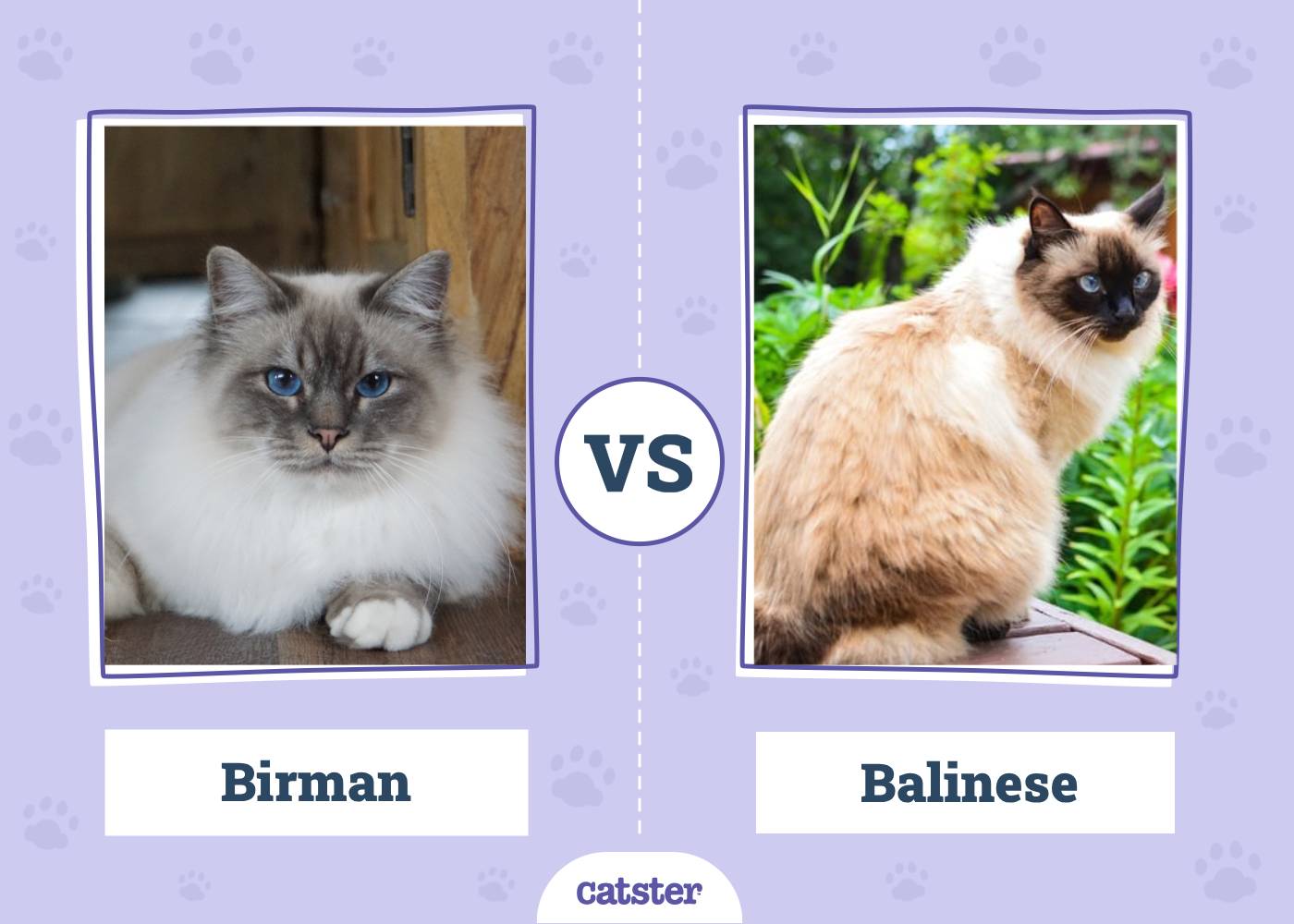
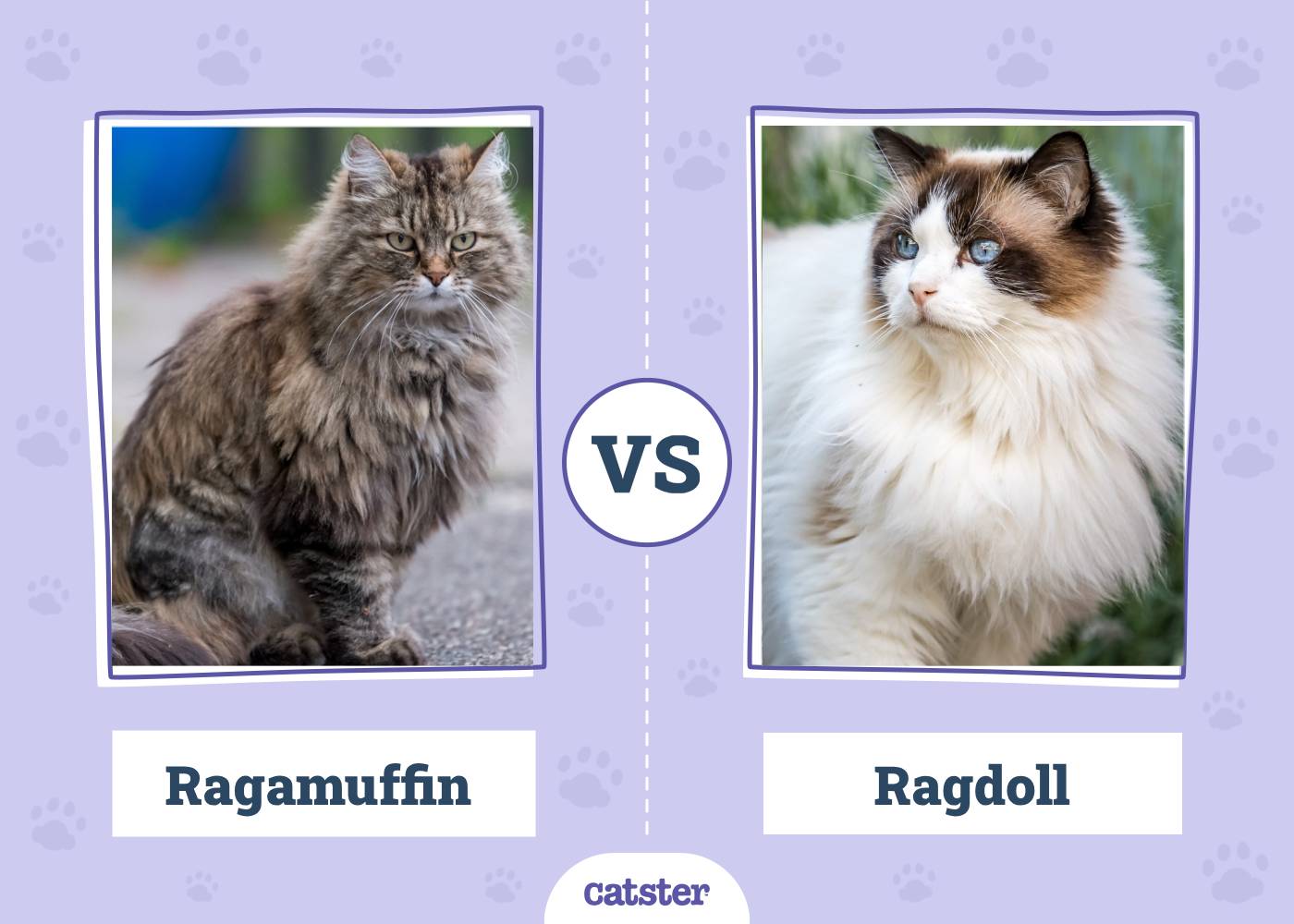
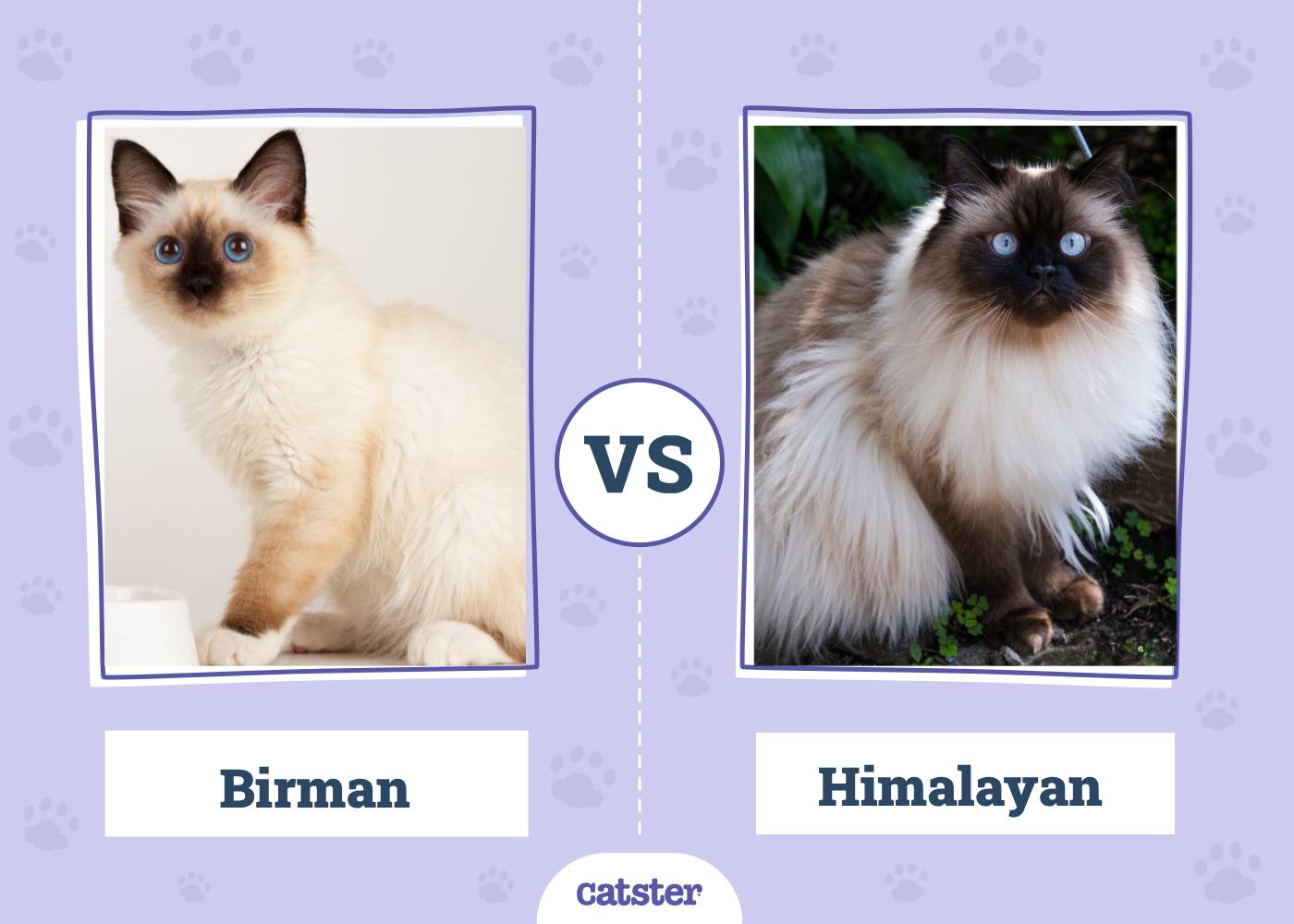
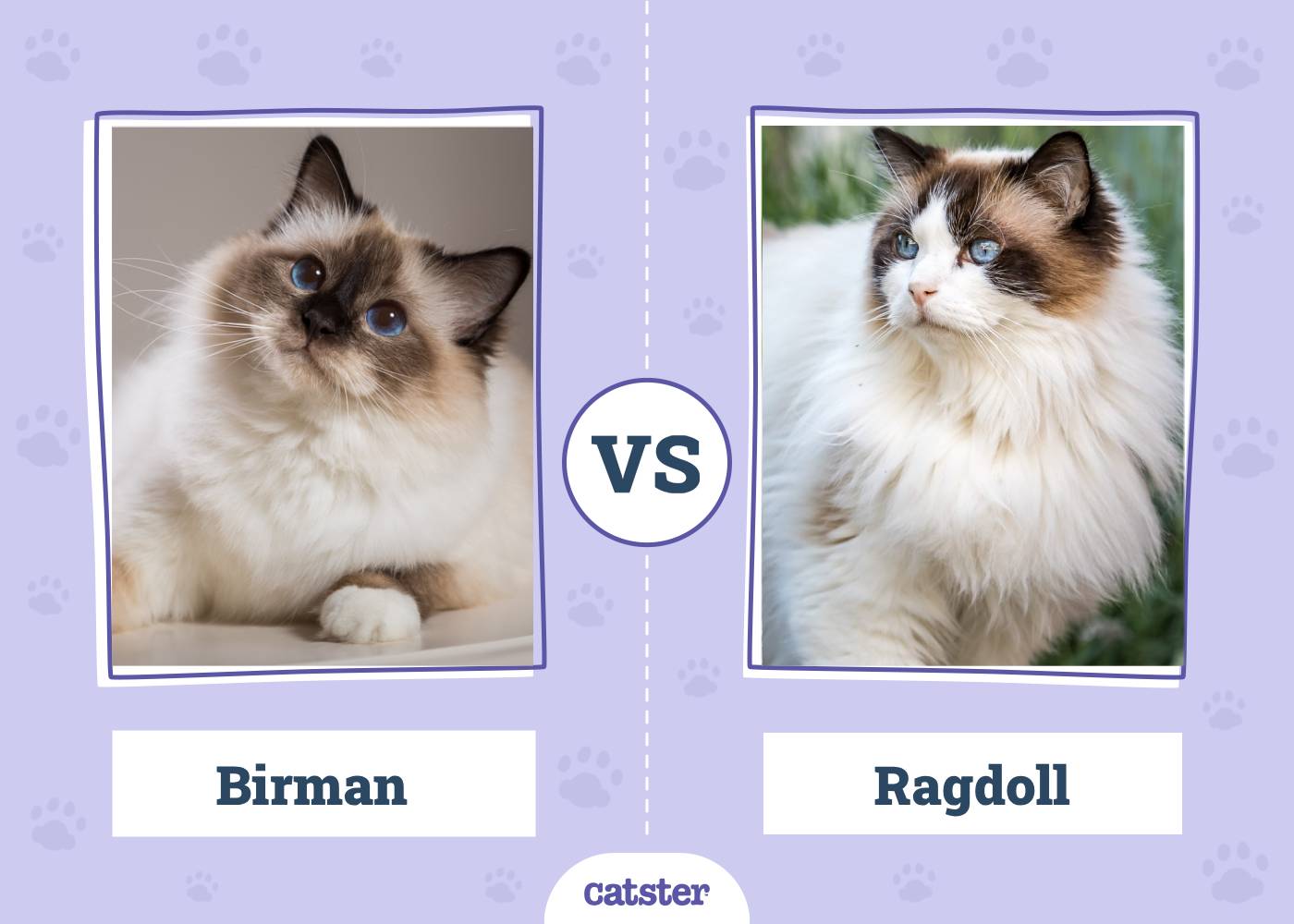
The Birman and Ragdoll breeds are often confused with one another due to their similar appearances. Both have long hair and gorgeous blue eyes, but to the untrained eye, it’s easy to mistake one for the other. However, despite the physical similarities, there are a few key differences between the Ragdoll and Birman that separate them. Nonetheless, both make excellent family companions and are worth considering.
If you're pondering either of these cats, it's wise to know the differences to help you decide which breed suits you and your family. In this post, we'll explain the differences so you can better understand both breeds.

Birman vs Ragdoll: Visual Differences

At a Glance

Birman Cat Overview

The Birman is thought to have originated in western Burma (present-day Myanmar), a country located in Southeast Asia. Their exact history is unclear; however, we know that the breed first arrived in France around 1919 and arrived in the United States in the 1950s.
These cats have a lifespan from 12 to 15 years, and it’s not unheard of for a Birman to live up to the maximum 15-year lifespan. In 1967, the Cat Fanciers’ Association accepted the breed, and it is now recognized by all major cat breed registries.
Appearance
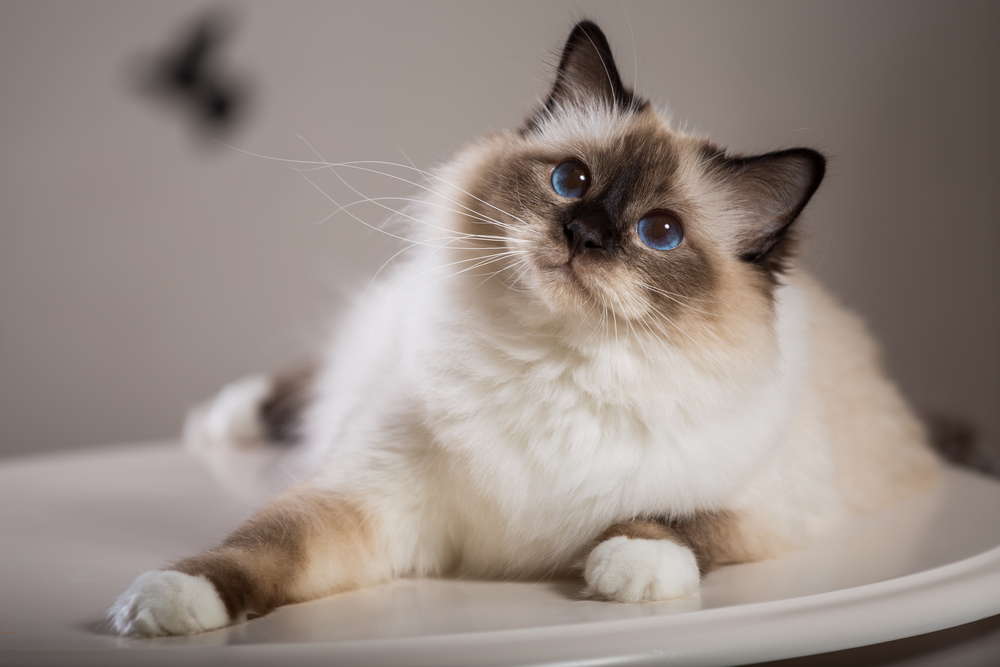
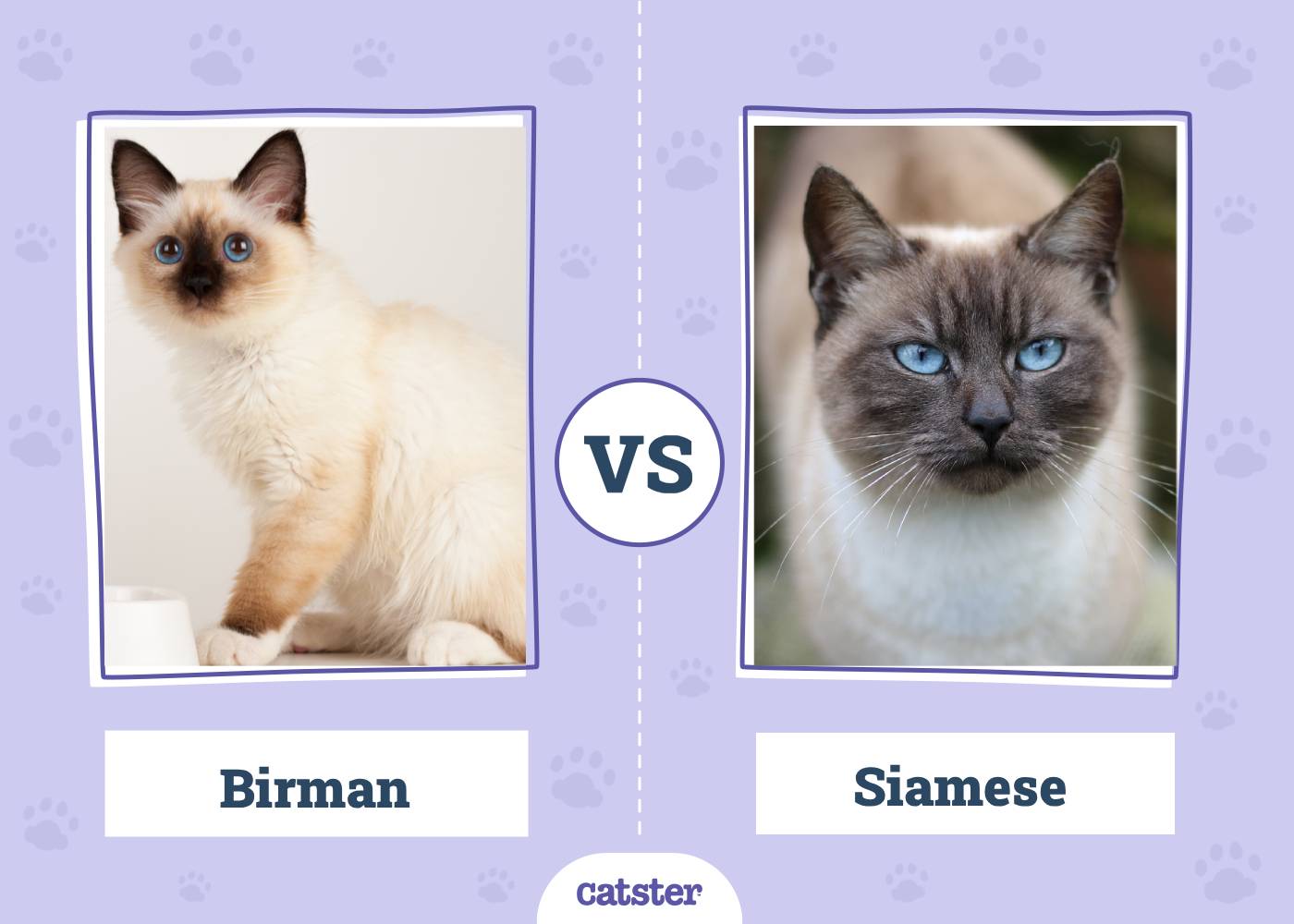
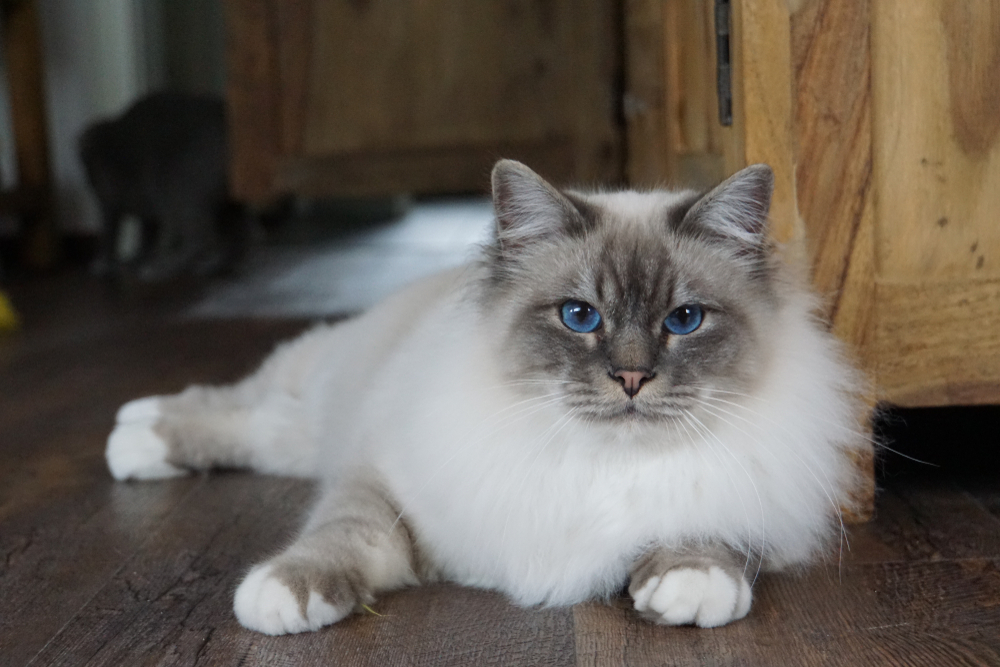
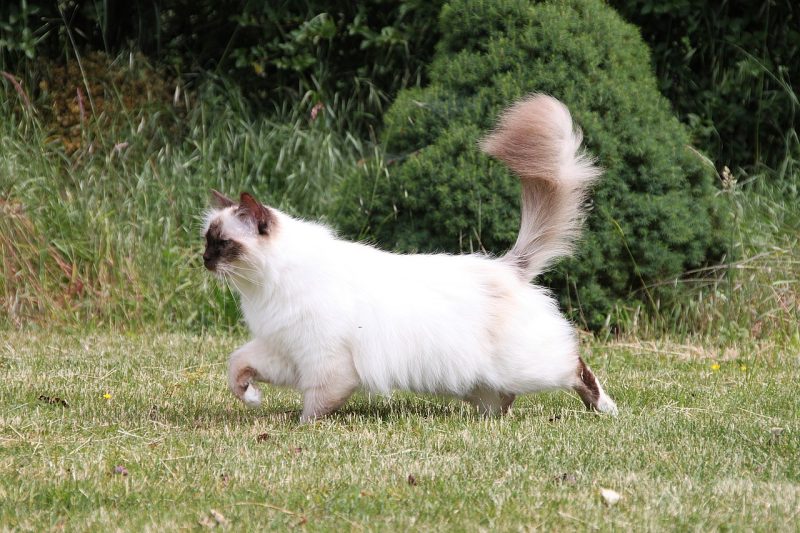
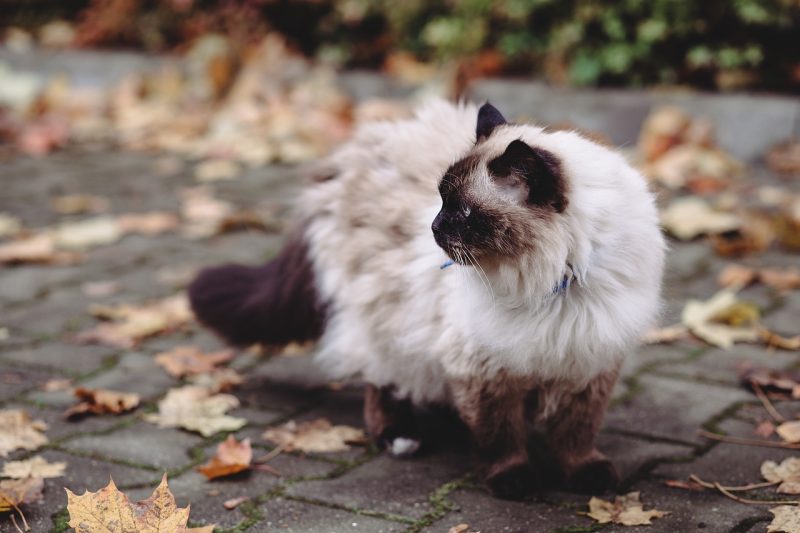
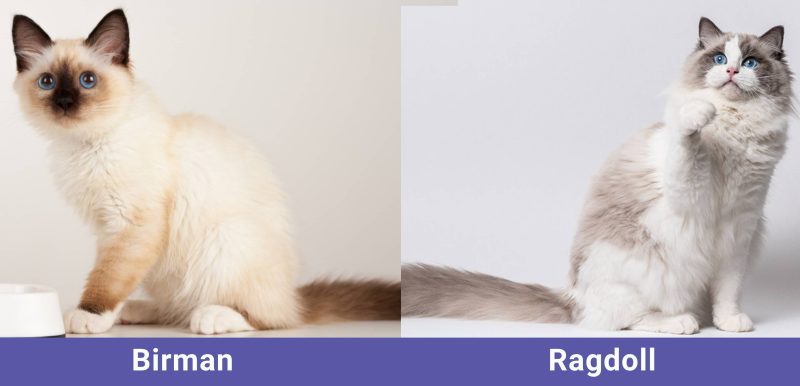
The average weight of the Birman ranges from 7 to 12 pounds. They have a medium to long single-layered coat that is always pointed, and the extremities are darker than the body—interestingly, though, the feet are always white.
However, kittens are born all white and will gradually develop points and colors, reaching their final colors by age 2. They come in an array of colors: cream, seal, chocolate, blue, lilac, or red. They have round, deep blue eyes with a round head and small ears.
Temperament
If you’re looking for a gentle, sweet, and affectionate cat, you can’t go wrong with adding a Birman to your family. They are intelligent cats who can learn tricks and commands, and they get along well with other furry members of the household. They tend to speak in soft tones and are playful and curious.
They love to follow their owners around the house and are sometimes called “Velcro” cats because of their desire to be near them at all times. However, they require lots of attention, making them perfect for older cat owners with the time to devote to them and who desire a laid-back cat with a loving personality. That doesn’t mean they are unsuitable for younger, active families; they do just fine with any family as long as they receive adequate attention.
Health
Because of their unclear history, there are a few health concerns that the Birman breed may have a predisposition to certain inherited and acquired health conditions. One concern is feline hypertrophic cardiomyopathy (HCM). This heart disease is believed to be congenital and can lead to heart failure, hind leg paralysis, and even death.
Hyperthyroidism and kidney disease are also possible, but that doesn’t mean every Birman cat will develop these conditions. Ensure you feed high-quality cat food and provide the Birman with mental and physical stimulation. Given their intelligence, they can learn to fetch, and they do well with having plenty of toys around. In short, providing the Birman cat with quality food and exercise will support overall health and wellness.
Grooming
Despite having a long, silky coat, Birmans only need brushing once a week to keep the coat looking beautiful and unmatted. They do not shed significantly, but will shed more during the spring and fall to accommodate seasonal coat changes. Ensure you provide the Birman with a scratching post to keep their nails healthy and check their ears every few weeks, cleaning them as needed. Brush their teeth as often as you can with an appropriate toothpaste made for cats to help reduce the risk of gum disease and other dental issues. You can also provide dental treats in between brushings.
Suitable For:
The Birman is suitable for any family looking for an affectionate, gentle, playful, and laid-back cat. They are ideal for seniors due to their laid-back personalities, but they pair well with any family who will give them adequate attention, which is hard not to do given their sweet and affectionate temperaments. They do well with other pets, making them also ideal for families with kids.
Ragdoll Cat Overview
The Ragdoll originated in the 1960s in the United States. Ann Baker, a Riverside, California resident, is credited for originally breeding the Ragdoll. As a popular breed to own around the world, they have a lifespan of 12 to 15 years, but some have lived even longer.
According to the International Cat Association, they are considered one of the fastest-growing breeds behind the Bengal, but it wasn't until 1993 that the Cat Fanciers’ Association recognized the Ragdoll under the miscellaneous class.
Appearance
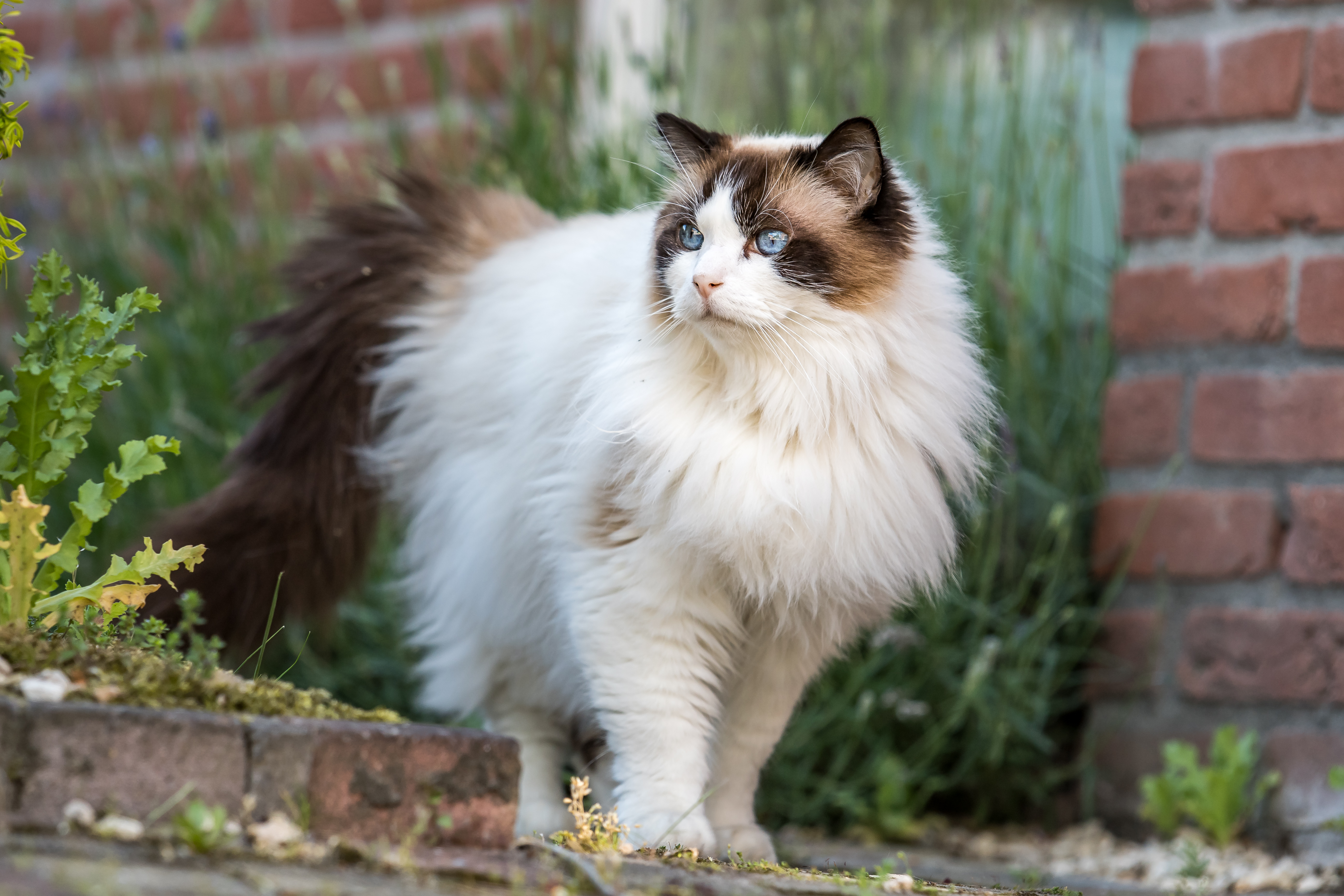
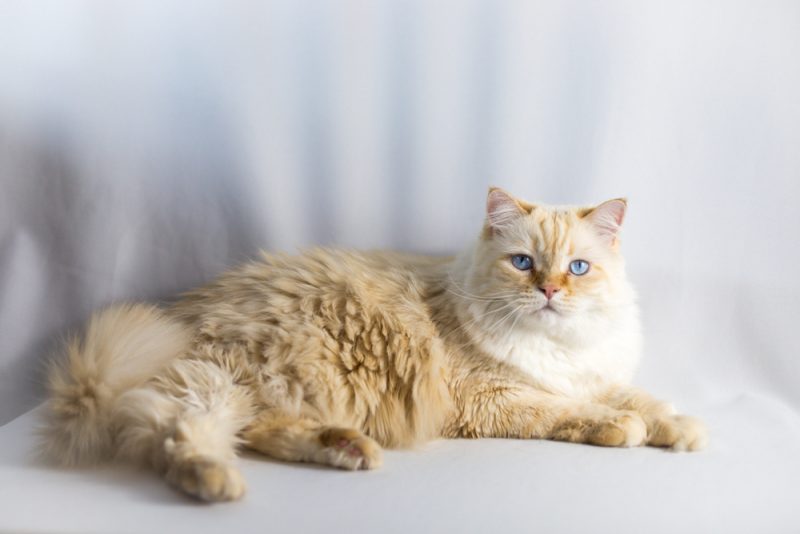
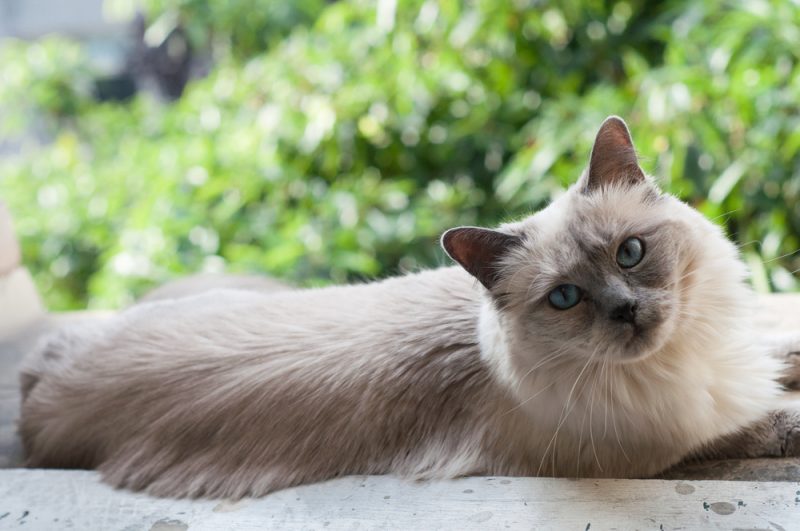
Like the Birman, the Ragdoll’s coat is medium to long in length and is soft. They have light-colored coats and are rather big cats, with the males weighing up to 20 pounds. They have muscular bodies that are hidden underneath their furry coats. Ragdolls have a wedge-shaped head, unlike the round head of the Birman, and the ears are wide-set and of medium size as opposed to the small ears of the Birman.
Ragdolls have colored point coats, meaning the coat is light in color, and the face, tail, ears, and limbs are darker in color. Interestingly, the genes that determine the point coloration are also responsible for the piercing blue eyes that Ragdolls are known for.
They come in a variety of colors and patterns: bi-colored, colorpoint, mitted, and van. Like the Birman, all kittens are born white, with colors appearing more as they age. The possible colors are cream, lilac, chocolate, red, seal, and blue.
Temperament
An interesting fact about Ragdolls is that they got the name honestly. They are incredibly laid-back and tend to “flop” in your arms when you hold them. However, not all Ragdolls flop in your arms, but if one does, it’s adorable. They do well with other furry household members and thrive on human interaction.
A word of caution: Ragdolls are generally best suited as indoor cats due to their friendly personalities; they will befriend any animal, regardless of whether it is a threat. They are friendly and social, and like the Birman, they require plenty of attention from their humans.
They are trainable and respond well to treats during training. Ragdolls are often compared to dogs due to their “doglike” personalities and love being held. The docile, intelligent Ragdoll is a popular, sought-after cat to own.
Health
As with any breed, the Ragdoll may be prone to medical issues, such as kidney disease, hyperthyroidism, urinary conditions, and respiratory issues. Again, not all Ragdolls will develop these conditions.
Feed high-quality cat food, and ensure the Ragdoll has plenty of toys for playtime, along with a scratching post. One difference from the Birman is that Ragdolls are not as active. They are happy to lounge, but it’s important to provide daily exercise to help maintain a healthy weight and overall wellness.
Grooming
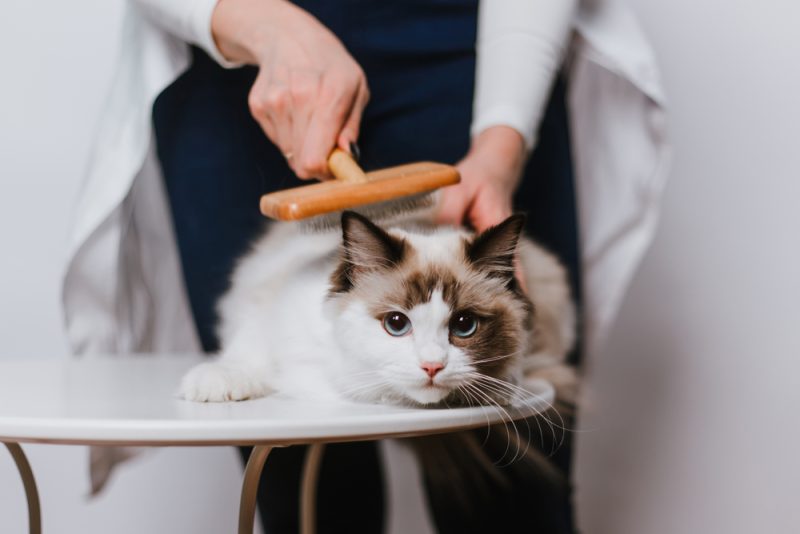
Despite the medium to long, soft coat, Ragdoll grooming requirements are fairly low maintenance. The coat is not prone to matting, and brushing it twice a week should suffice to keep it soft and luxurious. Brush the teeth as often as you can with toothpaste made for cats, and you can provide dental treats as well.
Suitable For:
The Ragdoll is suitable for any family, whether with children and other pets or a single person. They thrive on human interaction and will snuggle up with you. However, a lonely Ragdoll may become stressed, bored, or develop unwanted behaviors, and if you do not have the time to devote to this cat, the Ragdoll may not be right for you since they are quite clingy.

Birman vs Ragdoll: Which Breed Is Right for You?
It’s tough to say which breed is ideal because they are very similar. Both cats are affectionate, intelligent, and gentle and make excellent family companions. Their coats are similar in terms of maintenance, and they are both intelligent enough to learn tricks and commands.
The differences are the Ragdoll is much more muscular and weighs a bit more than the Birman, and the Birman is not quite as clingy as the Ragdoll. Ragdolls may become lonely or bored more easily than the Birman and the Birman is a bit more active. Both cats make excellent companions for any family, but the main difference lies in how much you’re home and how much attention you can give since the Ragdoll often requires a tad more attention than the Birman.
Sources
Featured Image Credit: Left - Borkin Vadim, Shutterstock | Right - Serita Vossen, Shutterstock

Expert cat care, straight to your inbox
Vet-reviewed advice, behavior tips, and the best of Catster. Free, and you can unsubscribe anytime.
By signing up, you agree to our Terms & Conditions and Privacy & Cookies Policy.
Rachel Giordano is a Pensacola, Florida-based musician and writer. She lives with her partner and their two dogs, Sophie, a Boston Terrier, and Aero, a Border Collie/Sheltie mix. Rachel holds a Bachelor of Arts degree in communication and loves writing about all types of cat breeds. When she’s not writing about cats, she loves to write suspense/thriller novels. A musician by night and writer by day, she enjoys sharing her knowledge of the needs and requirements of our furry friends.
Join the conversation
Ask a question, share your story, or send private feedback.