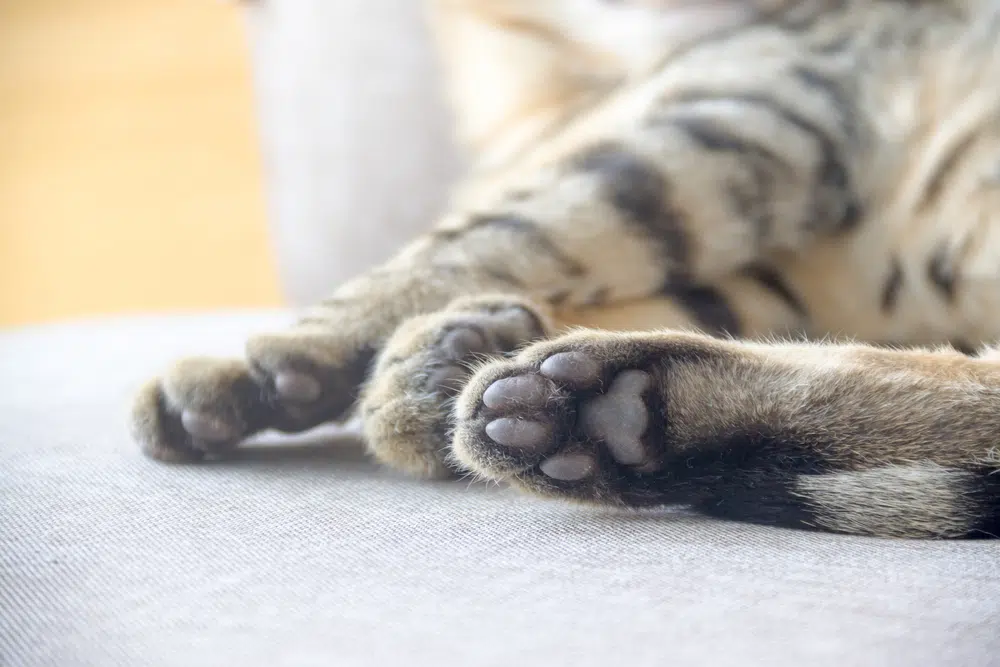
Cats are great companions and can make snuggling up to watch a movie cozier. They can even earn their keep by making sure pests like mice don’t try to overrun your home. Every cat has a certain amount of hunting instinct in them, but some cat breeds excel at hunting mice and other pests and stand out from the crowd when it comes to such instincts.
If you are looking for a great mouser cat to keep your home or farm protected, it is a good idea to choose one of the best-known mouser breeds. Here is a list of 17 awesome mouser cats that make great household pets for families of all types and sizes.

The 17 Best Mouser Cats
1. Maine Coon

| Origin | Unknown |
| Average Size: | 8–18 pounds |
| Typical Temperament: | Gentle, friendly, curious |
The Maine Coon is a large cat breed that seems to have been born to hunt mice. They will track down a mouse and eat it, even if they have recently been fed. When Maine Coons were discovered by humans, they were brought along on ships and kept on farms to keep rodents away from food and other goods. Today, they are cherished household members, but they still haven’t lost their natural instinct to hunt.
2. Siamese

| Origin: | Thailand |
| Average Size: | 8–14 pounds |
| Typical Temperament: | Affectionate, outgoing, social |
Siamese cats are intriguing and mysterious. They walk daintily and tend to display sophisticated attitudes—that is until a mouse comes around. These beautiful cats make great mousers, and they will aggressively hunt any down any that they spot around the house or in the yard. These cats also happen to have the gift of gab, so be prepared for plenty of vocal communication if you decide to bring one home.
3. Burmese

| Origin: | Myanmar (Burma) |
| Average Size: | 8–15 pounds |
| Typical Temperament: | Intelligent, loyal, friendly |
Burmese cats are known for their excellent hunting skills, particularly when it comes to dealing with mice. These cats will not only kill mice, but they may also use the pests as toys for a while. It is safe to say that mice do not want to go anywhere near a Burmese cat. In addition to being great mouse hunters, these cats are affectionate, cuddly, and interactive with human family members.
4. Siberian

| Origin: | Russia |
| Average Size: | 10–18 pounds |
| Typical Temperament: | Affectionate, lively, quiet |
These fun-loving cats are huge in comparison to most other cat breeds. Their large size and athletic bodies give them an edge when it comes to hunting mice. When they are not actively hunting, they like to lounge around and spend time with their human companions. They make little noise, they can keep themselves warm, and they don’t mind spending time at home alone.
5. Cymric

| Origin: | Canada |
| Average Size: | 8–12 pounds |
| Typical Temperament: | Active, friendly, independent |
This is a stealthy cat breed that does a great job of hunting because they know how to stay back until they are sure they can capture their prey. These cats have powerful back legs that enable them to jump high and far. They are expert stalkers, whether they want to get a toy or a mouse. These are also friendly cats that love to spend time with human family members. Their playfulness and loyalty are endearing.
6. American Shorthair

| Origin: | Europe/North America |
| Average Size: | 11–15 pounds |
| Typical Temperament: | Playful, friendly, patient |
American Shorthairs are curious animals that like to explore their environment. They are never afraid of getting down and dirty when it comes to hunting. This is a personable breed that gets along well with humans and other animals, making them a suitable pet choice for apartment and house dwellings. Their intelligence makes them slightly easier to train than many other cat breeds.
7. Balinese

| Origin: | United States |
| Average Size: | 5–9 pounds |
| Typical Temperament: | Active, intelligent, social |
The Balinese breed is lighthearted, friendly, and curious. These cats are quick on their feet and love to have a place of their own to retreat to during nap time. When a mouse comes around, they will not hesitate to hunt it down and make it retreat or end its life, depending on the situation. They are goofy and fun to spend time with, which makes them great for families, singles, and seniors alike.
8. Manx

| Origin: | Isle of Man |
| Average Size: | 8–14 pounds |
| Typical Temperament: | Social, dependent, shy |
The Manx is one of the oldest known cat breeds in the world. This cat is quiet, stealthy, patient, and attentive—all qualities that help make them excellent mousers. They were known to protect the Isle of Man, where they are said to have originated, from all the mice and rats that wanted to inhabit the place. Today, they make great house cats and are just as efficient in hunting as they always have been.
9. American Curl

| Origin: | United States |
| Average Size: | 8–12 pounds |
| Typical Temperament: | Outgoing, cuddly, loyal |
The American Curl is a beautiful cat breed that is hardy yet compact and outgoing with family members yet leery of strangers. They are excellent mousers and are never shy when a chance to hunt comes into play. These cats are adaptable and can be happy in both apartment and house settings. Their high prey drive is best handled with the help of interactive toys.
10. Japanese Bobtail

| Origin: | Japan |
| Average Size: | 8–12 pounds |
| Typical Temperament: | Smart, curious, outgoing |
Japanese Bobtails are outgoing, friendly, and full of energy. They enjoy spending time with toys, yet they are happy to snuggle up in a lap whenever the opportunity arises. If a mouse comes within earshot or eyesight, you can be sure that your Japanese Bobtail will take care of it right away.
11. Abyssinian

| Origin: | Ethiopia |
| Average Size: | 6–10 pounds |
| Typical Temperament: | Quiet, intelligent, curious |
The Abyssinian is an average-sized cat that loves to hunt prey, especially if they happen to have tails, like mice. These cats are curious and always seem to be on the prowl when they aren’t napping. With a penchant for playing and an appetite for hunting, you can’t go wrong with this breed if you have a mice or rat problem that you want to get rid of once and for all.
12. Chartreux

| Origin: | France |
| Average Size: | 6–9 pounds |
| Typical Temperament: | Gentle, patient, loyal |
The Chartreux is an elegant-looking cat with bright eyes and erect ears. They are always paying attention to what is happening around them. These cats are alert, curious, loyal, gentle, and patient, all of which make them excellent pets for households that include young children. These cats can entertain your kids throughout the day and help keep pests such as mice away.
13. Chausie

| Origin: | Egypt |
| Average Size: | 11–16 pounds |
| Typical Temperament: | Active, athletic, focused |
Chausie cats are sometimes referred to as jungle cats because they display a resemblance to wild cats like cheetahs and lions. Rest assured that they are domesticated just like any other housecat. Their large ears and intense eyes make it easy for them to home in on prey like mice, which they are inherently attracted to hunting down. Even if you aren’t worried about mice, you can rest assured that this breed can take care of other types of pests, like spiders and ants.
14. Persian

| Origin: | Iran (during the Persian era) |
| Average Size: | 7–12 pounds |
| Typical Temperament: | Quiet, sweet, loyal |
Persian cats are adorable, cuddly, and super soft. These cats love nothing more than to hang out on a lap and cuddle on the couch. However, they do have a spunky side to them that drives them to play with toys occasionally, especially interactive ones. These cats also like to hunt enough that they could effectively and organically get rid of mice infestations.
15. Bengal

| Origin: | United States |
| Average Size: | 7–15 pounds |
| Typical Temperament: | Sweet, loyal, athletic |
Bengal cats became popular in the United States as a breed that resembles big cats found in the wild. However, these cats have been proven to be sweet and loyal when it comes to dealing with their human and animal family members. They do not like rodents and will do whatever it takes to keep them away from their home territory. This means having a Bengal cat in your home will help minimize the risk of having to deal with pests in the future.
16. Turkish Angora

| Origin: | Turkey |
| Average Size: | 7–10 pounds |
| Typical Temperament: | Loyal, affectionate, attentive |
Most people would never guess that a Turkish Angora cat would be capable of hunting down mice after meeting one in person. These cats are extremely gentle with humans, tolerant of other cats and friendly dogs, and interested in being a part of the “happenings” when everyone is gathered inside the household. However, they do have a strong prey drive and have no problem hunting down mice when necessary.
17. The Mixed Breed

| Origin: | Unknown |
| Average Size: | Varies |
| Typical Temperament: | Varies |
While we cannot be sure what lineage a mixed-breed cat has inherited, many make great mousers. What’s great about mixed breeds is that they are easy to find at humane societies and similar facilities. After adopting one for a minimal cost, there is a good chance that the cat will help you keep pests like mice away from your home.

Choosing a Mouser Cat to Bring Home as a Pet
The process of choosing a mouser cat to bring home as a pet can be a lengthy and overwhelming experience. However, if you have a game plan in place, you can make the process more streamlined and less stressful overall. Start your journey with the help of these tips and tricks:
- Do Research: Contact the Cat Fanciers’ Association or other cat clubs to learn more about the breeds that you are considering adopting to help combat an existing mouse problem or to figure out which breed would be the best at preventing mice infestations.
- Complete a Trial Run: If possible, borrow a cat from this list that is under the care of a friend, family member, foster parent, or rescue facility for a week or two. During this time, you should be able to determine whether the breed can meet your needs when it comes to combating mice. Just remember that you might fall in love with the cat, whether they are efficient at hunting mice or not!
- Consider Personality and Temperament: The cat that you choose to combat mice will also be your family member, so it is important to make sure their personality and temperament match those of you and your household members. If you live in a loud household with rambunctious kids, you should get a mouser cat who is curious, outgoing, and independent. If you live alone or in a quiet, relaxed household, consider an equally laidback cat.
Take into account your household’s needs, and figure out how everyone can help take care of a cat before deciding which breed to invest your time and money in. No cat should be acquired simply for their hunting instincts and efforts. They should be accepted as a part of the family and incorporated into the household as such.
Conclusion
Cats are excellent pets, and some can also be awesome mousers. The mouser cat that is right for you will depend on your family situation and the kind of interaction that you are looking for. No matter what breed you decide on, keep in mind that your new kitty will need love, attention, interaction, and veterinarian care to stay happy and healthy.
You might be interested in:
- Why Do Cats Chatter at Birds? 5 Possible Reasons & FAQ
- Why Do Cats Meow & Yowl? 10 Reasons Behind the Behavior
Featured Image Credit: Stefan_Sutka, Shutterstock
 The 17 Best Mouser Cats