My Cat Killed a Mouse, What to Do? Our Vet Answers & Explains

In this article
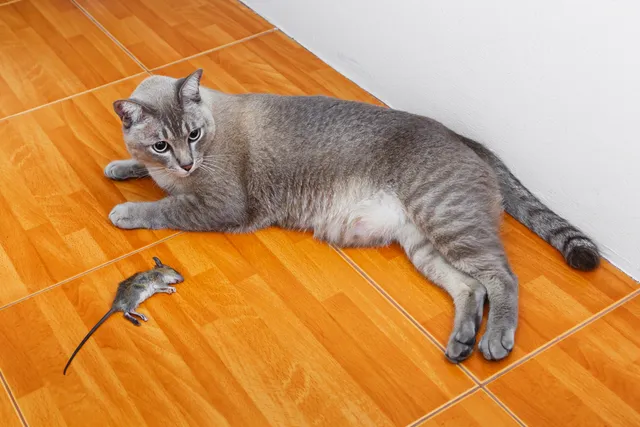
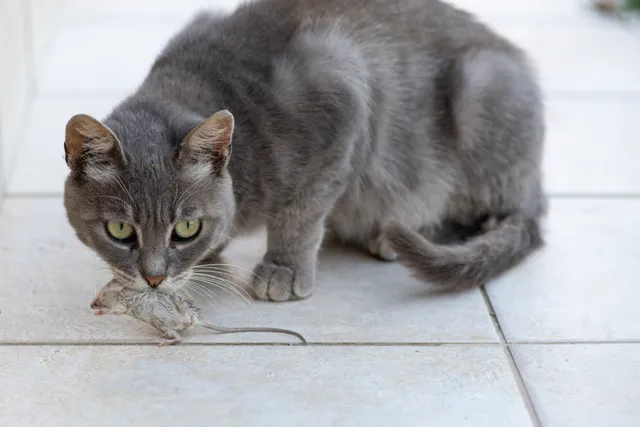
Cats might seem like the perfect pet to have at home, but they’re hunters at heart. What happens when you come home to find that your feline friend has snatched a little rodent? Should you be upset? Should you be thankful? Why would I want to see a dead mouse anyways? Well, there are a lot of things at play here. Cats hunt almost exclusively out of instinct, but with no doubt, you should follow specific guidelines for cleanup. Let’s discuss what you should do in such a scenario.

Why Cats Kill Mice
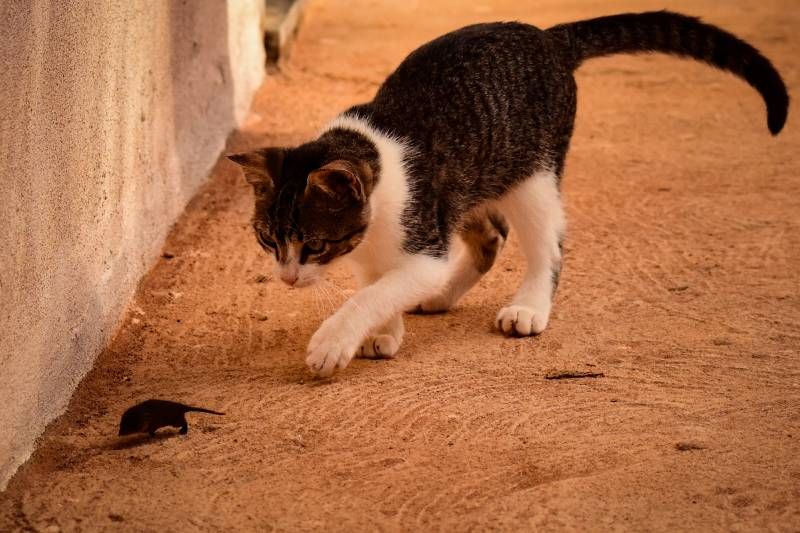
The reason why your seemingly innocent cat is chasing after pests in and outside of your home all goes back to their primal instincts. Don’t forget that cats are predators in the wild.
A cat would hunt a mouse either out of hunger or because they opportunistically hunt whenever the opportunity arises. As pet cats rarely face issues with hunger, most rodents that fall prey to pets are killed for sport rather than for nutrition.
If you’ve come across a dead mouse in your house or your cat comes to you with a mouse in its mouth, there are specific steps you should follow to ensure the cleanup is proper and thorough.

The 8 Steps To Follow If Your Cat Brings Home a Dead Mouse
1. Inspect & Secure Your Cat
The first step is to ensure your cat appears normal and not unwell. If your cat appears like their usual self and isn’t acting strange, then gently place them in a separate room before you begin cleaning up the mess. If your cat seems lethargic, is vomiting, or appears injured or bleeding, prioritize taking your cat to the vet promptly.
2. Suit Up
If your cat is fine, you can begin the procedure of cleanup. The first step is to wear gloves. Rubber or plastic gloves are recommended for cleaning up after a dead rodent.
Mice often carry fleas. Consider using an insect repellant on your clothing, shoes, and hands before handling a dead mouse.

3. Disinfect
Next, spray the dead mouse and its surrounding area with a disinfectant and let it soak for 5 minutes (according to instructions on the product label). Ensure the product you use says “disinfectant” on the label. Within the US, EPA-registered disinfectants are your best option.
If you don’t have a disinfectant at hand, you can make one using 1.5 cups household bleach in 1 gallon of water (or 1 part bleach to 9 parts water). Please be mindful that ventilation is often necessary when handling disinfectants.
4. Place Dead Rodent In Bag
After 5 minutes have passed, place the dead mouse in a plastic bag. Tie the end of the bags together in a knot to seal the bag. Place this bag in a second plastic bag and seal that bag with knots too.

5. Dispose
The double-bagged mouse should be disposed into a covered garbage bin that is regularly emptied. Alternatively, you should contact your state health department for information on other ways to dispose of rodents in your area.
6. Clean-Up
Wipe the area where the rodent’s body was found with paper towels. For a hard surface, you can mop or sponge the area. It is important to note that your cat might have carried the rodent to several places, and it’s a good idea to thoroughly clean and disinfect all floors, countertops, cabinets, and your cat’s favorite places.

7. Washing Up
Wash your gloved hands with soap and water, or a disinfectant before you remove them. Once you remove the gloves, wash your hands with soap and water.
8. Veterinary Visit
Mice can pose several health risks to cats, ranging from fleas to internal parasites that can make your cat seriously ill. Once the cleanup is done, your cat should be taken to a veterinarian for a checkup to ensure that they are okay.

What If The Mouse Is Alive?
At times, cats bring over live prey and sometimes, the prey escapes from their hold and ends up scurrying away into hiding. In such a case, you should consider the following
1. Begin by once again inspecting and securing your cat, as described earlier.
2. Isolate The Mouse (If Possible)
If the mouse is in a particular area of your house, for example, in a closed room, then try to seal the mouse in there if possible. However, do note that mice are incredible at sneaking through small crevices (including ventilation systems) and this might not always be possible

3. Trap The Mouse (Optional)
A snap trap can be used to try and capture the mouse, if possible. However, such traps are also dangerous for cats that step onto them. You’d have to set the trap up in an area your cat cannot access.
If the trap successfully captures the mouse, follow the instructions from the earlier explanation to dispose of the mouse and clean up. Take note that you’d also have to disinfect and clean any mouse urine or droppings, as these are considered health hazards for both you and your cat.
4. Pest Control (Recommended)
If the mouse cannot be captured, contact pest control and follow their instructions on the

5. Medical Care
Seek appropriate veterinary care for your cat (as previously mentioned). If you get sick and are concerned that it may be due to a rodent-borne disease, talk to your doctor and tell them about the exposure you may have had to mice and/or their droppings and urine.
Prevention: The Ethics of Roaming Cats
If your cat roams outdoors unsupervised, this might be a good time to reconsider this prospect. A simple incident such as a rodent brought into your house can be quite a stressful ordeal for you and your cat’s health.
Allowing cats to roam unsupervised isn’t advised as cats are very destructive towards local fauna. This disrupts ecosystems extensively. In addition, cats too are at risk when they hunt, whether it be in the form of a bite or scratch from their prey, or from diseases that their prey can pass onto them. In addition, a roaming cat isn’t necessarily safe. In many parts of the world, larger predators prey on cats. They can also get injured, lost, or displaced when they’re roaming unsupervised.
If your cat enjoys the outdoors, consider getting them a catio so that they can safely enjoy the outdoor environment. Alternatively, if they’re able to be leash trained, consider walking your pet on a leash - this also serves as a fantastic bonding opportunity for both of you!
If your cat is a fully indoor individual who happened to catch a mouse in your house, you might want to consider contacting pest control, as this often hints at an infestation - which is a health risk for you, your family members, and your cat.
Conclusion
A cat that’s allowed to roam may bring home dead or alive prey. The task of cleaning up after a rodent presented to you by your cat is extremely stressful, however, it should be done thoroughly and properly as mice, their urine, and their droppings are considered major health risks for both you and your pet cat.
Restricting your cat’s movement outdoors is a great way to ensure this never happens in the first place. Remember that this doesn’t mean depriving your cat of the outdoors; there are ways for cats to enjoy the outdoors without harming the animals or endangering themselves in the process.
Sources
Featured Image Credit: foto_monteiro, Shutterstock
Expert cat care, straight to your inbox
News, insights, and useful advice, delivered to you.

No spam — unsubscribe anytime.
By signing up, you agree to our Terms & Conditions and Privacy & Cookies Policy.
How useful was this post?
Click a star to rate. You can leave written feedback afterwards. (We read all feedback.)
Dr. Luqman Javed DVM (Veterinarian)
Dr. Luqman (also known as Dr. Lucky) grew up with an immense passion for animals of all kinds. By becoming a veterinarian, he turned his childhood dream into reality. Now, his goals are focused on providing help to cats all around the world by helping to cat owners understand their feline friends better to ensure the best quality of life for them. His passions are wildlife, exotic pets, pet owner education, and animal welfare. He graduated with his DVM from the Universiti Putra Malaysia in 2020. He has worked with a variety of animal species and has decades of personal experience with keeping many different types of exotic pets, such as turtles, hamsters, freshwater fish, chickens, songbirds, and parrots (and he has extensive skills in training parrots, too).