What Causes Limp Tails in Cats? Our Vet Explains

In this article
Has your cat appeared back at home with a limp tail? Has their tail gone limp after it got caught in the door? Limp tails in cats can have many causes with differing treatments needed. Among the most common causes are various kinds of tail trauma and infections, such as a cat fight abscess. Less common causes are neurological disorders involving the spinal cord and brain.
If your cat has a limp tail, you should take your pet to the vet straight away so they can diagnose the cause and start the appropriate treatment.

What is a Limp Tail
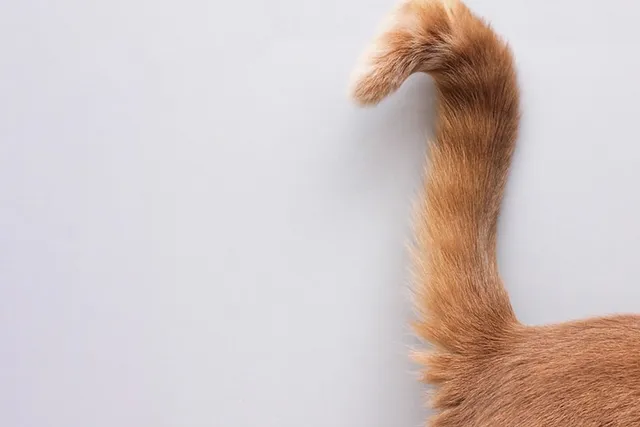
Before we begin, what is a limp tail? Having a limp tail is a sign of an underlying problem and not an illness in itself. If we say our cat has a limp tail we usually mean it is floppy and not moving in the usual way; it may be hanging seemingly lifeless and dragging along the floor. Sometimes the tail will be functional part way and then limp or unable to be moved after that point (as in with a tail fracture).

Causes of Limp Tails in Cats
1. Tail Pull Injuries
A limp tail can occur if your cat is the victim of a tail pull injury (sacro-caudal luxation). This is when the tail gets stuck somewhere and is pulled with such force that the tail dislocates. This can also happen if someone/something grabs them by the tail or in hit-by-car accidents. Tail pull injuries result in varying degrees of nerve damage and the prognosis can unfortunately be poor. The nerves in this area branch off from the spinal cord and depending on where (and to what degree) the dislocation is, the nerves controlling the bladder and bowel as well as tail and leg movement can be damaged. Cats with tail pull injuries often have other injuries such as a broken pelvis or leg.
Signs that can be seen with a tail pull injury:
A limp tail should always be checked urgently by a veterinarian in case of a dislocation and nerve damage.
2. Other Tail Injuries
Tail injuries are common in cats. Accidents unfortunately happen and we can injure our cat's tail if we step on it by mistake, shut it in a door, or catch it under the rocking chair for example. These traumas can lead to mild injuries such as grazes and bruising or severe injuries to the tail, such as deep cuts, nerve injuries (nerve damage), or even a broken tail are also possible. Some of these injuries can result in a limp tail.
It is usually quite obvious when your cat has a tail injury with signs including the following:
If you notice any of these signs in your cat, take them to the vet immediately.
3. Tail Infections
The most common cause of an infection in cat tails is a cat fight abscess. Tail infections and abscesses can develop when your cat has fought with another cat, been bitten by another animal, or has scratched their tail on a sharp object such as fence wire. Abscesses can develop within 2–7 days after the incident and often show up as a firm or soft lump along the tail or at the tail head (rump) area.

Your cat will probably resent you stroking or touching them along the tail if they have an infection as the area can be very sensitive.
Cats may also show the following signs:
If your cat has an infection on their tail, take them to the vet for medical attention.
4. Neurological Disease
In this category we’ll include other diseases that can affect the nerves or ability to move the tail. The nervous system is composed of the brain, spine and peripheral nerves. Thankfully not as common as the reasons above, neurological problems are on the list of things a vet will consider. Ailments such as a “slipped” disc, tumor, brain disorder or spinal injuries can affect the tail function and result in a limp tail.
Other signs to look out for include:
5. Anal Gland Problems

Anal glands are located just inside the anus (hence the name). There are two of them, one on each side. Anal glands are used for scent marking and can become infected, get blocked and be painful. Although anal gland problems don’t actually cause a tail to go limp, they can result in the tail being held down and so is easy to confuse with a limp tail.
Signs of anal gland problems in cats may include:
If your cat is showing these clinical signs, take them to the vet for an evaluation and treatment as the condition is often painful.
What to Do If Your Cat Has a Limp Tail
If your cat has a limp tail, the best thing to do is to take them to the vet for an examination. There are many different possibilities and an examination is needed to make a diagnosis and recommend treatment options.
After the examination a veterinarian will make recommendations for additional tests, such as x-rays, if needed. If there is suspicion of fractures, nerve damage or a neurological disorder, the vet may recommend hospitalizing your cat for monitoring and treatment.
How Can I Prevent My Cat From Getting a Limp Tail?
Unfortunately, there is no method to prevent your cat from getting a limp tail. Accidents happen all the time, even with indoor cats. They can damage their tail when they catch it in a door, they can fall down the stairs, or you may accidentally step on their tail. Outdoor cats are more exposed to the risk of damaging their tails, as they can fight with other pets, be hit-by-car victims, get injured on fences, etc.
To try to prevent a limp tail, take your cat to the vet as soon as you notice that they have been fighting or been the victim of an accident for example. Also, regular check-ups can help detect neurological disorders before they progress.

Conclusion
A limp tail in cats occurs in most cases due to trauma or infection. These problems vary greatly in severity and so it is important to get your cat checked out by a vet to ensure they are not in pain or need specialized care. In addition to a limp tail, you may notice the following signs: scooting, swollen tail, lumps, kinks, lameness, lack of feeling in the tail, the tail being warm to the touch and/or pain. If this is the case with your cat, do not hesitate to contact a vet. After the evaluation, the veterinarian can recommend any additional diagnostic work needed and the best treatment for your cat.
See also:
Sources
Featured Image Credit: italay, Shutterstock
Expert cat care, straight to your inbox
News, insights, and useful advice, delivered to you.

No spam — unsubscribe anytime.
By signing up, you agree to our Terms & Conditions and Privacy & Cookies Policy.
How useful was this post?
Click a star to rate. You can leave written feedback afterwards. (We read all feedback.)
Dr. Iulia Mihai, DVM MSc (Veterinarian)
Dr. Mihai is a vet with over 13 years of experience in laboratory, pet pathology, and cancer. She studied at the University of Agronomical Sciences and Veterinary Medicine of Bucharest, Romania (EAEVE member), where she worked in the laboratory of the faculty clinic after graduation. She has a master’s degree in equine and pet pathology and studied epithelial cancer for her Ph.D. Iulia has a passion for internal medicine and parasitology and started volunteering at the faculty’s clinic in her third year of college. She has worked in a couple of veterinary clinics over the years as an internal medicine specialist. She enjoys writing and teaching people about cat disease prevention, nutrition, behavior, and treatment.