Veterinary TCM (Traditional Chinese Medicine): Our Vet Explains How It Helps Cats

In this article
In the two centuries since Louis Pasteur and Joseph Lister revolutionized medical practice with vaccination, sterilization, aseptic surgical techniques, and other remarkable breakthroughs, the fields of human medicine and surgery have continued to advance, with veterinary science hot on their heels. A clear divide developed between what was recognized as modern Western medicine and the more traditional, natural methods of the East.
Traditional Chinese medicine, commonly referred to as TCM, was virtually rendered obsolete in most of the Western world. Those who practiced it were dismissed as superstitious witch doctors, and anyone wishing to explore TCM as an option was treated to a condescending smile and told to stick to science.
In an interesting twist of irony, many people are turning away from modern medicine and looking toward more natural, holistic ways to treat certain ailments and improve their overall health. Even doctors, nurses, and veterinarians are starting to recognize the potential benefits that TCM can offer, realizing that science and TCM can be used together, with promising results.
Let us take a closer look at what traditional Chinese veterinary medicine is and how it can help your cat.

What Is TCM?
Traditional Chinese medicine has been around for over 3,000 years, and its foundation is in the flow of the vital life force, known as Qi (pronounced “chee”). Illness is believed to be the result of blocked or disrupted Qi, so the principle of TCM is in restoring its flow, which can take many forms, including:
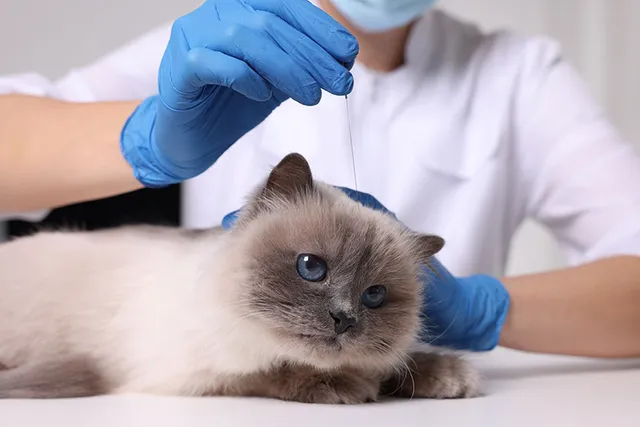
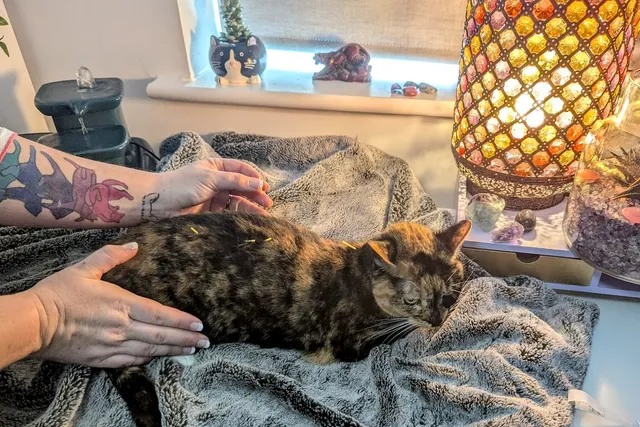
- Acupuncture
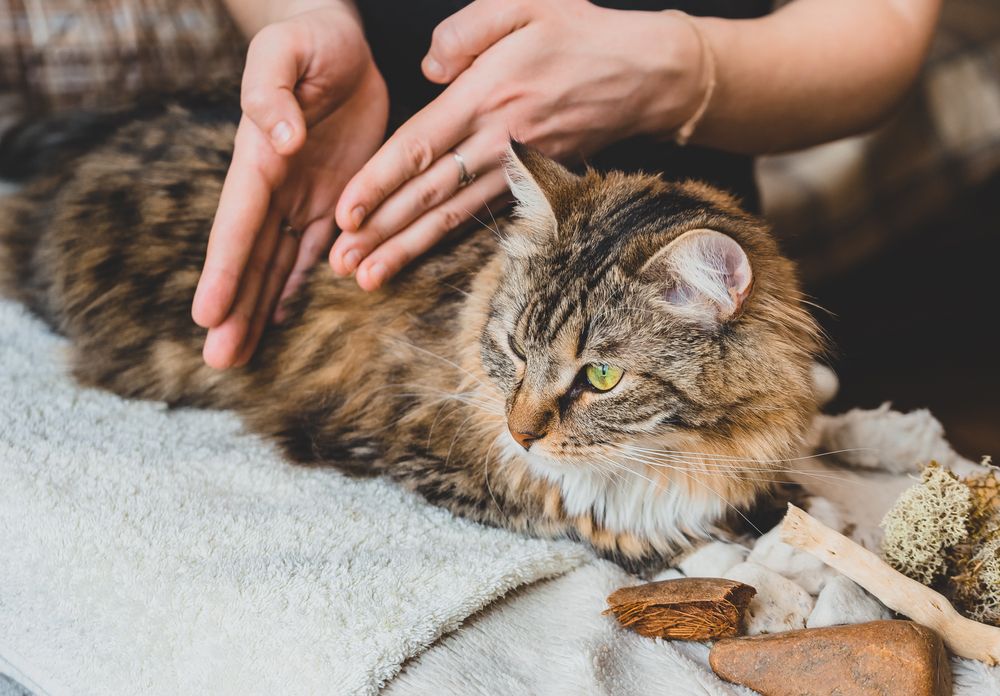
- Acupressure
- Moxibustion (burning herbal leaves on or near the body)
- Cupping (using the vacuum created in a warm glass jar to suction points of the body)
- Massage
- Herbal remedies
- Movement and concentration (e.g., tai chi and meditation)
What is interesting about most of these treatments is that there is very little in the way of dangerous risks or side effects; where the perceived danger lies is when treatments based on scientific evidence are discarded in favor of unproven methods.
Equally, the reverse is true, and TCM should not be dismissed without substantial evidence that it is ineffective or harmful. After all, there is a reason these remedies have been practiced for several millennia, and given that China has the third highest life expectancy in the world, perhaps we should be paying attention, no matter what your personal views may be.1

What TCM Is Not
It is quite common for alternative therapies to be all lumped together, and TCM is often thought of as synonymous with homeopathy, which it is not.
Homeopathy is based on the use of extremely diluted substances to treat some ailments, following the principle that “the more dilute the substance, the greater the effects.” Considering that some of the common ingredients used in homeopathic treatments include poison ivy, belladonna (deadly nightshade), arsenic, and stinging nettles, dilute would be preferred! However, many studies have shown that, much of the time, the treatments are so diluted that they are essentially just water, and if not diluted enough, have the potential to cause more harm than good.
Homeopathy is generally not recognized or recommended by doctors or vets, whereas TCM is becoming increasingly used and prescribed.

How TCM Can Help Your Cat and Types of Treatments
You can probably guess that certain TCM techniques are not going to be appropriate for our feline friends. Cupping and moxibustion are both impractical and unsafe to be applied to cats, and although most cats appear to spend much of their time engaged in contemplative meditation, convincing them to engage in tai chi might be taking things a bit far!
You might, however, be surprised to learn that acupuncture, acupressure, massage, and certain herbal remedies can be used to help treat several feline illnesses, some with quite remarkable results.
Acupuncture
Cats are surprisingly tolerant of this needling treatment and are known to respond well to treatments, even more so than dogs. It is most commonly used to treat pain, but acupuncture has also been found to be effective in managing several conditions, including:
- Soft tissue injuries
- Neurological disorders
- Healing wounds
- Osteoarthritis
- Respiratory disease (feline asthma, for example)
- Gastrointestinal and urogenital problems
- Stress and anxiety
One of the main advantages of using acupuncture in cats is that it can be used alongside most medications and health conditions and can be extremely beneficial in managing arthritis in elderly cats with kidney disease.

Acupressure
This is a technique that follows the same points and principles as acupuncture but uses pressure instead of needles. The benefit of this is that anyone can learn how to do it, so you can treat your cat at home while they sit on your lap!
Massage
Similar to acupressure but without targeting specific points, massage can help improve circulation, mobility, and lung capacity, and, if nothing else, can strengthen your bond with your cat!
Herbal Remedies
There are plenty of supplements and remedies that can be safely used by humans but can be deadly for your cat, so this is an area that you really need to explore with your vet.
Herbal remedies are most commonly used to help manage feline stress, anxiety, and arthritis.
What Are the Benefits of TCM for Cats?
One of the main benefits of incorporating TCM into your cat’s healthcare is that it is based on a “whole body” view, rather than on a specific disease or body part. TCM works on overall health by aiming to improve movement, exercise, digestive health, mental health, circulation, cardiac and respiratory health, and immunity, which is why the term “holistic treatments” is often used.
Another huge advantage of using TCM in cats is that it poses minimal risk to organ systems and can be used to replace or reduce the doses of drugs that can cause harmful side effects, such as non-steroidal anti-inflammatories for arthritis.
TCM for cats can only be delivered by a qualified veterinarian, which means that your cat will be receiving care from someone who is familiar with all aspects of veterinary medicine, which is not always the case with human TCM.
What Are the Problems Associated With TCM for Cats?
There are a number of potential downsides associated with using TCM in cats, including:
- It is not a substitute for surgery
- Some herbal remedies could be dangerous
- Not all vets are happy to incorporate TCM into their treatments
- Could be dangerous if owners stop using other treatments and only use TCM
The Takeaway on TCM and Cats
There is a certain amount of irony in the fact that modern medicine, having distanced itself from Chinese medicine in the past, is starting to embrace many aspects of TCM. This shift in perception is beneficial to us and our pets, as it has opened up an array of alternative treatments that had previously been rejected out of hand. While there are some health conditions for which TCM is not appropriate, many others could be improved by incorporating traditional methods into modern treatment plans.
We do not recommend taking an either/or position with regard to TCM, but we do recommend exploring different options with your vet. After all, if we can combine modern medicine, herbal remedies, and acupuncture to manage arthritis, inflammatory bowel, or feline asthma to give the greatest and safest results, why wouldn’t we?
Featured Image Credit: Ekaterina Kuzovkova, Shutterstock
Expert cat care, straight to your inbox
News, insights, and useful advice, delivered to you.

No spam — unsubscribe anytime.
By signing up, you agree to our Terms & Conditions and Privacy & Cookies Policy.
How useful was this post?
Click a star to rate. You can leave written feedback afterwards. (We read all feedback.)
Dr. Karyn Kanowski BVSc MRCVS (Veterinarian)
Dr. Karyn comes from Queensland, Australia, and has lived in the UK for the past 10 years. In 2010, she graduated from The University of Queensland School of Veterinary Science and also has a Bachelor’s degree in Zoology. She is passionate about using evidence, experience, and owner collaboration to provide the best solutions for pets, and believes in making reliable information about animal health accessible to all. Dr. Karyn shares her home with five cats, four dogs, and one husband. When she is not in the scrubs, she spends her time writing, gardening, and cleaning up pet hair!