Stomach Cancer in Cats: Our Vet Explains the Causes, Signs & Care

In this article
Your cat is losing weight and withdrawn, so you schedule a veterinary appointment. Your veterinarian suggests several diagnostic tests that point to your cat having stomach cancer. Let's look at stomach cancer in cats and the options available to treat it.

What Is Stomach Cancer in Cats?
Leiomyosarcoma is a cancer occurring in the stomach of cats and the intestines. It is not a common neoplasia (cancer), but it is aggressive and can metastasize or spread. Other possible cancers include lymphoma and adenocarcinoma.
Leiomyosarcoma specifically affects the smooth muscles throughout the gastrointestinal system, which use involuntary contractions to move food through the gut. Any cat can be affected by leiomyosarcoma, but it most commonly occurs in cats older than six years of age.

What Are the Signs of Stomach Cancer in Cats?
If your cat has leiomyosarcoma, the most likely signs of this cancer involve the gastrointestinal tract. Some cats have vomiting or diarrhea. Most commonly, vomiting or diarrhea is chronic and may occur intermittently. You might notice visible blood in the stools (hematochezia) or dark, tarry stools (melena). They may start to lose weight despite your increasing feedings.
You might see less apparent signs associated with stomach cancer in cats. Your cat might develop flatulence (gas), even with no changes in food, and you might hear their stomach rumbling, also called borborygmus.
What Are the Causes of Stomach Cancer in Cats?
Unfortunately, we don't know what causes cats to develop leiomyosarcoma, so more research is needed. As it is less common than other cancers like lymphoma, leiomyosarcoma is not well-studied in cats. Researchers know that certain viral infections, such as feline leukemia and feline immunodeficiency virus, are linked to lymphoma. Therefore, exposure to these viruses may increase the likelihood of your cat developing cancer.
If you are concerned about the health and well-being of your pet, we recommend getting in touch with a vet for guidance.
Diagnosing Stomach Cancer in Your Cat
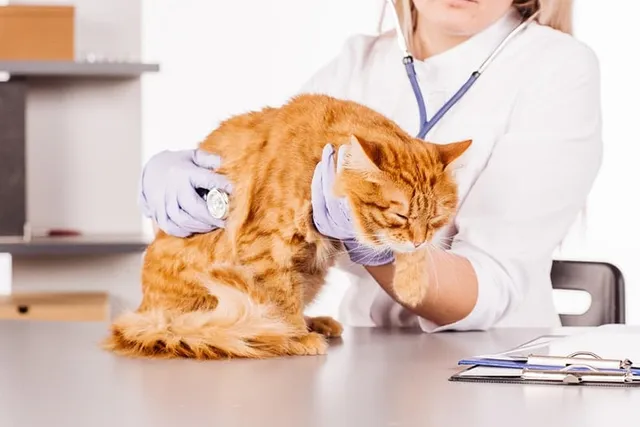
If your cat isn't feeling well and exhibits signs such as vomiting and diarrhea, your veterinarian will start with a physical exam and take a thorough history. During the exam, your veterinarian will gently palpate your cat's abdomen to see if anything feels out of the ordinary, such as lumps, thickened intestines, or abnormally large lymph nodes.
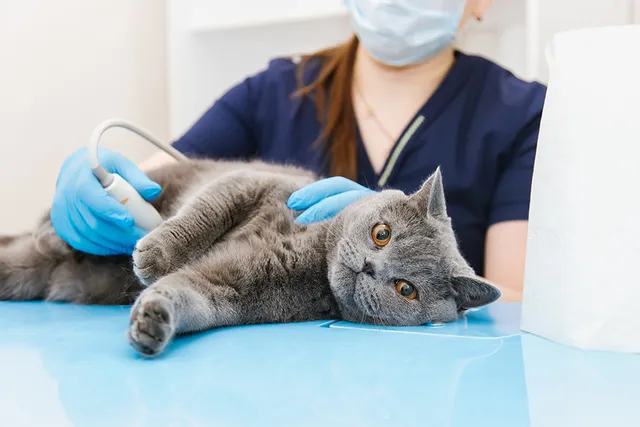
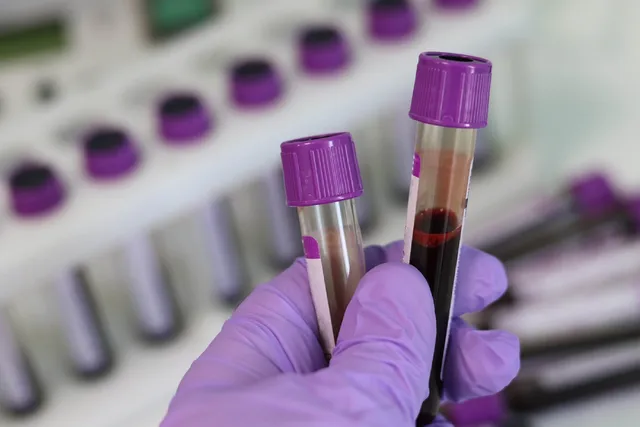
Your veterinarian might start with blood work and a fecal parasite screening test to rule out common causes of gastrointestinal distress, such as roundworms. Blood work may often be normal or reveal mild changes that don't pinpoint a specific reason, but it is essential to rule out certain conditions. They will likely perform radiographs (X-rays) or an ultrasound, or they might refer your cat to a specialist who can perform diagnostic imaging. Endoscopy is another helpful tool, where your veterinarian can scope your cat's stomach and take biopsy samples to evaluate for cancer cells.

How Do I Care for a Cat With Stomach Cancer?
If your cat is a candidate for surgery, your veterinarian may recommend surgery to remove a localized mass. The vet might refer you to a surgical or oncology specialist to develop the best action plan.
Unfortunately, leiomyosarcoma can metastasize to other organs. Because of this, before surgery, your veterinarian will likely perform what Is commonly called a "met check" to look for evidence of metastasis. Typically, that involves radiographs (X-rays) and potentially an ultrasound to look for evidence of cancer spread to other organs.
Your cat's post-operative recovery will likely be at least ten to fourteen days, where they will need an Elizabethan collar or bodysuit to keep your cat from licking or chewing at their incision.
In some cases, chemotherapy may be indicated. Your veterinarian and oncologist will work together to develop the best medication regimen for your cat.
Your cat will likely need supportive care while they are being treated, including:
- Anti-nausea medications like Cerenia (maropitant) help reduce the risk of your cat vomiting.
- Appetite stimulants like Elura (capromorelin)
- Pain medication, which could be a non-steroidal anti-inflammatory drug like Onsior (robenacoxib) or a steroid like prednisolone as a potential adjunct to chemotherapy
Your cat will likely need a diet that is easily digestible. Some diets your veterinarian could recommend include:
- Purina ProPlan Veterinary Diet EN
- Hill's Gastrointestinal Biome
- Hill's i/d
Frequently Asked Questions (FAQ)
How common is stomach cancer in cats?
Stomach cancer is considered much less common in cats than in dogs. In cases of reported neoplasia in cats, only 0.4% to 0.7% were cases of tumors associated with the stomach.

Are there other types of stomach cancer in cats?
Several other cancers can affect the stomach and other areas of the gastrointestinal tract. One cancer is adenocarcinoma, which starts in the glandular tissue of the stomach and can spread. Lymphoma is another intestinal cancer in cats. It develops in lymphatic tissue and can originate or spread throughout the body.
Is stomach cancer painful for cats?
Stomach cancer can be painful, so your veterinarian might look at options to treat your cat's discomfort. Many chemotherapy protocols utilize prednisolone, a steroid, which can also relieve some discomfort and pain. You must not give a non-steroidal anti-inflammatory like Onsior or meloxicam if your cat takes a steroid due to the risk of gastric ulcers and other complications.
Signs that your cat could be in pain include:
- Inappetance
- Withdrawn behavior
- Abnormal vocalizing
- Excessive grooming leading to hair loss
- Aggression
Conclusion
While stomach cancer is not common in cats, it is a potential cause of weight loss, vomiting, and diarrhea. Leiomyosarcoma is a cancer of the stomach and intestinal smooth muscles. Treatment typically involves surgical removal of the mass if it has not spread, although your veterinarian might recommend chemotherapy as an option, especially if there is evidence of cancer metastasis. Other treatments involve highly digestible diets and symptomatic treatment, such as anti-nausea medication, as needed.
Sources
Featured Image Credit: Tyler Olson, Shutterstock
Expert cat care, straight to your inbox
News, insights, and useful advice, delivered to you.

No spam — unsubscribe anytime.
By signing up, you agree to our Terms & Conditions and Privacy & Cookies Policy.
How useful was this post?
Click a star to rate. You can leave written feedback afterwards. (We read all feedback.)
Dr. Samantha Devine DVM (Veterinarian)
Samantha Devine is a practicing veterinarian who loves to share her experience with animal species and their health. Whether it's a guinea pig question or a pressing matter about something your cat ingested, she strives to provide clear answers. She is passionate about preventative care and firmly believes in the old adage, "An ounce of prevention is worth a pound of cure."
Dr. Devine has been practicing veterinary medicine for over 12 years and has spent a great deal of that time writing online to educate pet owners. In addition to general practice small animal medicine, she has worked with horses. zoo animals and aquatic species. She enjoys all aspects of preventative medicine, from nutrition to vaccines.
Dr. Devine received her degree from the Virginia Maryland Regional College of Veterinary Medicine.