How Do Vets Neuter Cats: Our Vet Explains Step by Step

In this article
Congratulations! You just adopted your first boy cat. Maybe it’s a small kitten you found outside. Maybe it’s an older cat that’s been in the shelter for years. You may have heard of getting your cat neutered but don’t quite understand the procedure. Keep reading for reasons why we recommend neutering your cat, in addition to an explanation of what to expect from the procedure.

Pros of Neutering
To clarify, neutering, otherwise referred to castration, is the removal of the testicles in a male cat. This may sound like a cruel procedure, but it is essential to the control of the cat population. If you’ve ever noticed a stray cat in your neighborhood, you know that in some cities this is a huge issue. These cats may or may not have access to clean food and water, can be spreading disease amongst one another, and in some areas can be a source of rabies.
Neutering one male cat can help prevent numerous female cats from getting pregnant. Because female cats can have more than one litter of kittens a year, neutering one male cat can prevent multiple births a year. Even if your male cat is indoor only, if they are not neutered, they are more likely to get out of the house and patrol the neighborhood looking for a mate. Removing the testicles will remove the sex hormones involved with driving your male cat to want to roam.
Male cats who are not neutered will also commonly spray or mark in the house. If you’ve ever experienced it, tom cat ( un-neutered male) urine has an especially pungent odor. Male cats will spray and urine mark to let others know where their territory is. They will also do this to let any females in the area know they are available to mate. If you neuter your male cat, spraying and urine marking will typically be significantly reduced or stop the behavior altogether. Not to mention that the odor of the urine will change, becoming less overpowering.

Will My Cat Be Sedated for a Neuter?
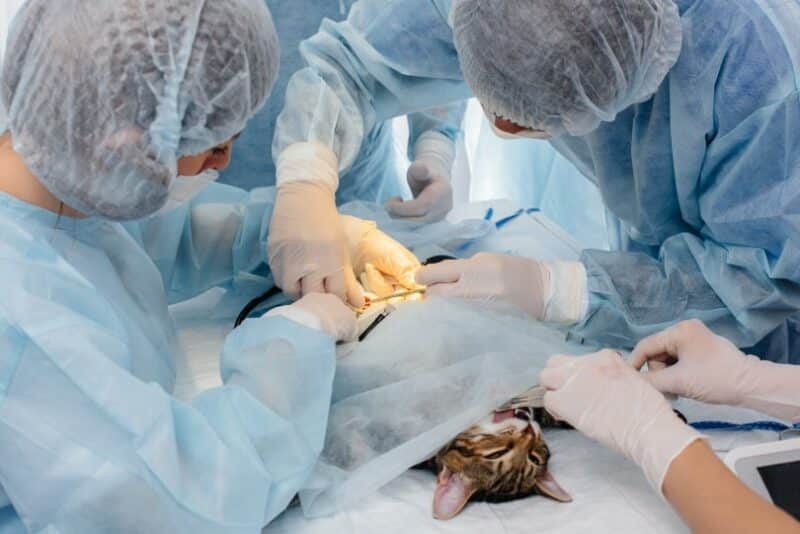
Feline castration is a straightforward procedure for veterinarians. First and foremost, the cat is completely sedated. Depending on the age of the cat, size of the cat, and any underlying health problems, sedation will vary. Most veterinarians prefer some type of injectable sedation for a cat neuter. This means that your cat will receive one or multiple medications mixed together in a syringe. These medications may be given into the vein or muscle, making your cat fall asleep and be unaware of the procedure.
Some of the medications used can be reversed when the procedure is completed. Others are left to wear off naturally after a few hours, allowing your cat to be sedated and wake up slowly from their procedure.
Some veterinarians prefer to also use a gas, or inhalant anesthesia, for the procedure. This may be more common for cats who are older or have underlying health issues making some injectable sedatives risky. Your veterinarian will decide what is best based on your cat's age and health.
Neutering Step-By-Step Explanation
- Step One: Sedation—your cat is put to sleep and feels no pain.
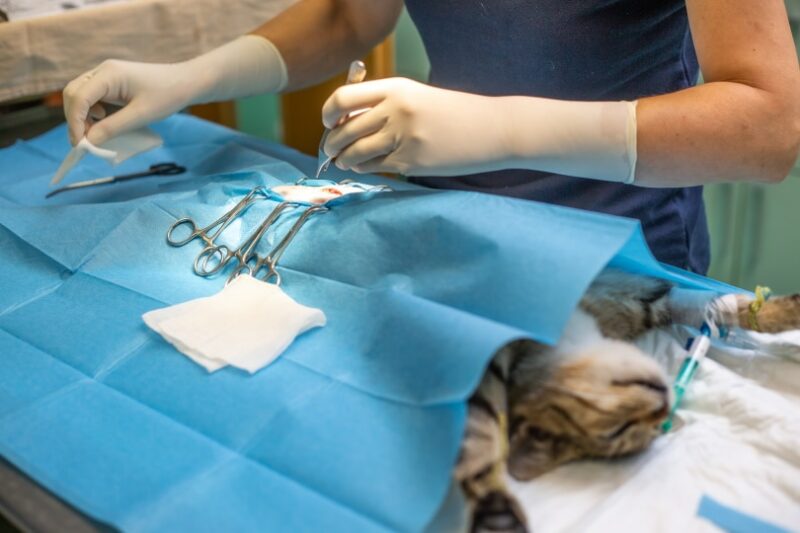
- Step Two: The surgical area is prepped. This means that all the hair from the testicles is removed with a clipper and the testicles are scrubbed to sterilize the surface. The surgical area is often isolated from other surrounding body parts with a drape to keep the surgical area sterile. Using a drape prevents any dirt and debris from other areas from being dragged into the surgical site.
- Step Three: An incision is made through the skin and tissue of the scrotum over one testicle. Gentle pressure is used to pull the testicle through the incision.
- Step Four: Either using suture or tying the cord and vessel upon itself, a knot is made. The knot is made between the body and the testicle itself.
- Step Five: A sterile blade is used to then remove the testicle below the knot. Ensuring the knot is still in place prevents any hemorrhage or excessive bleeding from the surgical site.
- Step Six: Steps 3–5 are repeated for the second testicle.

Healing & Aftercare
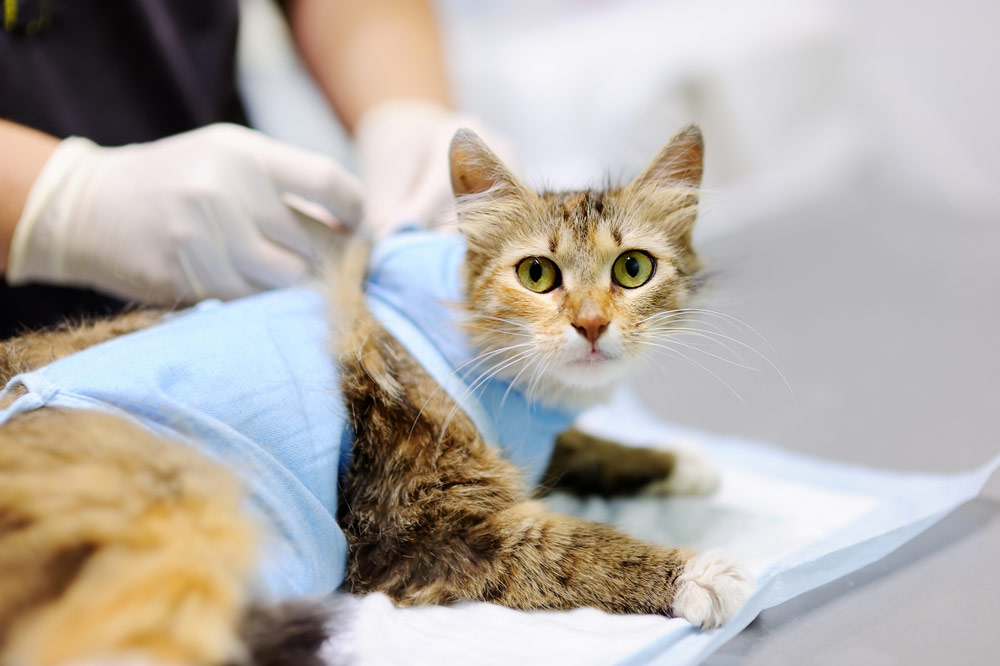
The two small incisions that were made into the scrotum to remove the testicles are left open to heal. Leaving the incision open helps prevent further trauma to the scrotum, allows for mild drainage of any blood or inflammatory fluid, and allows for a much quicker procedure. Keep in mind that veterinarians who work in animals shelters are often castrating well over a dozen male cats a day. The quicker and safer the procedure, the more cats that veterinarian can perform surgery on to help control the population.
The cat is often given an injection of pain medication and sometimes an antibiotic at the time of surgery. Antibiotics may or may not be given as the surgery is considered sterile and is very quick. The antibiotic will be up to the discretion of your veterinarian.
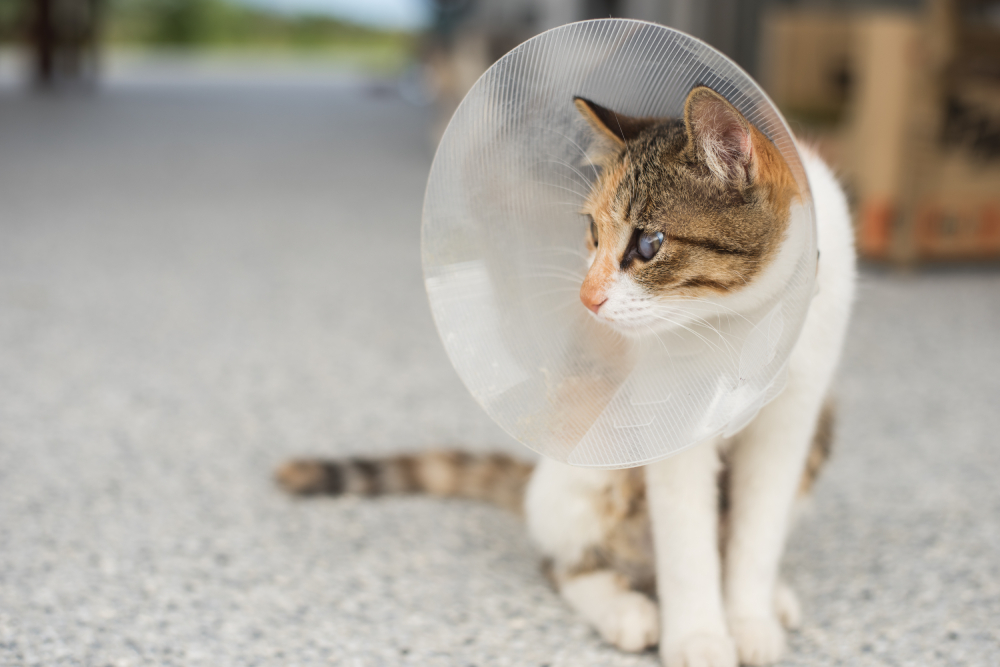
Your cat will likely go home with a cone around their neck (called an Elizabethan collar) so it cannot turn and lick at the surgical site. Any licking by your cat or potentially a housemate will cause trauma to the site, prevent healing, and may cause a serious infection. As with any surgery, your cat needs to be kept quiet and isolated for 10-14 days, allowing the surgical site to heal. Excessive activity such as running, jumping and playing may cause the surgical site to swell, become painful, bleed, or have healing complications. Most people will keep their cat in a bathroom or laundry room while they heal, or a dog crate large enough to fit a bed, litter box, food, and water.
Will My Cat’s Personality Change?
Most people do not notice a significant change in their cat’s personality or behavior after a neuter aside from a reduction in urine marking and spraying. Most cats, if playful before the procedure, will still be playful after. If your cat was lazy before a neuter, chances are they will still be lazy after. If your male cat shows any aggression, neutering may help to calm them down. However, it’s not guaranteed.
Conclusion
In conclusion, a feline neuter is a fairly common, straightforward procedure. It is recommended to help control the stray and feral cat population, reduce disease spread amongst cats, decrease the chance your male cat will try to run out of the house and reduce urine marking and spraying. While neutering isn’t without risk, the benefits and low risk of the procedure greatly outweigh most risks.
Sources
Featured Image Credit: elwynn, Shutterstock

Expert cat care, straight to your inbox
Vet-reviewed advice, behavior tips, and the best of Catster. Free, and you can unsubscribe anytime.
By signing up, you agree to our Terms & Conditions and Privacy & Cookies Policy.
Dr. Kim Podlecki DVM (Veterinarian)
A graduate of The Ohio State University College of Veterinary Medicine, Dr. Podlecki has more than 12 years of experience working with small animals in the United States. Dr. Podlecki worked almost exclusively in emergency and specialty medicine for more than 10 years before transitioning to relief in both general practice and ER. Dr. Podlecki also owns her own consulting company (renewvetconsulting.com) with the focus of helping veterinary hospitals prioritize their staff to promote a healthier internal culture.
Join the conversation
Ask a question, share your story, or send private feedback.