Cat Spraying vs Peeing: Vet-Verified Differences

In this article
Dealing with your cat peeing inappropriately in your home can be exceedingly frustrating. Many cat owners don’t realize there’s a difference between your cat peeing and spraying. While it may not seem like it, the distinction is important because several factors can cause your cat to spray or inappropriately pee in your home. There are also different approaches to remedying both issues.
Your vet can help you determine which issue you’re dealing with, but there is information your vet will likely need from you. It’s essential to keep track of the behaviors your cat is exhibiting, along with tracking your cat’s litter box usage and any changes your cat may have recently experienced. Here are some of the differences between cat spraying and peeing.

Overview of Spraying
Spraying is an instinctive behavior exhibited primarily by male cats, especially those that are intact, but it is also sometimes exhibited by female cats in heat. Even then, it’s an undesirable behavior that most people work to prevent.

Why Do Cats Spray?
Spraying primarily marks territory and lets other cats know they’re there. It leaves behind information about the cat via pheromones and odor.
While most cats spray to mark territory and show sexual receptivity, they will also do it if they feel threatened or stressed. Spraying isn’t specific to intact cats, but it occurs at a much higher rate in cats that are intact.
Characteristics of Spraying Behavior
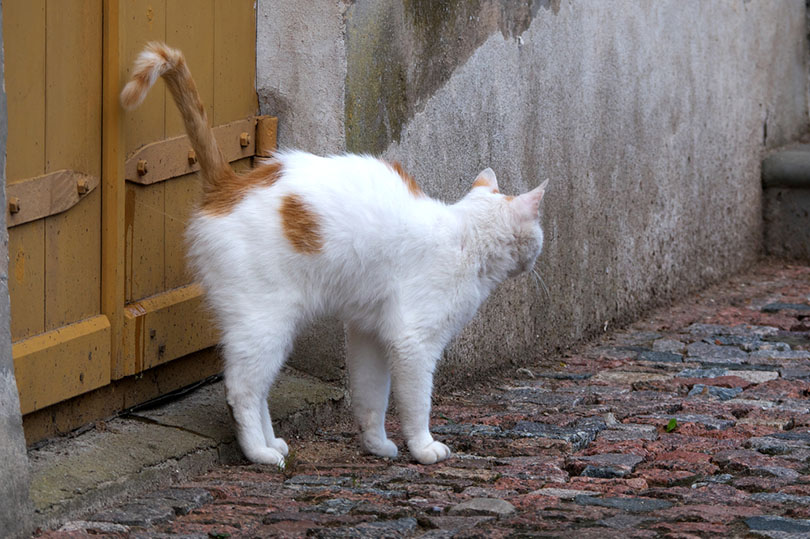
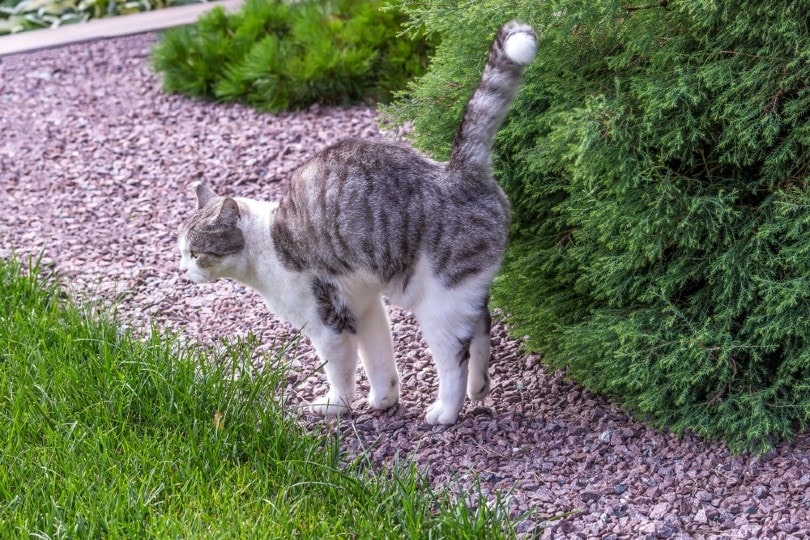
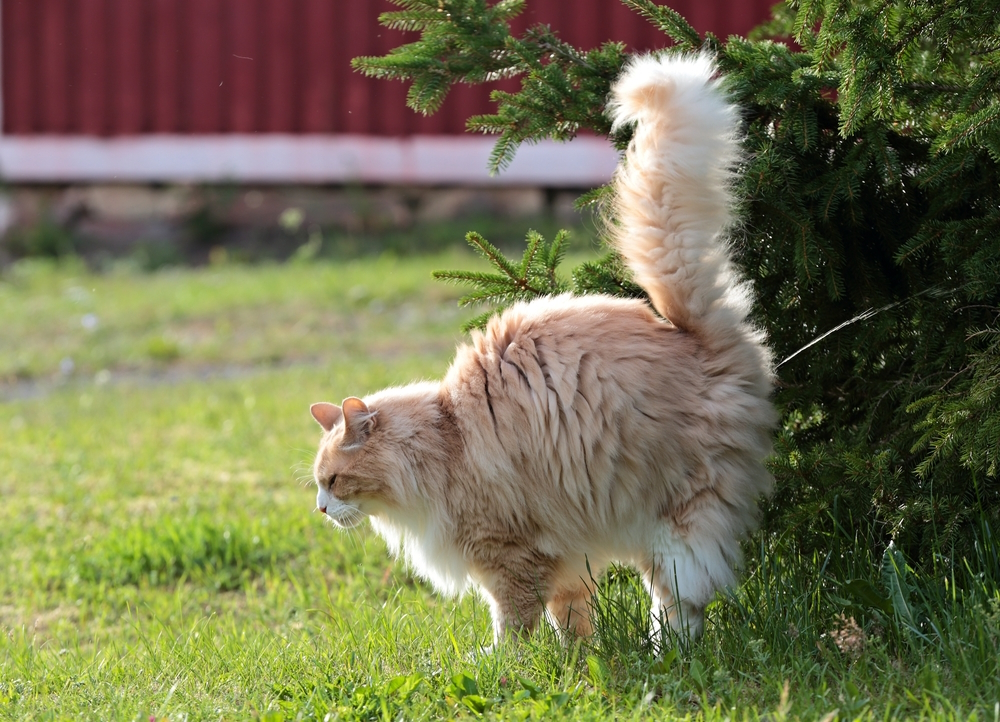
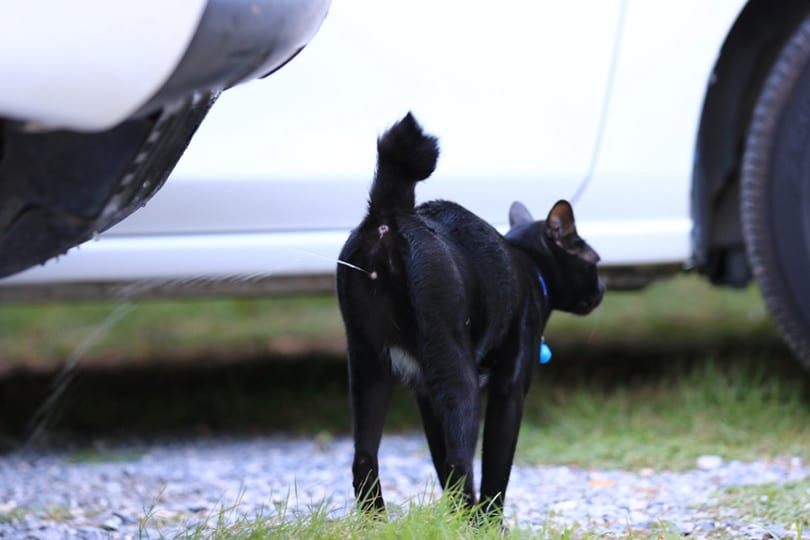
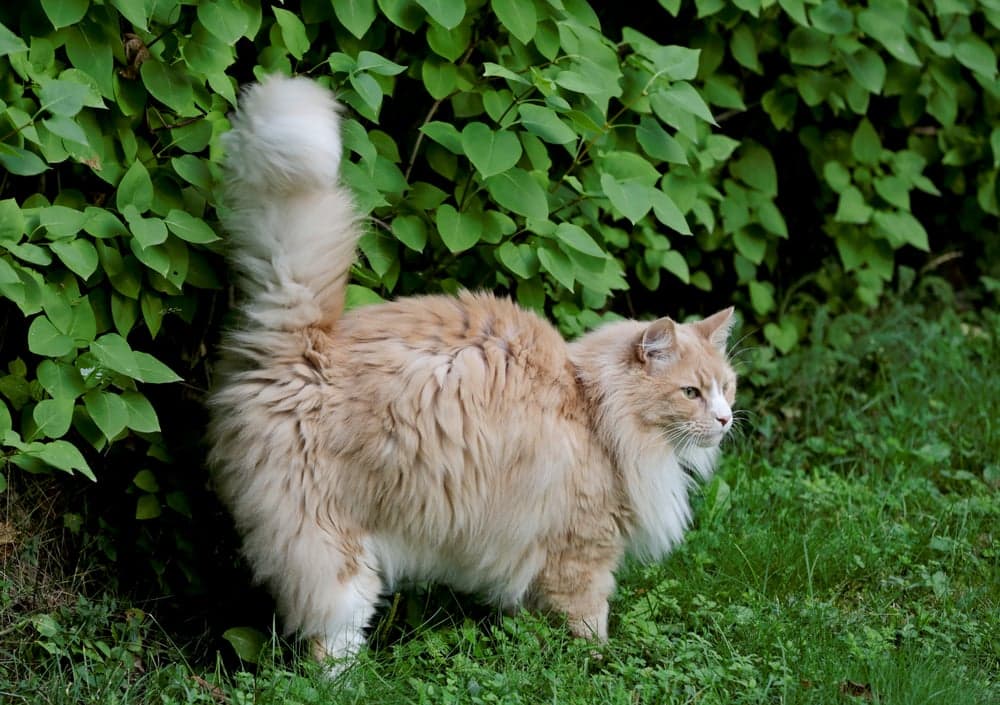
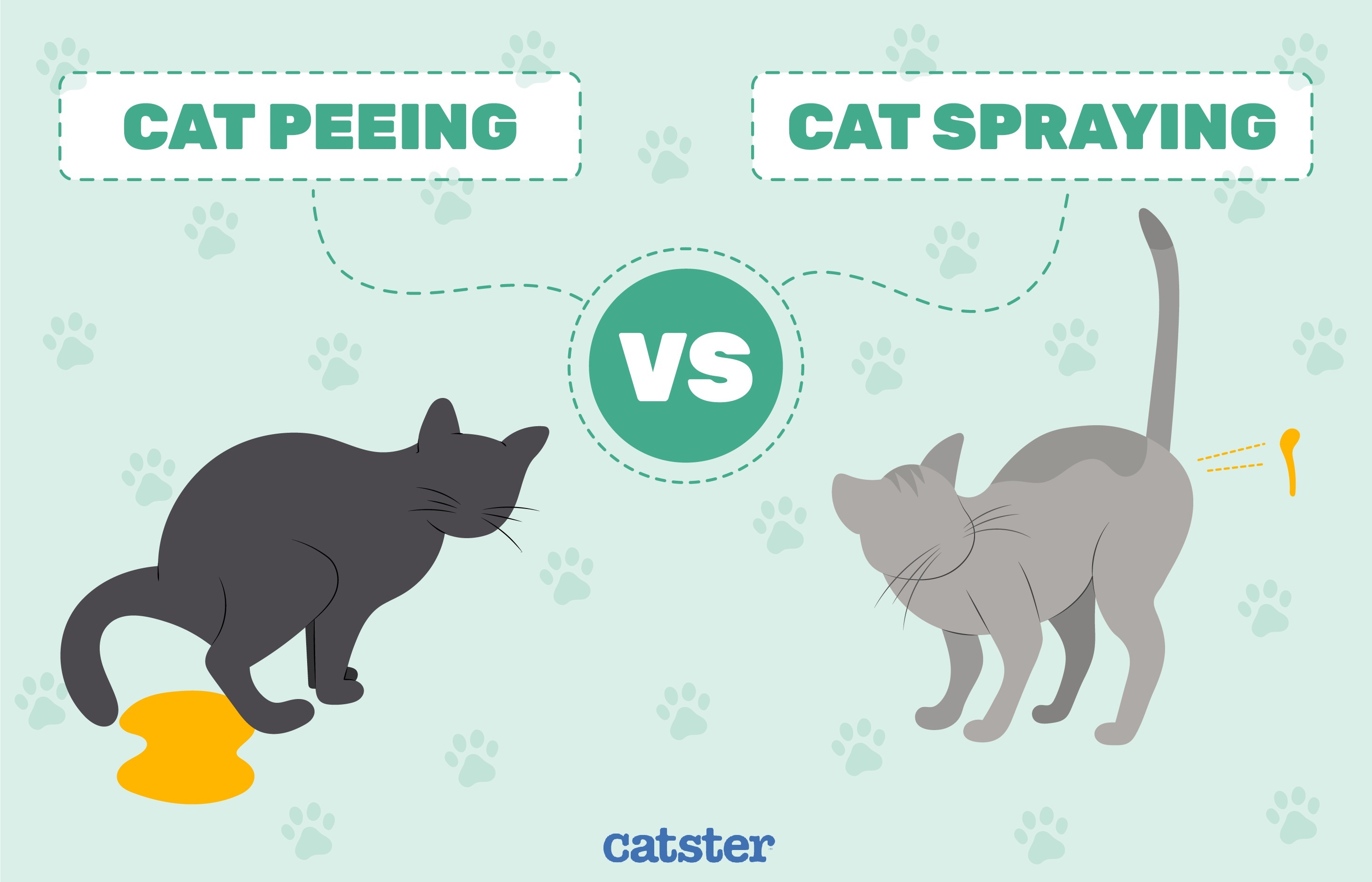
When a cat is spraying, they typically do so on a vertical surface, like a wall or fence. Generally, they will hold the tail high, sometimes vibrating or shaking it, especially toward the base. Male cats, especially tomcats, may have more pungent-smelling urine when spraying than females.
Neutering can decrease the unpleasantness of the odor, and in most cases, it will also reduce the likelihood of spraying. Spraying usually consists of small amounts of urine instead of emptying a full bladder.
Cats spray the same spot or area repeatedly but may also seek new spaces to spray and mark. Either way, you'll need a reliable cleaner to help eliminate the smell.
Did you know there's an enzyme cleaner that does it all? The Hepper Advanced Bio-Enzyme Pet Stain & Odor Eliminator Spray permanently removes the very worst smells and stains (truly, everything you can imagine!), and they offer a 100% satisfaction guarantee! Click here to get yourself a bottle.

- ADVANCED ENZYMATIC CLEANER - Penetrates the most stubborn smells and stains at the deepest molecular levels to dissolve any pet mess you encounter and lift it away at the source.
- FOR ANY MESS, ON ANY SURFACE - This pet odor eliminator cleans your carpets, floors, furniture, fabrics, and more. Whether it's urine, feces, vomit, or drool, you can erase all foul spots and smells!
- FRESH, NATURAL ODOR - Our unique formulation doesn't rely on dangerous or unpleasant chemical fragrances to get the job done. We eradicate smells and stains, not just cover them up.
At Catster, we’ve admired Hepper for many years, and decided to take a controlling ownership interest so that we could benefit from the outstanding products of this cool cat company!

Overview of Peeing
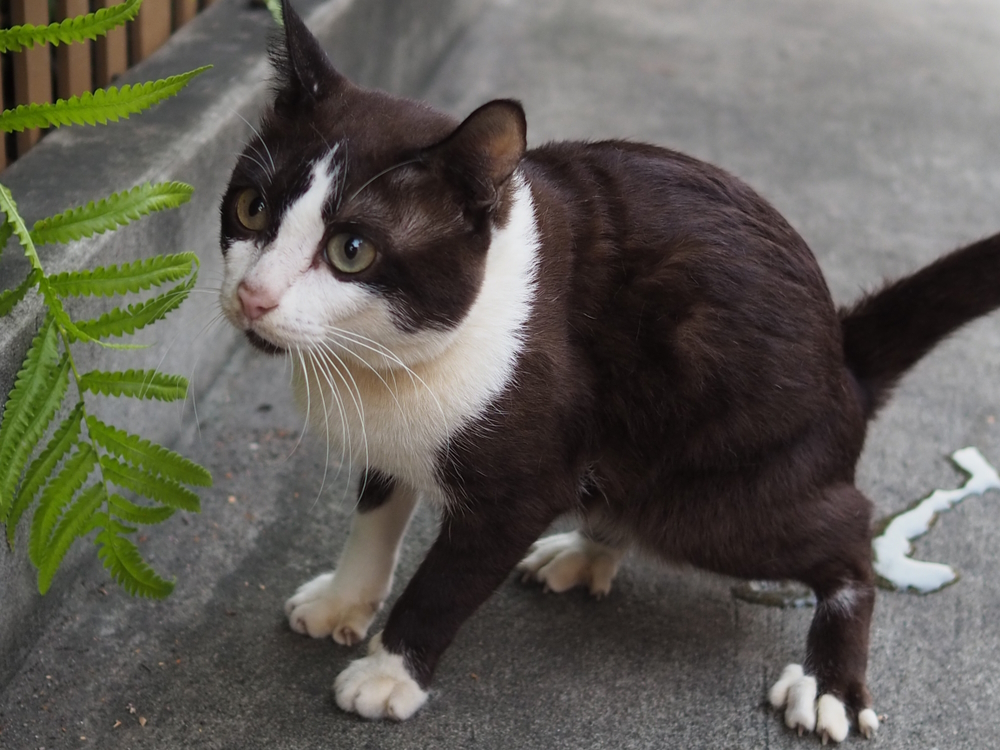
Peeing is a normal bodily function, but cats are pretty particular about where they urinate. When your cat starts peeing in odd places or skipping the litter box, you should take notice and start looking for causes. The causes of inappropriate urination in cats can range from behavioral to serious medical issues.

Why Do Cats Pee Inappropriately?
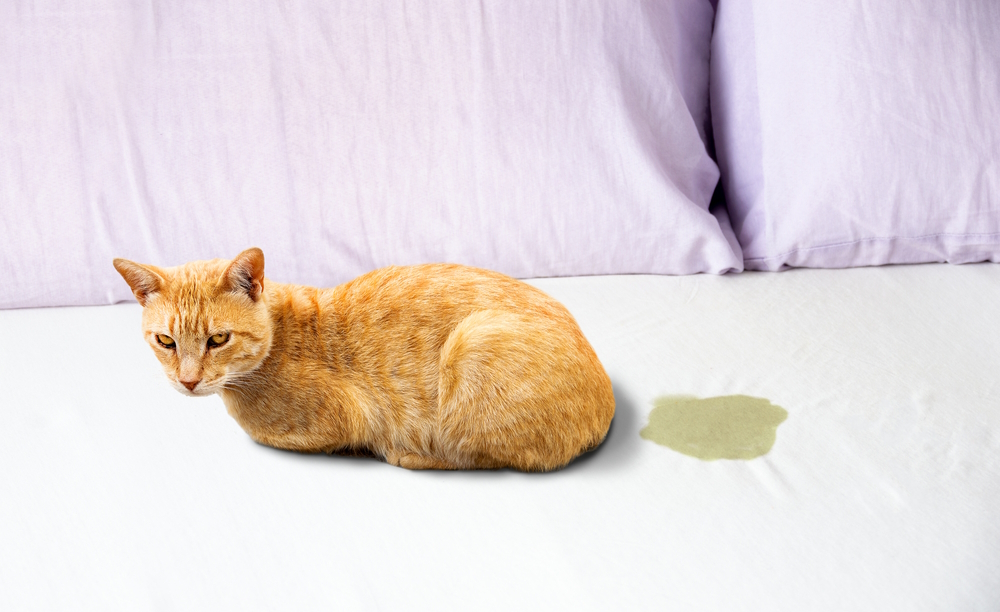
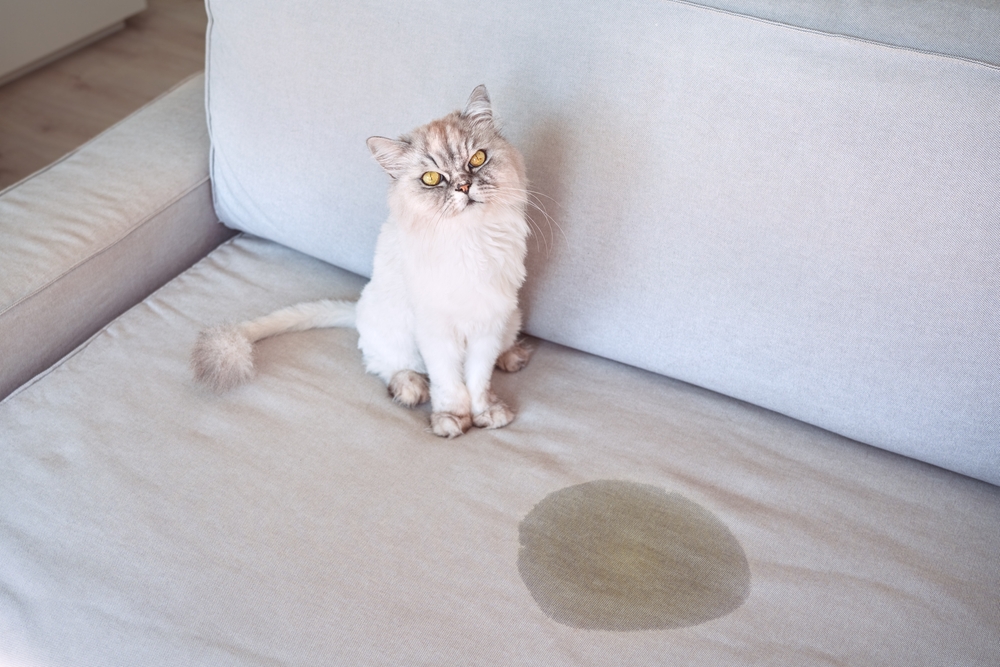
There are multiple reasons your cat may be peeing inappropriately. Some cats will begin avoiding the litter box due to stress or environmental changes, but it can be different from spraying. If your cat has a UTI or other medical issue causing discomfort in the litter box, they may begin peeing elsewhere.
In their mind, the litter box is the cause of their discomfort, and peeing outside the litter box doesn’t carry the same stress. Other issues can lead to this behavior, like stress related to other illnesses and changes in the home. Bringing home a new pet or a baby, moving, and rearranging a room can cause your cat to pee outside the litter box.
If you are concerned or have questions about your cat's health, you can also speak to a vet from the comfort of your own home to help make a plan. They can determine when an in-clinic vet visit should be made.
Characteristics of Inappropriate Peeing
Technically, spraying would fall under the “inappropriate peeing” umbrella. However, if your cat is peeing due to illness or stress but isn’t attempting to spray or mark, they will likely squat and urinate instead of peeing on a vertical surface. You may see blood in the urine if your cat has a UTI, bladder stones, or other issues affecting their urinary tract.
Your cat’s urine may not have a strong odor if they are peeing inappropriately unless they have a UTI or overly concentrated urine. It’s not uncommon for cats that are peeing inappropriately to seek out unusual places to pee, like in bathtubs and sinks.
| Spraying | Peeing |
| Common in intact cats | Can occur in any cats |
| Marks territory or indicates stress | Indicates stress or illness |
| Occurs on a vertical surface | Can occur on any surface |
| Often accompanied by strong-smelling urine | Usually normal-smelling urine |

Conclusion
Spraying is a behavior that is often associated with intact male cats but can occur in any cat. Inappropriate peeing can occur with any cat and indicates that your cat is likely exhibiting stress or reacting to an illness. Both spraying and inappropriate peeing are issues that may require veterinary intervention to correct.
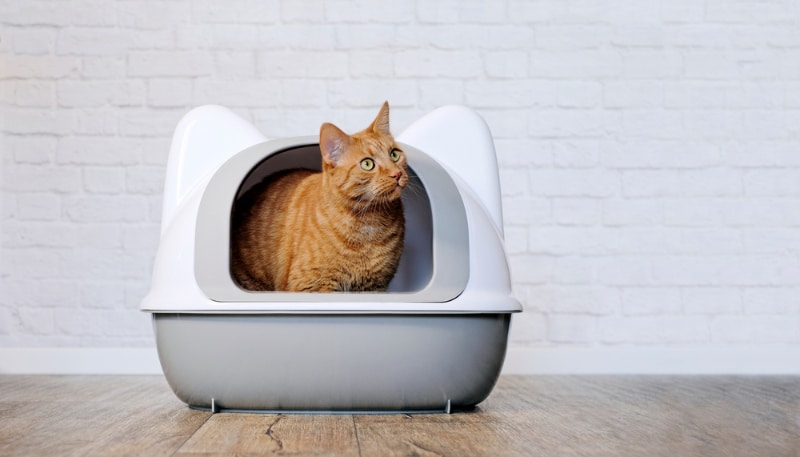
Monitoring your cat’s litter box usage can help you identify when an issue is developing. It can also help you and your vet determine what is causing your cat to start spraying or peeing inappropriately. Make sure to keep a stable, calm environment with plenty of comfy hiding places to keep your cat free of stress and decrease the chances of either issue developing.
Related Read:
Featured Image Credit: You are free to use this image but we do require you to link back to Catster.com for credit

Expert cat care, straight to your inbox
Vet-reviewed advice, behavior tips, and the best of Catster. Free, and you can unsubscribe anytime.
By signing up, you agree to our Terms & Conditions and Privacy & Cookies Policy.
Brooke Billingsley, a former veterinary assistant for nine years, became a nurse in 2013. She lives in Arkansas with her boyfriend of five years, surrounded by her beloved pets: three dogs, two cats, five fish, and two snails. Brooke has a soft spot for special needs animals, caring for a three-legged senior dog and a widely known cat with acromegaly and cerebellar hypoplasia. She has developed a keen interest in fish keeping and is always learning how to provide the best environment for her aquatic pets. In addition to her passion for animals, Brooke enjoys gardening and maintains a vegetable garden during the summer. She stays active with yoga and received her 200-hour yoga teacher certification in 2020. Brooke also hosts a podcast that delves into folklore and myth, dedicating her spare time to research and writing. She embraces the philosophy that every day is an opportunity for learning and growth, continually working to acquire new skills and knowledge.
Join the conversation
Ask a question, share your story, or send private feedback.