Get

In Your Inbox

Catster is reader-supported. When you buy via links on our site, we may earn an affiliate commission at no cost to you. Learn more.

Is It True That All Cats Spray? Vet-Verified Facts & FAQ

Share

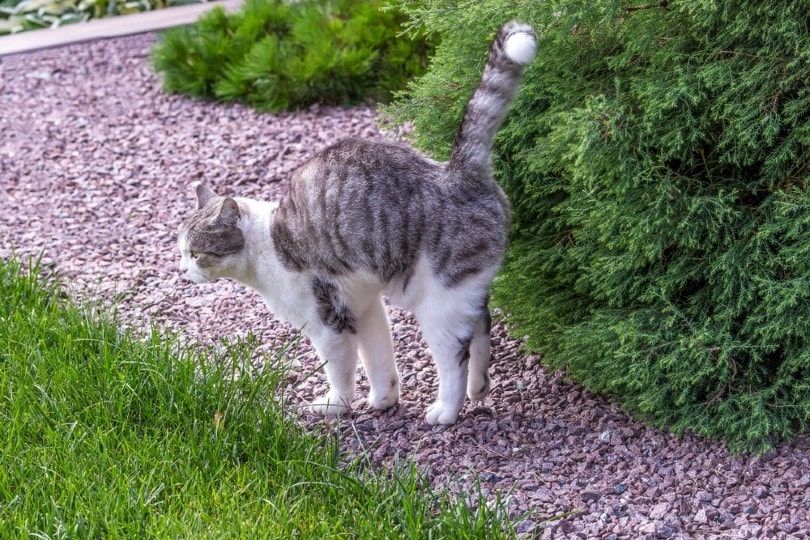
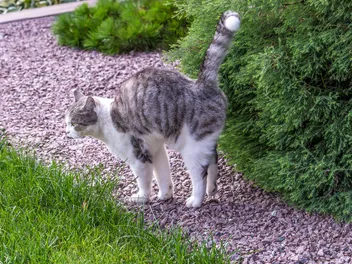
tabby cat spraying outdoors to mark territory

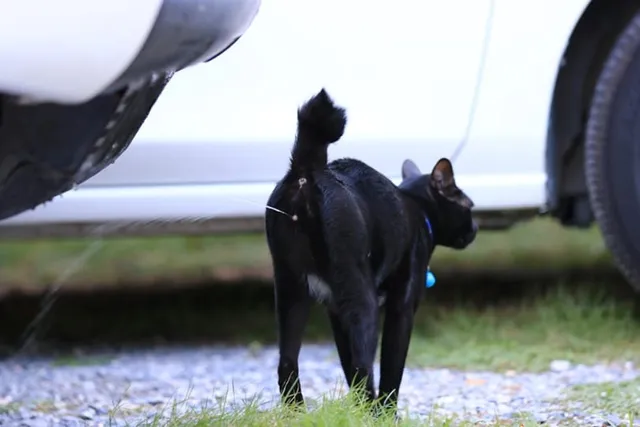
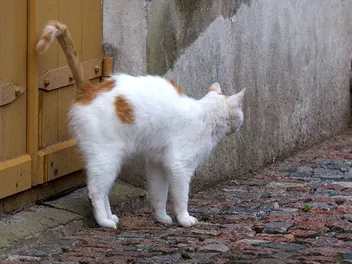
Even though all cats have the ability to spray, not all of them do it. This is good news for cat owners. You may have a cat that never sprays at all. Spraying means the cat backs up against a surface, like a wall or a tree, and spray urine on the surface instead of squatting and peeing on the ground or in the litter box. While this is a messy process, the pheromones in the urine make it more pungent than usual.

In this article, we look at the reasons cats spray and how you can help stop yours from doing this in the house.

divider cat paw scratch oct 2024

Do All Male Cats Spray?

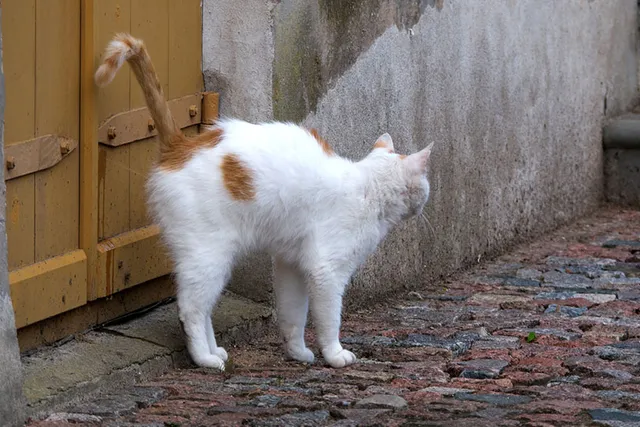
a white cat spraying the wooden gate
Image Credit By: Igor Shoshin, Shutterstock

Male cats are more likely to spray than female cats, but all cats are capable of spraying urine. Whether they do or not depends on a few factors. If you get a male kitten, having them neutered before they reach 6 months of age will all but guarantee that the cat will not spray. Around 95% of cats will show a decrease in spraying after being spayed or neutered.

Why Do Cats Spray?

Male and female cats spray for many of the same reasons. Cats communicate with each other through scent, like many other animals. Cats spray outdoors to leave messages for one another.

Cats spray urine to mark their territory. If another cat comes across this scent, they’ll know that the area has already been claimed. Even if you have an indoor cat, they can see another cat through the window or door and spray in the house as a response.

Cats may spray in multi-cat households to establish dominance and set boundaries. Spraying may also indicate stress. Moving to a new house, changes in routine, or the arrival of a new pet in the house can trigger this behavior.

Spraying is also done as a way to attract mates. Male and female cats will spray to let other cats know that they are available. If your cat was spayed or neutered after one-year-old, this behavior could remain with them long term.

Spraying vs Peeing Outside the Litter Box

You are free to use this image but we do require you to link back to Catster.com for credit

Anytime that your cat pees outside of the box, it can be frustrating. It’s important to know exactly what’s happening so you can keep your cat healthy.

Cats that spray will do so vertically, so the urine sprays straight from them instead of being aimed toward the ground. This means you’ll find sprayed urine on walls, furniture, and other vertical surfaces.

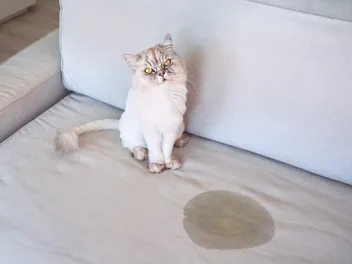
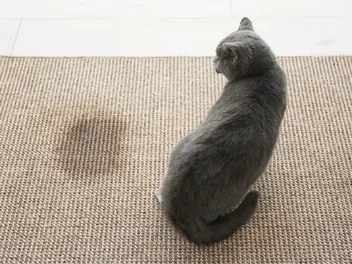
Coming across a puddle of pee on the floor doesn’t necessarily mean your cat is spraying, but it’s concerning when this happens. When cats urinate outside of the litter box, there may be an underlying problem.

If you notice that your cat is peeing outside of the litter box, the first thing that you should do is bring them to the vet for an exam. Peeing outside the litter box can be a sign of, among other possibilities, a urinary tract infection. You’ll want to eliminate any health problems that could be causing this behavior, especially if it’s not typical.

How to Stop a Cat From Spraying

Once a health problem is ruled out, getting your cat spayed or neutered should stop the spraying behavior. If your cat is already neutered or spayed and perfectly healthy, try to identify what might be causing this behavior. Did your cat’s routine change recently? Are they stressed? Once you can pinpoint the stressors, you can work to eliminate them.

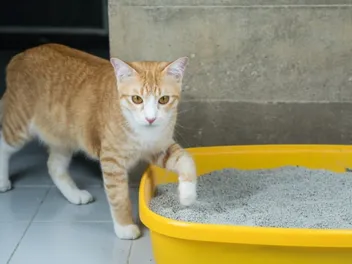
If you have another cat in the home, make sure each cat has their very own litter box, food bowl, water dish, and bed. Cats may not feel like spraying for territory if they don’t feel that theirs is threatened. Clean any sprayed urine thoroughly, leaving no trace of the scent behind. If the scent remains, cats will continue to spray in that area.

Talk to a vet or a cat behaviorist to see if anything else can be done to help your cat feel more comfortable in your home.

If you need to speak with a vet but can't get to one, head over to PangoVet. It's an online service where you can talk to a vet online and get the advice you need for your pet — all at an affordable price!

PangoVet_Mention-in-Content for PangoVet2 save money

divider cat paw scratch oct 2024

Conclusion

Your cat spraying in the house can be upsetting, but there are things that you can do to try to stop it from happening. Rule out any health issues that might be causing this behavior, and make sure your cat is spayed or neutered. If you still can’t figure out the reason that your cat is doing this, your vet or a cat behaviorist may be able to help.

See Also: 


Featured Image Credit: Helen Liam, Shutterstock

Want content like this delivered to you?

Sign Up For Our Newsletter

News, insights, expert advice, and everything cat

* By submitting, you agree to our Terms & Conditions and Privacy & Cookies Policy.


How useful was this post?

Click on a star to rate (you can leave written feedback after clicking submit)

Help us improve Catster for pet parents!

Your feedback really matters.

What did you like about this post? Also how can we improve it?

Join the conversation

Leave a Reply

You’re very welcome to leave a comment or question. Please know that all comments must meet our community guidelines, and your email address will NOT be published. Let’s have a positive and constructive conversation.


Talk With A Vet Online

Peace of mind,
anywhere, anytime

Affordable vet advice

Do Cats Cause Schizophrenia? Scientists Find a Link – Here’s What It Means

Being a fierce advocate (and occasional recipient of) mental health support and awareness, the term ‘crazy’ is not one I like to fling...

One in 100 Cats Gets Diabetes – Here’s How to Catch It Early

One in every 100 cats develops diabetes.1 That’s not a rare, unlucky condition reserved for cats with obvious health problems. It’s common enough...

Dramatic Rescue Turns Into Dramatic Reunion

What started as a routine call for the RSPCA became a heroic, five-hour rescue featuring one trapped and traumatized cat, an emotional family...

Ask Dr. Paola – Help! How Do I Know if it’s Ear Mites! (May 4, 2026)

Welcome to our “Ask Dr. Paola” series, where every Monday we bring expert advice straight from Dr. Paola Cuevas (MVZ) to help our...

More related

9 Interesting Cat Kidney Facts

Cats entertain us with acrobatic moves and amusing behavior, and some cat owners may believe that their strange pets come from another planet....

Exotic Shorthair Munchkin Cat Mix: Info, Pictures, Temperament & More

The Exotic Shorthair Munchkin mix is a new breed known as the Minuet or Napoleon. They’re playful, loyal, affectionate, and make an excellent...

How to Find a Reputable Cat Breeder: 13 Vet-Reviewed Questions To Ask

Excited Cats advocates for adopting before shopping, though we fully understand there are many reasons for seeking a breeder. So, we encourage it...

National Microchipping Month 2026: When & What It Is

The facts of lost pets tell a sad tale. Roughly 15% of cat owners will lose their pet within 5 years. Outdoor felines...

Keep reading

Can Cats Control Their Tails? Vet-Verified Positions & Movement Explained

Cats use their tails to communicate to the world through body language. You can tell a lot about a cat’s disposition by what their tail is doing. With that being said, cats have full control of their tails. The tail...

tail of a cat on vintage background

Why Do Cats Like Crinkly Things? 5 Possible Reasons & Risks

Cats are intrigued by objects that make a crisp, crackling sound. Something about their curious personalities makes the compelling sound of a crinkly toy irresistible, much like how they’ll clamor to the chime of a bell. But why, out of...

Cute cat on outdoor chair playing with empty plastic water bottle

Can Cats Eat Canned Chicken? Vet-Reviewed Info to Know

Everyone knows that cats are obligate carnivores. In other words, they evolved to eat meat entirely. They don’t typically eat anything else, though they can stomach some other foods. For this reason, giving them canned chicken may seem like a...

Can Cats Eat Canned Chicken

Are Tomato Plants Toxic to Cats? Vet-Reviewed Houseplants Examined

There’s nothing more exciting than welcoming a new cat into your life. Having a pet involves taking good care of it and buying the proper cat food, plenty of kitty litter, and some toys. If you plan on allowing your...

Catster_Are Tomato Plants Toxic to Cats

Can Cats Eat Ketchup? Vet-Reviewed Diet Facts & FAQ

When considering what kind of human foods are okay to give to our cats, we’re usually thinking in terms of actual food and not condiments, such as mayonnaise or ketchup. However, there’s always a chance our feline friends could manage...

Can Cats Eat Ketchup

Can Cats Eat Lentils? Vet-Reviewed Nutritional Facts & FAQ

We’ve all heard that curiosity killed the cat, and that saying has a foundation in reality; cats explore their world with their mouths, and ingesting foreign substances and objects can be fatal! Lentils are a superfood for humans that packs...

Catster_Can Cats Eat Lentils_v1_Dec 3 2024

Why Does My Cat Keep Meowing? 7 Reasons Why They Won’t Stop

Meowing is one of your cat’s main sources of communication with you. Most meows are harmless and hearing them is a normal part of your day. But if your cat is meowing excessively, you may wonder why. Read on to...

cat meowing or chirping by the window

Are Fiddle-Leaf Figs Toxic to Cats? Vet-Reviewed Houseplants Examined

With over 400,000 different land plant species on our beautiful green planet, indoor plants have become extremely popular. 1 Plants clean the air that you live in, are low maintenance, reduce noise, look nice, and add life to any space....

Catster_Are Are Fiddle-Leaf Figs Toxic to Cats

Love Cats? So Do We! Join the Catster Community

Stay informed with expert pet care insights delivered straight to your inbox! Discover professional guidance on animal behavior, feeding tips, trusted product picks, and much more.


Sign up for the Catster Email Newsletter

Stay informed with expert pet care insights delivered straight to your inbox! Discover professional guidance on animal behavior, feeding tips, trusted product picks, and much more.