Wet vs. Dry Cat Food: Vet-Approved Facts & Key Differences


In this article
When it comes to choosing between dry cat food and wet cat food, the decision can get confusing on which one you should select. Is dry cat food the better option, or should you choose wet food for the moisture content?
Some cat owners may find it hard to influence their cats to drink water, and wet food provides more hydration. On the other hand, dry food keeps longer than wet food, and it doesn’t require refrigeration once opened. Nonetheless, the intention of this article is to examine the differences between the two to help you make an informed decision based on your cat’s nutritional requirements. Let’s explore this topic more in-depth.

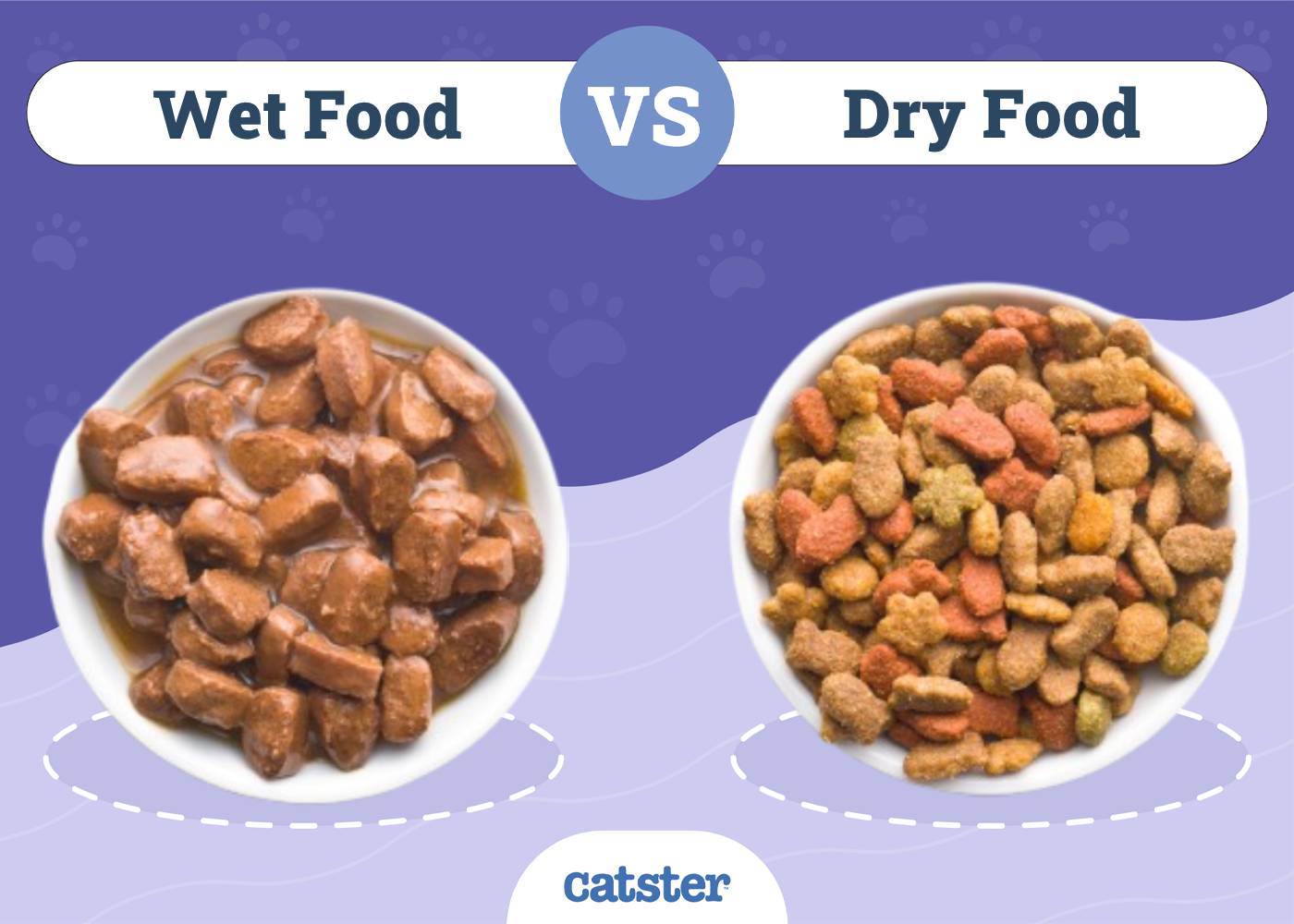
Visual Differences

At a Glance
Overview of Wet Cat Food

Wet Cat Food Benefits
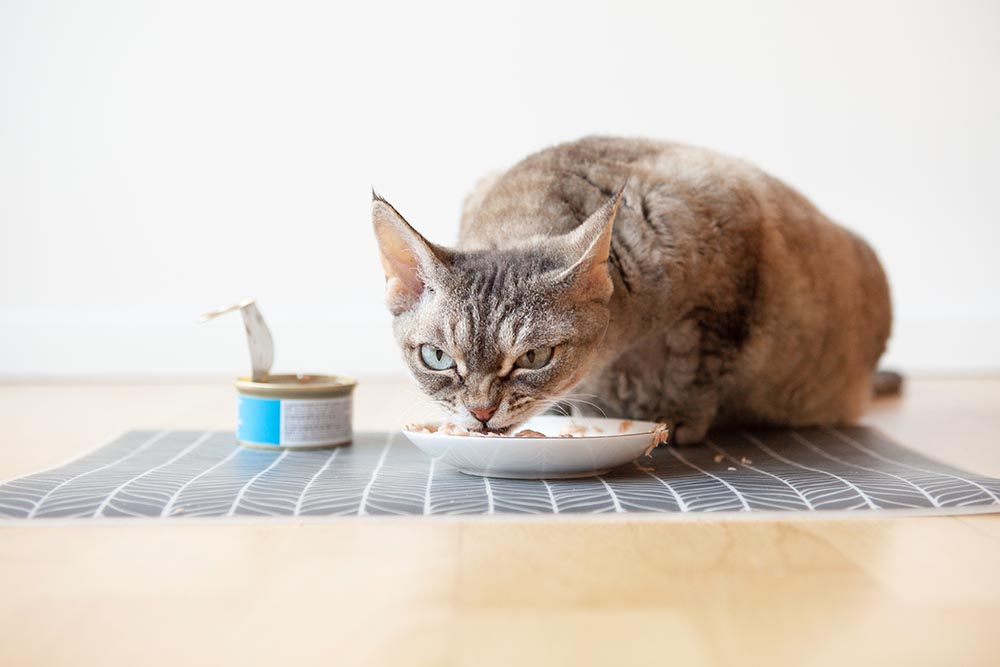
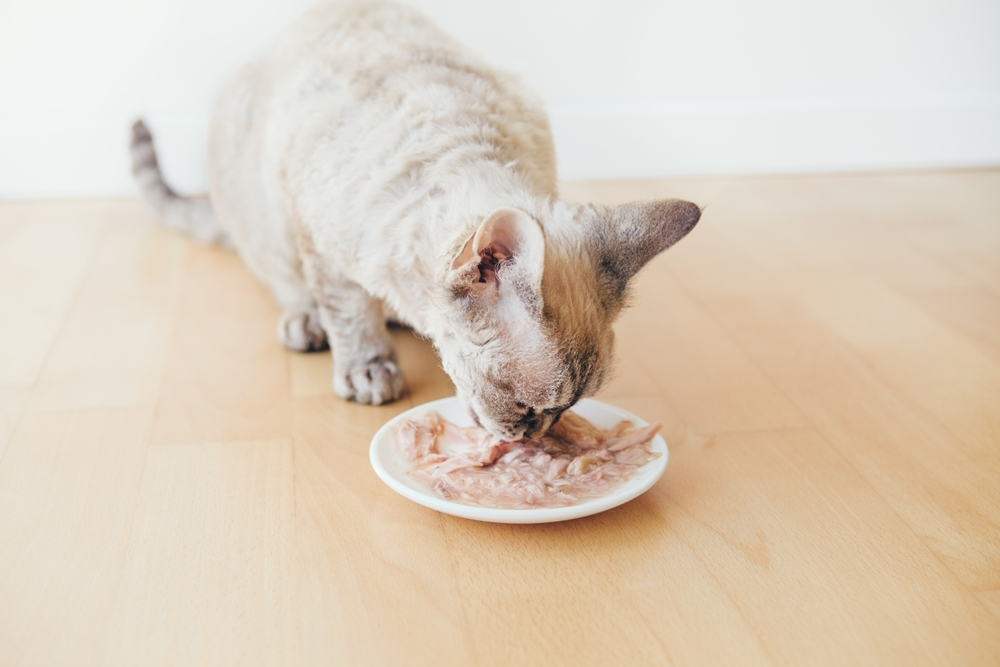
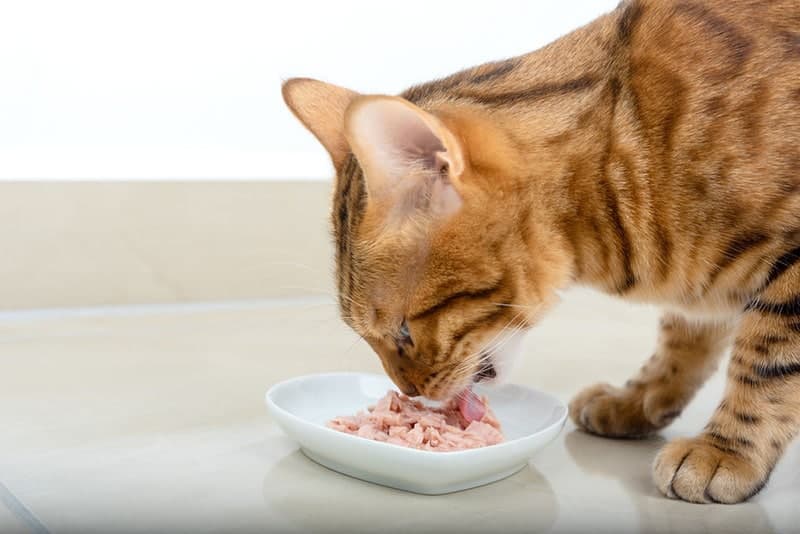
Wet cat food has a few benefits worth considering. First, wet cat food has a much higher water content (roughly 65%) than dry kibble, which is beneficial if your cat does not drink as much water as needed to stay hydrated. However, you should still provide fresh water 24/7 for your cat regardless if he eats wet food or dry food.
Tip: You can try a cat water fountain to entice your cat to drink—the flow of the water is intriguing and will strike your cat’s curiosity.
Wet food is also highly palatable, which is a perk for picky eaters. Wet food is also easier to eat, which is most beneficial for young or senior cats or cats with dental issues. You also have a variety of flavors that will surely please your kitty and the odor of wet food usually draws more interest.
For overweight cats wet food can be a better option due to the lower amounts of calories compared with dry food. Wet foods can also be helpful for cats prone to certain health conditions such as urinary tract problems and constipation- speak to a veterinarian for advice to choose the right food if your cat has underlying health concerns.
Wet Cat Food Drawbacks
One drawback to wet food is the shelf life; once a can or packet is opened, any remaining food requires refrigeration. Uneaten wet food should not be left out for longer than about an hour to avoid bacterial growth, this may not be ideal for cats who like to graze throughout the day. In addition, wet food is typically more expensive than dry kibble.
Wet food may contribute to periodontal disease due to having no crunch to aid in removing tartar; however, this is disputable—some experts conclude that dry kibble does not help prevent periodontal disease unless it is a specially formulated dental food kibble. In fact, the only proven method is regularly brushing your cat’s teeth.
Pros
- Higher water content
- Highly palatable for picky eaters
- Easier to chew for seniors or cats with dental issues
- Better option for overweight cats (lower calorie and carb content)
Cons
- More expensive
- Shorter shelf life
- May contribute to periodontal disease

Overview of Dry Cat Food

Dry Cat Food Benefits
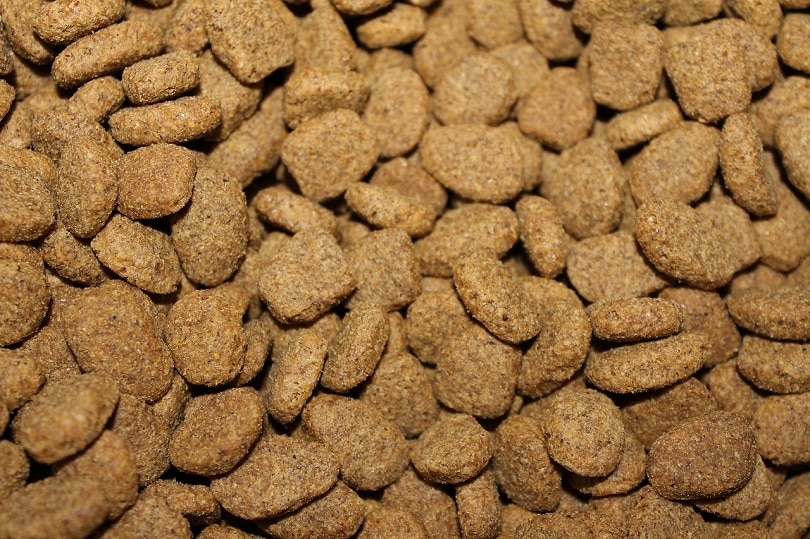
We’ve lightly touched on the benefits of dry cat food; however, in this section, let’s explore the key benefits of dry cat food. A key difference is the convenience factor. Dry food is easy to measure to ensure you’re providing your cat with the appropriate daily amount required for optimal nutrition. The moisture content in dry cat kibble is less than 20%, which gives it a longer shelf life—this is also more cost-effective.
Also, due to the lower moisture content, there is a lower chance of bacterial growth, which allows you to leave the food out for longer. Unlike wet food, you can also leave dry cat kibble in automatic feeders or puzzle toys. Refrigeration is also not required with dry kibble, but keep in mind that it’s recommended to pick up any uneaten dry kibble within 24 hours to prevent overeating.
Dry Cat Food Drawbacks
Even with the convenience of dry cat food, there are still a few drawbacks. For starters, dry kibble may be harder for some seniors to chew or cats with dental issues. Dry cat food is usually more calorie-dense, which can contribute to obesity when you free-feed. It can also be difficult to gauge how much your cat is eating if he doesn’t eat the entire portion in one sitting. Dry cat food is also usually higher in carbohydrates since starches are needed to form the kibble pellets.
Pros
- Convenient
- Longer shelf life
- Budget-friendly
- Widely available
- Less chance for bacterial growth
Cons
- May be harder to chew for some cats
- Free-feeding can lead to obesity
- Higher in carbohydrates

Other Factors to Consider
Can I Mix Wet and Dry Cat Food?
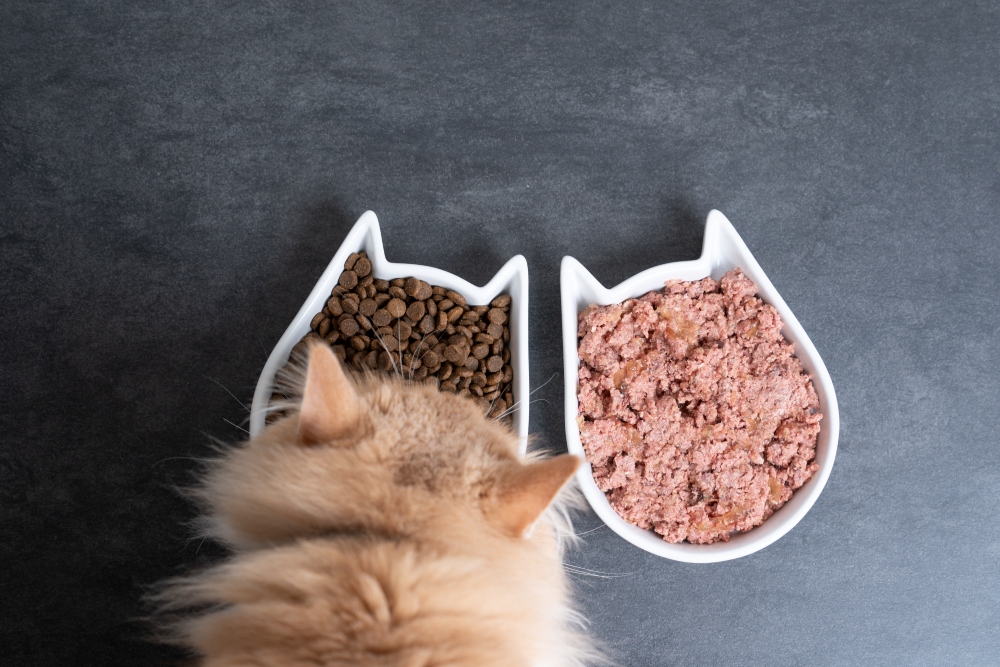
This question is common among cat owners, and the answer is, yes, you can! Since both types of cat food offer particular benefits, why not mix the two? Mixing the two consistencies, or feeding one at each meal, gives your cat more options for texture and flavor, which may prove beneficial if you have a picky eater.
It’s also more cost-effective to provide a mixture of the two—you won’t be spending a ton of money on solely wet food, and the wet food will last longer this way.
Your cat will still need a complete and balanced diet of protein, fats, vitamins, and minerals, and it’s important to note it can be easy to overshoot how much to feed when mixing wet and dry kibble. If you have any concerns or questions, a vet can help you determine the best course of action for feeding your cat to ensure nutritional needs are being met when combining the two.

- NO MESS - The 360° tray on this cat food and water bowl set has a raised design to catch and contain stray crumbs and drips. Protect your indoors and floors from wet and messy meals!
- WHISKER FRIENDLY - Shallow and wide metal containers with flat bottoms ensure your kitty can enjoy mealtime free from whisker fatigue!
- CHEW-SAFE MATERIALS - Kittens and cats love chewing on silicone and soft rubber - but it's a choking hazard. Our cat feeding station materials are anti-chew for a 100% safe feeding frenzy!
If it’s kibble, wet, or a combination of both that your cat enjoys, choosing the right cat bowl to serve it in goes far beyond presentation. Your cat's comfort is at the forefront with the Hepper NomNom Cat Bowl! The unique design benefits cats in many ways - dual stainless steel bowls are shallow and wide to aid with whisker fatigue and slight elevation for proper posture. The wide catch tray ensures that all food (and water!) stays exactly where you’d expect it to be - inside the bowl! Click here to learn more.
At Catster, we’ve admired Hepper for many years and decided to take a controlling ownership interest so that we could benefit from the outstanding designs of this cool cat company!
Do Vets Recommend Wet Food Over Dry?
Your cat’s overall health and preferences will determine which food is appropriate. A veterinarian may suggest dry over wet, or vice versa, or may recommend a combination of the two. Regardless of whether wet or dry, it is important to always feed a high-quality, complete, and well-balanced diet. This means it will contain all the essential nutrients required for your cat to thrive. A vet can give advice on the best option for your cat, and direct you on the required daily amounts to prevent overfeeding your feline.
Can I Add Water to Dry Cat Food?
Yes, you absolutely can! Adding water to dry kibble is a way to enhance the flavor and make a “gravy,” if you will. This is most beneficial if your cat loves the kibble but needs more hydration or if your cat is starting to show less interest in the dry kibble and you don’t want to add wet food. Simply add ¼ cup of filtered water to the top of the kibble to moisten it for easier chewing and to enhance the flavor.
Remember that you shouldn’t leave this out for more than an hour or two to prevent bacterial contamination (as with wet food).
Conclusion
With so many options, we know it can get extremely confusing regarding the best form of nutrition you should feed your beloved kitty. As you can see, both dry kibble and wet food have advantages and disadvantages, and the appropriate food type will depend on your cat’s overall health and individual preferences. Your veterinarian is an excellent resource to utilize when trying to determine the best route to take, and we recommend doing so before changing your cat’s diet.
Not every cat has the same nutritional needs, and your vet can help you find that perfect balance for optimal health.
You might also like:
Sources
https://www.petmd.com/cat/nutrition/wet-cat-food-vs-dry-cat-food-which-better
https://www.dailypaws.com/cats-kittens/cat-nutrition/cat-food/wet-vs-dry-cat-food.
https://www.purina.com/articles/cat/nutrition/wet-vs-dry-cat-food
https://www.comfortedkitty.com/wet-vs-dry-cat-food-which-is-better/
https://www.hepper.com/benefits-and-downsides-of-wet-food-for-cats/
https://www.petmd.com/cat/conditions/urinary/feline_idiopathic_lower_urinary_tract_disease
https://vcahospitals.com/know-your-pet/cats-nutrition-and-periodontal-disease
Featured Image Credit: Jiri Hera, Shutterstock

Expert cat care, straight to your inbox
Vet-reviewed advice, behavior tips, and the best of Catster. Free, and you can unsubscribe anytime.
By signing up, you agree to our Terms & Conditions and Privacy & Cookies Policy.
Rachel Giordano is a Pensacola, Florida-based musician and writer. She lives with her partner and their two dogs, Sophie, a Boston Terrier, and Aero, a Border Collie/Sheltie mix. Rachel holds a Bachelor of Arts degree in communication and loves writing about all types of cat breeds. When she’s not writing about cats, she loves to write suspense/thriller novels. A musician by night and writer by day, she enjoys sharing her knowledge of the needs and requirements of our furry friends.
Join the conversation
Ask a question, share your story, or send private feedback.