Pyrantel Pamoate for Cats: Our Vet Explains Dosage, Uses & Side Effects

In this article
Pyrantel pamoate, or simply pyrantel, is an antiparasitic substance for treating certain types of intestinal worms in cats. This substance does not kill all intestinal worms, though, so certain dewormers have two or more substances in their composition (including pyrantel) for maximum effectiveness.
Intestinal parasites in cats are more common than most pet parents think, and even deworming your kittens might be necessary. Adult cats can become infested when ingesting parasite eggs, but kittens can become infested with intestinal worms via their mother (transmitted through milk). It’s recommended to talk to your veterinarian about the best deworming treatment for your kitten. Read on to learn more about pyrantel for cats!

What Is Pyrantel Pamoate?
Pyrantel pamoate or embonate is an antiparasitic substance used in the composition of certain medicines (alone or in combination with other antiparasitic substances) to kill intestinal worms. This substance does not kill all species of intestinal worms; it is not effective against whipworms and tapeworms.
Pyrantel pamoate affects the following species of intestinal nematodes:
To kill a wide variety of intestinal worms in cats (including whipworms and tapeworms), vets can recommend drugs that contain a combination of anthelmintic substances. An example of a drug that’s effective against several types of intestinal worms is Drontal Allwormer, which contains praziquantel plus pyrantel embonate/pamoate.
Pyrantel pamoate is a depolarizing neuromuscular blocking agent that acts on intestinal worms by paralyzing them. As a result, the worms will no longer be able to move, and the body will eliminate them through the feces. The most popular brand names include Nemex® and Strongid®.
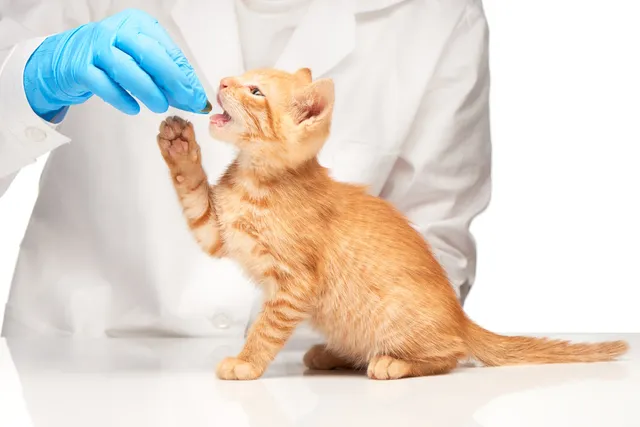
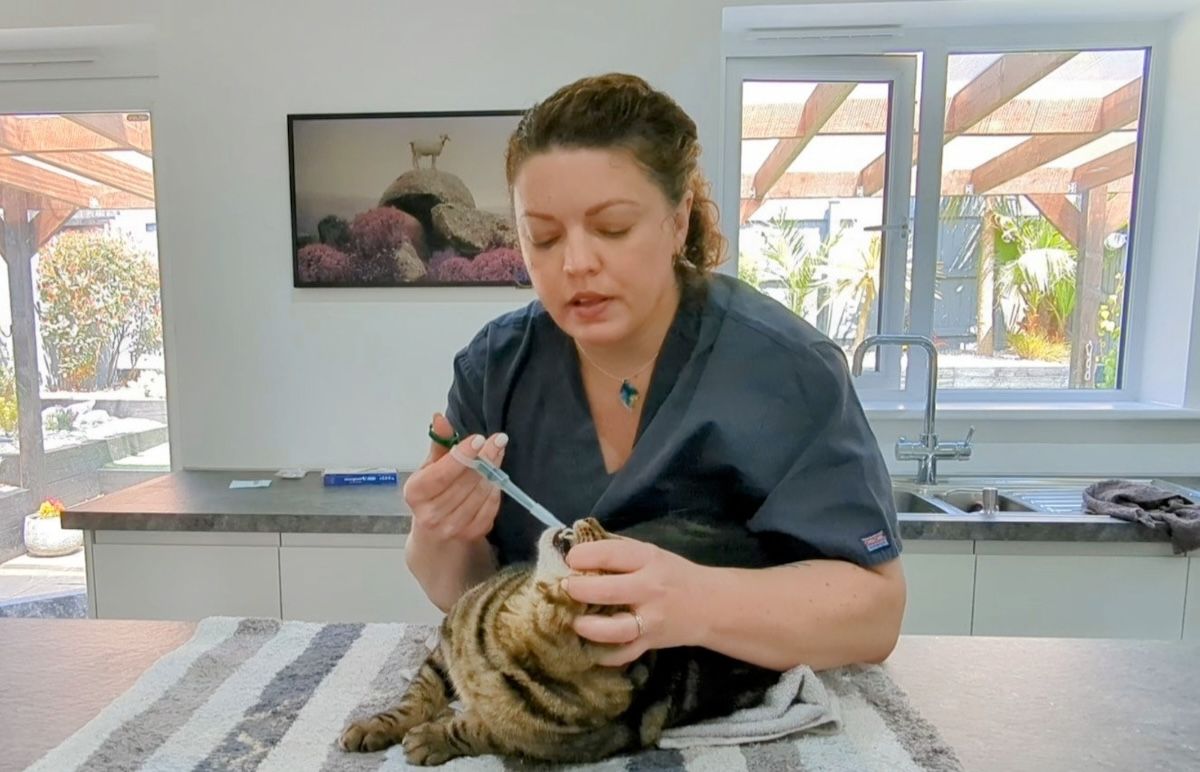
Pyrantel pamoate is available in three pharmaceutical forms: tablets, liquid, and oral paste. Products should be stored below 30°C (86°F), and oral suspensions must be shaken well before use because they might separate. Like many medications, it should be protected from direct sunlight.


How Is Pyrantel Pamoate Given?
Pyrantel pamoate is available in three pharmaceutical forms, each with its own concentrations:
- Tablets (22.7 mg, 62.5 mg, and 113.5 mg)
- Suspension (2.27 mg/ml, 4.54 mg/ml, 50 mg/ml)
- Oral paste (180 mg/ml)
The usual pyrantel pamoate dosage for cats is 2.5–5 mg/lbs. (5–10 mg/kg). The dose is repeated after 2–4 weeks or as recommended by your vet.
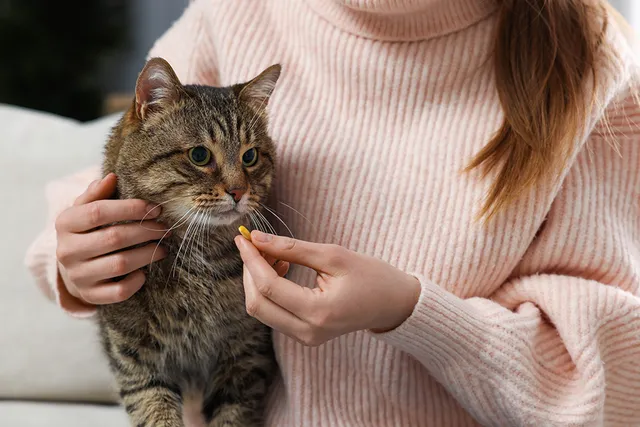
Pyrantel pamoate can be administered at any time: before, during, or after a meal. However, some vets recommend administering the medicine before meals (in the morning on an empty stomach), and feeding should be done 1–2 hours after giving the medicine to your cat.
If your cat experiences vomiting or diarrhea after being given the medication on an empty stomach, it is recommended to give the next dose with a small amount of food.

What Happens if You Miss a Dose?
If you miss a dose, give it to your cat when you remember, and then continue according to the usual schedule. Do not give your cat two doses at the same time because you risk doing more harm. If you give your cat too much pyrantel pamoate, they can experience severe side effects.
If you ever have doubts, do not hesitate to contact the vet.
Potential Side Effects of Pyrantel Pamoate
Pyrantel pamoate is a safe drug with no or very rare side effects when administered correctly. However, there may still be cases when side effects may occur.
The clinical signs may include:
However, it is normal for a cat to have soft stools (or vomiting) for a while after taking pyrantel pamoate. Contact the veterinarian if the clinical signs do not disappear or worsen within 24 hours after administration. Moreover, cats with kidney or liver disease can experience long-term side effects.


Frequently Asked Questions
What Are the Clinical Signs of Intestinal Parasites in Cats?
When a cat becomes infested with intestinal parasites, the clinical signs do not occur immediately, but a certain period must pass (depending on the parasite).
In general, clinical signs occur about 2 weeks after infestation and can include the following:
However, some cats may not show any clinical signs and are still infected with intestinal parasites. In addition, the clinical signs may vary depending on the parasite species.
The appearance of one or more clinical signs indicates that something is wrong with your cat, and you should contact the veterinarian. Remember that many of these clinical signs are common to other diseases, and only the veterinarian can make a correct diagnosis.

What Does a Deworming Schedule Look Like for Cats?
The deworming schedule for cats depends on several factors, such as:
Kitten Deworming Schedule
- Your kitten's first deworming should be done at 2 or 3 weeks of age, then you should repeat it every 2 weeks until the age of 12 weeks.
- Between the ages of 3 and 6 months, deworming should be done once a month.
- After the age of 6 months, the kitten will be dewormed once every 3 months, twice a year, or as recommended by the veterinarian.
Adult Cat Deworming Schedule
The deworming schedule for adult cats will depend on the environment in which they live. As a result, those that live outdoors or indoor/outdoor should be dewormed once every 1–3 months. These cats present a higher risk of infection with intestinal parasites.
Cats that live only indoors should be dewormed once or twice a year.
Conclusion
Pyrantel pamoate for cats is an effective anthelmintic substance in the treatment of certain species of intestinal parasites. This substance is not effective against whipworms or tapeworms. To cover these two types of intestinal worms, there are dewormers that contain another anthelmintic substance in addition to pyrantel.
Pyrantel is available in several pharmaceutical forms, and the usual dosage for cats is 2.5–5 mg/lb, with repetition every 2–4 weeks or as recommended by the vet. Side effects are rare when the appropriate dose is administered. If you missed a dose, give your cat their medicine when you remember, and then follow the usual schedule. Do not give two doses at once because overdosing can lead to severe side effects. If your cat shows persistent or severe clinical signs after administration, contact your veterinarian immediately.
Featured Image Credit: thodonal88, Shutterstock
Expert cat care, straight to your inbox
News, insights, and useful advice, delivered to you.

No spam — unsubscribe anytime.
By signing up, you agree to our Terms & Conditions and Privacy & Cookies Policy.
How useful was this post?
Click a star to rate. You can leave written feedback afterwards. (We read all feedback.)
Dr. Iulia Mihai, DVM MSc (Veterinarian)
Dr. Mihai is a vet with over 13 years of experience in laboratory, pet pathology, and cancer. She studied at the University of Agronomical Sciences and Veterinary Medicine of Bucharest, Romania (EAEVE member), where she worked in the laboratory of the faculty clinic after graduation. She has a master’s degree in equine and pet pathology and studied epithelial cancer for her Ph.D. Iulia has a passion for internal medicine and parasitology and started volunteering at the faculty’s clinic in her third year of college. She has worked in a couple of veterinary clinics over the years as an internal medicine specialist. She enjoys writing and teaching people about cat disease prevention, nutrition, behavior, and treatment.