Cat Pregnancy Timeline & Stages: Vet-Verified Week-by-Week Facts


In this article
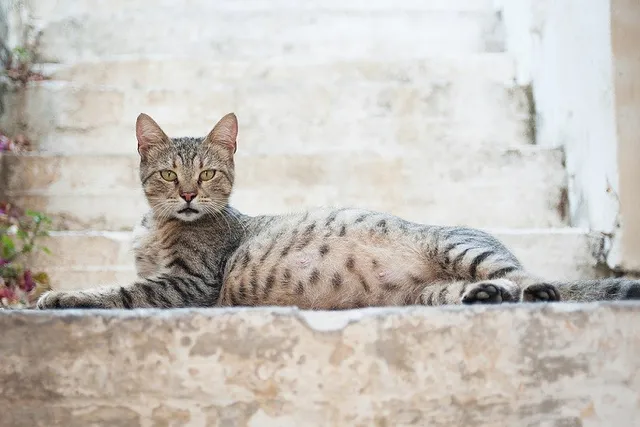
Cats evolved to get pregnant very quickly, and the act of mating stimulates the release of eggs from the ovaries. So the odds of them getting pregnant are very high. Usually, the average feline pregnancy takes about 60 to 65 days. However, it is difficult to figure out exactly how far along she is unless you know exactly when your cat mated.
Cats can usually get pregnant as young as 4 months old, but it's safer to wait until the mother has reached maturity before breeding. It is recommended to spay your cat before she is 4 months old to prevent unwanted pregnancies unless you're planning on breeding her.
If you decide to breed your feline, there are a few things you need to know. We'll look at the signs of pregnancy, a cat pregnancy stages timeline with pictures, and help your cat prepare for the big day.

Signs of Cat Pregnancy

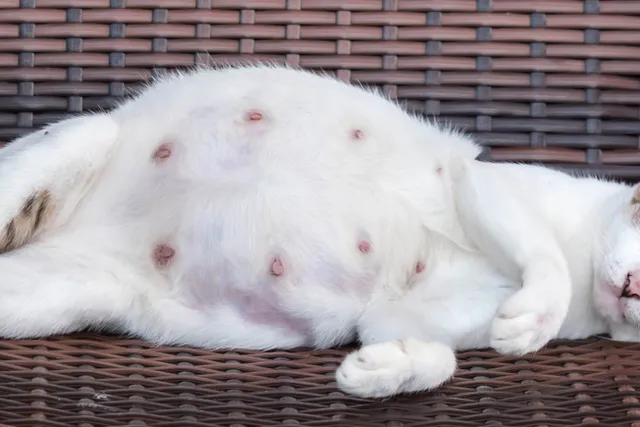
Luckily, many cat pregnancy signs show up reasonably early in cats. The earliest one involves her nipples becoming enlarged and red. This is known as pinking-up and usually occurs around the 2-week mark. This is the earliest sign, though it can be difficult to notice if you've never bred a cat. Your cat may go through a stage of morning sickness, just like people. This sickness can occur at any time of the day, not just in the morning. Depending on how many kittens your cat has, the abdomen will start to swell at some point. She will gain weight, though the bulk of the weight gain will not occur until later in the stages of cat pregnancy.

Dos and Don'ts While Your Cat Is Pregnant
- Do feed your cat kitten food. As soon as you know your feline is pregnant, you should switch her food to one designed for kittens. The formula will contain everything your feline needs to grow kittens.
- Do see a vet early in the pregnancy process. While cat pregnancies usually go off without a hitch, some complications can occur. Finding these issues early can be all the difference, so getting your cat seen by the vet as early as possible is essential.
- Do a double-check for ticks, fleas, and lice. Parasites can put an extra toll on the mother cat while she is pregnant. Plus, they will pass to the babies after birth, leading to diseases and malnourished kittens.
- Do increase your cat's food intake. On top of switching to a kitten formula, you should also increase the amount of food available to your cat. Your feline will probably need to eat 50% more than she did pre-pregnancy.
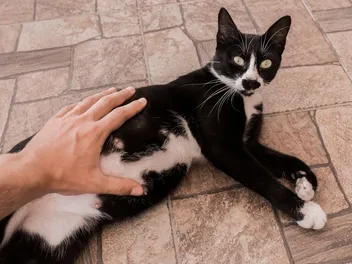
- Don't attempt to palpate your feline's stomach. This usually involves pressing on the stomach to check the number and size of the kittens. A trained professional should only do it to prevent harm to the mother or her kittens.
- Don’t deworm or give any medication to your cat without a vet’s approval, as many medications can be dangerous for the babies.
Our Top Picks: Best Cat Foods for Pregnant Cats
Cat Pregnancy Timeline: Pregnant Cat Week-by-Week

Week 1
This is the week of conception. It can take up to 10 days for the sperm to fertilize the eggs after mating, depending on when they are released. The fertilized eggs will be implanted into the uterus, which takes around 12-14 days.
Your feline will likely not be acting any differently at this point.
Week 2
During this week, the eggs will implant into your feline's uterus, the placenta will start forming, and the embryos will develop. Her hormones will begin changing. However, she will likely not act much differently.
Week 3
This is the first week the kittens begin developing, and their internal organs start forming. Your cat's hormones will continue rising, and she may gain some weight. As her hormones increase, you may notice that her nipples become darker and enlarged. This is the first visual sign of the cat's pregnancy.

Week 4
In week 4, your cat's hormones have reached an all-time high, which means she's likely to develop a few new cat pregnancy signs. Your cat may suffer from morning sickness, and she might be sick all day.
The sickness should not cause your feline to lose weight, however. If this happens, you should take her to see your vet. Instead, her body weight should continue to increase, though you may not notice her bigger size unless you get her on a scale. Also, you should stop picking her up at this point, as this can potentially hurt her and the babies.
Week 5
This is the perfect week to take your pregnant cat to the vet if you haven't already. At this point in the cat pregnancy timeline, the kittens are big enough for your vet to feel, so they may be able to tell you the number of kittens. However, this isn't always accurate, as kittens can easily hide behind each other.
Week 6
Your cat's appetite should be increasing by now. She will likely be eating more than she used to, as all the kittens are starting to get pretty big. She's also bulking up on calories to feed the kittens after birth. Extra nutrition is essential, so ensure she's receiving enough food.
Kitten food is particularly vital at this stage, though we recommend switching as soon as you know your feline is pregnant. Kitten formulas contain extra food your cat needs to thrive and develop the kittens appropriately.

Week 7
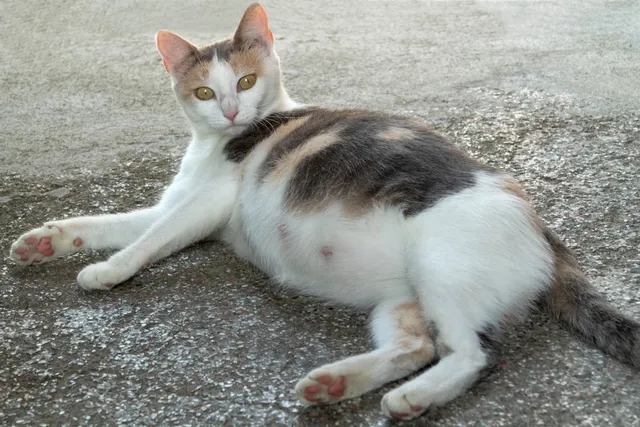
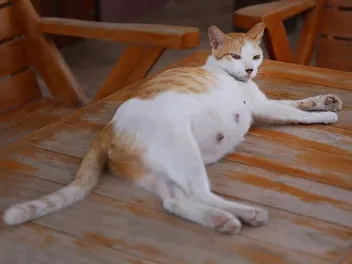
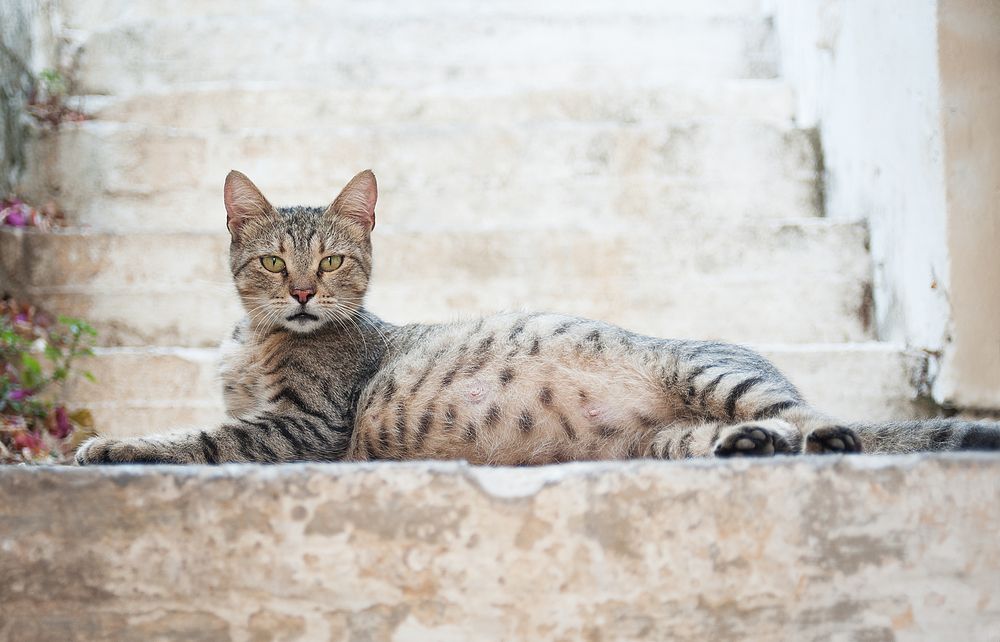
By the 7th week, your cat will have a pregnant stomach. She's in the home stretch now, and it'll be undeniable that your feline will soon give birth. Your cat may begin nesting, so now is a good time to introduce a nesting box, though she won't need it for a few more weeks.
Instead of eating too much, your cat's appetite may decrease as her stomach has less room. Offer meals often to help counteract this.
Week 8
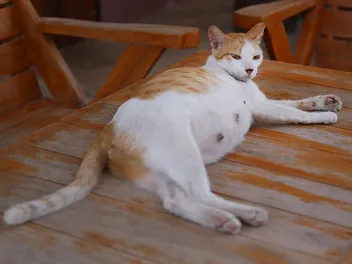
During this week, you may be able to notice the kittens moving in your feline's stomach. Their rolls and kicks should be pretty evident, especially if she lets you get up close to her belly. Your cat's nipples will swell more and lose fur as they prepare to feed the kittens after birth. She will begin grooming herself often, mostly due to the hormones. Her stomach hair will begin to fall out as well. Again, this is due to the hormones that allow the kittens to nurse more easily after birth.
Her appetite may still not be what it was a few weeks earlier. You should continue to offer food frequently or allow her to graze as she wants to. She may also begin producing milk this week, especially if she has already had a litter. Otherwise, it'll happen next week.
Week 9
Some cats will deliver their kittens during week nine. During this week, your cat may act anxious and paced. She will begin nesting if she hasn't already. Her appetite will be at an all-time low since her kittens have reduced the amount of stomach room she has. Meowing, painting, and other signs are common and usually a sign that labor is close.

Week 10
Some cats will carry their kittens into week 10. Some will not. This may be related to the breed and the size of the litter. Sometimes, cats are just wired to carry their kittens longer. Your cat should go into labor by the end of this week. If she hasn't, it is time to call your vet.
Usually, this isn't an indication that something is wrong. Instead, it is possible that the eggs took longer to implant than usual, resulting in a later due date.

How to Best Prepare for Labor
Truthfully, when it comes to your feline giving birth, there isn't much you can do. This will largely rest on your cat's shoulders. However, you need to prepare a birthing area for your cat. This should be done around week seven to give your cat lots of time to nest in the box and prepare it to her liking.
The box should be in a warm, quiet room where the cat is unlikely to be disturbed. It shouldn't be near other animals or in a high-traffic area. Otherwise, your cat probably won't use it. The box should be packed with newspaper or shredded paper. If you don't shred the paper, the mother cat will likely shred it slightly as needed.
You should have towels and blankets on hand during the birth, but you should interfere as little as possible. Mom will likely know what to do, and you don't want to distract her.
Post-Birth Recommendations
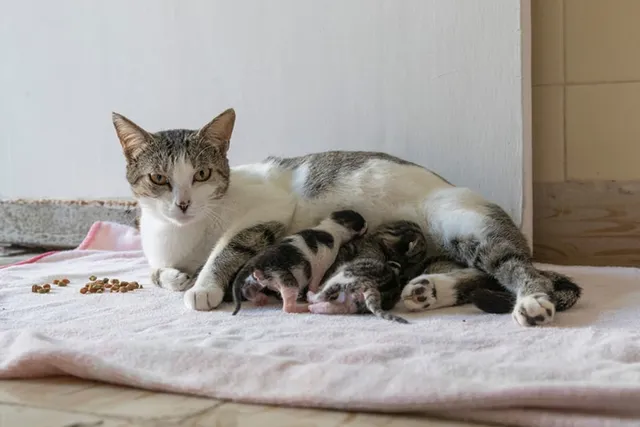
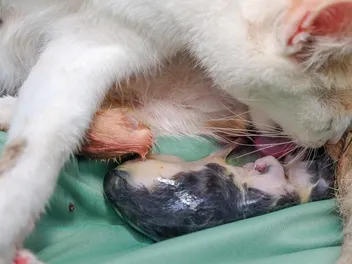
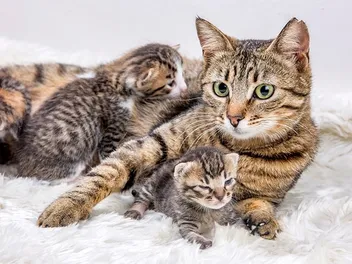
Usually, the entire delivery will be between 2 and 5 hours, depending on the number of kittens. Litters are usually around four to six kittens, which leaves you at about two kittens an hour. Once the kittens are born, the mother cat should settle down and feed them. You shouldn't interfere as long as all the kittens seem to be eating. If one gets turned around, you may want to move it closer to the mother's stomach.
If more kittens can feed at once, you may have to switch them out at this early stage until they learn how to take turns. You want to ensure that all kittens get equal time.
The only time you want to interfere in any considerable way is if the mother doesn't appear to be taking care of the kittens. The mother cat will not stay with the kittens all the time, but she should be coming back to feed regularly. If she isn't feeding or grooming the kittens, call your vet right away. Hand-rearing may be necessary, but that is very rare with a healthy mother.

Summing Up
In many ways, a cat pregnancy resembles a human pregnancy at a much faster pace. Your cat will begin gaining weight about halfway through their pregnancy and may also experience morning sickness. You won't need to help your cat much with the labor process. Most felines know precisely what to do and won't need assistance unless something goes wrong. Afterward, all that's left to be done is to celebrate the arrival of your kittens!
Related Read:
Can a Cat Get Pregnant if She’s Not in Heat (What You Need To Know!)
Do Cats’ Waters Break? Our Vet Explains Feline Pregnancy Facts
Featured Image Credit: Jim Polakis, Shutterstock
Expert cat care, straight to your inbox
News, insights, and useful advice, delivered to you.

No spam — unsubscribe anytime.
By signing up, you agree to our Terms & Conditions and Privacy & Cookies Policy.
How useful was this post?
Click a star to rate. You can leave written feedback afterwards. (We read all feedback.)
Christian started writing for a local newspaper as a teenager, and he's been involved in the publishing industry for most of his adult life. Combining his love of writing with a passion for animals, he is currently the Director of Editorial at Pangolia and the Editor-in-Chief at Catster.
Christian lives in the Philippines with his wife, son, and four rescue cats: Trixie, Chloe, Sparky, and Chopper.