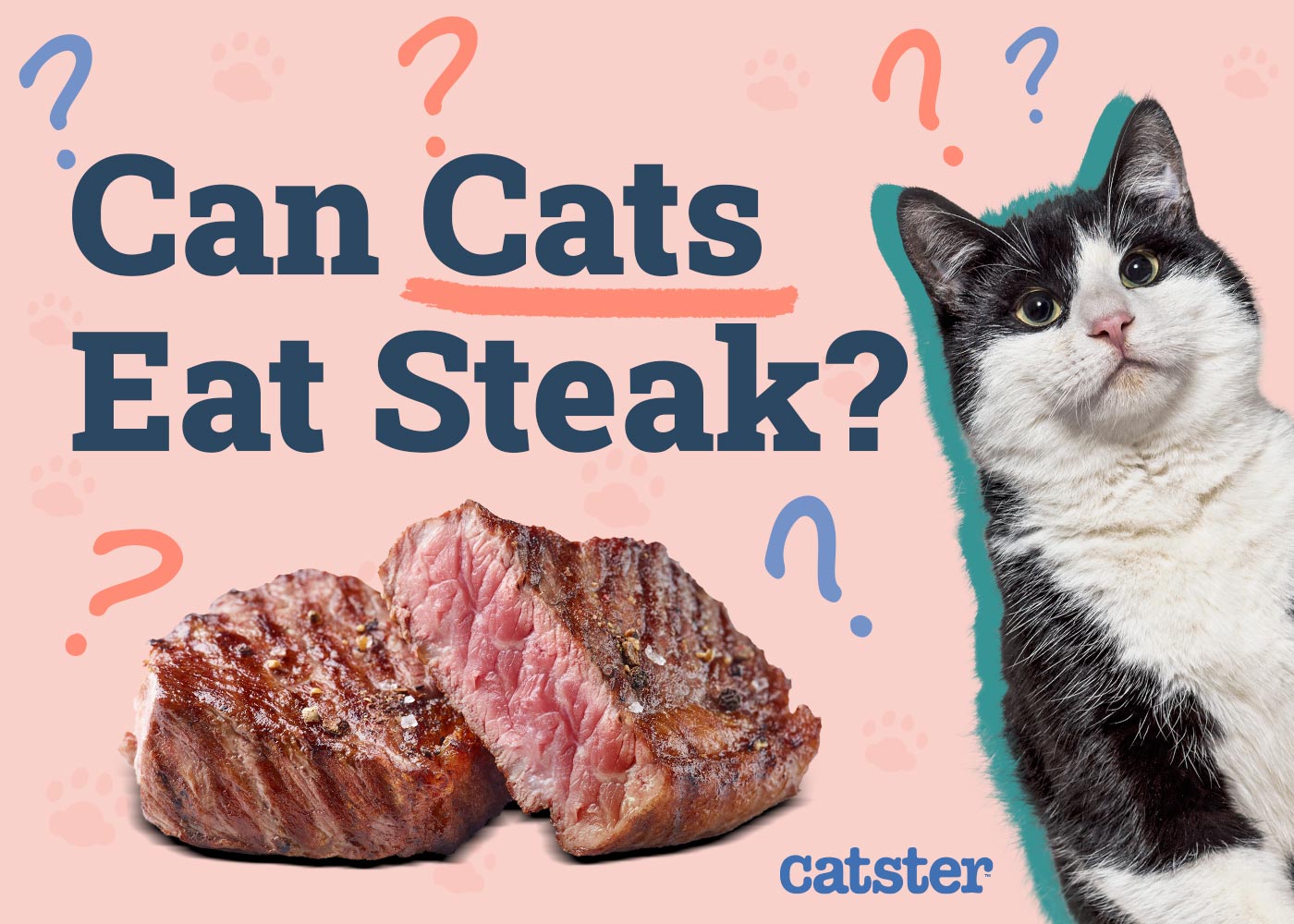
Can Cats Eat Steak? Vet-Verified Nutrition Facts & FAQ

In this article
Your cat is probably one of the most finicky eaters you know. She will turn up her nose at even the most decadent cat food. This begs the question, “Can I feed my cat steak?” As one of the most savory meals available, a well-prepared steak dinner should be a dish that every carnivore craves.
However, recent research1 has revealed that red meat can increase your risk of heart disease, certain cancers, and other health issues. But is it bad for your feline? No, it isn't, and cats can eat steak safely.
In this article, we’ll explore whether steak is safe for your cat to eat and the health benefits and drawbacks of this delicious dinner.

So, Can Cats Eat Steak?
The simple answer to this question is yes. Your kitty can eat steak in moderation. Red meat is one of the safest selections for your furry friend. Flesh from a cow doesn’t have any known poisons to cats, is easily digestible, and does not include the same heavy metal contaminants that many kinds of fish can be afflicted with.


What Are the Health Benefits of Feeding My Cat Steak?
Felines are carnivores, plain and simple. Steak contains many nutrients for a healthy, thriving cat. However, while it's true that cats can eat steak, ensuring that your cat has no nutritional imbalances is critical, so never replace their pet food with a steak-only diet. If you are considering changing your cat’s diet only to include whole foods, it’s important to seek the advice of a veterinarian first.
Steak, while healthy for cats, will not meet all of their dietary needs as well as pet food that is specifically formulated for felines. Many cat owners try to steer clear of eating red meat. However, unlike humans, felines are biologically designed to eat meat every day.
Lean, cooked steak contains numerous vitamins and nutrients that can boost a cat’s health, including iron, niacin, protein, selenium, zinc, and vitamin B12. Since their ancestors were all meat-munchers, cats efficiently absorb these nutrients from the steak, far better than they would from a meal that is crafted from plant-based foods, such as kale or spinach.
Green veggies may be a great source of nutrients for omnivores like us, but not so much for our feline companions.

Why Is Vitamin B12 Important for Cats?
Also known as cobalamin, vitamin B12 is critical for a cat’s health, including their nervous system, immune system, and their digestive tract. While felines do not produce their own B12, they can absorb the vitamin through their food.
Sick and elderly cats may be unable to absorb enough vitamin B12 in their food. The absorption process is complex and takes the work of the small intestine, liver, stomach, and pancreas. If one of these organs is not functioning properly, your cat absorbs less vitamin B12.
Additionally, the vitamin only exists in your cat’s body for a limited time. A healthy feline's tissues will retain B12 for about 13 days. In a sick cat with gastrointestinal or other health complications, the vitamin will only stick around for five days. Reserves of B12 will quickly get depleted.
Some signs of a vitamin B12 deficiency in cats include vomiting, severe weight loss, lethargy, or diarrhea. If your cat isn’t absorbing Vitamin B12 properly, one of the best plans is to occasionally give them B12 supplements and some well-cooked, plain, lean steak as a treat. Ask your vet before you change your cat's diet or give them supplements.

- NO MESS - The 360° tray on this cat food and water bowl set has a raised design to catch and contain stray crumbs and drips. Protect your indoors and floors from wet and messy meals!
- WHISKER FRIENDLY - Shallow and wide metal containers with flat bottoms ensure your kitty can enjoy mealtime free from whisker fatigue!
- CHEW-SAFE MATERIALS - Kittens and cats love chewing on silicone and soft rubber - but it's a choking hazard. Our cat feeding station materials are anti-chew for a 100% safe feeding frenzy!
Learning about what your cat can and cannot eat is a crucial part of keeping them happy and healthy! Choosing a bowl to serve cat-friendly foods in is another important decision pet owners face. Satisfy the specific needs of your cat with the innovative design of the Hepper NomNom Cat Bowl. Learn why it’s our (and our cats!) favorite food and water dish here.
At Catster, we’ve admired Hepper for many years and decided to take a controlling ownership interest so that we could benefit from the outstanding designs of this cool cat company!

Things to Consider When Feeding Your Cat Steak
While there is nothing wrong with giving your cat steak as a treat or in moderation along with their normal feline food, you need to feed them plain steak that contains no fat or bones. Raw and uncooked fat can cause many health issues, including diarrhea, vomiting, and other intestinal upsets. Additionally, too much fat (or worse, fat trimmings) can lead to heart attacks, strokes, and high blood pressure. Cats can also choke on bones or splinters, which can cut them internally or cause obstructions.
Keep in mind, also, that most cats can live on less than 300 calories each day. A single three-ounce serving size of plain steak can be packed with up to 178 calories. If you’re not careful about how much steak your cat ingests, they can pack on the pounds quickly. Obesity can lead to diabetes, arthritis, and even cancer.
Another important note is that while cats can have cooked steak, you should avoid feeding them raw meat. Raw meat could potentially be infected with bacteria such as E. coli. Overall, plain steak in moderation is fine. It is rich in vitamins and minerals, such as Vitamin B12, that cats need to flourish. However, watch how much steak you’re feeding your animal and never feed them fat or bones, or cook the steak with oil or spices.
While sharing human food with your cat is not always safe, we have a solution that will keep you both smiling.
We've currently got a 40% discount to share on the HUMAN-GRADE premium cat food that ranked number #1 in our reviews! CLICK HERE & use code Catster24 to SAVE 40% on Smalls cat food!
See Also:
Sources
https://www.allfelinehospital.com/getting-your-cat-to-lose-weight.pml
https://www.ibdkitties.net/the-importance-of-b12/

Expert cat care, straight to your inbox
Vet-reviewed advice, behavior tips, and the best of Catster. Free, and you can unsubscribe anytime.
By signing up, you agree to our Terms & Conditions and Privacy & Cookies Policy.
Christian started writing for a local newspaper as a teenager, and he's been involved in the publishing industry for most of his adult life. Combining his love of writing with a passion for animals, he is currently the Director of Editorial at Pangolia and the Editor-in-Chief at Catster.
Christian lives in the Philippines with his wife, son, and four rescue cats: Trixie, Chloe, Sparky, and Chopper.
Join the conversation
Ask a question, share your story, or send private feedback.