Get

In Your Inbox

Catster is reader-supported. When you buy via links on our site, we may earn an affiliate commission at no cost to you. Learn more.

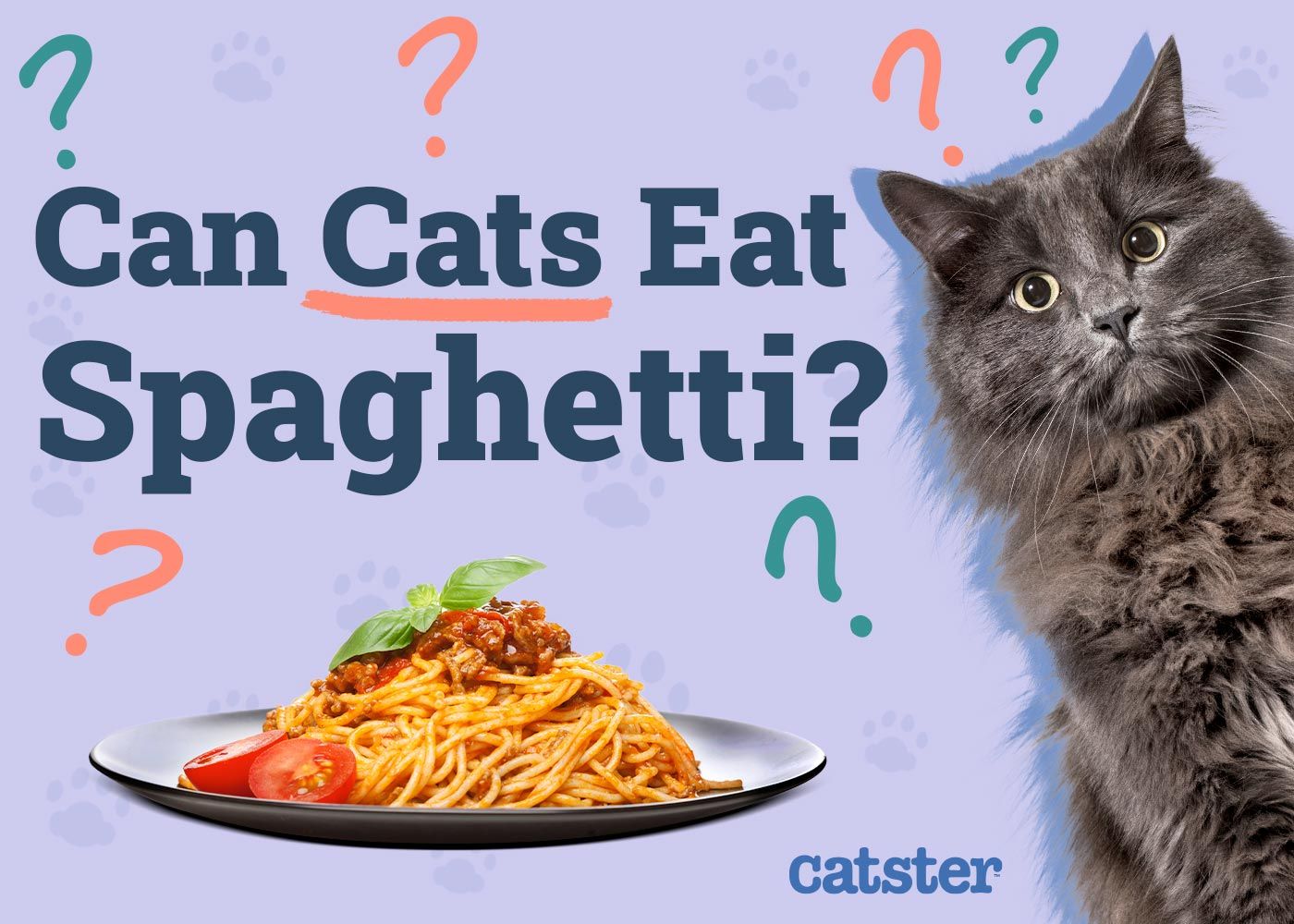
Can Cats Eat Spaghetti? Vet Reviewed Facts To Know!

Share

Can Cats Eat Spaghetti

It’s totally normal for loving pet owners to want to share their favorite foods with their feline companions. In many cases, this is a relatively harmless practice, though sometimes, it can be quite detrimental to your cat’s health. Spaghetti isn’t considered one of the most nutritious foods for humans, but it’s definitely delicious and many people dine on it with pleasure.

As you’re enjoying your pasta dish, your cat is eyeing you boldly, seeming to say, “where’s my portion?” It’s hard to deny your kitty, so you start to section off a little of your pasta for your pal before reconsidering. Now, you’re wondering if it’s safe for your cat to eat. The truth is, neither pasta nor tomatoes are toxic for your cat, though they’re also not nutritious for them either. But many of the spices normally found in pasta sauce are actually toxic for your pet.

divider 1 paws

Is Pasta Safe for Cats?

Pasta is safe for cats to eat. It contains nothing that’s toxic or poisonous to a feline. That doesn’t mean it’s healthy food for them though. Cats are obligate carnivores, meaning they get all of their nutrition met by eating other animals. As such, protein is the nutrient they require the most, and carbohydrates the least.

Pasta, on the other hand, is a carbohydrate and contains very little protein. So, it’s not easy for your cat to digest and it doesn’t provide any nutritional value for your cat either. Pasta is not recommended as part of their diet. If you choose to offer some to your cat, it should be in small doses and only on occasion.

Kitten eating food from bowl
Image Credit: Marian Weyo, Shutterstock

Are Tomatoes Safe for Cats?

Of course, pasta isn’t the only ingredient in spaghetti. Otherwise, it wouldn’t be a big deal. But spaghetti also contains sauce, and it’s the sauce that could be questionable when it comes to your kitty’s health.

The main ingredient in most spaghetti sauce is tomatoes. Tomatoes themselves aren’t inherently dangerous for your cat. However, the stems and leaves of the tomato plant can cause some serious side effects in your sidekick. These parts of the tomato plant are high in solanine; a substance that is toxic for your cat. 

If you need to speak with a vet but can't get to one, head over to PangoVet. It's an online service where you can talk to a vet online and get the advice you need for your pet — all at an affordable price!

PangoVet_Mention-in-Content for PangoVet2 save money

Is Creamy Sauce Safe for Cats?

If you prefer Alfredo over pomodoro or ragu sauce in your pasta, you might be wondering if it is safe for your cat. Sadly, cream-based sauces are a definite no for cats. Besides the incredibly high amount of calories and fat, cream-based sauces are loaded with lactose, a milk sugar that most cats are unable to digest. Cats and humans who are lactose intolerant lack the ability to digest this sugar because they do not secrete the enzyme lactase. The result is that lactose ends up fermenting in the cat’s intestines, causing gas, bloating, discomfort, and possibly even diarrhea. 

Ripe tomatoes on a table
Image Credit: Devanath, Pixabay

Toxic Herbs & Seasonings

It’s not just the tomato or the cream that might give your cat some issues. The seasonings that are commonly found in tomato sauce are also dangerous for cats if ingested. For instance, onions and garlic are both toxic to a feline. If your cat eats onions, garlic, shallots, scallions, or anything else in the same family of vegetables, it could cause their red blood cells to get hemolyzed, resulting in life-threatening anemia. A cat that ingested onions or garlic might present the following signs:

Initial signs
  • Nausea
  • Drooling
  • Oral irritation
  • Vomit
  • Diarrhea
Signs of hemolytic anemia
  • Lethargy
  • Weakness
  • Pale gums
  • Loss of appetite
  • Increase heart rate
  • Increased respiratory rate
  • Orange or red urine
  • Seizures
  • Collapse
  • Death
Pasta_Spaghetti
Image Credit: Ben_Kerckx, Pixabay

How to Feed Your Cat Spaghetti

We recommend you avoid feeding your cat spaghetti, as it is not a species-appropriate food for a cat, and the associated risks are just not worth taking. However, if you really want to share your pasta with your pet, then you just need to exercise some caution. Your best bet is to share only plain pasta with your feline. Overall, though, we would recommend sticking to species-appropriate foods when your kitty deserves a treat. 

Feeding your cat zucchini noodles is a safer option that can actually provide fiber and antioxidants to your cat. As long as you purposely prepare them without garlic, onion, or any other spices, sharing some zoodles with your cat will help you scratch that itch of sharing some spaghetti with your furry friend.

zoodles (zucchini spaghetti healthy for cats, dogs, humans)
Image Credit: Megan Betteridge, Shutterstock

divider 1 paws

Should You Feed Your Cat Spaghetti?

What you feed your cat is ultimately up to you. Spaghetti poses no nutritional value for a cat. Your cat doesn’t need to eat spaghetti and may not even like it. Since cats aren’t great at digesting carbs, plain spaghetti could cause an upset stomach. However, it is not toxic, as long as you don’t feed your feline too much. But stay away from sauces, as they usually contain garlic and onions, both of which are truly toxic for your cat, and even small doses could have a detrimental health effect.

Related Reads:


Featured Image Credit: ponce_photography, Pixabay

Want content like this delivered to you?

Sign Up For Our Newsletter

News, insights, expert advice, and everything cat

* By submitting, you agree to our Terms & Conditions and Privacy & Cookies Policy.


How useful was this post?

Click on a star to rate (you can leave written feedback after clicking submit)

Help us improve Catster for pet parents!

Your feedback really matters.

What did you like about this post? Also how can we improve it?

Join the conversation

Leave a Reply

You’re very welcome to leave a comment or question. Please know that all comments must meet our community guidelines, and your email address will NOT be published. Let’s have a positive and constructive conversation.


Talk With A Vet Online

Peace of mind,
anywhere, anytime

Affordable vet advice

Do Cats Cause Schizophrenia? Scientists Find a Link – Here’s What It Means

Being a fierce advocate (and occasional recipient of) mental health support and awareness, the term ‘crazy’ is not one I like to fling...

One in 100 Cats Gets Diabetes – Here’s How to Catch It Early

One in every 100 cats develops diabetes.1 That’s not a rare, unlucky condition reserved for cats with obvious health problems. It’s common enough...

Dramatic Rescue Turns Into Dramatic Reunion

What started as a routine call for the RSPCA became a heroic, five-hour rescue featuring one trapped and traumatized cat, an emotional family...

Ask Dr. Paola – Help! How Do I Know if it’s Ear Mites! (May 4, 2026)

Welcome to our “Ask Dr. Paola” series, where every Monday we bring expert advice straight from Dr. Paola Cuevas (MVZ) to help our...

More related

Is it True That Cats Hate Aluminum Foil? 3 Vet-Reviewed Possible Reasons Why

As cat owners are well aware, cats are very opinionated animals. They have strong feelings about several aspects of their environment, and many...

Can Cats Eat Corned Beef? Vet Approved Risks & Nutritional Information

Cold corned beef and boiled cabbage may be a St. Patrick’s Day staple for many Americans, but unfortunately, this dish is another human...

Why Do Cats Like Crinkly Things? 5 Possible Reasons & Risks

Cats are intrigued by objects that make a crisp, crackling sound. Something about their curious personalities makes the compelling sound of a crinkly...

Can Cats Eat Lentils? Vet-Reviewed Nutritional Facts & FAQ

We’ve all heard that curiosity killed the cat, and that saying has a foundation in reality; cats explore their world with their mouths,...

Keep reading

Why Did My Cat Lose His Voice? 5 Vet-Reviewed Potential Reasons

It’s normal for us to lose our voice or feel hoarse when we’re sick or after yelling at a party or concert. It’s not as common of an occurrence in our pets. If your normally vocal cat has suddenly lost...

Cat meowing

Can Cats Eat Celery? Vet-Reviewed Nutrition Facts & FAQ

Celery is a popular chips-and-dip accompaniment, and while your cat definitely shouldn’t have the chips or the dip, what about the celery itself? Can cats eat celery? In fact, there’s nothing wrong with giving them a few celery stalk pieces...

Can Cats Eat Celery

Where Do Outdoor Cats Sleep? 7 Places They Like to Curl Up (Vet-Reviewed)

Some cats are strictly indoor pets and prefer lounging on a bed, tower, or sofa. However, others split their time between being inside and outside. So, when it comes to finding a safe place to sleep outdoors, where do our...

cat walking outdoors looking at the camera

Can Cats Eat Pumpkin Pie? The Interesting Answer

Cats are obligate carnivores, meaning their digestive system is designed to digest meat, bones, and other animal body parts. Pumpkin pie is not on this list, and while cats can eat pumpkin or plain canned pumpkin, pumpkin pie is bad...

Can Cats Eat Pumpkin Pie

Will Barn Cats Kill Chickens? The Interesting Answer (Vet-Approved)

A barn cat isn’t a specific cat breed but a term used to describe a cat that usually lives outdoors, either as a pet or a feral animal, on agricultural properties, usually sheltering in buildings. They’re also known as farm...

chicken looking at the camera in the yard

Can Cats Eat Bird Seed? Vet-Approved Nutritional Facts & Warnings

If you have a cat that stays indoors, you likely won’t ever have to worry about him eating bird seed. But if your cat spends lots of time outdoors, you’ve probably noticed him eating bird seed that has fallen on...

Can Cats Eat Bird Seed

Are Reed Diffusers Bad for Cats? Vet-Reviewed Facts & FAQ

If you are like most people who own a cat, you want to keep your home smelling nice, but you also want to make sure your cat stays safe and healthy in the process. You might have heard of reed...

reed diffusers on the table

How to Get a Urine Sample From a Cat: Effective Vet Approved Tips & FAQ

A urine sample can help a veterinarian check for various conditions in a feline’s urinary tract and kidneys. If your vet has asked you to bring in a sample of urine from your cat, you might be feeling a bit...

woman collecting urine sample of an orange cat

Love Cats? So Do We! Join the Catster Community

Stay informed with expert pet care insights delivered straight to your inbox! Discover professional guidance on animal behavior, feeding tips, trusted product picks, and much more.


Sign up for the Catster Email Newsletter

Stay informed with expert pet care insights delivered straight to your inbox! Discover professional guidance on animal behavior, feeding tips, trusted product picks, and much more.