Get

In Your Inbox

Catster is reader-supported. When you buy via links on our site, we may earn an affiliate commission at no cost to you. Learn more.

Why Is My Cat’s Third Eyelid Showing? 5 Vet Reviewed Reasons & Advice

Share

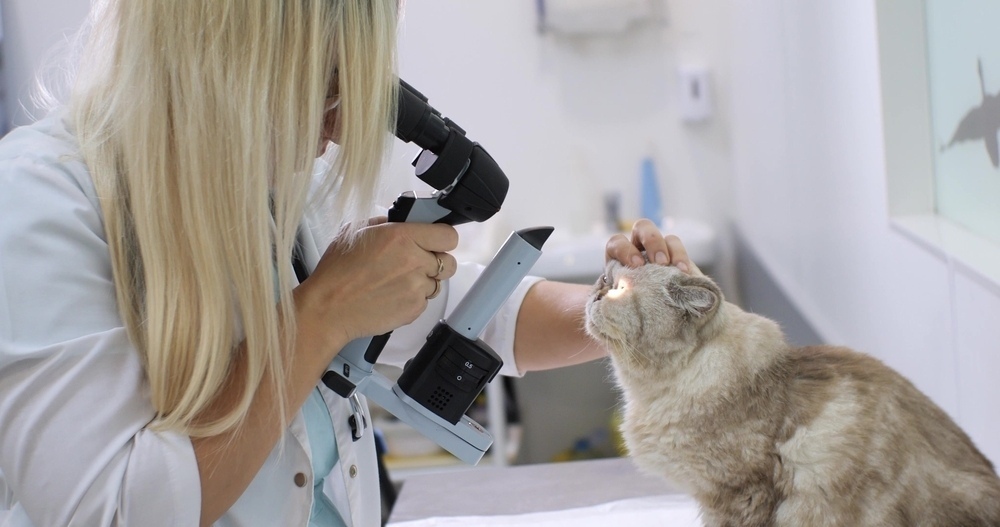
Vet ophthalmologist examining a cat_s eyes with a slit lamp

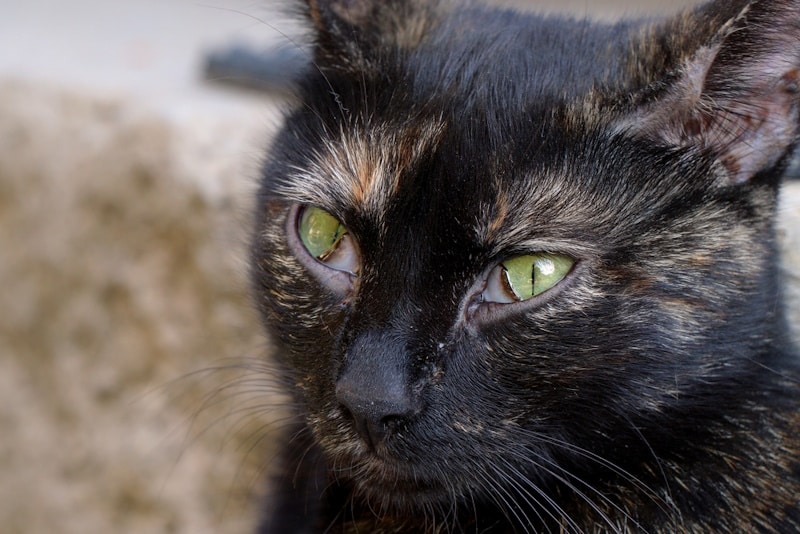
Cats do not see the world in the same way that humans do. Their eye anatomy is different, and their eyes glow due to a reflective membrane at the back of their eyes that helps them see well in the dark. They have two eyelids (one above the eye and one below) like we do, but they also have what’s referred to as a third eyelid, or nictitating membrane.

We don’t usually see a cat’s third eyelid showing unless they are just waking up from a long nap or are otherwise looking around lazily. Then, you might be able to glimpse their third eyelid before it slides back into place. However, certain problems and conditions outside of these normal circumstances can result in its sustained appearance, like if the cat is dehydrated or injured.

So, why would your cat’s third eyelid be showing? There are common causes that are worth exploring.

divider 3 paws

The 5 Reasons For a Cat’s Third Eyelid Showing

1. Eye Disease

Any type of eye disease can cause your cat’s third eyelid to show itself either sometimes or all the time.

Specific issues that could result in a cat’s third eyelid showing include:
  • Entropion (turning in of upper, lower, or both eyelids leading to corneal irritation and possibly ulceration)
  • Conjunctivitis
  • Corneal ulceration
  • Glaucoma
  • Eyelid mass

If you suspect that your cat is suffering from an eye disease or ailment, it is important to schedule a checkup with your veterinarian as soon as possible. The longer a problem is left to fester, the harder it could be to treat and correct.
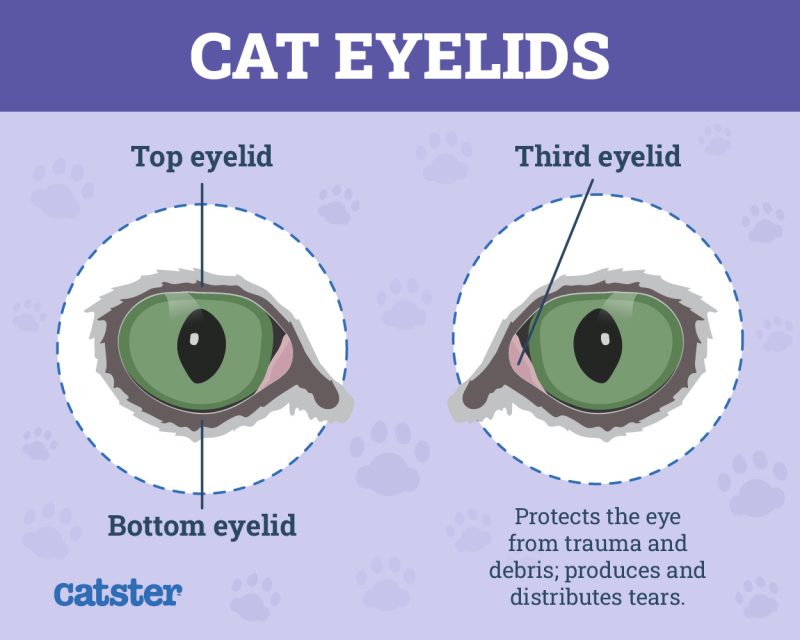
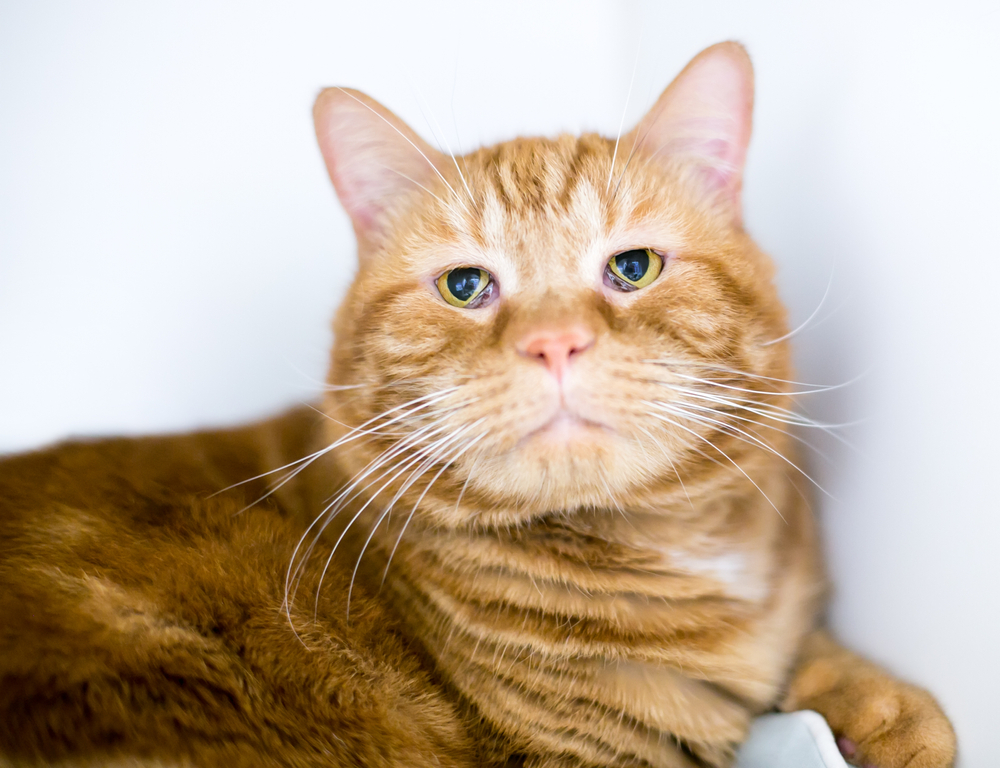
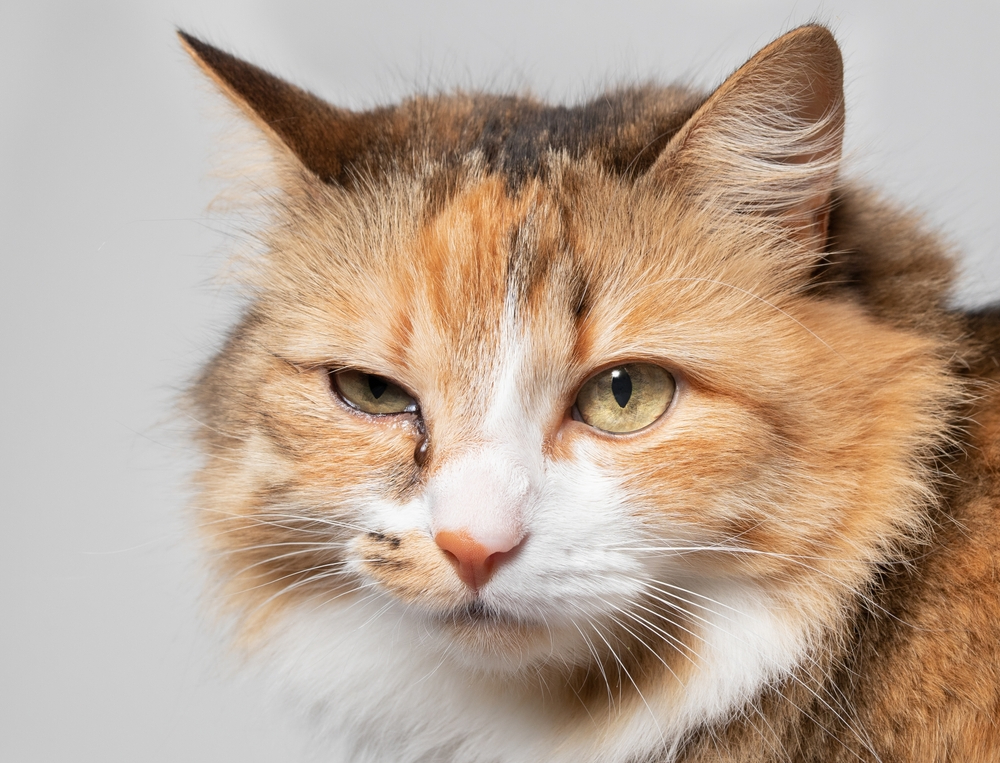
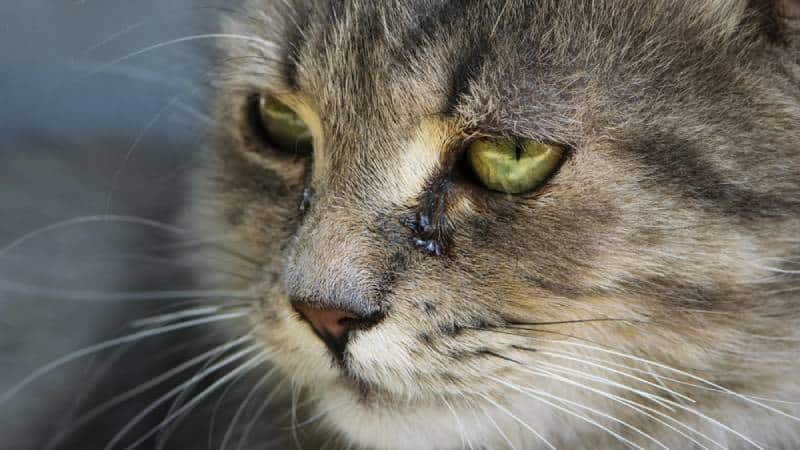
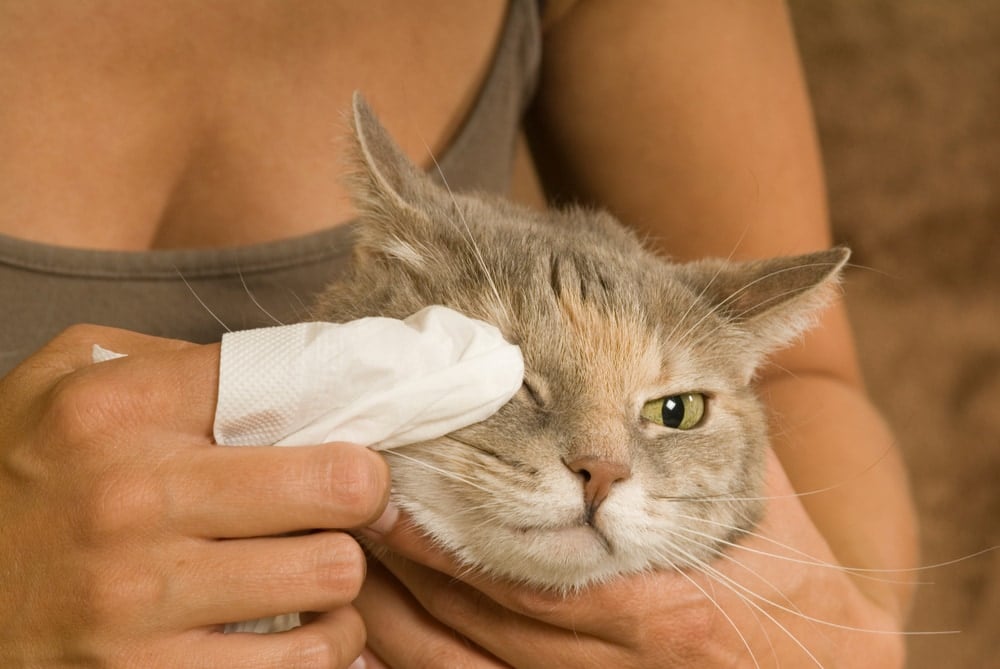
cat eyelids
You are free to use this image but we do require you to link back to Catster.com for credit

2. Dehydration and/or Old Age

Both old age and dehydration can cause loss of tissue around the eyes, which in turn, can cause the third eyelid to prolapse, becoming visible more often or all the time. Rehydration can help restore eyelid performance, but the cause of dehydration may be much harder to treat.  For example, a cat suffering from dehydration due to chronic kidney disease will continue to be dehydrated due to inappropriate fluid loss through excessive urination. Many other systemic diseases can cause dehydration in cats, so an examination with your veterinarian is warranted.

For an older cat, generalized weight loss can cause the fat pad behind the eye to reduce in size, causing the eye to sink inwards and the third eyelid to raise up in turn.  Veterinarian guidance and care are necessary to assess the cause of the weight loss and third eyelid exposure.

If you need to speak with a vet but can't get to one, head over to PangoVet. It's an online service where you can talk to a vet online and get the advice you need for your pet — all at an affordable price!

PangoVet_Mention-in-Content for PangoVet2 save money


3. Nerve Damage

When a cat suffers from nerve damage, it can cause one or both third eyelids to at least partially prolapse. Damage to the facial nerve, either from infection, inflammation or neoplasia (growths) can cause the dysfunction of the third eyelid.  If a third eyelid showing is due to nerve damage, other signs of nerve damage are likely to appear, including pupil size changes and loss of facial muscle movement.  If you notice any of these symptoms, take your cat to the vet for assessment.

Veterinarians Examining the Eyes of a Pet Maine Coon with an Otoscope
Image Credit: Gorodenkoff, Shutterstock

4. Gastrointestinal Issues

A fairly common reason for a cat’s third eyelids to show are gastrointestinal problems.  This is known as Haw’s Syndrome and the third eyelid protrusions are usually present in both eyes and are accompanied by diarrhea. The cause is unknown, but viral infections have been linked to the syndrome.


5. Injury

Any kind of injury to the eye could result in a cat’s third eyelid showing temporarily until the affected area heals. Certain injuries could cause permanent damage, even if the third eyelid prolapse is temporary, so it’s always a good idea to have the injury checked out by a trusted veterinarian.

vet applying eye drops to cat's eyes
Image Credit: Maria Sbytova, Shutterstock

divider 3 paws

In Conclusion

There are many different possible reasons for a cat’s third eyelid showing and not sliding back into place. Some are more serious than others. If your cat’s third eyelid remains visible, the best course of action is to see a veterinarian for a diagnosis and treatment plan.


Featured Image Credit: Lebedko Inna, Shutterstock

Want content like this delivered to you?

Sign Up For Our Newsletter

News, insights, expert advice, and everything cat

* By submitting, you agree to our Terms & Conditions and Privacy & Cookies Policy.


How useful was this post?

Click on a star to rate (you can leave written feedback after clicking submit)

Help us improve Catster for pet parents!

Your feedback really matters.

What did you like about this post? Also how can we improve it?

Join the conversation

Leave a Reply

You’re very welcome to leave a comment or question. Please know that all comments must meet our community guidelines, and your email address will NOT be published. Let’s have a positive and constructive conversation.


Catster's Digital Magazine is Back!

Vet-approved health & behavior advice

Real cat stories & community features

Chatting About the Rainbow Bridge, Euthanasia, and Laughter During Grief | Chatty Cattys, Episode 24

If you’ve ever felt the loss of a beloved cat, or are dreading the day when your pet crosses the rainbow bridge, you’ll...

The Simple Reasons Cats Refuse to Let Anyone Use the Bathroom Alone

Cats have an extraordinary talent for making themselves present in the most inconvenient places, and the bathroom ranks near the top of the...

A Paw-sitive Milestone: Canada Officially Becomes a Declaw-Free Nation

Canada has officially become a declaw-free nation. On May 25, 2026, a new regulation was filed in Ontario under the Provincial Animal Welfare...

The Surprisingly Simple Ways to Help a Cat With Hairballs

Cats spend an astonishing amount of time grooming. It is part hygiene routine, part comfort ritual, and part instinct that traces back generations....

More related

Cat Preventive Care for Good Health & Longevity: 8 Fundamental Pillars

There is an aspect of veterinary medicine that is called preventive care; meaning preventing health problems through proactive measures. Preventative care means better...

Why Does My Cat Sleep With Me and Not My Husband? 6 Likely Reasons

Often, our cat’s behaviors can seem strange. One point of confusion is often the places our cats try to sleep. They seem to...

My Cat Ate a Poinsettia Leaf, Here’s What to Do (Vet Answer)

On almost every list of toxic plants for cats, especially holiday lists, you’ll see poinsettias listed. The good news is that poinsettias are...

Can Cats Eat Fish Bones? Vet-Reviewed Feeding Facts

Cats are obligate carnivores. In the wild, they eat a good variety of small prey, depending on availability, and they make the most...

Keep reading

How Many Hours a Day Do Cats Groom? Vet-Reviewed Behavior Explained

Imagine spending half of your waking hours in the shower every single day. While that might seem exceedingly boring and tedious to us, cats spend approximately 2–5 hours grooming themselves every day, which is between 30% and 50% of their...

bengal cat grooming itself

Does Hot Water Kill Fleas on Cats? Vet-Approved Facts & FAQ

Having a cat in your life is wonderful, but it sometimes comes with a catch: dealing with fleas. Apart from being annoying, flea infestations can trigger allergies, irritation, and even illness. So, getting rid of them as quickly as possible...

woman bathing her cat

Why Do Kittens Sometimes Die Suddenly? Vet-Verified Causes & Facts

Having a litter of newborn kittens in your house can be a cause for celebration, but it can sometimes also cause heartache. These tiny little bundles of fluff are incredibly fragile, and sometimes you might wake up to find that...

newborn kitten in man's hand

Can Cats Eat Cranberry Sauce? Vet Reviewed Health Risks & Alternatives

Cranberry sauce is a tasty condiment or side dish that goes well with many kinds of meals. However, if you’re a cat owner, you’ll want to think twice about feeding this sweet dish to your pet. While cranberry sauce isn’t...

Can Cats Eat Cranberry Sauce

Can Cats Drink Distilled Water? Vet-Reviewed Facts & FAQs

If you’re unsure about the quality of your tap water, you may be concerned about drinking it yourself or offering it to your cat. Distilled water is an alternative to tap water, but can cats drink distilled water, and is...

Can Cats Drink Distilled Water

Can Cats Eat Salt & Vinegar Chips? Vet-Reviewed Risks & FAQ

Does your cat inch towards you when they hear the crinkle of a chip bag? Felines are nosy creatures that are often intrigued by what they can’t have. This may include salt and vinegar potato chips. While eating a couple...

Can Cats Eat Salt & Vinegar Chips

Do Cats Poop Less on Wet Food? 3 Ways to Get Your Cat to Poop Less

Our precious felines are ever so kind to leave us love bombs in the litter box on a regular basis. No matter how many litters you try, it’s hard to mask that smell when things are fresh. So, you might...

cat wet food

Can Catnip Give Cats Diarrhea? Feline Health Facts & FAQs

Nepeta cataria, otherwise known as catnip, is a perennial feline favorite. While not all kitties enjoy a sniff of the good stuff, most absolutely do. This fan-favorite intoxicant has a few different effects. It mellows some cats out and stimulates...

Catnip flowers (Nepeta cataria) blossoming in a garden on sunny

Love Cats? So Do We! Join the Catster Community

Stay informed with expert pet care insights delivered straight to your inbox! Discover professional guidance on animal behavior, feeding tips, trusted product picks, and much more.


Sign up for the Catster Email Newsletter

Stay informed with expert pet care insights delivered straight to your inbox! Discover professional guidance on animal behavior, feeding tips, trusted product picks, and much more.