A Faulty Rabies "Study" Recommends Killing Strays Rather than Using TNR
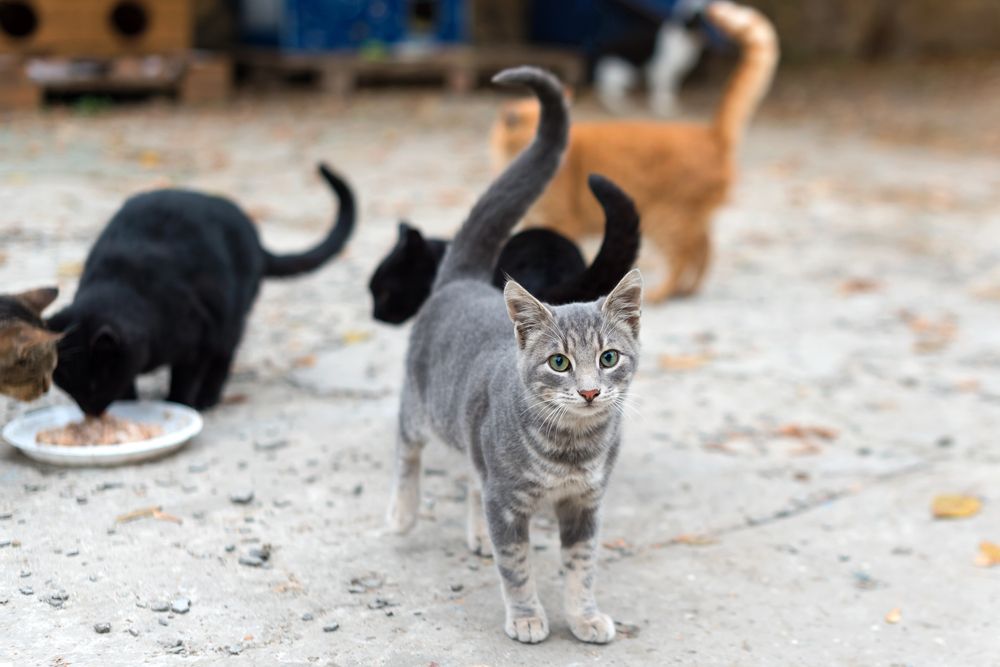
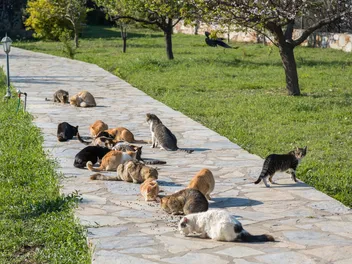
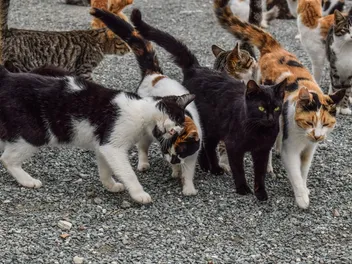
Those who work for the welfare of cats are familiar with Best Friends, an organization that works to stop the killing of animals in shelters and supports and carries out trap-neuter-release, or TNR, and many other initiatives to ensure the welfare of animals. So naturally, Best Friends, along with many in the cat community, were alarmed and angered when a so-called study surfaced that proposed rounding up and killing stray cats to stop rabies. There are better ways to manage feral cat colonies. At Catster, we wholeheartedly support TNR, because we know it works.
Best Friends Animal Society had asked if we would talk to Peter J. Wolf, the group's Cat Initiatives Analyst. Here's what Peter had to say about stray cats, rabies, the "study," and TNR efforts.

Catster: Peter, what prompted this study?
Peter Wolf: First, this is not a study as such; it's a review of the literature related to a particular topic. In this case, the authors cherry-picked from the body of literature, resulting in a badly distorted review and some misguided conclusions.
Secondly, this paper, published in the journal Zoonoses and Public Health, does not represent any official CDC position. Marc Selinger, reporting for Examiner.com, explained in early November that the paper was not actually written by CDC staff at all, but by two "university students" as part of their CDC fellowship.
I don't know what prompted the ZPH paper. What's surprising is to see the CDC's name on this -- and their recommendation that the millions of unowned cats in the U.S. "must be reduced and eliminated to manage the public health risk of rabies transmission."

Catster: An article in USA Today, referring to the ZPH paper, says: "For 30 years, the main domestic animal linked to human exposure to rabies in the United States has been the cat. In the past 10 years, the number of feral cat colonies has exploded as animal-rights groups fight to end the capturing and killing of strays."
Is this true? Is the cat the main domestic animal linked to rabies exposure? And have feral cat colonies really exploded?
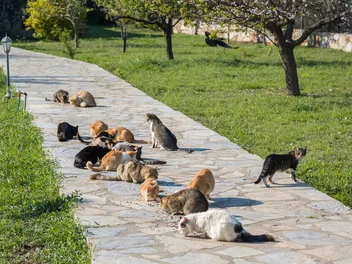
Peter Wolf: It's safe to say that trap-neuter-return (TNR) efforts, and therefore the number of managed colonies, have increased over the past 30 years. But that's not the same as saying the number of community cats has increased over that same period, as TNR opponents sometimes suggest. I haven't seen any data to support such a claim; indeed, there's good reason to think the number is declining.
Regarding rabies exposures, the USA Today article is incorrect, the result, I suspect, of some confusion about the difference between the number of documented rabies cases and the number of human exposures -- two very different things.
As a CDC report explains: "In 1981, for the first time, the number of rabid cats outnumbered the number of rabid dogs, by approximately 20 percent." But because of the way rabies cases (and again, we're not talking about exposures just yet) are documented, comparisons between species are inappropriate. (This is something that the CDC actually points out in the agency's annual rabies surveillance reports.) We shouldn't confuse rabies cases with human exposures to rabies.

Catster: The USA Today article also quotes Becky Robinson of Alley Cat Allies, who says: "Trapping, neutering, vaccinating and returning feral cats to the wild means they remain healthy and disease-free, and the colonies eventually die out." Do you want to add to this?
Peter Wolf: I agree completely. I would only add that every year, TNR groups vaccinate tens of thousands, if not hundreds of thousands of cats, providing a tremendous public health benefit to their communities. Such efforts not only reduce the risk of disease transmission from domestic animals to humans, but also serve as a barrier between wildlife and humans.
Catster: Is it really difficult to capture and release ferals, as the press coverage suggested?
Peter Wolf: It can be a challenge to recapture some community cats -- there's no doubt about that. However, whether or not they truly need to be revaccinated periodically is a matter of debate.
Three additional points about the USA Today article and the ZPH paper:
Neither the USA Today article nor the paper acknowledge -- according to the CDC's own data -- just how rarely humans contract rabies from cats. Since 1960, only one such case has been confirmed in the U.S.
We need more TNR, not less. Simply put: Sterilized and vaccinated cats are far better for public health than the alternative.
Rabies in cats is largely isolated to those areas with high levels of raccoon rabies (which helps explain why, as the USA Today story notes, many states don't require cats to be vaccinated). It's important from a public health perspective for people to understand that while some areas of the country are relative hot spots, rabies in cats is virtually unheard of across entire regions.

Catster: In your opinion, what is the best thing people can do to help feral cats? What are your thoughts on rabies prevention?
Peter Wolf: Let's start with a very basic tip: If you're feeding strays, as many folks do, be sure you're also getting the cats sterilized. And encourage your neighbors to do the same.
About Catherine Holm: Told that she is funny but doesn't know it, accused of being an unintentional con artist by her husband, quiet, with frequent unannounced bursts into dancing liveliness, Cat Holm loves writing about, working for, and living with cats. She is the author of the cat-themed memoir Driving with Cats: Ours for a Short Time, the creator of Ann Catanzaro cat fantasy story gift books, and the author of a short story collection about people and place. She loves to dance, be outside whenever possible, read, play with cats, make music, do and teach yoga, and write. Cat lives in the woods, which she loves as much as really dark chocolate, and gets regular inspiration shots along with her double espresso shots from the city.
Featured Image Credit: IMG Stock Studio, Shutterstock
Expert cat care, straight to your inbox
News, insights, and useful advice, delivered to you.

No spam — unsubscribe anytime.
By signing up, you agree to our Terms & Conditions and Privacy & Cookies Policy.
How useful was this post?
Click a star to rate. You can leave written feedback afterwards. (We read all feedback.)

Told that she is funny but doesn’t know it, accused of being an unintentional con artist by her husband, quiet, with frequent unannounced bursts into dancing liveliness, Cat Holm loves writing about, working for, and living with cats. She is the author of The Great Purr, the cat-themed memoir Driving with Cats: Ours for a Short Time, the creator of Ann Catanzaro cat fantasy story gift books, and the author of two short story collections. She loves to dance, be outside whenever possible, read, play with cats, make music, do and teach yoga, and write. Cat lives in the woods, which she loves as much as really dark chocolate, and gets regular inspiration shots along with her double espresso shots from the city.