Is Your Cat Missing or Just on an Adventure? How to Tell (With Vet-Reviewed Tips)



In this article
Losing a cat is a heart-wrenching experience. But is your cat really lost or have they just wandered off? Although it's hard to know for sure, knowing your cat's habits is a good first step. In any case, if you think that your cat is missing, keep your cool, but do act quickly to put the odds of finding them in your favor.
If your cat spends a lot of time outside, it’s important to consider getting them microchipped by your vet, in case they get lost and picked up by a local shelter. By scanning their chip and finding your details, they can be reunited with you promptly. An alternative for some independent outdoor cats may be wearing a safe breakaway collar with their name, your name, address and phone number, or even a GPS tracker, so you can keep track of their whereabouts.

Before You Start: How to Know If Your Cat Is Missing
It can be tricky to know for sure if your cat is missing or on an adventure, as it depends on your pet's habits. For example, I always let my cat go outside. We live in the countryside, and there are no dangerous roads or wild animals around our house. So, I know that when my cat leaves in the morning, she might not come back until evening, and sometimes she even spends the night outside.
However, I know that 36 hours is the longest that her absence usually lasts, and as a cat mom, I couldn’t take much longer than that. Beyond this period, I would start worrying and look for her (fortunately, this has never happened). But you don’t have to wait that long if you can't find your cat.
Let’s look at two different situations:
- If you let your cat outside regularly, you probably know their habits, so you’ll know when they've been out for too long. Most cat parents usually start to worry after 24 hours with no sign of their pet.
- If you always keep your cat indoors and they have suddenly disappeared, the situation may be more problematic. Your pet may not be used to the potential dangers outside. You should start looking for them as soon as you notice their absence.
Even if you are not sure whether your cat is missing, it is better to act quickly if in doubt. The following tips should help you organize your search and find your cat as quickly as possible.

Our 6 Tips to Find Your Missing Cat
1. Search Your House From Top to Bottom
You've probably already done it, but to be sure, check all of your cat's favorite hiding places. A stressful situation (such as the arrival of a new animal in your home) may have caused anxiety in your cat, and they took the opportunity to take refuge in the depths of your wardrobe. Try to entice them with their favorite treats, and call out to them in a soft, reassuring voice.
2. Check the Neighborhood
If your cat is not in the house, search the whole neighborhood. Bring food with you and call your cat. Be aware that this approach sometimes has a downside: You risk attracting the attention of other dogs or cats nearby, which can startle your pet if they’re around. If this happens, it may become challenging to continue looking for them this way, as your cat may have probably already gone farther afield. However, you know your cat best. They may have a favorite spot to hang out. Some cats will come to their owner as soon as they hear their voice calling out their name, or you may hear a distinct meow that will guide you in their direction.

3. Ask Your Neighbors for Help
Notify your neighbors as soon as possible so they can keep an eye on their backyard and all around their house. Get them to check their sheds and garages more carefully, as cats can easily get accidentally locked in such places for days, becoming hungry and dehydrated.
4. Use Social Media
Whether you like social media or not, it can be a huge help when looking for lost pets. Post a photo of your cat on various social networks (Instagram, Facebook, Twitter, TikTok, etc.), and ask your family, friends, colleagues, and others to share your posts.
5. Put Up Posters
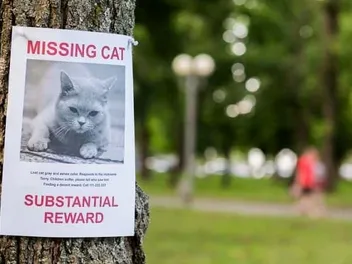
Print a good-quality photo of your cat, and write your phone number on a clear area of it. Make as many copies of this poster as possible, and post them all over your neighborhood and on local business notice boards (but ask permission before putting a poster on a storefront).
6. Check at Your Local Vet and Animal Shelter
If a stranger found your cat but doesn't have any ID tags or microchips, it's possible the person took them to the SPCA or other local animal shelter or a vet clinic.

What Are the Chances of Finding Your Cat Safe and Sound?
According to the American Society for the Prevention of Cruelty to Animals, about 74% of lost cats are found. However, this statistic dates from 2012 and was established from a survey of only around 1,000 households that had cared for either a cat or a dog. According to a 2018 study, only 61% of lost cats are found within a year, and 34% within the first week.
In any case, the chances of finding your lost animal will increase considerably if they have an identity tag and/or an electronic chip. Also, be aware that neutering can help curb your feline's roaming behavior and reduce their risk of running away in the first place.
Final Thoughts
If your cat is missing, keep up hope. Search your neighborhood, ask your neighbors for help, share your kitty's photo on social media and in your neighborhood, contact your local vet, and keep checking animal shelters regularly. Lastly, you can submit a Lost Pet Form to request assistance based on where you live. Visit the Lost Pet Research and Recovery page for more information, and don’t give up!
See Also: What & Where Is the Odd Cat Sanctuary?
Sources
Featured Image Credit: Astrid Gast, Shutterstock
Expert cat care, straight to your inbox
News, insights, and useful advice, delivered to you.

No spam — unsubscribe anytime.
By signing up, you agree to our Terms & Conditions and Privacy & Cookies Policy.
How useful was this post?
Click a star to rate. You can leave written feedback afterwards. (We read all feedback.)