Get

In Your Inbox

Catster is reader-supported. When you buy via links on our site, we may earn an affiliate commission at no cost to you. Learn more.

How to Get a Cat to Stop Jumping on Kitchen Counters (8 Proven Methods)

cat walks on the kitchen table

The affinity cats have for climbing things is well known. Many cats are constantly on the prowl for the highest perch in the house, willing to climb up to those heights by whatever measures are necessary. Often, this leads to cats climbing all over your furniture, including couches, bookcases, and kitchen counters.

It’s a bit unsanitary for your cat to be slinking around your countertops, not to mention the safety concerns. Nonetheless, it’s a behavior that many cat owners witness. So, what should you do to stop your cat from jumping up onto your kitchen counters? We’ve found eight great methods to prevent this behavior. Hopefully, one of them will be the right solution for your cat!

divider single cat paw oct 2024

Why Is This Behavior Unwanted?

In some households, cats might be allowed onto the kitchen counters. Some pet parents are so enamored with their pets that they just can’t tell them no! But it’s a bad idea to let your cat up onto your countertops, for at least these three reasons:

  • Your cat could easily end up creating an unsafe situation if it were to knock over a dish or glass and break it, creating many sharp shards that could harm you and your cat.
  • Not everything on your countertops is safe for cat consumption. While you probably don’t have anything poisonous to you on your counter, some things that are safe for humans can be toxic to cats, like garlic and onions.
  • If your cat puts its paws in your food or sheds some hair on the counter, it could contaminate your food, introducing bacteria and possibly more into the food you’re going to eat.
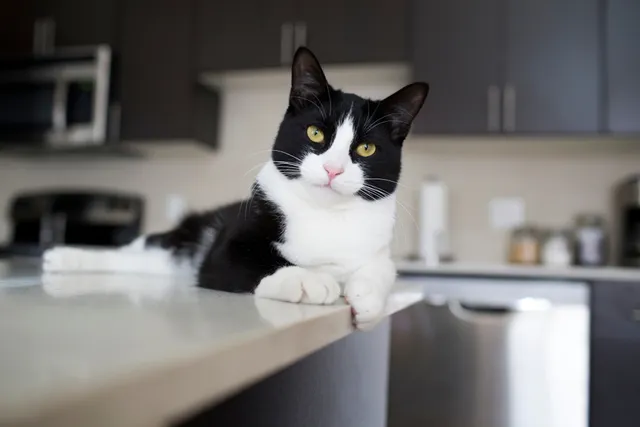
Black and white domestic cat lying on modern kitchen
Image Credit: Sarah McGraw, Shutterstock

Why Your Cat Is Jumping Up on the Counter

Sometimes, understanding a problem gets you halfway to a solution. So, before we discuss the ways you can stop your cat from jumping up onto your kitchen counters, let’s go over the reasons why your cat is even exhibiting such behavior.

  • Your cat can smell food on the counter or cabinets that it wants to get to.
  • Your cat is just trying to climb up to a high point, such as the top of your cabinets. They may just want to relax or sleep there.
  • Your cat may be jumping onto the counter in an attempt to escape another pet.
  • If you’re cooking, your cat could just be attracted to the smell of your cooking and be jumping on the counter in hopes of getting a bite.

divider cat paws 2 oct 2024

The 8 Ways to Stop Your Cat From Jumping on Kitchen Counters

Now that we understand some of the likely reasons your cat is jumping up onto the kitchen counters and why we want to prevent this behavior, it’s time to go over the specific actions you can take to put an end to it. There are eight different options here for you to try. If you’re lucky, you’ll only need one!

1. Foil the Counter’s Edge

This one’s not our favorite option, but it’s definitely effective. You’ll have to tape a strip of aluminum foil along the edge of the counter. When your cat touches the foil, the sound and feel of the foil against their nails is a major deterrent and should turn your cat around instantly. Granted, it’s not a very attractive look, but if you’re getting desperate, it’s an option you can turn to.

a roll of aluminum foil on countertop
Image Credit: FabrikaSimf, Shutterstock

2. Try Some Sticky Tape

Here’s another option that’s a bit inconvenient. It’s similar to putting foil on the counter’s edge, only this time, you’re just putting a strip of sticky tape there. Again, cats hate the feeling of the sticky tape, just like the aluminum foil, so it will discourage your cat from climbing up. Unfortunately, this method can cause damage to your counters if you’re not careful about the tape, so don’t leave it on too long or the adhesive might not come off again easily.


3. Keep Your Cat in Another Room While Cooking

cat sleeping near salt lamp
Image Credit: Robert Hale, Shutterstock

Often, cats are simply attracted to the delicious smells of your cooking. If you find that your cat is jumping up onto the counter whenever you’re in the middle of making a meal, then it might be time to bar your feline from the room whenever you’re cooking.


4. Positive Reinforcement Training

Cat’s don’t do too well with punishment, but they generally respond well to positive reinforcement. Rather than yelling at your cat for being on the counter, you can try enticing them to get off and rewarding them for doing so. Try tossing a toy or treat on the floor whenever your cat jumps up onto the counter. When your cat gets off the counter to go after the reward, then give them some positive reinforcement in the form of love and nice words in a pleasant tone.


5. Utilize Deterrents

Certain things will naturally deter your cat, such as citrus scents. If you use a citrus-scented spray on your countertop, it can repel your cats and put an end to their climbing up. As a bonus, your kitchen will smell delicious.

citrus oil_Monfucos_Pixabay
Image Credit: Monfucos, Pixabay

6. Give Your Cat Other High Places to Go

Your cat may be just climbing up onto the countertop because they love to climb and are looking for a way to get to a high point in the room. If you want your cat to stop doing this, you can give them another high place to climb, such as a cat tower. Hopefully, they’ll decide that they like climbing this more than the counter.


7. Keep Your Countertops Clean

If you have food scraps and old dishes on the countertop, the smell could entice your cat into climbing up to try and get a taste. Clean off your countertops well and avoid leaving any food scraps out to dissuade your cat from making the trip.


8. Check Your Cat’s Feeding Schedule

Image Credit: Pixabay

Sometimes, when your cat is looking for food, it’s on a mission to overeat. Other times, it’s actually still hungry, and this could be an indication that you need to take a look at your cat’s feeding schedule. Maybe they need more food or an extra meal. But they could just be trying to overeat, so always keep that in mind.

divider cat paws oct 2024

Conclusion

If you’re starting to get frustrated by the fact that you’re always finding your cats on your kitchen counters, then one of these eight solutions might finally put an end to this behavior and help you take your kitchen back. Cats are curious creatures, and they love to climb, so kitchen counters are often victims of their exploration. You can put a stop to that, by deterring your cat, using positive reinforcement training, ensuring there’s no food left out, keeping your cat out of the room while you cook, or one of the other ways we’ve covered. We’ve provided so many options in the hope that you’ll find the right fit for you and your feline, so don’t be afraid to experiment.

Related Reads:


Featured Image Credit: EkaterinaSid, Shutterstock

Want content like this delivered to you?

Sign Up For Our Newsletter

News, insights, expert advice, and everything cat

* By submitting, you agree to our Terms & Conditions and Privacy & Cookies Policy.


How useful was this post?

Click on a star to rate (you can leave written feedback after clicking submit)

Help us improve Catster for pet parents!

Your feedback really matters.

What did you like about this post? Also how can we improve it?

Join the conversation

Leave a Reply

You’re very welcome to leave a comment or question. Please know that all comments must meet our community guidelines, and your email address will NOT be published. Let’s have a positive and constructive conversation.


Talk With A Vet Online

Peace of mind,
anywhere, anytime

Affordable vet advice

Kennel Cough in Cats: Our Vet Explains Signs, Treatment, Causes & Diagnosis

If you’ve noticed your cat coughing and sneezing, almost like they have a cold, there’s a chance they could have kennel cough. Most...

9 Interesting Cat Kidney Facts

Cats entertain us with acrobatic moves and amusing behavior, and some cat owners may believe that their strange pets come from another planet....

130 Fall-Inspired Cat Names: Ideas for Your Autumn Kitty

Deciding what to name your new cat or kitten can be overwhelming. One way to narrow it down is to consider names inspired...

10 Facts About Fat Cats & Feline Obesity (Vet-Approved)

Obesity is a major problem in domestic cats. Their food, which is naturally high in calories, is readily and freely available to them,...

More related

Catster Photo Contest: Cats of the Week Winners (Mar 13, 2025)

This Week’s Winner Silliest Cutest Most Dignified Best Action Shot Sleepiest Most Expressive Enter Your Cat Submit your kitty for a chance to...

California Spangled Cat Breed Info: Pictures, Temperament & Traits

The California Spangled Cat is a medium-sized housecat that has a muscular physique and a curious personality. These cats have short, spotted coats...

How Can Cats Survive High Falls? Vet-Approved Science & Info

Cats have been wowing humans with their ability to handle high falls with relative ease. Cats have survived falls from great heights, although...

Why Does My Cat Keep Meowing and Rubbing Against Everything? 6 Vet-Reviewed Reasons

If you have ever noticed a cat’s affectionate side, you may have seen their tendency to rub their faces on their owners or...

Keep reading

Can Cats Eat Pringles? Vet-Reviewed Facts & FAQ

Does your cat come running every time you pop open a can of Pringles because he loves the funny-shaped potato chips? If you’re wondering if cats can eat Pringles, you should know that Pringles and other chips aren’t good for...

Can Cats Eat Pringles

When Should Cats Stop Eating & Drinking Before Spaying or Neutering? Vet Approved Advice

Before most surgeries, it is generally recommended that you stop feeding and giving water to your feline. When under anesthesia, there is always a chance that the cat may vomit while asleep and then aspirate. However, the chance is lower...

orange cat eating wet food

The Real Reasons Kittens Suckle! Warning: High Level of Cuteness Follows

If you’ve welcomed a new kitten into your home, you already know they come with a whole toolbox of adorable quirks. But there’s one behavior many pet parents don’t expect: suckling. Whether it’s a blanket, a finger, or their own...

sphynx kitten, webbed feet, sucking a blanket

Why Does My Cat Chase Me? 8 Vet-Reviewed Reasons & What to Do

Cats are cute and adorable even when they’re chasing you, but sometimes you just want a bit of space. To help you understand if your cat’s behavior is normal, you need to figure out why they’re chasing you in the...

Cat meowing at you

Do Antibiotics Make Cats Sleepy? Vet-Reviewed Side Effects of Antibiotics

Antibiotics are one of the most effective ways to fight infections and have been used for more than 50 years by veterinarians. While they can help your cat recover from many different ailments, they’re not without their downsides including potential...

Veterinarian giving injection to cat

Are Peonies Poisonous to Cats? Vet-Verified Risks & Safety Tips

Peonies have vibrant pink flowers and are popular plants, but pet owners have to consider more than just a plant’s beauty. Unfortunately, peonies are toxic to cats. If your cat has gotten into your peonies, then you need to get...

Catster_Are Peonies Poisonous to Cats

Can Cats Eat Nutritional Yeast? Vet-Reviewed Facts & FAQ

Nutritional yeast is usually healthy for cats in moderation. Unlike baking yeast—which is highly dangerous to felines—nutritional yeast is deactivated yeast, which means it won’t ferment and rise in your cat’s stomach. Nutritional yeast is healthy in and of itself...

Can Cats Eat Nutritional Yeast

Do Cats Have a Clitoris? Feline Reproduction Facts & FAQ

If you’ve ever wondered if female cats have clitorises, the answer is yes; it’s an anatomical part shared by all female mammals! Fetuses all start with a structure called the genital tubercle that becomes a penis when exposed to fetal...

Curious cat

Love Cats? So Do We! Join the Catster Community

Stay informed with expert pet care insights delivered straight to your inbox! Discover professional guidance on animal behavior, feeding tips, trusted product picks, and much more.


Sign up for the Catster Email Newsletter

Stay informed with expert pet care insights delivered straight to your inbox! Discover professional guidance on animal behavior, feeding tips, trusted product picks, and much more.