Does My Cat Understand Laser Pointers? Vet-Verified Facts & Tips


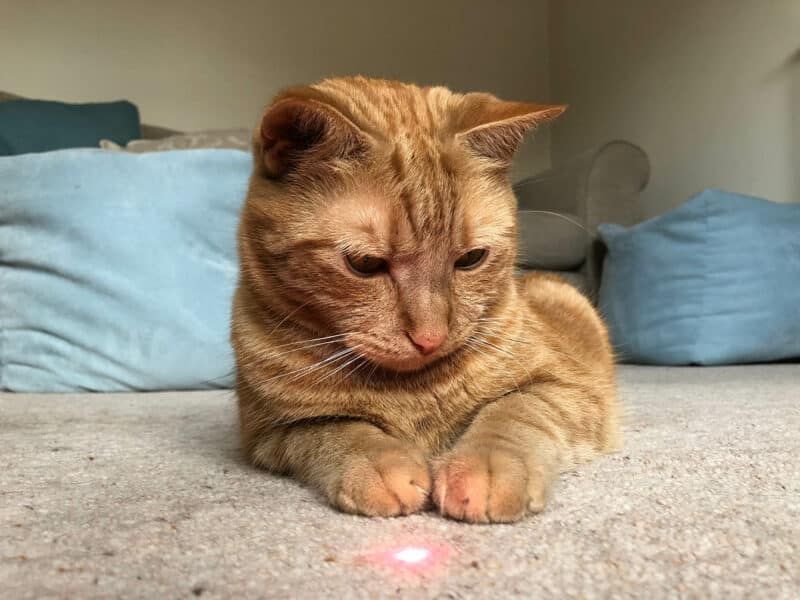
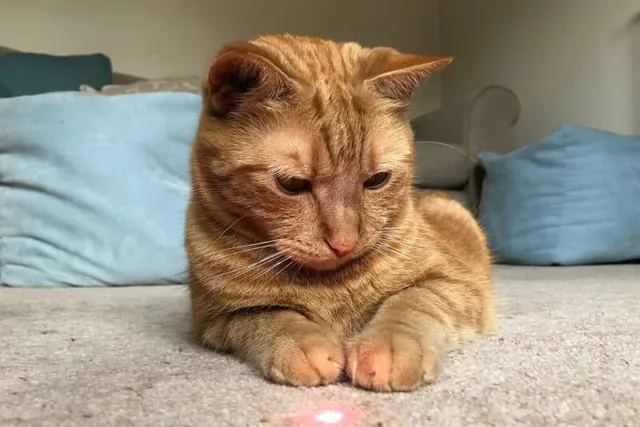
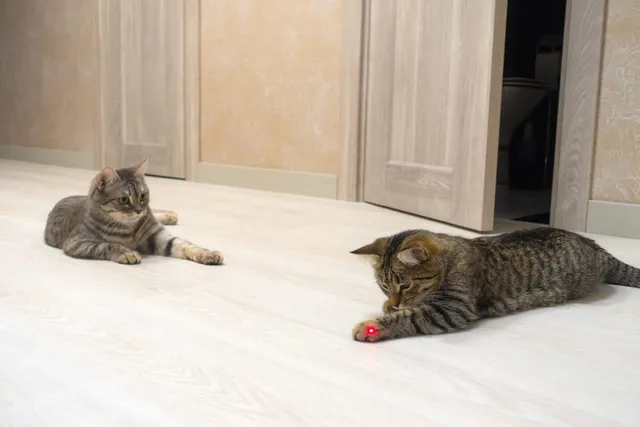
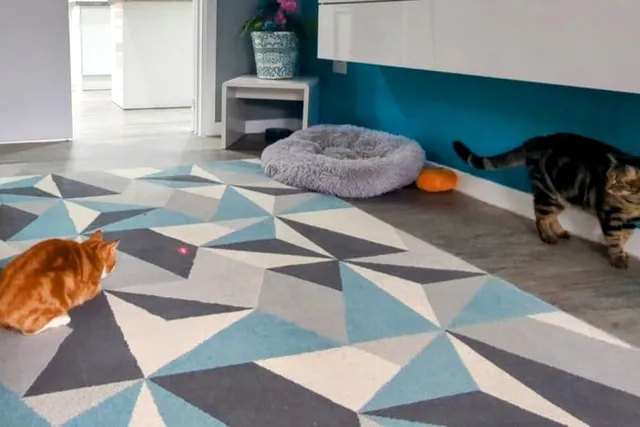
Laser pointers are a great way to entertain your cat since most kitties love chasing the little red dot. If you have ever used a laser pointer while playing with your cat, you are probably quite familiar with the scrunched-up body, wagging tail, and laid-back ears that go with a good feline hunt.
A laser pointer stimulates your kitty's stalking and hunting instincts in a big way. Even though they can never catch it, they keep returning to catch the pesky dot that consistently slips out of their paws, which might lead you to wonder if your cat understands what's going on with the laser pointer.
While it's difficult to say with certainty what your cat understands about this “game,” we do know that most cats enjoy playing with laser pointers for a bit and then become frustrated that they never actually see results from all their efforts. This strongly suggests that your cat understands the ephemeral nature of the red dot they're chasing.

What Is It About Laser Pointers That Cats Love?

Cats naturally love to chase, pounce, and spring on prey. They engage in these activities in the wild as part of the hunt. The need to stalk and spring is so instinctual that cats engage in similar activities even when they do not need to catch anything to eat.
The little red dot your laser pointer makes is perfect for triggering the hunting instinct in your cat. It jerks around like an injured insect or animal trying to flee and stops and starts suddenly, just like a mouse trying to escape your kitty's clutches. It moves quickly and without rhyme or reason, which adds to your cat's stimulation.
Do Cats Enjoy Playing With Laser Pointers?
Absolutely, but some tire of chasing an object they never manage to catch. It depends a great deal on each cat's play preferences. Many cats will happily engage with laser pointers until you get tired of the game, but others quickly grow weary and simply stop bothering to chase the dot.
This most likely happens not as a result of exhaustion but frustration. When felines hunt, they have physical contact with their prey; even if the bird or squirrel gets away, there is a brief tussle when your cat gets to engage with their intended target physically. Some cats find it frustrating to chase but never catch the red dot, and they walk away from the game.
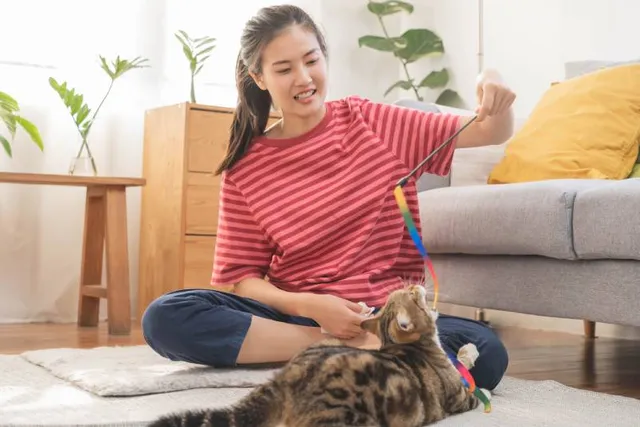
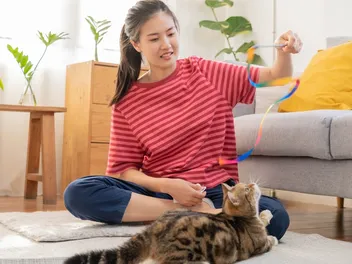
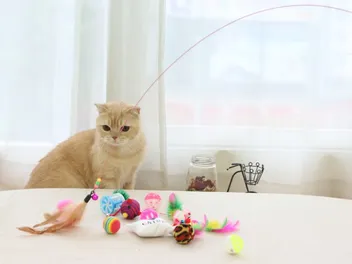
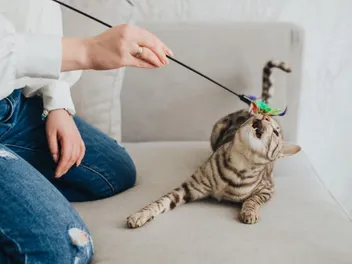
If you're worried about your cat becoming frustrated, you can prevent this by having a plush toy and a few treats on hand that you can throw into the mix. You can add a few seconds of play with a physical teaser every few minutes. That way, your kitty will be motivated to play and stay engaged longer.
What Are the Drawbacks to Using a Laser Pointer to Play With My Cat?

There have been some anecdotal reports of cats becoming aggressive and destructive after laser pointer play. The scientific jury is still out on whether there's a causal link between the two activities, though. Some owners suggest the residual aggression and tendency to scratch furniture with gusto after chasing a laser pointer might be linked to frustration. Just make sure to give your cat the chance to "catch" a plush toy, a teaser, or a treat to wind down from the chase.
It's also essential to ensure the products are used safely. Laser pointers can blind your cat if you shine one directly into your feline's eyes for more than a few seconds (the same is true for humans). It's best to keep the fun electronic toys out of kids' hands until they've reached the age when they can safely engage with lasers without potentially injuring your cat, themselves, or another person.
Keep in mind that laser pointers encourage your cat to get up and move. If you decide to introduce a laser pointer to your arsenal of kitty toys, pay close attention to your cat's reactions, and don't go too long. The idea is to prevent frustration before it happens and give your kitty the opportunity to win!
What If My Cat Doesn't Like Playing With the Laser Pointer?
Cats can be incredibly picky regarding toys, and it is normal if your pet isn't into playing with laser pointers. Some refuse to engage with store-bought options, preferring to play with things they find around the house, like plastic milk carton rings.
Other cats are fine with store-bought toys but don't like certain ones for unknown reasons. There are still others that will play with almost anything but need a few weeks to warm up to any new toy you make or buy. If your feline enjoys chasing the laser pointer dot, that's great, and if they don't, that's okay too!
Finding a toy that your cat enjoys, is genuinely drawn to, and is excited to play with can be a challenge. That's why having a few options is always a good idea until you get an idea of what gets them moving. We love the Hepper Catnip Stick and Whale Kicker for different reasons. For cats who need a little encouragement in playing, the stick is packed full of organic catnip enticing enough to lure in the laziest of felines. The Whale is a great option for cats who love to hunt, pounce, and kick! Both are extremely durable, and can be cleaned and reintroduced for play days yet to come. Find out which is best suited to you below.
| Image | Product | Details | |
|---|---|---|---|

|
Hepper Catnip Stick |
|
Check Price |

|
Hepper Whale Plush |
|
Check Price |
At Catster, we’ve admired Hepper for many years and decided to take a controlling ownership interest so that we could benefit from the outstanding designs of this cool cat company!
Final Thoughts
Cats love chasing and stalking the little red dot, and a laser pointer can provide a fun way to get your cat moving. It is also a fantastic way to engage physically with your cat if you have mobility issues or don't enjoy the physicality of running around with a teaser.
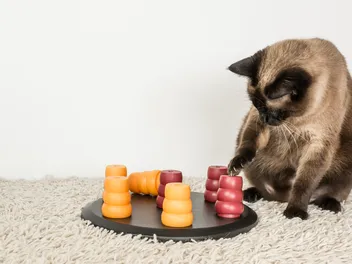
Always allow your cat to catch something physical every once in a while to keep them motivated and interested in the game, and avoid pointing the laser directly into your feline companion's eyes. While laser pointers can provide your cat with a bit of physical exercise, don't forget to mix it up and use puzzles and other challenges that offer sufficient mental stimulation to keep your favorite feline happy.
Sources
Featured Image Credit: Laurav1984, Shutterstock

Expert cat care, straight to your inbox
Vet-reviewed advice, behavior tips, and the best of Catster. Free, and you can unsubscribe anytime.
By signing up, you agree to our Terms & Conditions and Privacy & Cookies Policy.
Lorre Luther is a writer who is firmly convinced that cats are smarter than humans. She left her law career in the United States and moved to the Netherlands to follow her dream of becoming a writer. Lorre currently lives in Rotterdam, she enjoys traveling and greatly appreciates the beauty of nature. Lorre has a spot for animals and admires the intelligence of cats.
Join the conversation
Ask a question, share your story, or send private feedback.