Do Lasers Encourage Play or Trigger Obsessive Behavior? How Different Cats React

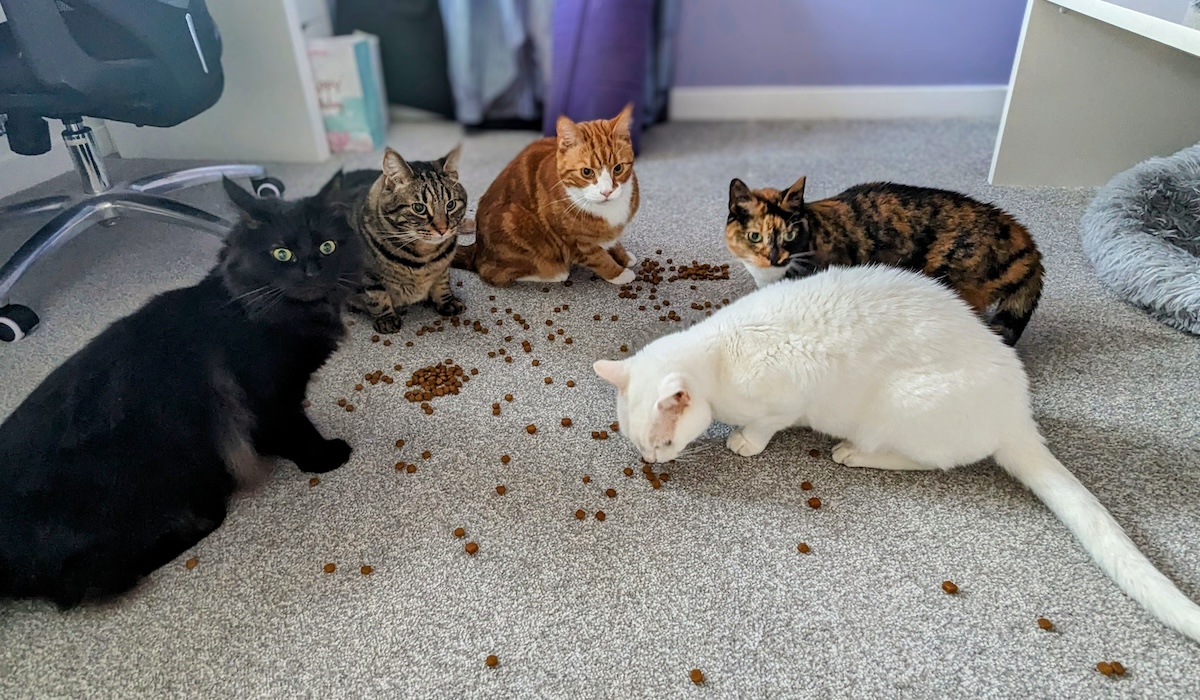
Hi, I’m Dr. Karyn! Read my introduction to learn more about me and meet my five hilarious cats: Clutch, Cyril, Alex, Zelda, and Zazzles.
One of the more challenging aspects of looking after indoor cats is making sure they get enough exercise, enrichment, and excitement in their lives. It’s easy enough to grab a lead and take the dogs out to the beach or the park, but not all cats are amenable to the harness lifestyle. One popular choice is the laser pointer, and it’s easy to appreciate why.
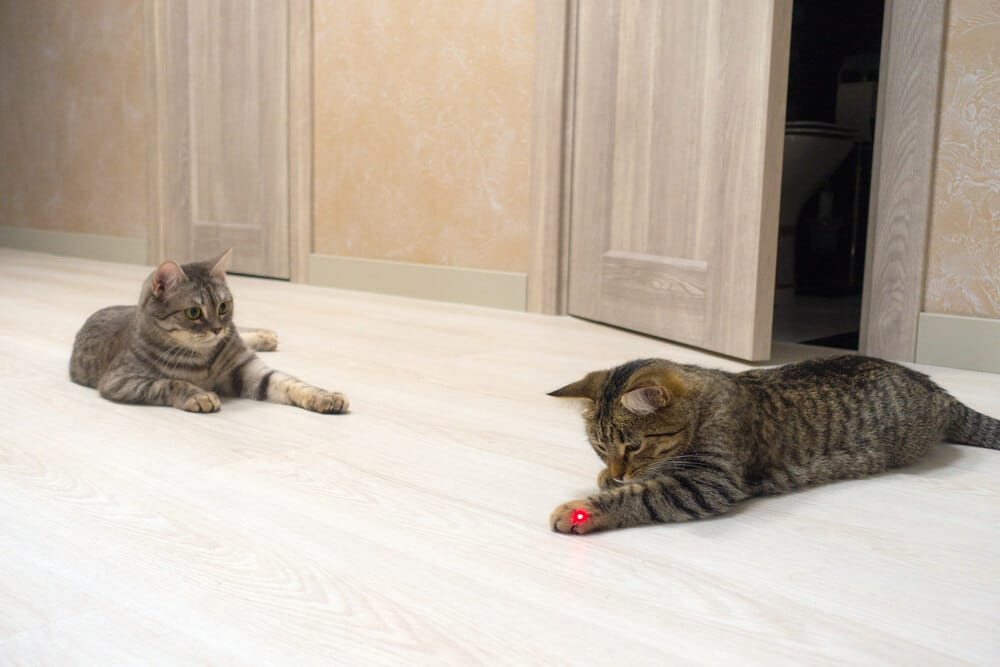
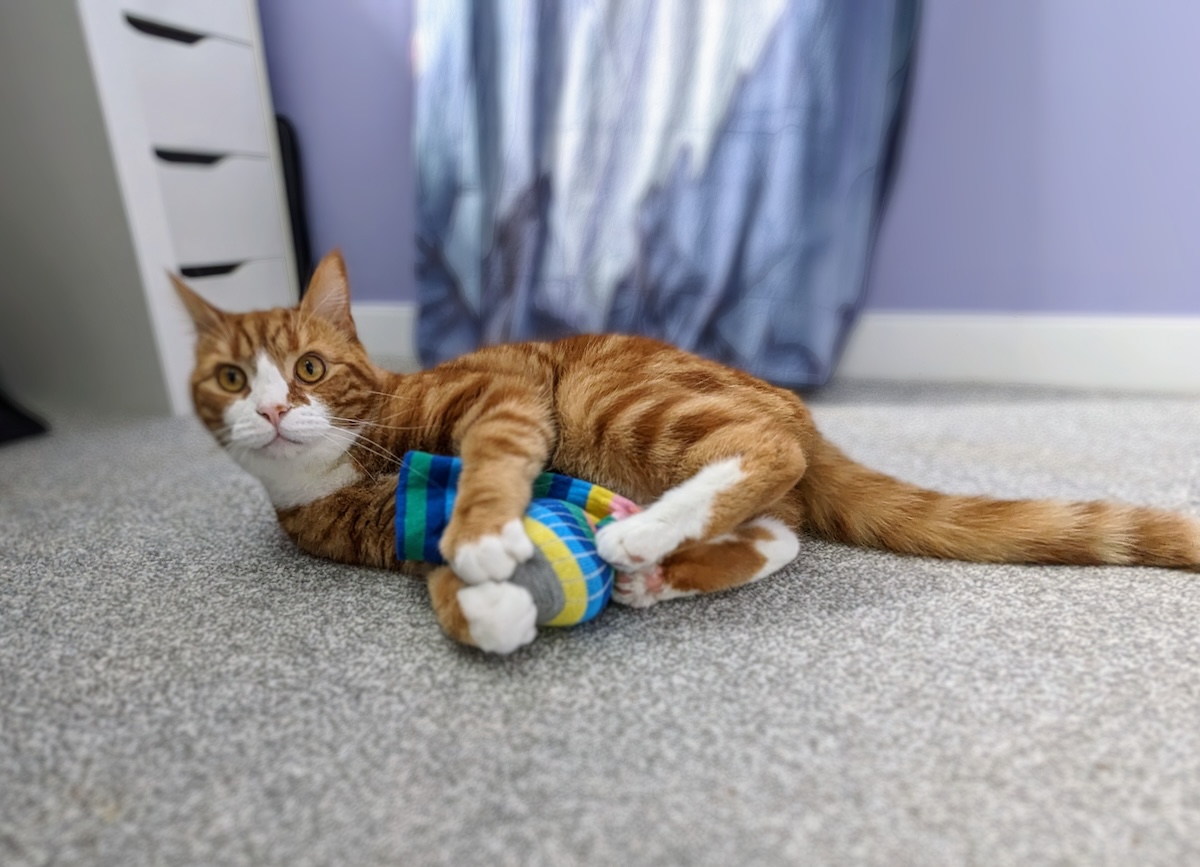
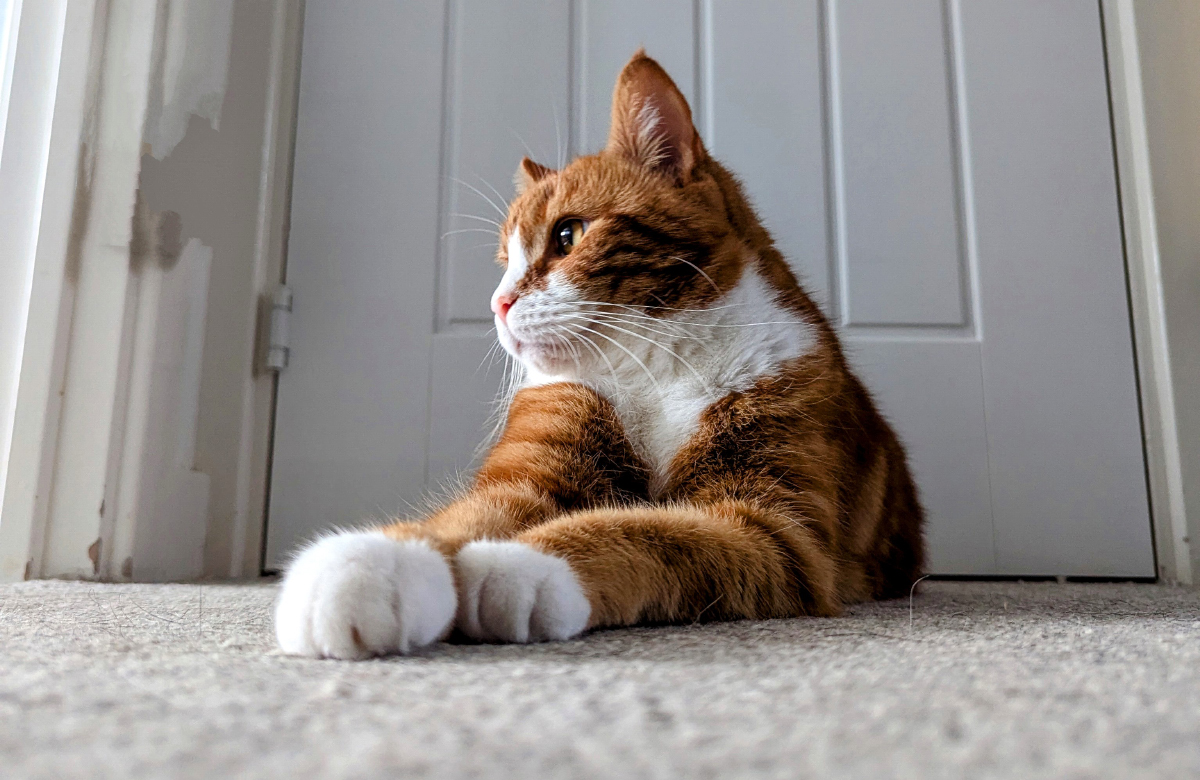
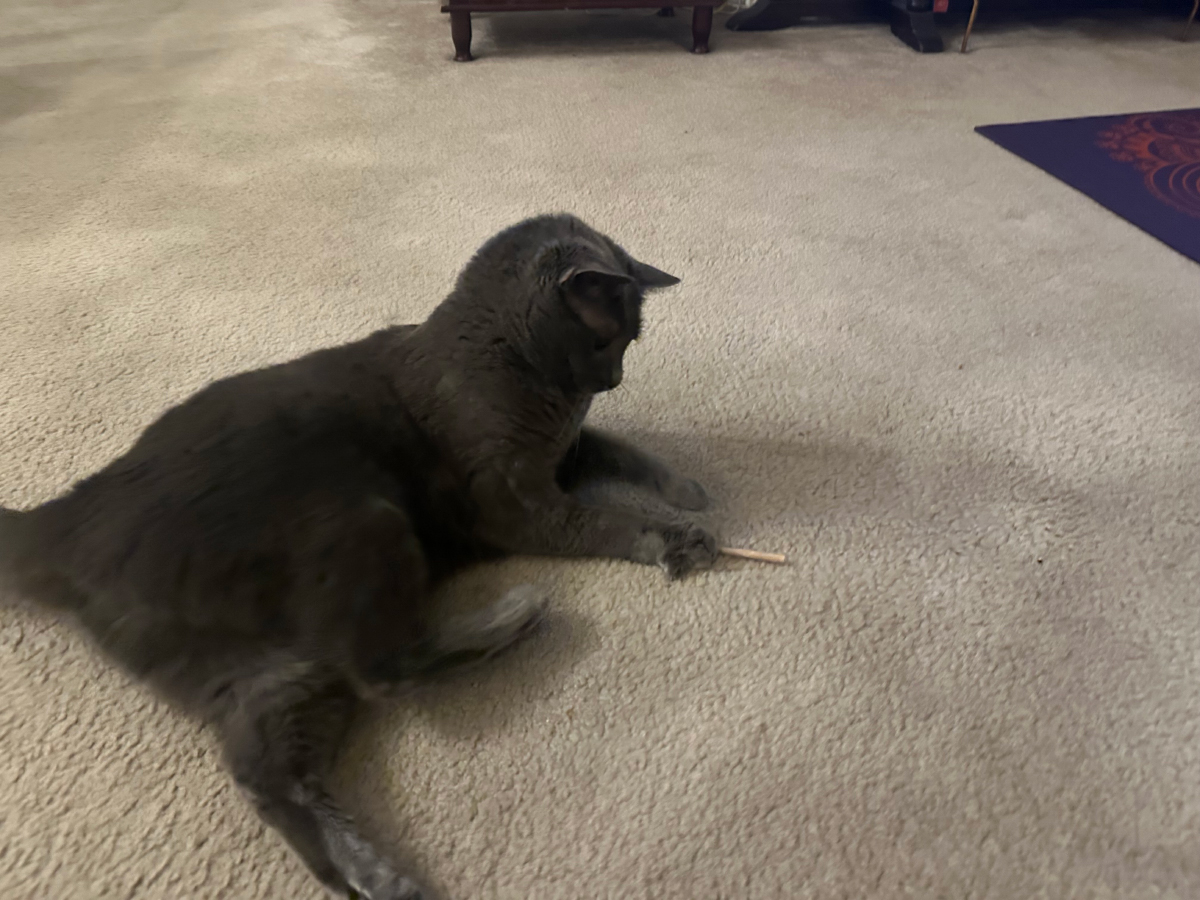
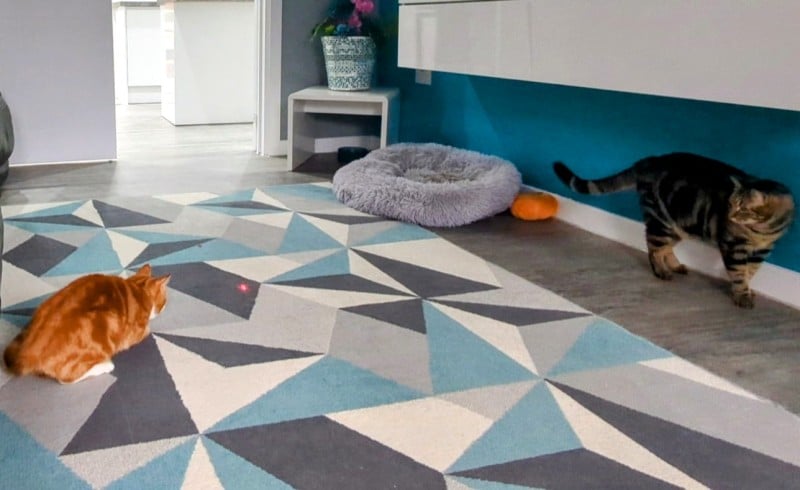
With very minimal effort on my part, I’ve got the cats running upstairs, downstairs, over the bed, and off the walls. Even Cyril, who is famous for his dedication to a life lived horizontally, cannot resist the flickering allure of that elusive red dot. But after reading about how lasers can negatively affect dogs, I started to become worried about my ginger ninja, Alex.

Why Do Cats Love Laser Toys?
Although most of our domestic cats these days are less focused on hunting creatures and more interested in creature comforts, they aren’t that far removed from their wild or free-roaming relatives. Buried deep within that lazy exterior are the hunting instincts and prey drive of a lion, just waiting to be triggered by some fast-moving beastie. When our cats see the twitching movement of that laser, instincts take over, and they soon find themselves unable to resist the chase.
What is strange about this particular game of cat and …dot, is that they never get to catch it, so you would think they would eventually grow bored. However, as most cat parents (myself included) will tell you, each time the laser is retrieved from its draw, cats appear to be just as interested as the time before, and the dozens of times before that. Zelda, in particular, sheds her regal and poised demeanor and turns into a playful, energetic kitten if she so much as hears the telltale sound of the laser being taken from its hiding place. Are they hoping that this time they will finally catch their prey? Or do they simply enjoy the chase?
Unfortunately, this is something only a cat can tell us, so for now, we must use what we know to decide if laser toys are just an engaging way to encourage our cats to play and burn calories, or if they are a potential source of frustration, anxiety, and unhealthy obsession.
A Note on Laser Safety:

When the Game Becomes Obsession
‘Laser Pointer Syndrome ’ is an obsessive-compulsive disorder that has been recognized in our canine friends, with dogs becoming so fixated by the rapid movement of laser toys that they are unable to relax. Their inability to complete the chase leaves them on edge, constantly on alert for ‘the one that got away’. This has always been something that didn't exactly worry me, but it did make me wonder, when I was playing with my cats. It wasn't until Alex joined our fellowship of cats that I started to become concerned.
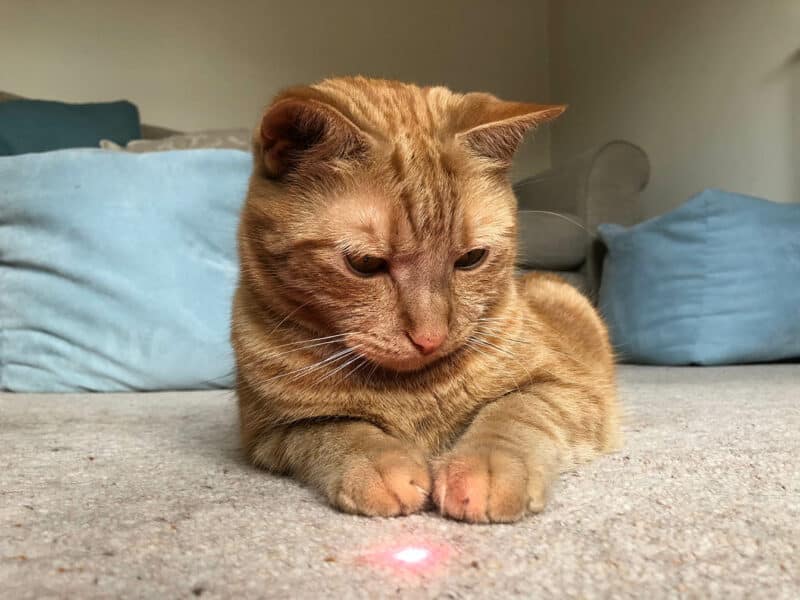
In the beginning, just like all the other cats, Alex loved the fast-paced game of chasing the laser pointer, darting frantically around the house, following it up and down the stairs, and over the cat tree. Then I started to notice him becoming fixated on anything with a reflective surface that flickered on a wall or door - watches, cutlery, even the reflection from our metal door handle. Every night, Alex sits poised outside our bedroom, waiting for the moment that the light from the bathroom hits our door handle just right, sending a shimmer across the wall of the landing. This flash of light lasts moments, one or two seconds at most, but he waits for it, every night. That’s when I started to get worried.
How Do I Fix It?
The obvious solution was to just throw the laser away, give it up cold turkey, which is exactly what I did. However, this didn’t stop Alex’s light chasing behavior; he was just as obsessed with flickering lights and shiny surfaces as ever before. I had opened Pandora’s sparkling box and now I didn’t know how to close it.
Don’t get me wrong, Alex was okay. He wasn’t stressed or permanently locked in a state of tense anticipation, but it did worry me that he was spending at least an hour or two every night just waiting for a fleeting glimpse of a quarry he would never catch; a hunt that couldn’t ever end in the satisfaction of capture. Or could it?
A plan began to take shape in my mind, and I came up with a possible way to bring closure to Alex’s unfinished business. I didn’t know if it would work, but it was worth a try.
Step 1 - Buy a new laser toy
It might seem a bit like buying booze for an alcoholic, but seeing as cold turkey hadn’t worked, I wanted to try weaning him off.
Step 2 - Introduce a new toy that he can actually play with
Interestingly enough, the laser toy I purchased came with a bonus feathery mouse!
Step 3 - Start with the laser, end with the toy
My plan was to end the game with a physical reward so that all the effort of chasing concluded with Alex capturing something he could actually grasp, kick, and chew.
I had to get the timing right, making sure that I switched off the laser at the moment he grabs the toy, but I felt up to the challenge! But would it work?
The Re-education of Master Alex
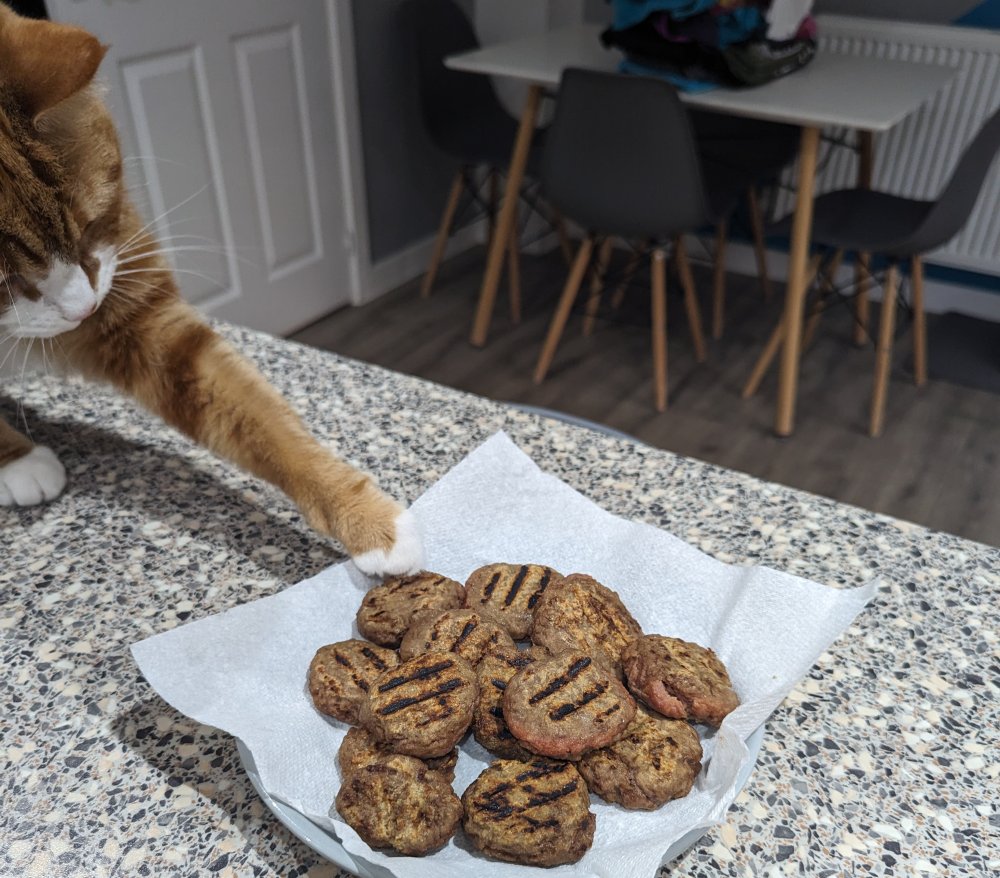
Sometimes it’s about trial and error, and it turned out that Alex wasn’t as excited about the new toy as I’d hoped! His best buddy Cyril, on the other hand, was very interested. It turned out that Alex was more food-motivated, so instead of a toy, I directed the laser toward a small pile of his favorite treats, and voila! His attention immediately zeroed in on the food, and the laser was quickly forgotten.
I was quite pleased to see that in both instances, Alex and Cyril, once they were focussed on the treat at the end of the laser game, didn’t start looking around for the elusive little dot, whereas normally, they would remain on high alert, waiting for it to move again. I don’t expect that this will completely eradicate Alex’s fascination with all things shiny, but the first attempt went better than I thought, so I am optimistic that we will be able to change how he views the laser.

Are Laser Toys a Bad Idea?
Not necessarily, and in many cases, they can actually be one of the best ways to turn a sedentary cat into a fast & furious feline by providing an outlet for their seldom-used hunting instincts. But I think that, in the same way some humans can’t drink, gamble, or shop without becoming addicted, certain cats are predisposed to laser pointer syndrome, something that researchers have started to explore. In a suggestion similar to my method, others have suggested combining laser play with clicker training, giving cats a tangible reward at the end of the game.
Early surveys suggest that laser toy obsession is more likely to occur in cats under two years old, which fits with Alex’s situation. Obviously, I wish I had known about this potential hazard when I first introduced him to the laser four years ago, but even as a vet, I am constantly learning.
And hopefully, my experience with Alex can help some of you avoid the same issue. If you’re going to introduce your cat to the thrill of chasing a laser, make sure that you can give that chase a satisfying conclusion.

This article is a part of Dr. Karyn's series with her five cats.

Expert cat care, straight to your inbox
Vet-reviewed advice, behavior tips, and the best of Catster. Free, and you can unsubscribe anytime.
By signing up, you agree to our Terms & Conditions and Privacy & Cookies Policy.
Dr. Karyn Kanowski BVSc MRCVS (Veterinarian)
Dr. Karyn comes from Queensland, Australia, and has lived in the UK for the past 10 years. In 2010, she graduated from The University of Queensland School of Veterinary Science and also has a Bachelor’s degree in Zoology. She is passionate about using evidence, experience, and owner collaboration to provide the best solutions for pets, and believes in making reliable information about animal health accessible to all. Dr. Karyn shares her home with five cats, four dogs, and one husband. When she is not in the scrubs, she spends her time writing, gardening, and cleaning up pet hair!
Join the conversation
Ask a question, share your story, or send private feedback.