Cats Need Teeth, Don't They? Dr. Karyn the Vet vs Pet Owner

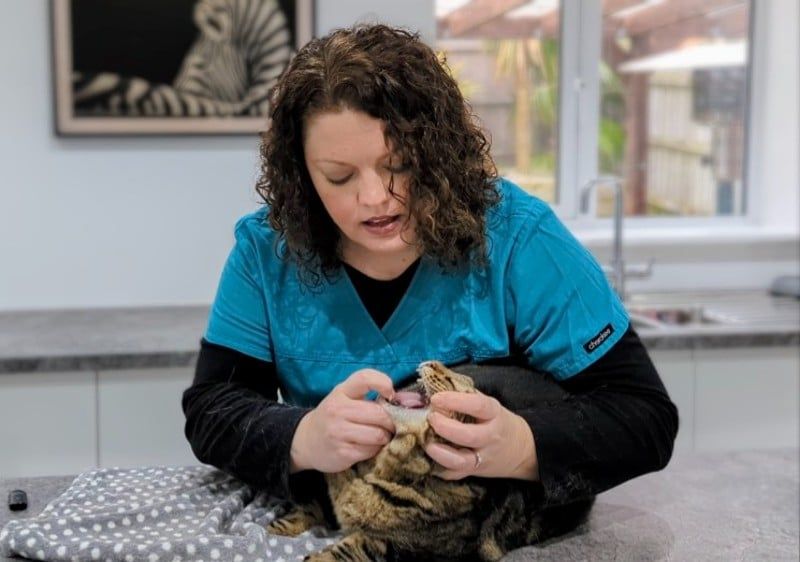
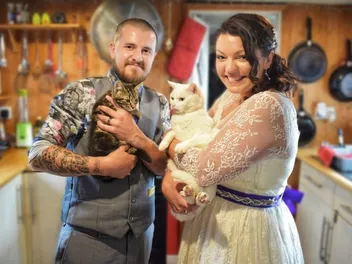
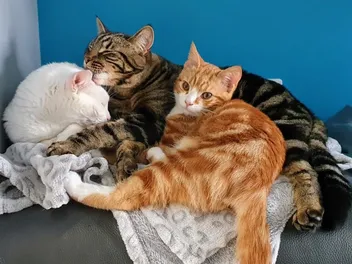
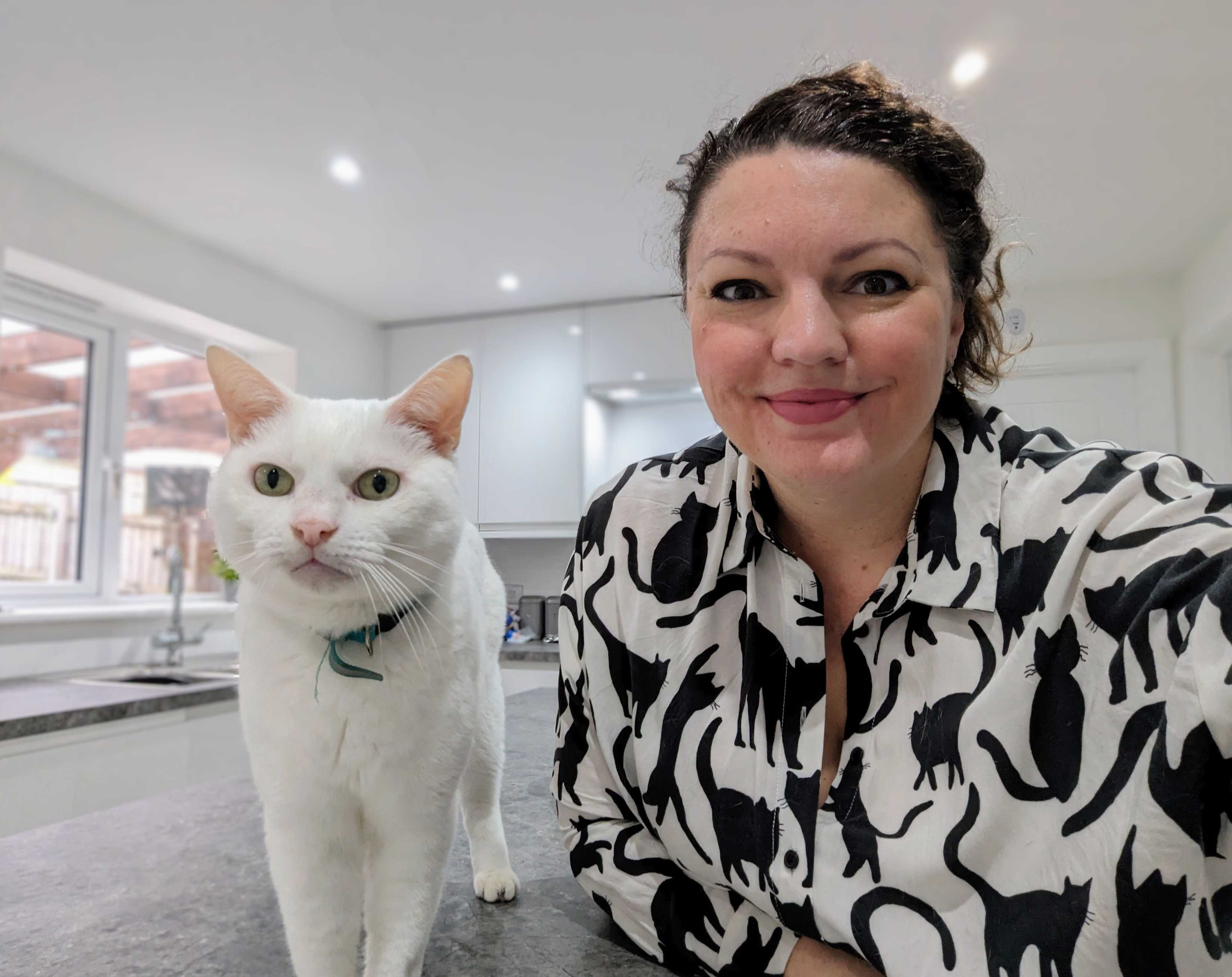
Hi, I’m Dr. Karyn! Read my introduction to learn more about me and meet my five hilarious cats: Clutch, Cyril, Alex, Zelda, and Zazzles.
That probably sounds like a stupid question, doesn’t it? Of course cats need teeth!
But, what would happen if they didn’t have any? Well, that was a question I was faced with about my special little man, Clutch, five years ago.
We don’t know anything about Clutch’s kittenhood; he was about a year old when he was brought into my veterinary practice, skinny, scabby, and in need of some TLC after fending for himself in a shopping center car park for several months. When no one came forward to claim him, I found myself falling in love with this confident, sassy, affectionate fellow. After I castrated and chipped him, he came home with me, where he has stayed for over nine years. Among the many things that were unique to Clutch was his little cheesy grin. His mouth sat open by just a few millimeters, just enough to get a peek at his little fangs and incisors, and it was adorable. There was no obvious cause of this gap, and he certainly had no trouble scarfing down food.

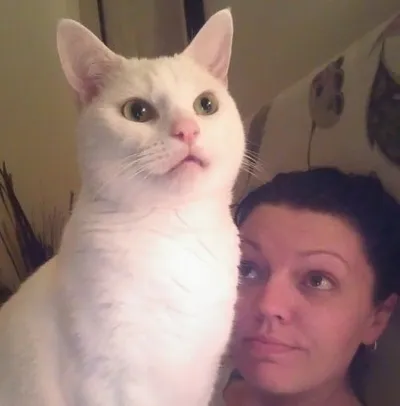
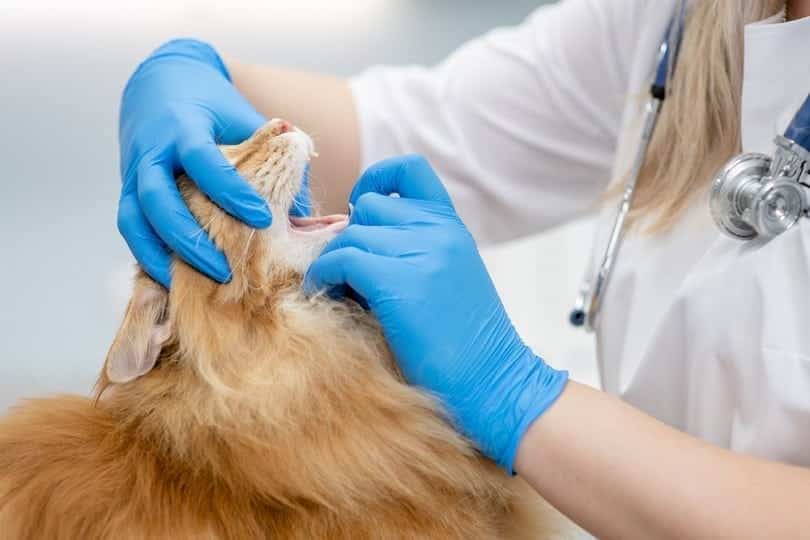
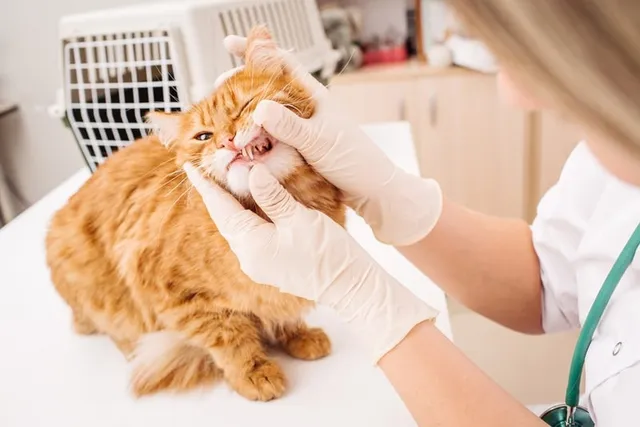
After about four years, I noticed that he started to seem a bit sad, and wasn’t eating with such enthusiasm, which led me to have a good look inside his mouth. What I found was that the gums around most of his teeth around the front of his mouth looked red and inflamed, and all four of his canine teeth (fangs) were a bit wobbly. It appeared that, over time, the constant exposure of his gums to the air had caused inflammation and weakening of the tooth roots.
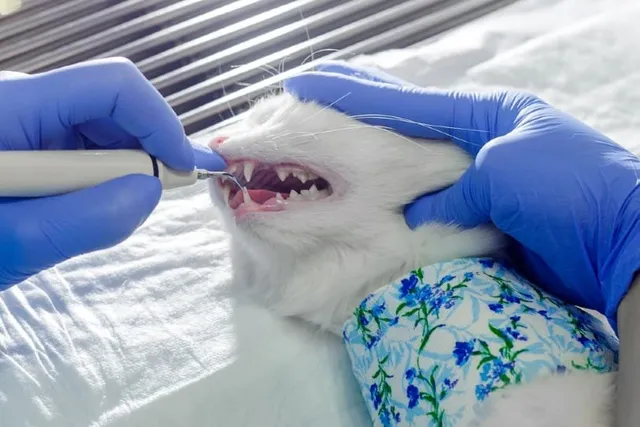
Because of the way the gums had been affected, and because he was in pain, there was no other option than to get him in for a dental and extract all the affected teeth, which was most of them. This sounds really awful, I know, but it was a procedure I had performed dozens of times on cats with severe dental disease, and I knew how well they did after having their teeth out. I knew that Clutch would be able to eat without his teeth, I knew that he was fit and healthy, so there was minimal anesthetic risk, and I knew that it was the best way to treat his sore mouth.
I knew all this. I am a vet after all, a professional. So why did my partner find me in tears, completely inconsolable, at 11 pm the night before his surgery?

Dr Karyn the vet is a completely different person to Karyn, the pet owner.
The conversation went a little bit like this:
Reece: What’s wrong? I thought he was just having teeth out?
Me: He is.
Reece: But you do that all the time. He’ll be fine! He’ll be better with them out.
Me: I know that.
Reece: You know better than anyone that he’ll be okay.
Me: Yes, I know that too.
Reece: ?
Me: I don’t know! It’s just different when it’s your own! What if he’s not okay? What if he’s the rare case that doesn’t wake up from anesthetic? What if he can’t eat?
I found myself plagued by all of the worries and concerns that I am usually helping my clients deal with, unable to listen to my own advice. I was completely unprepared for the rush of emotions that was hitting me, and I realized that, when it comes to treating my own pet, logic and objectivity are out the door and catching a bus to the next county. This is why doctors and vets should never operate on loved ones, and I was glad that I’d arranged for a colleague to perform Clutch’s dental. As you can probably guess, Clutch’s surgery went flawlessly. His pre-anesthetic bloods were perfect, his anesthetic was smooth, and the problematic teeth came out with very little resistance, confirming that they really needed to be extracted. He was up and about very quickly, meowing loudly about his very empty stomach. Which brings me to our original question: Cats need teeth, don’t they?

Clutch’s New and Improved Toothless Appetite
One of the most common observations I hear from owners after their cat or dog has had a dental is how much better their pet is eating.
“We didn’t realize how much his teeth were affecting him,” is a frequent comment.
“She seems happier than she has in months!” is another.
This is because, most of the time, if an animal’s teeth are causing them pain or discomfort, it’s usually been going on for a lot longer than we realize. Cats in particular are very talented when it comes to masking pain; just getting on with it until it becomes too much for them to keep up the act. That doesn’t make us bad pet parents, but it does mean that if our cat starts to show signs of dental problems, we need to take it seriously. If it’s bad enough that they can’t disguise it, it’s usually bad enough to need surgery.
So when you remove the source of that pain, the results are often dramatic, and almost instant.
I had prepared a supply of Clutch’s favorite roast chicken as a recovery treat, cut into little pieces that could be swallowed whole. Many people think that mushy, liquidy food is best after a dental, but this is more likely to get stuck in the gaps left by the extracted tooth roots; soft chunks are the way to go. And boy, did they go!
I think if I’d filled his bowl to the brim with chicken, it would have been gone in an instant. Clutch attacked each piece I offered with the ferocity of a starving velociraptor, and I was grateful that he no longer had those sharp fangs! Within a few days, he was back to the sprightly, energetic character of six months ago. After a week, his gums had completely healed, and after two weeks, he had gained ten ounces. And, just like any other pet owner, I thought to myself: He’s happier than he’s been in months!
Clutch ❤️ Chicken (and just about everything else!)
Clutch had been a big fan of cooked chicken before his dental, but now he was obsessed. Gone were the tiny bite-sized pieces; he was grabbing great big chunks and chomping away until there was nothing left. He was eating dry kibble too - he still has a couple of molars at the back to chew with, but most of the time, cats swallow the pieces whole anyway. But it was the way that he was using his gums like teeth that was most impressive!
The other cats in our house, all in possession of full mouths of healthy teeth and gums, still refuse to eat chicken if it has not been shredded. Meanwhile, I am quite certain that, if given the opportunity, Clutch would sink his lack-of-teeth into an entire roast chicken. In fact, just the other night he tried to make off with a whole pork rib! He’s also been known to bite off the end of a pizza slice, munch on a dropped corn chip, and just the other day he managed to steal part of a pancake! We have learned to be extra vigilant when Clutch and food are in the same room, but I have to admit that his desperate attempts to snatch treats and climb into the fridge are quite entertaining.

But, cats do need teeth, don’t they?
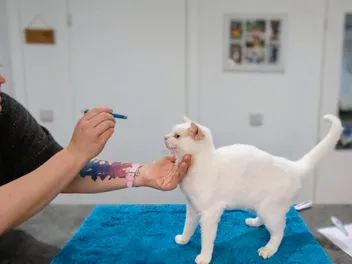
Of course they do, and dental health and hygiene is an essential part of looking after your feline companions. Being able to check your cat’s teeth, and watching how they pick up, chew, and swallow their food, are simple and effective ways that you can monitor their dental health. In addition to that, having your vet perform a dental check every six to twelve months can help identify and treat problems before they become severe.
However, there are certain conditions and situations where cats need to have multiple teeth removed; sometimes all of them. If you find yourself in that situation, it is completely normal to feel stressed, worried, and emotional - I’ve been there! But you should also know that if your cat’s teeth are bad enough that they need to come out, you can almost guarantee that they’re going to feel 100% better with them gone. And once the gums have healed and hardened, they can be just as effective as teeth, maybe even better - just ask Clutch!

This article is a part of Dr. Karyn's series with her five cats.
Expert cat care, straight to your inbox
News, insights, and useful advice, delivered to you.

No spam — unsubscribe anytime.
By signing up, you agree to our Terms & Conditions and Privacy & Cookies Policy.
How useful was this post?
Click a star to rate. You can leave written feedback afterwards. (We read all feedback.)
Dr. Karyn Kanowski BVSc MRCVS (Veterinarian)
Dr. Karyn comes from Queensland, Australia, and has lived in the UK for the past 10 years. In 2010, she graduated from The University of Queensland School of Veterinary Science and also has a Bachelor’s degree in Zoology. She is passionate about using evidence, experience, and owner collaboration to provide the best solutions for pets, and believes in making reliable information about animal health accessible to all. Dr. Karyn shares her home with five cats, four dogs, and one husband. When she is not in the scrubs, she spends her time writing, gardening, and cleaning up pet hair!