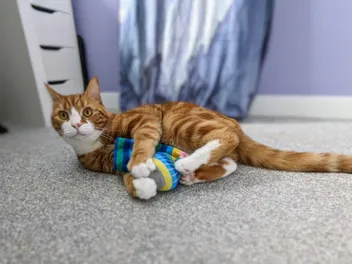
The Thrill of the Hunt: Do Cats Need It to Live a Good Life?

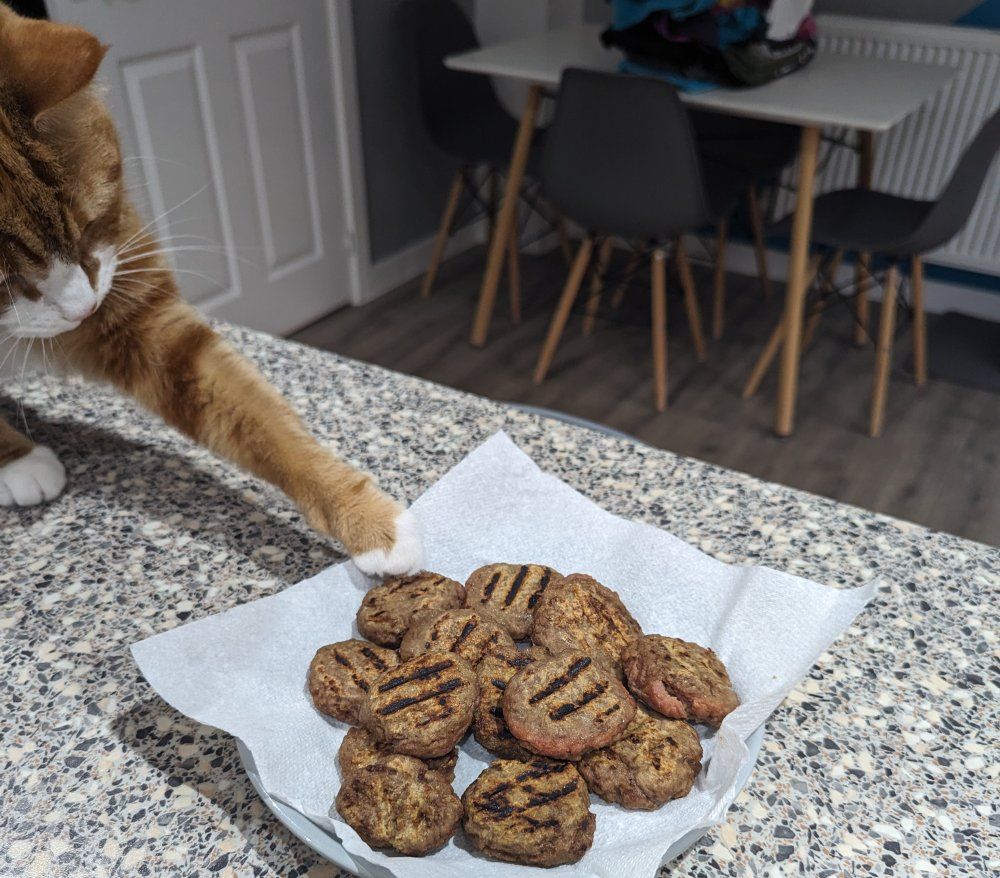
Hi, I’m Dr. Karyn! Read my introduction to learn more about me and meet my five hilarious cats: Clutch, Cyril, Alex, Zelda, and Zazzles.
Cats have been sharing our lives for thousands of years, and in that time, they have evolved from being skillful, silent hunters that stalk and kill their prey with startling efficiency, to, well…this:

Don’t get me wrong, the athletically challenged Cyril is not necessarily an accurate representation of all pet cats, but you get the idea! However, when you compare the behavioral and morphological changes that domestication has had on our canine companions, as demonstrated by my Chihuahua, Ned and his German Malinois, Kodah, our feline friends have retained much of their ancestors' instincts and attributes.
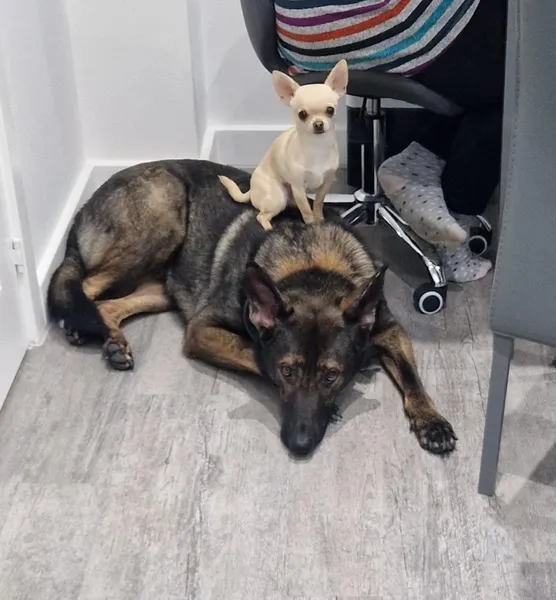
And it is this fact that often makes it hard for us, their human caretakers, to decide how much of their natural ancestral behaviors we should be encouraging.
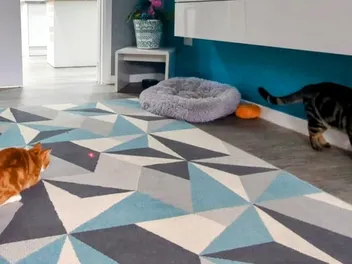
I previously talked about using toys and laser pointers to reach out to my cats’ hunting instincts and get them engaging in some cardio, which I believe is an important part of providing them with enrichment, exercise, and mental stimulation, but is it enough? Should we be encouraging our cats to be cats, and allow them to hunt prey with impunity? I’m not so sure, but I also think that this is a question that is open to a variety of interpretations.

Is it Cruel to Stop Cats From Hunting?
Back in the late 1970s, the Farm Animal Welfare Council of Great Britain formulated a set of rules that would become the cornerstone of virtually every law regarding keeping captive animals, not just livestock. Those rules were better known as The Five Freedoms, and they are:
Freedom from hunger and thirst, by ready access to water and a diet to maintain health and vigor.
Freedom from discomfort, by providing an appropriate environment.
Freedom from pain, injury and disease, by prevention or rapid diagnosis and treatment.
Freedom to express normal behavior, by providing sufficient space, proper facilities, and appropriate company of the animal’s own kind.
Freedom from fear and distress, by ensuring conditions and treatment, which avoid mental suffering.
More recently, these were re-examined with a view to expand on these basic provisions to not only prevent negative experiences but to provide animals with A Life Worth Living. Now, I think that it’s fair to say that my cats have a life worth living; one that I myself would be quite content with, and the same can likely be said for the majority of cats that live with human families. I can also confidently say that most pet cats enjoy lives that are in keeping with at least four of the five freedoms. Where things get a bit less clear, however, is when we look at the 4th rule: Freedom to express normal behavior. Does this mean we should allow our cats to roam freely and hunt? Although some would argue yes, I don’t think it’s quite that simple.

I live in the UK, where keeping cats indoors is largely frowned upon, though this is starting to change. When I lived in Australia, the rules regarding cat ownership were becoming more strict, with the introduction of mandatory microchipping and registration of pet cats, as well as the imposition of curfews. See, unlike the UK, where cats have been part of the landscape for over a millennia, Australia was devoid of feline predators until they were introduced by European colonists in the early 19th century. Since their introduction, a population of 3-4 million feral cats has emerged, which is responsible for killing six million native animals per day, and threatening over 100 million species with extinction. In this scenario, limiting the outdoor access and hunting of cats is undoubtedly necessary. But what about in parts of the world like the UK or US, where cats, in one form or another, are better tolerated within the ecosystem?
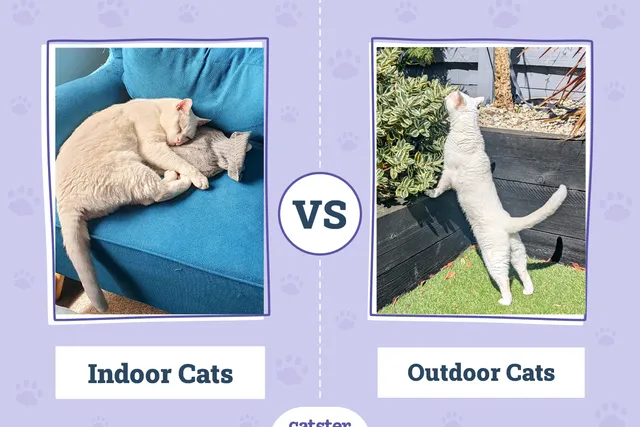
In my humble opinion, keeping cats indoors is part of being a responsible owner. In the majority of cases, we live with our cats in areas where there are lots of people, dogs, and cars. There are potentially deadly hazards like predators, toxins, parasites, and viruses, and the feline population density is far greater than would occur naturally, so making welfare judgments for our pets based on their wild origins starts to seem irrelevant.
If we were to look at it more objectively, taking into account the five freedoms, I would argue that the life of an entirely indoor cat is one that is:
Free from hunger and thirst
Free from discomfort
Free from pain, injury and disease
Free from fear and distress
And when we are able to provide our indoor felines with an environment that
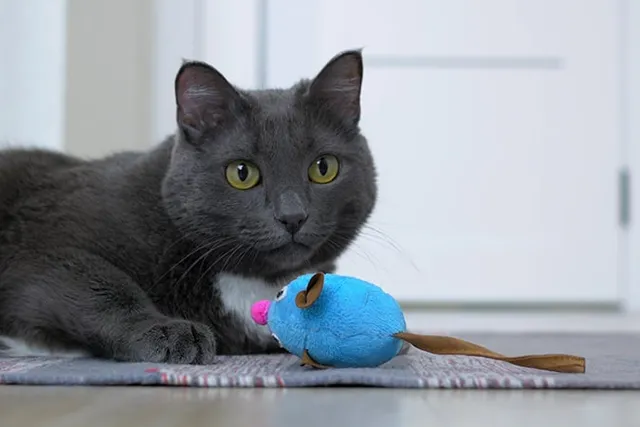
is enriched with games and interactive toys,
allows them to explore the vertical world through cat trees and shelves,
challenges them by providing their food in interesting ways,
is filled with attention, love, and affection,
I believe that we not only allow them the freedom to express normal behaviors, but we are also making sure that we give them a life worth living.
Is it Cruel to Allow or Encourage Cats to Hunt?
Cruelty is largely a human invention. In the animal kingdom, there are rarely instances where one animal causes pain or suffering to another purely for sport or enjoyment; hunting is a matter of survival. But is this still the case with our domestic pets?
Our pets still have a prey drive - that wild instinct that can turn even the most delicate fluffball into a killing machine - which is why some people believe that we should allow them to do what comes naturally - hunt. The way I look at it is that we can’t treat our cats as pets one minute, and wild animals the next. Either we commit to their domestication, or we set them all free to whatever fate nature has in store for them (and I’m sure you know which one I’m in favor of!).
Cats may retain their hunting instincts, but most of them don’t need to hunt, and some of them seem to be unsure of what to do with their prey once they’ve caught it. The first time I ever heard Alex engage his ‘hunting chatter’ was when he spotted my husband eating a hotdog! Why would they go through the work of chewing through skin and fur when there’s a bowl of tender chunks back at home? So we either end up with a cat that is hunting and eating food it doesn’t need, with the risk of picking up various diseases in the process, or one that is catching prey to either kill or play with. I’m not suggesting that these cats are cruel, they are just following an instinct they no longer have a need for.
But I do wonder if knowingly allowing our cats to chase and kill wild animals when they don’t need to, is irresponsible, if not cruel.

Giving Our Cats the Thrill of the Hunt
I think it’s important to remember where our cats have come from, and that they still have many of the urges and instincts of their wild counterparts, but that doesn’t mean we should ignore the fact that they aren’t wild anymore. Part of being responsible for the animals in our lives is keeping them safe, and given that allowing your cat to hunt comes with the additional risks of roads, predators, parasites, infections, and conflict with other cats, it seems to me that providing them with alternative ways to flex their predatory muscles is a much safer way to ensure their needs are being met.
And let’s face it, if my spoiled cats don’t have a life worth living, I don’t know who does!

This article is a part of Dr. Karyn's series with her five cats.
Expert cat care, straight to your inbox
News, insights, and useful advice, delivered to you.

No spam — unsubscribe anytime.
By signing up, you agree to our Terms & Conditions and Privacy & Cookies Policy.
How useful was this post?
Click a star to rate. You can leave written feedback afterwards. (We read all feedback.)
Dr. Karyn Kanowski BVSc MRCVS (Veterinarian)
Dr. Karyn comes from Queensland, Australia, and has lived in the UK for the past 10 years. In 2010, she graduated from The University of Queensland School of Veterinary Science and also has a Bachelor’s degree in Zoology. She is passionate about using evidence, experience, and owner collaboration to provide the best solutions for pets, and believes in making reliable information about animal health accessible to all. Dr. Karyn shares her home with five cats, four dogs, and one husband. When she is not in the scrubs, she spends her time writing, gardening, and cleaning up pet hair!