


When it comes to cat litter, there are loads of options for your precious feline. You can choose from non-clumping or clumping, and you can also choose between clay, silica gel, and biodegradable, eco-friendly materials. However, with the many options, how do you determine the safest cat litter to use?
In this post, we’ll discuss cat litter safety and explain what to look for in order to use the safest cat litter available on the market today. We’ll also examine the types of materials used and the pros and cons of each.

The 3 Types of Materials Used in Cat Litter
1. Clay Cat Litter

Clay cat litter is generally the least expensive, and more economical type of cat litter, and is a popular choice among cat owners due to the ease of keeping the litter box clean.
Still, clumping clay litter is somewhat controversial due to its impact on the environment, the dust it produces, and the chance of intestinal blockages. Let’s examine the pros and cons to get a more in-depth idea of this type of litter.
- Better odor control
- More manageable cleaning
- Budget-friendly options available
- Keeps litter box dry
- Not environmentally friendly
- Non-flushable
- Potential to accumulate in digestive tract and cause obstructions s
- Non-biodegradable
- Some are quite dusty
2. Silica Gel Litter

You may have heard about safety issues regarding silica dust, and are worried about using it in your home. The good news is that the form of silica gel granules used in cat litter, amorphous silica, does not produce the hazardous dust associated with crystalline silica, and is perfectly safe for you and your kitty. This type of litter is a lot more expensive than the others on the list, but with good reason.
Silica gel litter works by trapping the urine inside the granules, then slowly releasing the non-smelly liquid through evaporation. To keep your litter box fresh, you just need to scoop out the poop! This litter is non clumping, so there are no risks of it forming intestinal blockages, and most silica cat litters claim to hold around 4 weeks of urine per cat!
Some silica litter even contain color changing granules that let you know if there are problems with your cat’s urine – how clever is that?
The main downsides to this litter is the price, the fact that it is not a particularly eco-friendly option, and some cats don’t like the feel of the granules underfoot.
- Absorbs liquids well with odor control
- Requires less maintenance and cleaning
- Contains less dust
- Less likely to grow mold and bacteria
- Some are flushable and biodegradable
- May not be comfortable on your cat’s paws
- Expensive
- Environmental impact of mining
- Granules often get tracked out of the tray
3. Biodegradable/Eco-Friendly Litter

Lastly, cat owners have the option of using biodegradable cat litter. This type of litter is made from all-natural, sustainable materials, such as soft wood, recycled paper, pine, grass, walnuts, corn, wheat, soybeans, and other environmentally safe materials. Not only is this type of litter better for the environment, it is also safer for your cat.
In choosing eco-friendly cat litter, you can rest assured it will be free from dyes, fragrances, GMOs, and synthetic chemicals.
- Eco-friendly
- Free from artificial dyes, fragrances, GMOs, and synthetic dyes
- Dust-free
- Better for allergy sufferers
- Some are flushable
- More expensive
- May be harder to find in pet stores
- Some materials may attract pests
- Minimal odor control
- Requires more filling and cleaning
- Some materials may produce more dust

Other 2 Litter Factors to Consider
The types of litter above can also come in different forms; clumping, non-clumping, scented, or unscented – which is the best for your cat?
1. Unscented vs. Scented Cat Litter
Some cats are sensitive to scented litter, and going with biodegradable and sustainable cat litter will most likely be unscented, meaning no artificial fragrances will be present, only natural smells from the material itself. Keep in mind that even if cat litter is marketed as “scented,” this feature doesn’t tend to last long, and good litter box hygiene is still essential.
Combating tough cat litter smells is an ongoing battle for pet parents but luckily, there are products out there designed to help! Two products that significantly reduce odors are the Hepper Litter Additive and the Hepper Enzyme Spray. At Catster, we’ve admired Hepper for many years and decided to take a controlling ownership interest so that we could benefit from the outstanding designs of this cool cat company!
Image
Product
Details
Best Enzyme Cleaner

Hepper Advanced Bio-Enzyme Pet Stain & Odor Eliminator Spray
CHECK PRICE
Best Litter Additive
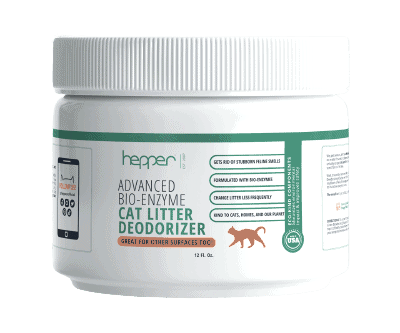
Advanced Bio-Enzyme Cat Litter Deodorizer
CHECK PRICE
2. Clumping vs. Non-Clumping

All cat litter comes in either clumping or non-clumping. Some debate surrounds the concern that clumping litter could be dangerous for cats due to sodium bentonite, the agent responsible for causing the litter to “clump” when moisture is added to it. The agent acts as expandable cement, if you will, which hardens and allows you to scoop out the clump rather than cleaning the entire box and adding all new litter. Instead, you only have to fill in the void from the clump, resulting in using less litter.
Another concern is the possibility of the litter causing intestinal blockages if your cat swallows some. Cats are constantly grooming themselves, and if litter is in the paws and your cat licks and ingests enough of it, it could cause intestinal blockages. Reports of this seem to be anecdotal only, with no cases readily found in any scientific literature. We would suggest avoiding clumping cat litter for kittens however; they are much more likely to be playing, in or getting covered in their litter, which could increase their risk of a blockage.
- Better odor control
- Lasts longer in the litter box
- Easy to spot cat waste for removal
- Clumps with moisture for easy scooping
- More dust and tracking
- Requires daily maintenance
- Fewer options in materials used
- Slight possibility of causing intestinal blockages

Cat Litter Safety Tips
- Keep your litter boxes far away from your cat’s food and water.
- Make sure your cat can easily get in and out of the litter box and that it’s large enough for them to turn around in.
- Don’t use litter box liners, as cat claws can get stuck in them or rip the liner, thus causing more of a mess for you to clean.
- Use an uncovered litter box with unscented litter, preferably.
- Fill the box with enough litter that your cat can dig and cover their waste.
- Scoop the box at least once daily.
- Do a deep clean of the litter box at least once every two weeks (possibly less often with silica litter).
- Wear gloves whenever you’re cleaning the litter box.
- Pregnant women should have someone else clean the litter box to prevent them from being exposed to toxoplasmosis.

Final Thoughts
When it comes to choosing litter for your cat, much of the decision comes down to personal preference; both yours, and your cat’s. In terms of the safest option, look for litters that produce less dust. In general, the cheaper clay litters will produce more dust than others, and silica gel produces little to none. Natural materials are much kinder to the environment but will require more cleaning to stay on top of odor control.
Overall, there are no ‘unsafe’ litters on the market, but like with anything, some are better than others. One of the major factors in terms of giving your cat the best toileting experience is the box itself. Avoid enclosed boxes that keep odors trapped in – it might be nicer for us, but it will be less pleasant for them! Deep sided boxes are good, and top-entry boxes are a great way to provide your cat with some privacy, a deep layer of litter, and reduce the amount of litter being tracked around the house.
Hopefully, this information will put your mind at ease about the safety of cat litter and helps you make an informed decision next time you’re at the pet store.
Related Reads:
- Why Is My Cat Making a Vibrating Noise? Vet-Approved Explanation
- Why Do Mother Cats Attack Their Older Kittens? Vet-Reviewed Reasons
Featured Image Credit: Zoran Photographer, Shutterstock






