Get

In Your Inbox

Catster is reader-supported. When you buy via links on our site, we may earn an affiliate commission at no cost to you. Learn more.

Why Do Mother Cats Attack Their Older Kittens? 4 Vet-Reviewed Reasons

Share

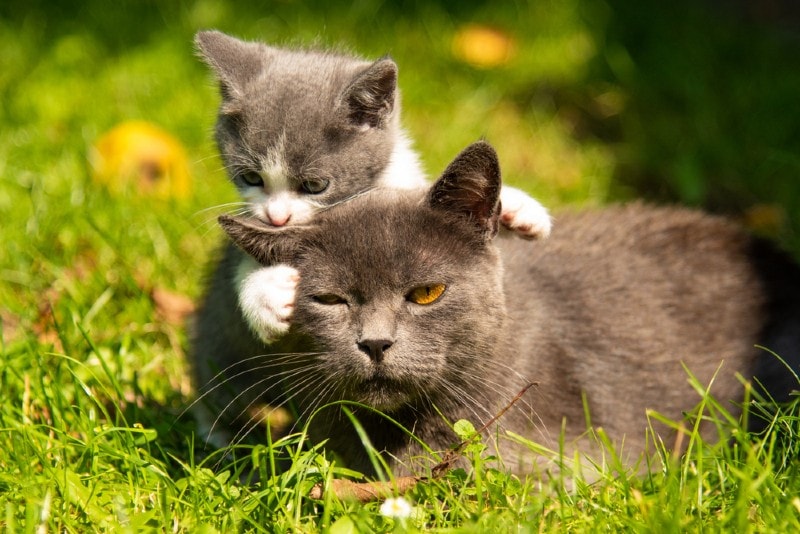
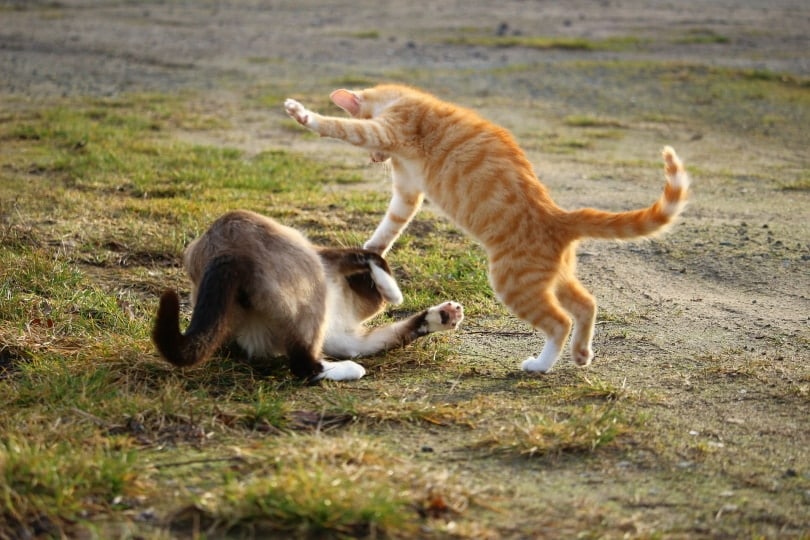
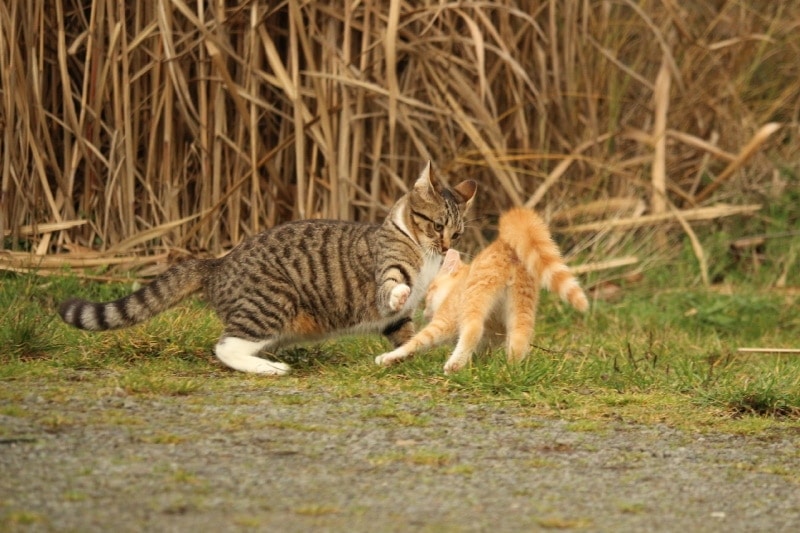
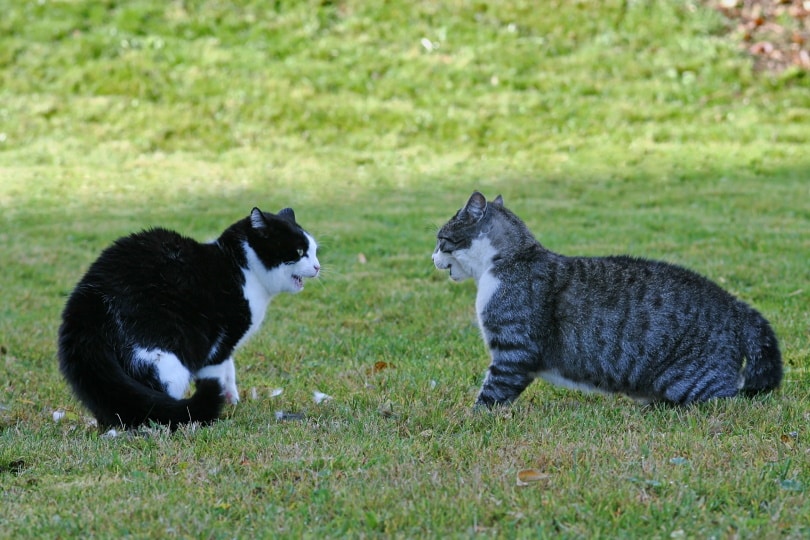
cat and kitten playing outdoors

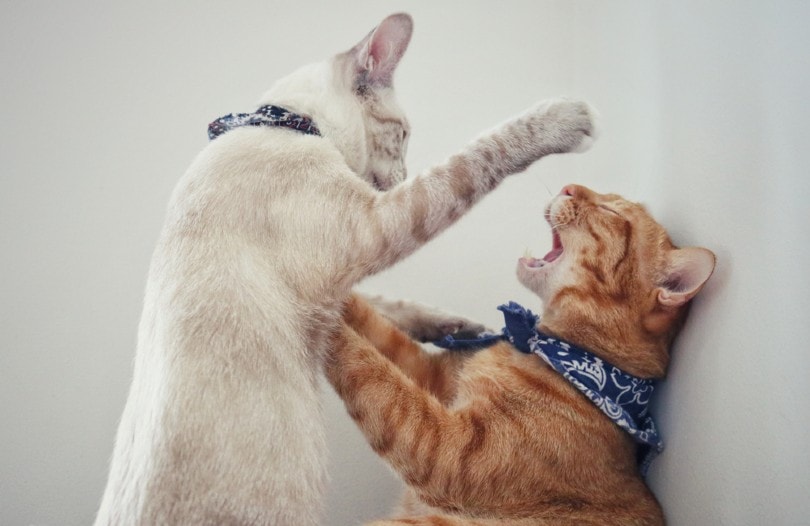
Queens occasionally reject kittens who appear to be ill or spend less time caring for weaker ones when they have particularly large litters and not enough milk to provide adequate nourishment for all their babies. Mother cats sometimes stop giving their kittens attention but can also actively attack them, for a variety of reasons.

Once kittens get older, the reasons mother cats may go on the attack vary from teaching boundaries to weaning. Contact a veterinarian for advice if you become concerned about your cat’s behavior or the kittens’ welfare. Keep reading to learn more about four possible reasons mother cats attack older kittens.

divider cats oct 2024

The 4 Reasons a Mother Cat May Attack Their Older Kittens

1. Weaning

When cats are born, they’re dependent on their mothers for nutrition. As kittens age, their mothers encourage them to eat regular food by pushing them away when they want to cuddle up and nurse.

The process can continue until cats are entirely weaned, and most kittens need about 6-8 weeks before they’re fully weaned. If your cat appears to be reacting assertively, specifically when her older kittens approach to nurse, there’s likely nothing to be worried about as it’s probably just part of the natural weaning process.

mother cat nursing kittens in a box
Image By: Azami Adiputera, Shutterstock

2. Teaching Boundaries

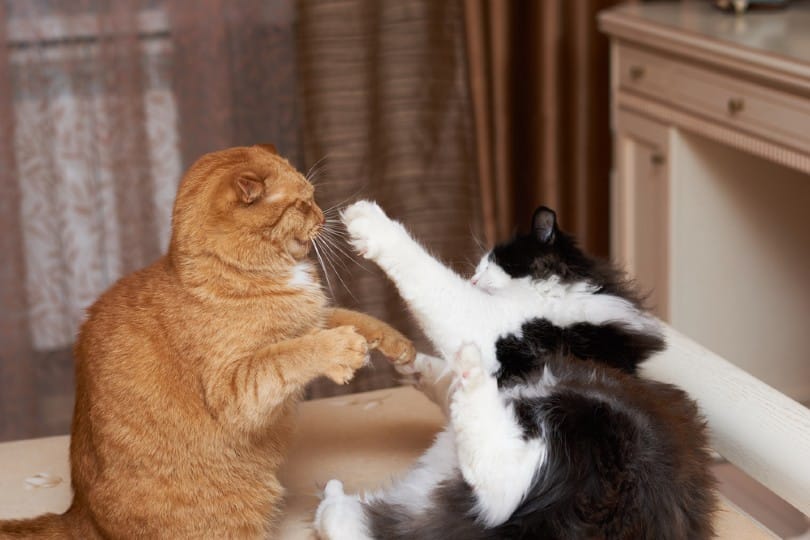
Cats sometimes react aggressively when things become too heated during playtime. Mother cats are primarily responsible for teaching their babies how to interact with and get along with other cats and navigate the world. Cats often growl, bite, and use aggression to tell their feline friends it’s time to back off.

If your cat is biting or hitting her kittens when they get carried away while playing, she’s likely teaching them their boundaries. The mother and her kittens usually calm down after she disciplines them.


3. Redirected Aggression

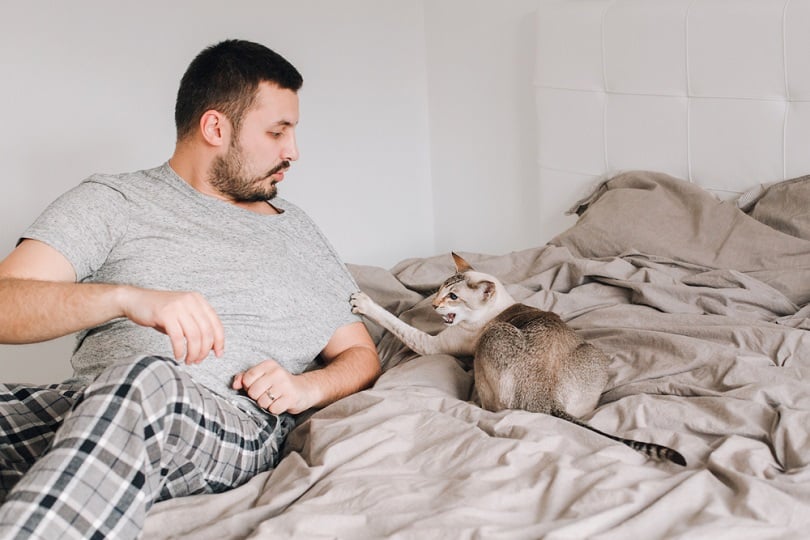
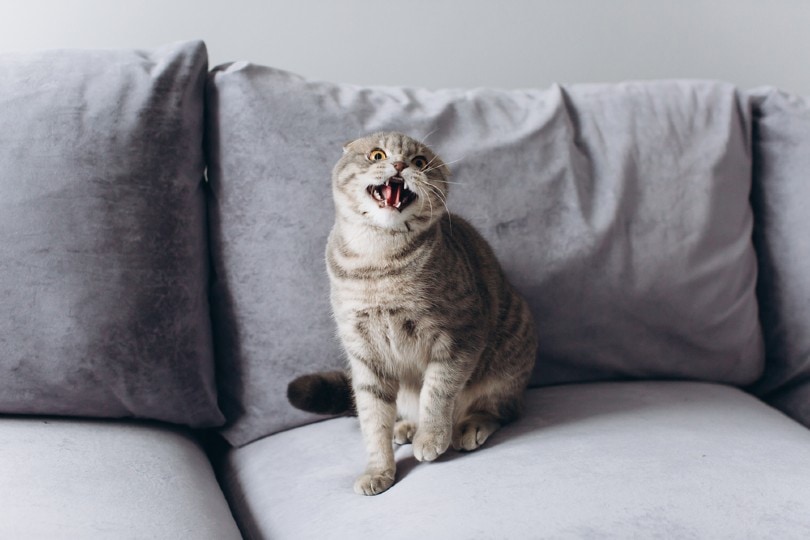
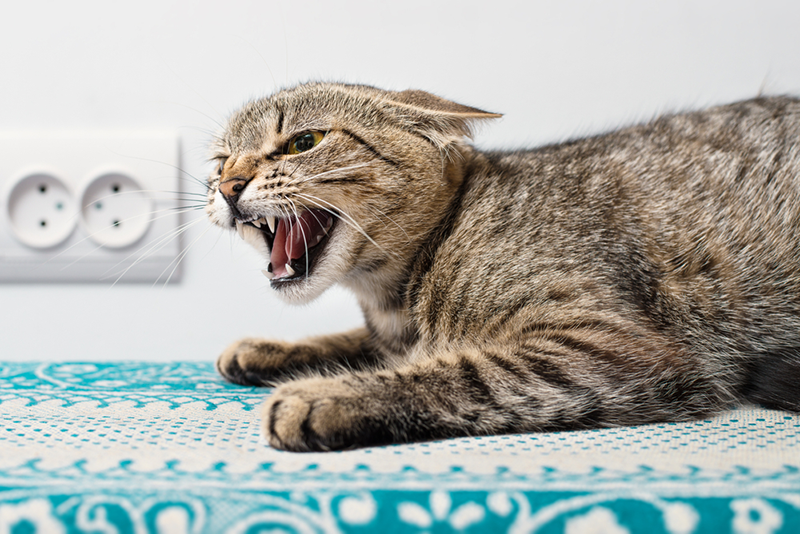
Scared cats sometimes attack people and animals that have nothing to do with what’s upsetting them. For instance, a cat who is upset with the family dog may attack the nearest bystander instead of the dog; it’s called redirected aggression and can also be triggered by things your cat sees happening outside.

If your cat reacts aggressively toward her kittens after a showdown with another pet, it may be redirected aggression. Allowing cats the time and space to calm down is critical when it comes to controlling this sort of behavior.

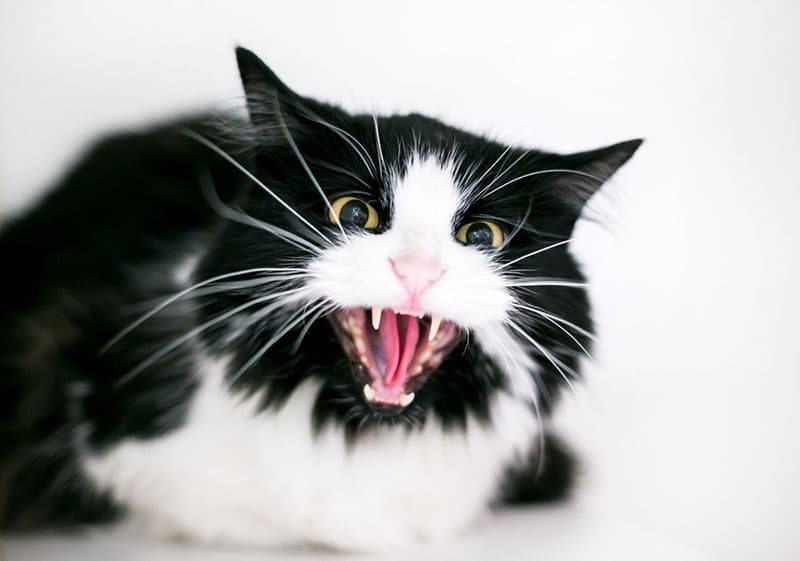
Angry cat to kitten
Photo Credit: Alfiya Safuanova, Shutterstock

4. Pain

Cats often hide signs they’re not feeling well; it’s an adaptation that helped them survive in the wild. It’s notoriously difficult to identify signs of illness in cats, as they’re often subtle and marked by minor changes. Cats that aren’t feeling well often withdraw and lose interest in interacting with people they usually want to spend every minute with, and they can even lash out when feeling particularly under the weather.

Some bite and become aggressive when painful parts of their bodies are touched. If your cat generally appears to be lethargic or you’ve observed other behavioral changes, make an appointment with a vet to ensure nothing else is going on that could be causing the behavior.

If you need to speak with a vet but can't get to one, head over to PangoVet. It's an online service where you can talk to a vet online and get the advice you need for your pet — all at an affordable price!

PangoVet_Mention-in-Content for PangoVet2 save money

divider 1 paws

Conclusion

Mother cats can become aggressive toward older kittens for several reasons, including setting limits and weaning. Pain can also motivate this sort of behavior. Mother cats can go on the offensive when kittens’ play becomes a bit too enthusiastic.

Getting rid of stressors and ensuring cats have comfortable environments that meet their needs can often go a long way toward reducing overly assertive behavior in pets. Keep in mind that punishing cats for aggressive conduct makes the situation worse. Cats showing signs of illness, such as lethargy, lack of appetite, or withdrawal, should always be seen by a veterinarian so that they can be diagnosed and treated.

Related Reads:


Featured Image Credit: Volodymyr Plysiuk, Shutterstock

Want content like this delivered to you?

Sign Up For Our Newsletter

News, insights, expert advice, and everything cat

* By submitting, you agree to our Terms & Conditions and Privacy & Cookies Policy.


How useful was this post?

Click on a star to rate (you can leave written feedback after clicking submit)

Help us improve Catster for pet parents!

Your feedback really matters.

What did you like about this post? Also how can we improve it?

Join the conversation

2 Responses

  1. I have a first time mother and still have two kittens about 4 months old. one kittens got out and was under mobile home all day. we finally got her in only for mother cat to seem not to recognize or want this kitten around. Mom is growling, hissing, attacking the baby. I don't know if mom's smelling something. I'm going to bathe the baby,but don't know what to do as I have a handicap person in home and it's becoming a dangerous situation. Any help you can provide would be appreciated. Thank you.

    1. Hi Sandra, at 4 months old kittens need to be eating solid kitten food and be independent from their mother. Mothers will naturally create distance if kittens insist. It is the law of nature, and of course, not an easy but necessary step for kittens to carry on with their lives. The best way you could help is by getting the kittens neutered and to avoid more kitten litters soonish. Kittens can reproduce at a very young age. You might be interested in reading: An Owner’s Manual on Spaying or Neutering Your Cat: Why Not to Feel Guilt- https://www.catster.com/felines-weekly/an-owners-manual-on-spaying-or-neutering-your-cat/
      Additionally, you might find this information reassuring:
      Weaning Kittens: Vet-Reviewed Guide for How & When to Do It – https://www.catster.com/cat-health-care/weaning-kittens-how-and-when/
      We hope this helps!

Leave a Reply

You’re very welcome to leave a comment or question. Please know that all comments must meet our community guidelines, and your email address will NOT be published. Let’s have a positive and constructive conversation.


Catster's Digital Magazine is Back!

Vet-approved health & behavior advice

Real cat stories & community features

Chatting About the Rainbow Bridge, Euthanasia, and Laughter During Grief | Chatty Cattys, Episode 24

If you’ve ever felt the loss of a beloved cat, or are dreading the day when your pet crosses the rainbow bridge, you’ll...

The Simple Reasons Cats Refuse to Let Anyone Use the Bathroom Alone

Cats have an extraordinary talent for making themselves present in the most inconvenient places, and the bathroom ranks near the top of the...

A Paw-sitive Milestone: Canada Officially Becomes a Declaw-Free Nation

Canada has officially become a declaw-free nation. On May 25, 2026, a new regulation was filed in Ontario under the Provincial Animal Welfare...

The Surprisingly Simple Ways to Help a Cat With Hairballs

Cats spend an astonishing amount of time grooming. It is part hygiene routine, part comfort ritual, and part instinct that traces back generations....

More related

Ussuri Cat Breed Info: Pictures, Traits & Facts

The Ussuri is a naturally occurring hybrid that originated from Russia in the Amur River region. There is very little information about this...

Do Cats Poop Out of Spite? Vet-Verified Reasons & Feline Behavior Explained

If you’ve lived with cats for a while, you may have wondered if they do things out of spite when they’re upset. It...

How to Get Rid of Cat Dandruff: 6 Vet-Approved Tips and Tricks

Dandruff is common in cats and is generally a sign that your pet has dry skin. But the causes of dry skin can...

Should You Spend More Time With Your Cats in Winter? Vet-Approved Indoor Enrichment Ideas

For many people, winter is the perfect time of year to stay inside, where it’s cozy and warm. These cold months of the...

Keep reading

Why Is My Cat So Skittish? 5 Vet-Reviewed Reasons & Care Tips

Just like humans, cats have different personalities. If your cat is skittish, you may be wondering why. Some cats are simply shy and they are just as lovable! But others become skittish when they’re nervous or in pain. It’s important...

scared British blue-point cat hiding under the bed

Do All Cats Knead? Vet-Approved Behavior Explanation

Whether you think it’s adorable or find it utterly annoying, you’ve likely caught your cat kneading at some point. This behavior usually takes place on a soft blanket or your lap, and cat fanatics often refer to it as “making...

white-and-tan-kitten-kneading-on-the-bed

Is the Buttercup Toxic to Cats? Vet-Approved Facts & FAQ

The buttercup plant (Ranunculus acris), also known as butter cress or figwort, is a member of the Ranunculaceae family (that’s a mouthful!). It’s a common yellow plant in the US. If you grew up near them, you might have used...

Catster_Is the Buttercup Toxic to Cats

Cats Making Biscuits: Vet-Reviewed Explanation

Cats have their fair share of quirky behaviors. They race around the room, chasing invisible objects for no apparent reason, or turn anything into a toy, whether it’s appropriate or not. And don’t get us started about bringing us “presents.”...

tabby-cat-paws-on-backrest-of-couch

Why Do Cats Suck Their Tails? 7 Vet-Reviewed Reasons

Tail-sucking is a confusing yet somewhat common feline behavior regardless of their age. Still, suckling is usually associated with nursing kittens, so it can be strange to observe this behavior in adult cats. Some cats might suck their tails habitually,...

Orange cat sucking on their tail

10 Vet Reviewed Facts About Cat Anal Glands

If you’ve ever noticed a stinky, fishy smell coming from your cat or a swelling next to their anus, then you’ve likely noticed their anal glands. The anal glands contain chemicals that act as territory markers, although they do serve...

vet checking up a cat

Stella & Chewy’s Cat Food Reviews 2026 : Recalls, Pros & Cons

Review Summary Stella and Chewy’s Cat Food manufactures freeze-dried raw food, meal toppers, and raw frozen meals. They have a very good range of foods made from good quality ingredients. Their food is easy to get hold of and is...

Stella & Chewy's Cat Food Review

The Refuresh Deshedding Tool – It’s No Ordinary Brush

Love Cats, Hate Cat Hair Certain things seem to go hand-in-hand with sharing your life with a cat, with hairballs, vomiting, and hair on EVERYTHING often seen as unavoidable side effects of a life spent in feline company. In theory,...

The Refuresh Deshed

Love Cats? So Do We! Join the Catster Community

Stay informed with expert pet care insights delivered straight to your inbox! Discover professional guidance on animal behavior, feeding tips, trusted product picks, and much more.


Sign up for the Catster Email Newsletter

Stay informed with expert pet care insights delivered straight to your inbox! Discover professional guidance on animal behavior, feeding tips, trusted product picks, and much more.