How to Get Rid of Raccoons But Not Feral Cats: 5 Humane Tips & Tricks
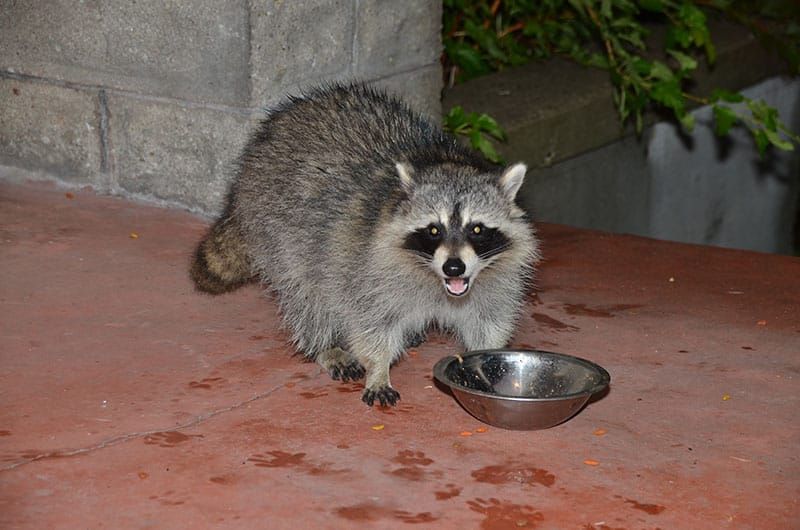
Raccoons can be a real nuisance, especially when you are trying to care for the feral cats in your neighborhood by leaving out food and water for them. Unfortunately, raccoons love cat food, and any you leave outdoors is irresistible. That can make it tough to keep the raccoons away from the food so the feral cats can enjoy it.
However, it is not impossible to do so. A few techniques can be used to get rid of raccoons without taking the food away or scaring away the feral cats. Here’s a list of practical options you may want to try on your property.

The 5 Humane Tips to Get Rid of Raccoons But Not Feral Cats
1. Switch to Daytime Feedings

Most people fill up the cat food bowls in the evening so feral cats can eat throughout the night when the environment is quiet. But nighttime is also when the raccoons like to come out and look for food. Therefore, you may be able to keep the raccoons away by switching from a nighttime to a daytime feeding schedule.
Try making the food available in the morning and keeping it out until right before sunset. You can store the food indoors throughout the night, so the raccoons are not tempted to roam around your property looking for the food. At first, the feral cats might be confused, but they shouldn’t take long to figure out the new feeding schedule. Consistency with the new schedule will be essential.
Pros
- Eliminates the temptation for nighttime raccoon prowlers
- Still enables feral cats to access food regularly
Cons
- Cats may not like coming out for food during the day at first
2. Move the Food Bowls Indoors
You likely don't want feral cats coming in and out of your home throughout the night, especially if you have pet cats living inside. However, you may be able to move the food bowls that you leave out for feral cats to an indoor space, where the raccoons are less likely to find them. This technique may only work for a while before the raccoons get smart enough to find their way to the food, but there are a few ways to combat that.
First, try installing a cat door in your garage door or wall, and then keep the food bowls in the garage. For the first few nights, you may have to leave a small bowl of food outside the cat door so the feral cats will figure out where to go. If raccoons also get into the garage for food, you may have to find a new spot.
Consider building a small box with a cat door and placing it near your home. Keep the food bowls in there until the raccoons find the food. If or when that happens, you can move the box to a new location. Using surveillance cameras will help you monitor the box to determine when the raccoons are taking over.
Pros
- Offers feral cats a safe and protected place to eat, no matter the weather
- Makes it tougher for raccoons to know that there is cat food around
Cons
- May not be effective in the long term
3. Elevate the Food Bowls

While raccoons can jump high, felines are better jumpers. Therefore, elevating the cat food bowls several feet off the ground can prevent the raccoons from getting to the food and coming back nightly to compete with the feral cats for more.
You can install shelves on the exterior wall of your home to put the food on. Alternatively, you can use 4x4s and plywood to build tall stands or tables to set up in your yard, somewhere away from the trees, which raccoons can climb up. If this raccoon repellent technique doesn’t work, you can use the stands or tables as flowerpot holders.
Pros
- The shelving and stands don’t need to take up much space
- Scrap material can be used to make the shelves
Cons
- Older and sick cats might not be able to reach the shelving
4. Eliminate Other Food Sources
Another way to keep raccoons from rummaging through your property for the food you leave out for feral cats is to eliminate all other food sources. Start by switching to trash cans that seal and lock so the raccoons cannot get into them. This will also ensure that items like chicken bones aren’t knocked on the ground, where the cats can get to and possibly choke on them.
Make it a point to check your property for food left on your property, whether it’s a half-eaten rat or a banana peel from a neighboring home’s garbage bin. You should also enclose your gardens with netting or greenhouses, especially when the fruit and vegetables are beginning to ripen.
Pros
- Helps keep your property in good shape
- Will keep feral cats from finding dangerous food
Cons
- The process can be time-consuming
5. Find a New Place to Feed the Feral Cats

Perhaps there is another place in your neighborhood where you can feed the feral cats so raccoons don’t feel tempted to hang out on your property. There might be a park down the street where you can place food bowls in a safe place for the cats to find. Maybe someone in the community doesn’t mind using their undeveloped property to feed feral cats.
You can place ads online or make fliers and hang them up throughout the neighborhood to find others willing to help find a location to feed the feral cats that will not attract raccoons. You may find that there are more people than you thought who are willing to help!
Pros
- Helps you engage with the community on a deeper level
- Eliminates food sources on your property
Cons
- Requires more time and commitment

Conclusion
Raccoons can be frustrating to deal with for humans and feral cats. The more food they can find on your property, the more likely they will keep returning. And unfortunately, there aren't any easy ways to repel raccoons that won't also repel cats. Hopefully, the tips and tricks outlined here will help you finally keep the raccoons under control without alienating the feral cats in your neighborhood.
You might also want to know: Can Cats and Raccoons Mate? Vet-Approved Facts & FAQ
Featured Image Credit: Rod Zadeh, Shutterstock
Expert cat care, straight to your inbox
News, insights, and useful advice, delivered to you.

No spam — unsubscribe anytime.
By signing up, you agree to our Terms & Conditions and Privacy & Cookies Policy.
How useful was this post?
Click a star to rate. You can leave written feedback afterwards. (We read all feedback.)

Rachael has been a freelance writer since 2000, in which time she has had an opportunity to research and write about many different topics while working to master the art of fusing high-quality content with effective content marketing strategies. She is an artist at heart and loves to read, paint, and make jewelry in her spare time. As a vegan, Rachael is obsessed with helping animals in need both in her community and anywhere in the world where she feels she can make a difference. Animals also happen to be her favorite topic to write about! She lives off the grid in Hawaii with her husband, her garden, and her rescue animals including 5 dogs, a cat, a goat, and dozens of chickens.