How to Prepare For a House Fire With Cats: 8 Vet-Approved Tips


No one likes to spend time thinking about disasters or scary situations, but it’s vital to be prepared in the event of an emergency. All members of the family need to be included and accounted for in your disaster preparation, including pets. In 2023, over 330,000 house fires occurred in the United States, making house fires one of the most common emergencies that can impact you and your family.1
Here are eight tips to make sure your cat is prepared for a house fire.

The 8 Ways to Prepare for a House Fire with Cats
1. Include Your Cat in Your Fire Emergency Plan
To prepare for a house fire, you need to have an emergency plan in place. Everyone who lives in your home should know how to get out of the house in case of a fire and where to meet once you’re outside. Your local fire department can help you with the details of your plan.
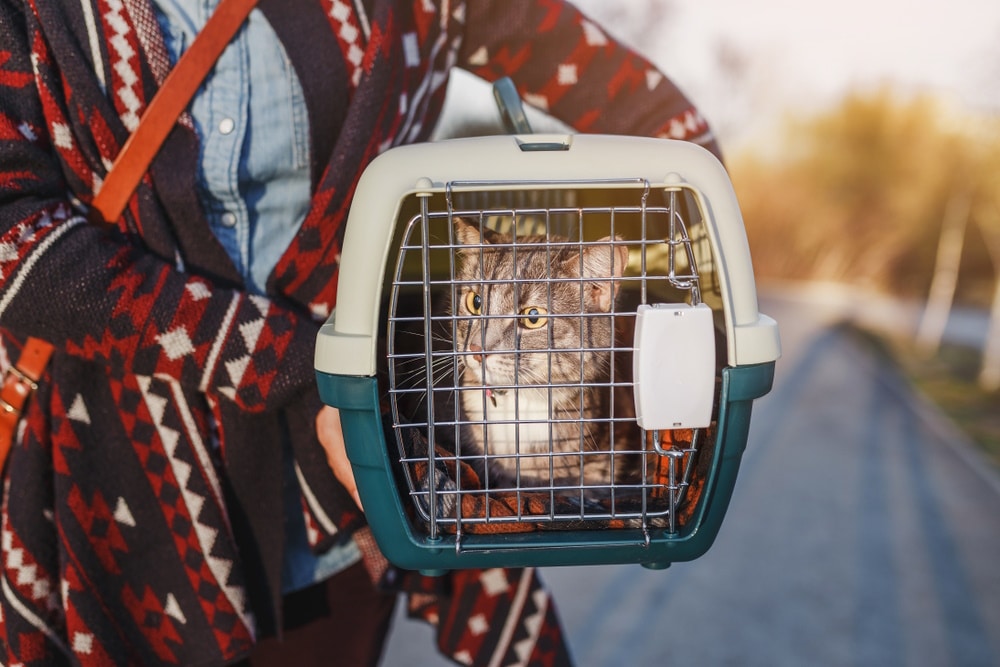
If you have cats, someone needs to be responsible for them if a fire happens. That means knowing where the carriers are kept and how to get your cat into them. Cats often hide in times of stress, so everyone should familiarize themselves with the kitty’s regular hiding spots.
2. Make Sure Your Cat’s Information is Current
House fires are chaotic scenes, and the chances that your cat gets loose or lost during the situation are high. Be prepared for this scenario by keeping your cat’s identification information current. Have your cat microchipped and register it with your most recent phone number and address.
As an extra layer of protection, place a cat-safe collar on your kitty with identification tags attached, a GPS, or your information printed on it.

3. Keep Cat Carriers Easily Accessible
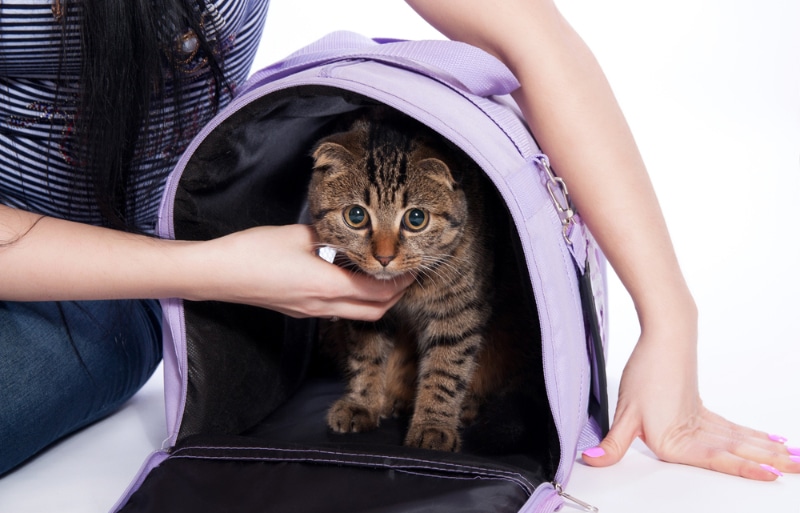
In a house fire, every second counts when it comes to getting people and pets to safety. You don’t want to waste time looking for your cat’s carrier. Instead, keep them in an easily accessible location and make sure everyone knows where to find them. Because house fires may occur when you aren’t home, it’s best to keep the carriers somewhere that firefighters or other rescuers can quickly see them if necessary.
Spend time getting your cat used to going into the carrier so they remain calm inside and consider it a safe space.
4. Alert Rescuers to Your Cat’s Presence
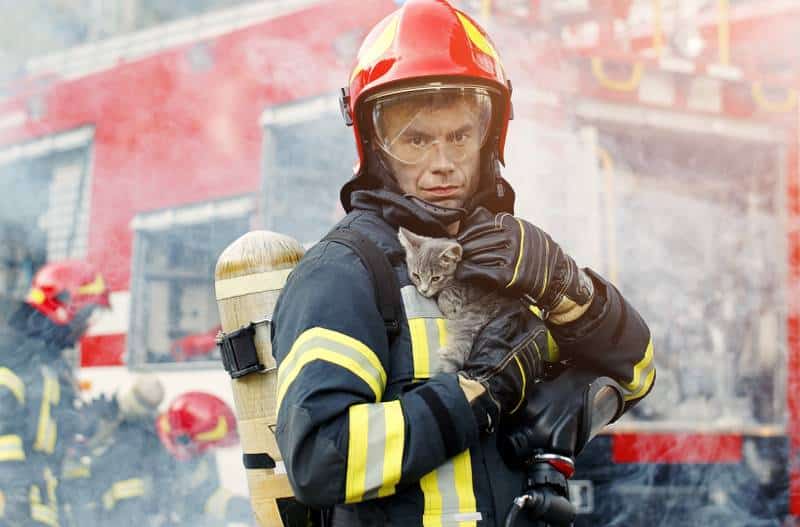
Firefighters won’t know that they need to rescue your cat from a house fire if they aren’t aware there are pets in the house. You can get special window clings designed to alert rescue personnel to the presence of family pets. Check with your local fire station to see if they offer these for free or buy one if necessary.
Place the alerts near all doors and any windows that firefighters might use to enter your house. Keep them updated with the number and type of pets in your family.

5. Have a Backup Plan If You Aren’t Home
In the event a house fire happens when you aren’t home, you’ll need to be prepared with a backup plan to save your cats. For example, give a trusted neighbor a key to your house and make sure they know where your cat carriers are located and where your cat likes to hide, if it’s safe for them to enter in the first place. Alternatively, make sure they speak to the firefighters and explain the situation. Ideally, your cat should already be familiar and comfortable with your neighbors.
If necessary, your backup rescuers can pass the necessary information to rescuers, including how to get in touch with you.
6. Include Your Cat in Your After-Disaster Plan
In most cases, you won’t be able to live in your house for some time after a fire. Even homes that are only minimally burned often have smoke damage that needs to be cleared before it’s safe to come back. You’ll need to be prepared with somewhere to stay that allows your cat. Talk to friends or family in the area ahead of time to make sure they’re okay with your cat staying with you.
Be prepared with a local hotel that allows cats or a boarding facility if necessary. If your cat takes medication, keep an emergency supply with your personal disaster kit, along with your kitty’s records.

7. Take Your Cat for a Checkup
Even if you think your cat escaped a house fire with no physical injuries, it’s still a good idea to have them checked out by a vet as soon as possible. Signs of smoke inhalation can take time to appear, and it’s always better to be safe than sorry. If your cat has obvious burns or is having trouble breathing, they’ll need emergency care.
Know where the closest 24-hour animal hospital is located and the fastest way to get there.
8. Practice Fire Prevention
The best way to prepare your cat for a house fire is to prevent one from occurring in the first place. Make sure your house is equipped with smoke detectors and test the batteries regularly. Cats and other pets often accidentally start house fires by knocking over candles, chewing electrical wires, or turning on the stove. Never leave candles burning unattended.
Place child-safety covers on your stove knobs or remove them completely when you aren’t using the appliance. Keep all electrical wires covered or out of reach of your cat.


Final Thoughts
While there are many steps you can take to help prevent a house fire, they can still happen despite your best efforts. Besides prevention, the most important thing you can do to stay safe is to be prepared for a house fire. The tips we covered in this article will help ensure that your feline family members are just as ready for a fire emergency as the humans are.
If you still need help with your disaster plan, contact your local fire department for assistance.
Featured Image Credit: VAKS-Stock Agency, Shutterstock

Expert cat care, straight to your inbox
Vet-reviewed advice, behavior tips, and the best of Catster. Free, and you can unsubscribe anytime.
By signing up, you agree to our Terms & Conditions and Privacy & Cookies Policy.
Elizabeth Gray is a lifelong lover of all creatures great and small. She got her first cat at 5 years old and at 14, she started working for her local veterinarian. Elizabeth spent more than 20 years working as a veterinary nurse before stepping away to become a stay-at-home mom to her daughter. Now, she is excited to share her hard-earned knowledge (literally--she has scars) with our readers. Elizabeth lives in Iowa with her family, including her two fur kids, Linnard, a husky mix and Algernon, the worldʻs most patient cat. When not writing, she enjoys reading, watching all sports, and spending time outdoors with her family.
Join the conversation
Ask a question, share your story, or send private feedback.