Get

In Your Inbox

Catster is reader-supported. When you buy via links on our site, we may earn an affiliate commission at no cost to you. Learn more.

6 Vet-Verified Facts About Cat Eye Colors: Vision, Kittens & Coat Impact

Share

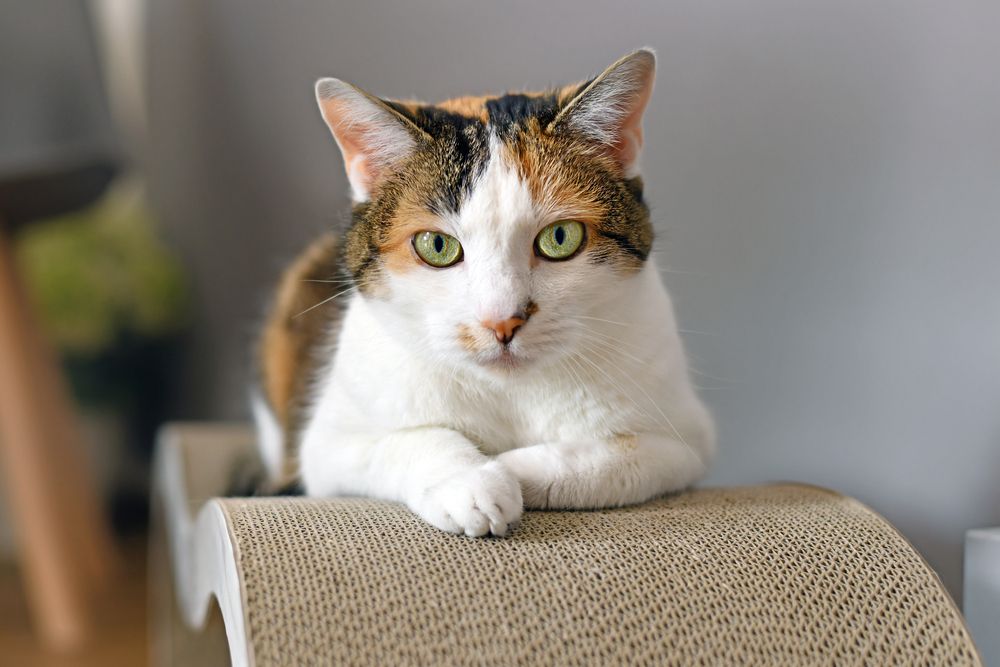
Calico-Cat-with-green-eyes-lying-on-cardboard-scratch-board

Your cat’s eyes are the windows to their soul, so it’s no wonder they’re so pretty, but a lot is going on behind those sparkly blues, autumn golds, or emerald greens. When you get into the nitty-gritty, there are some seriously fascinating facts to discover about the inner workings of a cat’s eyes and how their color is determined, so let’s gaze a little more deeply into this.

divider cat faces oct 2024

Top 6 Facts About Cat Eye Colors

1. Kittens Are Born With Blue Eyes

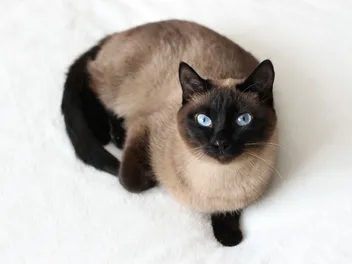
Though some breeds, like the Siamese and Birman, are known for their stunning sapphire-blue eyes, every cat is blue-eyed at the very beginning. This happens because it takes around 6 to 7 weeks for the iris (the colored part of the eye) to start producing the melanin responsible for its pigmentation.

Melanin comes from cells called melanocytes, and these are contained within the layers of the iris called the stroma and the epithelium.

cute blue mitted ragdoll cat with long fur and blue dominant eyes
Image Credit: oussama el biad, Shutterstock

2. Melanin Determines Eye Color

types of cat eye colors by rarity
You are free to use this image but we do require you to link back to Catster.com for credit

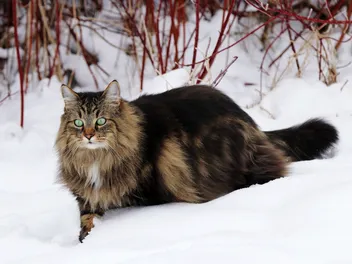
A cat’s eye color depends on the amount and type of melanin produced by their melanocytes (the melanin-producing cells). Cats with more melanin have darker eyes, whereas cats that have minimal amounts of melanin have blue eyes.

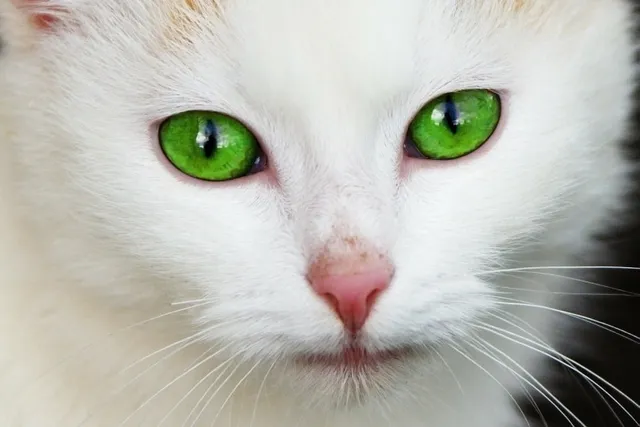
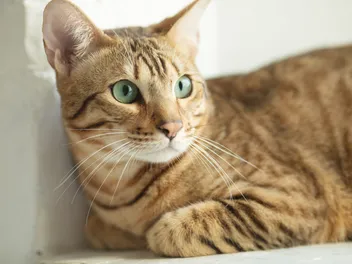
Blue-eyed breeds include the Siamese, Birman, Himalayan, Ragdoll, and Persian, to name a few. Green-eyed cats have some melanin, but not as much as orange/copper-eyed cats.

The type of melanin also plays a role in cat eye colors; eyes with more eumelanin are brown, eyes with more pheomelanin are yellow, and eyes with lower levels of pheomelanin and eumelanin are blue or green.


3. Cats Don’t Have Dark Eyes

Predicting Phenotypes Color of the Eyes Infographic_Father (BrownBlue Eyes) Mother (BrownBlue Eyes)
You are free to use this image but we do require you to link back to Catster.com for credit

The darkest possible shade cat eyes can have is copper, which is more of an orange-brown than full brown, like some dogs have. While cats can have black and brown coats and markings, they can’t have truly brown or black eyes.


4. Refraction Makes Eyes Appear Blue

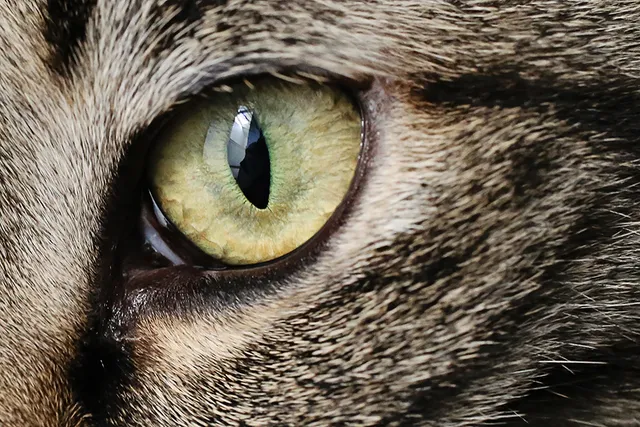
Blue eyes in cats are not caused by blue pigment. Instead, they appear blue due to light scattering in the stroma of the iris, a phenomenon known as the Tyndall effect. The iris contains very little melanin in blue-eyed cats, so incoming light is scattered and refracted, reflecting shorter (blue) wavelengths back to the observer. Without this light scattering, the iris would appear colorless or very pale.


5. Fur Color and Eye Color Aren’t Strongly Linked

While it’s true that certain breeds, like the Siamese, are typically blue-eyed, other eye colors aren’t linked to specific coat colors or types. Blue-eyed breeds receive the dominant white coat gene, which overrides any possibility of the cat developing other eye colors like amber, copper, golden, green, or hazel. Unfortunately, the same gene is linked to a stronger incidence of deafness.


6. Heterochromia Causes Different Colored Eyes

cat vs human vision
You are free to use this image but we do require you to link back to Catster.com for credit

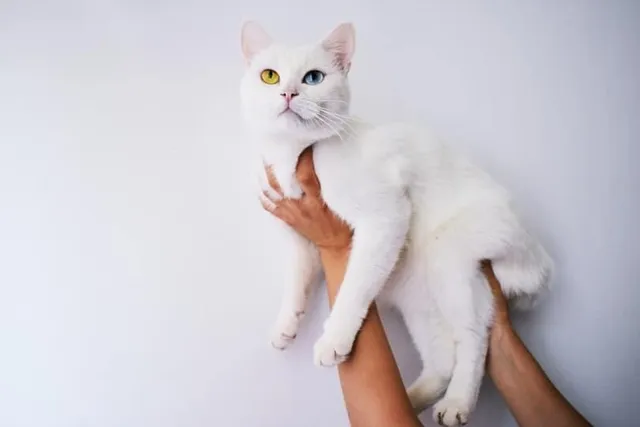
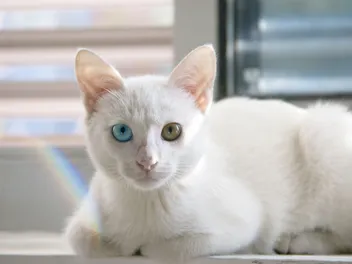
Cats with odd-colored eyes—such as one blue eye and one amber eye—have a condition called heterochromia. This occurs when melanin is unevenly distributed in the irises during development, resulting in one eye with normal pigmentation and one with very little or no melanin. The blue eye appears blue due to light scattering rather than pigment.

Some cats have sectoral heterochromia, where a single iris contains two colors, for example, part yellow and part blue.

Heterochromia does not affect a cat’s vision. White cats with blue or odd-colored eyes are at higher risk of congenital deafness, but odd-eyed cats that are not white do not have an increased risk of hearing problems.

divider cat faces oct 2024

What’s the Rarest Cat Eye Color?

Copper—the darkest color a cat’s eyes can be—seems to be the rarest single color. Copper is a reddish-brown shade, possibly with an orange tone. On the other hand, yellow, amber, green, and hazel-colored eyes are much more common.

While copper is one of the rarer single colors, it’s even rarer for cats to have heterochromia (odd-colored eyes). Dichromatic eyes (irises with more than one color as described above) are especially rare.

divider cat faces oct 2024

Conclusion

While eye colors in cats can vary greatly, no matter what color eyes your cat has, they’re all beautiful! That said, if you notice anything new or unusual about your cat’s eyes, like dark spots or redness, please consult a vet, as it could be a sign of a medical issue that requires attention.

See Also:


Featured Image Credit: Firn, Shutterstock

Want content like this delivered to you?

Sign Up For Our Newsletter

News, insights, expert advice, and everything cat

* By submitting, you agree to our Terms & Conditions and Privacy & Cookies Policy.


How useful was this post?

Click on a star to rate (you can leave written feedback after clicking submit)

Help us improve Catster for pet parents!

Your feedback really matters.

What did you like about this post? Also how can we improve it?

Join the conversation

Leave a Reply

You’re very welcome to leave a comment or question. Please know that all comments must meet our community guidelines, and your email address will NOT be published. Let’s have a positive and constructive conversation.


Catster's Digital Magazine is Back!

Vet-approved health & behavior advice

Real cat stories & community features

Vets Urge Owners: Don’t Ignore Sweet Smell Coming From Cats

Cats are not particularly known for having a pleasant aroma. The occasional whiff of fishy cat breath and that unmistakable post-litter-box scent simply...

“A Cat Spay Costs How Much???”

America has a kitten problem. Every day, thousands of cats and kittens are abandoned, surrendered, or discarded. Those who are lucky enough to...

Ask Dr. Paola – Help! My Cat Is Seeking My Attention! (June 15, 2026)

Welcome to our “Ask Dr. Paola” series, where every Monday we bring expert advice straight from Dr. Paola Cuevas (MVZ) to help our...

Everything I Need to Know About Cartoon Comedy, I Learned From My Pets

If you’ve ever looked at your cat doing something ridiculous and thought, “There has to be a joke in that somewhere,” Scott Metzger...

More related

How to Prevent Hairballs in Cats: 4 Vet Approved Methods

There’s nothing like cleaning up a hairball to start your morning, and the ensuing cleanup is sure to leave a scowl on your...

Can Cats Understand Multiple Languages? Dr. Lauren’s Perspective

Happy New Year, everyone! Sorry for the delay on this one – Pancake and I were busy celebrating… Cats have lived with humans...

5 Amazing DIY Cat Diapers You Can Create at Home (With Pictures)

If you are a cat lover, then you know that sometimes they have accidents. When this happens, it is important to have a...

CatGenie Litter Box Review 2026: Our Expert’s Opinion

What is CatGenie? How Does It Work? The CatGenie is a self-cleaning litter box that goes a step beyond most self-cleaning options on...

Keep reading

My Cat Killed a Rat, What Do I Do Now? Vet-Reviewed Info

The first time that your cat kills and delivers you a rat, it can bring up all sorts of emotions: Disgust, anxiety, and more are all common and perfectly normal. But none of those emotions tell you what you should...

cat next to a dead rat

Can Cats Eat Cilantro? Vet-Reviewed Nutritional Facts & FAQ

Cilantro is a popular herb used in cooking all around the world, but can cats eat cilantro? The bottom line is that cats can eat cilantro without a problem, but they do not need cilantro in their diets to maintain...

Can Cats Eat Cilantro

Why Does My Cat Open Drawers? 8 Vet-Reviewed Tips to Stop Them

Cats can be a complete joy to own, but sometimes their inquisitive personalities can get them into trouble. This is often the case when they start getting into every drawer in your home, and while it can be cute at...

cat trying to open a drawer

Do Munchkin Cats Get Along With Dogs? Vet-Reviewed Answer & Explanation

Affectionately known as the Dachshund of the feline world, the diminutive Munchkin Cat is pure, fur-covered cuteness! Their loveable looks are mirrored by equally loveable personalities and they are known for being amiable felines that fit in comfortably with most...

Dogs and Munchkins Get Along

Smalls vs Nom Nom: Pros, Cons & Facts (2026 Update)

Disclaimer: Nom Nom has discontinued its fresh cat food recipe and is no longer taking orders. Nom Nom hopes to return to providing fresh food to cats in the future when they have more readily available high-quality ingredients. We have...

Smalls VS Nom Nom

How to Clean Cat Ears: Vet-Approved Step-by-Step Guide

Cats are pros at personal hygiene and maintenance. However, their ears are one of those areas that they, unfortunately, cannot groom effectively, and sometimes they need a good clear out. But, unsurprisingly, it can be slightly difficult to get them...

Cat ears getting cleaned

Can Cats Drink Lactaid? Vet-Approved Nutritional Science & Info

Lactaid is a lactose-free milk product, free from the sugar lactose found in milk. It is intended as milk suitable for those who are lactose tolerant. Many cats are lactose intolerant, and therefore, as a cat owner, you might be...

Can Cats Drink Lactaid

Is Alstroemeria Toxic to Cats? Vet-Approved Advice

If your cat just ate some of your Peruvian Lily or rubbed on the petals you may be panicking. Although the ASPCA lists Peruvian Lily, also known as Alstroemeria, as safe for cats, dogs, and even horses, it is listed...

Catster_Is Alstroemeria Toxic to Cats

Love Cats? So Do We! Join the Catster Community

Stay informed with expert pet care insights delivered straight to your inbox! Discover professional guidance on animal behavior, feeding tips, trusted product picks, and much more.


Sign up for the Catster Email Newsletter

Stay informed with expert pet care insights delivered straight to your inbox! Discover professional guidance on animal behavior, feeding tips, trusted product picks, and much more.