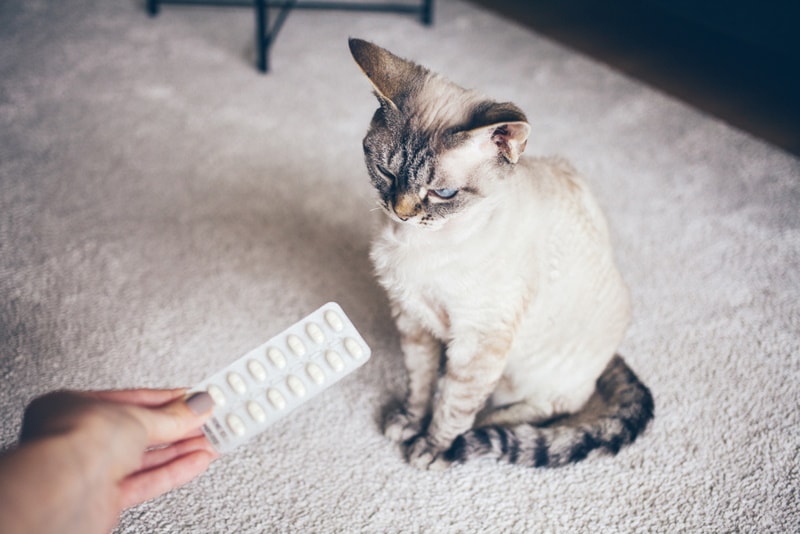
Can You Give Cats Human Pain Medication? Our Vet Explains
In this article
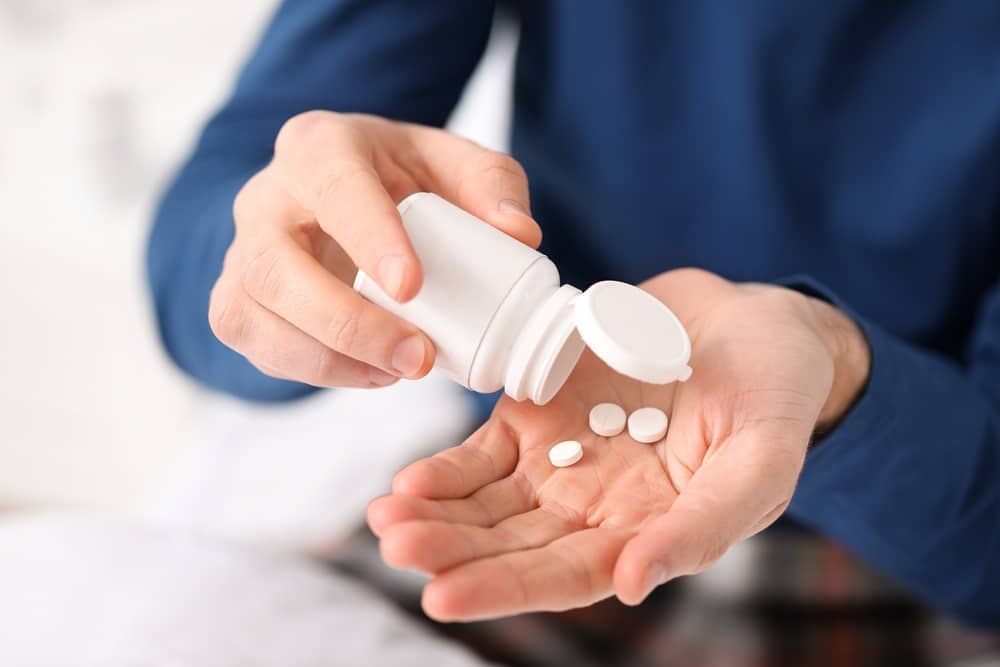
Seeing animals in pain has to be one of the worst things a pet owner can experience, and we want to be able to help them as best we can. If your cat has been injured or seems to be in pain, you might wonder if you can treat them with any medications from your own drug cabinet. The answer is an unequivocal no. Never give human pain medication to your cat.
While there are some human medications that can be adapted or adjusted for veterinary use, most will, at best, cause your cat to become very unwell, and at worst, it could be deadly.
In the following article, we’ll take a closer look at some common human pain relief medications (analgesics), and the dangers they pose to our feline friends.
If you need veterinary advice for your pet, we recommend PangoVet’s TeleVet service. You can have a video consultation with a real veterinarian from the comfort of wherever you are, no travel needed. PangoVet’s vets can provide you with personalized care and advice, and hopefully help ease your mind.

Common Human Pain Medications and How They Affect Cats
1. Acetaminophen
Also known as paracetamol, this is widely regarded as one of the safest human medications around—even children can take it! However, cats lack a specific liver enzyme (glucuronyl transferase), which is essential for the metabolism of certain compounds, including acetaminophen. As a result, even very low doses of this medication can cause liver toxicity and inhibit the ability of red blood cells to carry oxygen (methemoglobinemia) within a few hours. Left untreated, this will invariably be fatal.
Treatment for acetaminophen toxicity in cats is possible and involves a combination of decontamination (inducing vomiting and administering activated charcoal to reduce absorption), intravenous fluid therapy, and the use of the amino acid N-acetylcysteine to reduce liver toxicity. The success of treatment will depend greatly on the amount of medication that has been taken and how quickly treatment is sought.

2. Non-Steroidal Anti-Inflammatories (NSAIDS)
NSAIDs (e.g., ibuprofen, naproxen, and feldene) alleviate pain and reduce swelling by inhibiting enzymes called cyclooxygenase (COX), which lead to the formation of prostaglandins (fatty molecules that behave like hormones) involved in the inflammatory process. However, this also affects the protective layer of the stomach lining, and the wrong dose can cause gastrointestinal damage and stomach ulcers.
The active ingredients and strength of human NSAIDs are dangerous for pets, particularly cats, and can cause severe kidney damage, as well as gastrointestinal ulceration and bleeding.
Treatment for NSAID toxicity in cats involves a combination of decontamination, intravenous fluid therapy, and the use of gastroprotectants to reduce damage to the stomach and intestinal lining. The success of treatment will depend greatly on the amount of medication that has been taken and how quickly treatment is sought.
There are several NSAIDs that have been specifically formulated to be safe for cats, including meloxicam (e.g., Metacam) and robenacoxib (e.g., Onsior), which may be prescribed for post-operative pain, arthritis, or other painful conditions. However, even these medications can have toxic effects if not given strictly as prescribed.
3. Aspirin (Acetylsalicylic Acid)
One of the earliest forms of modern pain relief, aspirin is technically classified as an NSAID too. Although it also works by inhibiting prostaglandin formation, it has significantly lower rates of adverse effects in the stomach and kidneys. In addition to its effectiveness as an anti-inflammatory, aspirin also has antithrombotic (platelet inhibiting) effects that reduce clotting.
Aspirin is sometimes prescribed to cats with heart disease to reduce their risks of forming blood clots. However, if cats are given human doses of aspirin, they are at serious risk of salicylic acid poisoning, resulting in the disruption of blood gasses, as well as spontaneous hemorrhage, seizures, coma, and death.

4. Opioids
We know that opioid medications (e.g., Tramadol, fentanyl, methadone, oxycodone, and hydrocodone) pose a significant risk to human health due to their addictive properties, but, as our cats are unable to obtain these medications themselves, addiction is not our main concern for our feline friends. However, these medications can be extremely dangerous, even deadly, if our cats get their paws on them.
Opioids are commonly used in both human and veterinary surgery and medicine due to their potent analgesic effects. They work by attaching to nociceptors, the sensory receptors that alert our brain to tissue damage, which is interpreted as pain. Different opioids act on different forms of nociceptors, with some being more potent than others. The more potent opioids are also more dangerous, as they can also cause respiratory failure.
Some of these medications are given by injection to cats having surgery or being treated for severe pain. Drugs like fentanyl and oxycodone are extremely dangerous to give to cats, and Vicodin is particularly lethal, as it contains both hydrocodone and acetaminophen.
Occasionally, a vet may prescribe the drugs tramadol or oral buprenorphine for cats to take at home, particularly if they are unable to take other analgesic medications. These opioids have a ceiling effect, which means that they have a limited ability to cause respiratory depression.
If you have been prescribed fentanyl patches, you must be extremely careful to keep your cat away from them. Any contact with their skin or from licking could be fatal.
Treatment for opioid toxicity is usually in the form of supportive care and administration of the drug naloxone, which reverses the effects of opioids.
What Should I Do if My Cat Swallows My Pain Medication?
Contact a vet immediately. As with all poison or toxin ingestion, the sooner treatment starts, the better the outcome will be. Do not attempt to make your cat vomit unless specifically instructed to by a vet; in some situations, this can make the problem worse.
Retrieve any spilled medications and packaging to bring with you to the vet.
Contact the Pet Poisons Hotline for more advice about the toxic doses and effects of any medications or substances your cat ingests, which have not been specifically prescribed to them.
Emergency Hotlines:
Do not wait to see if your cat develops any signs of toxicity. By the time they do, it may be too late.
How Can I Help My Cat When They’re in Pain?
Your number one resource is a vet. All vets have a duty of care to treat and prevent suffering, so if your cat is in pain, reach out to a vet. If money is limited, they should be able to provide basic first aid and pain relief, but be aware that the treatment options will be limited.
If your cat has an injury and does not want to be touched, try to coax them into a small room or area that can be blocked off to confine them. Keep the room dark and quiet and allow them to settle. Place soft bedding in a cat carrier and see if you can encourage them to go in on their own. If they won’t, you may need to cover them with a thick towel or blanket to place them into the carrier, and this is more easily done by directing them in the bottom first.
Are there any natural remedies for pain relief in cats?
If your cat is in pain or has an injury, the best and safest option is to see a vet, as they can prescribe the appropriate pain relief. Cats lack a particular enzyme which makes them much more sensitive to medications and other chemicals, which has also made it more difficult to find safe analgesia options for them. For less acute problems, such as arthritis, stress, and preventive health, you can check out our articles on Holistic Cat Care and Traditional Chinese Medicine.
Final Thoughts
Never give human pain medication to your cat. Although there are a few instances where human drugs can be adapted and prescribed to our cats, in the overwhelming majority of cases, human pain medication can result in serious harm, or even death, to our feline family members.
If you think your cat might be in pain, or if you suspect they may have taken some of your own medication, call a vet immediately.
See Also:
Sources
Featured Image Credit: Pixel-Shot, Shutterstock

Expert cat care, straight to your inbox
Vet-reviewed advice, behavior tips, and the best of Catster. Free, and you can unsubscribe anytime.
By signing up, you agree to our Terms & Conditions and Privacy & Cookies Policy.
Dr. Karyn Kanowski BVSc MRCVS (Veterinarian)
Dr. Karyn comes from Queensland, Australia, and has lived in the UK for the past 10 years. In 2010, she graduated from The University of Queensland School of Veterinary Science and also has a Bachelor’s degree in Zoology. She is passionate about using evidence, experience, and owner collaboration to provide the best solutions for pets, and believes in making reliable information about animal health accessible to all. Dr. Karyn shares her home with five cats, four dogs, and one husband. When she is not in the scrubs, she spends her time writing, gardening, and cleaning up pet hair!
Join the conversation
Ask a question, share your story, or send private feedback.