Can Cats Take Metacam (Or Any NSAIDS)? Facts & FAQ (Vet Answer)

In this article
Has your cat ever had an operation, or perhaps been seen for an injury or wound? If so, you might have heard of the drug Metacam. This is a medication regularly given as an injection when a cat has surgery, but it is also a common oral medication for dogs with injuries or arthritis. In the United States, Metacam is not licensed for prolonged oral use in cats; however, that’s not quite the end of the story.
Metacam is the most common brand name of a medication called meloxicam, which is classified as a non-steroidal anti-inflammatory, or NSAID. In humans, common NSAIDs include ibuprofen, naproxen, and piroxicam, most of which are extremely toxic for our pets.
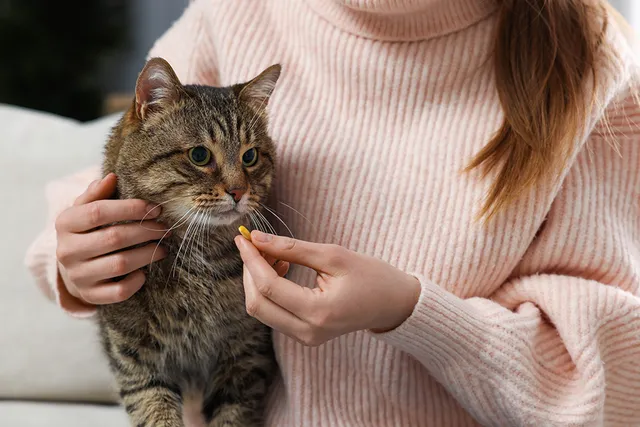
If your cat has been sent home with Metacam, there may be a very good reason, which you should confirm with your vet. However, if your cat has accidentally been given, or ingested Metacam that was not prescribed for them, contact your vet immediately. While the right dose can be safe, the wrong dose may be deadly.

The Dose Makes the Poison
Philippus Aureolus Theophrastus Bombastus von Hohenheim (what a name!) was a 16th-century chemist, more commonly known to us as Paracelsus, the father of toxicology. His famous quote, “The dose makes the poison,” is commonly used in the field of medicine. What he essentially meant was that any chemical or medication can be toxic if taken in high enough quantities, but the trick is knowing what that quantity is.
Any medication that has a therapeutic effect on the body will eventually cause problems if given at too high a dosage, too frequently, or for too long. If a treatment claims to have zero side effects, then it’s unlikely that it will have any actual effects either!
So, if Metacam is sometimes used on cats, we know that it’s not strictly toxic, so why can’t we use it at home like we do with dogs? This is basically a question of dosage and side effects and whether the labeling of Metacam/meloxicam in cats in the US needs to be re-examined.

What Are the Risks Associated With Metacam?
NSAIDs, also referred to as COX inhibitors, work by blocking a specific enzyme (cyclooxygenase, or COX) that triggers pain and inflammation, making it an effective treatment for pain, swelling, and inflammation. However, because of the way the body absorbs, metabolizes, and excretes this drug, it can also cause serious side effects.
There are two main recognized side effects of Metacam: gastrointestinal problems and renal (kidney) problems.
Potential gastrointestinal side effects, including vomiting, diarrhea, and stomach ulcers, are typically the result of the COX inhibitors on the acidity of the stomach. These are relatively common side effects of NSAIDs in all species, including humans, which usually resolve once the medication is stopped.
It is the renal side effects that have this drug sidelined in the US. It has been shown that cats given repeated injections with high doses of Metacam often suffer from acute renal failure and death. This is due to damage caused when the drug is being excreted via the kidneys. Dogs appear to be far less susceptible to these effects.
However, Metacam is used as a standard long-term pain relief medication for cats in several countries, including Canada, Australia, the United Kingdom, and Europe. In the US, it can be prescribed by vets off-label if they feel that it is warranted, or if there are no other suitable alternatives.
So, Can Cats Have Metacam?
Technically, they can, but if you are in the US, your vet has prescribed it off-label. This means that it has been assessed as being safe for your pet but is not strictly within the prescribing guidelines for that drug. If you have been prescribed Metacam for your cat, double-check with your vet that they have adjusted the dose for your pet and that there are no other options available. Sometimes, Metacam may be prescribed for cats to go home with after a spay surgery, and although off-label, would generally be considered safe, provided the correct dosage is used.
More recently, a drug called Onsior (robenacoxib) has become available for cats as an FDA-approved NSAID for post-operative use, but even this is only licensed to be given for a maximum of 3 days, making it a poor option for long-term management of chronic conditions such as arthritis. However, like with Metacam, Onsior has been approved for long-term pain management in the UK and Europe but is still limited to a maximum of 6 days in Australia and Canada.
In countries where Metacam is used for long-term pain management in cats, there is a specific feline version that is a lower concentration than the dog formula, reducing the risks of overdosing. Additionally, the dose for long-term use is, at most, one-quarter of the dose used for the initial injection to improve the safety margin. This dosage has been found to strike a good balance between providing effective pain relief and minimizing potential side effects.
If your cat has any renal problems or a sensitive gastrointestinal tract, talk to your vet about extra precautions.
A Question of Quality of Life
The biggest problem with the restrictions placed on drugs such as Metacam and Onsior for cats is that it severely limits the options for long-term pain management for this species to opiate medications, which are not overly effective in managing arthritic pain.
Human medications are not just dangerous for cats, but deadly. Ibuprofen or naproxen can trigger liver failure, renal failure, or both, while just a small dose of acetaminophen can be fatal.
Sometimes, we need to make an informed decision about what is best for our pets. If your cat faces a life of chronic pain without the use of Metacam, you may want to weigh that up against the potential risk of renal damage. If you and your vet are considering using Metacam to manage your cat’s pain, it is advisable to perform a full blood and urine analysis to ensure there are no underlying problems that could affect your decision.

Summing Up
Cats are at a significant disadvantage when it comes to anti-inflammatory pain relief, with very few products licensed for feline use, particularly in the US.
If your cat has been prescribed Metacam by your vet, you might be confused if you find out that this is not an FDA-approved treatment. This is due to the association between Metacam and acute kidney damage in cats. However, in many countries, Metacam is regularly used at safe doses to treat post-operative pain, acute trauma, and arthritis. If you are worried about using this medication, speak to your vet to make sure that all concerns, considerations, and options have been addressed.
If your cat is taking Metacam or another NSAID medication, be sure to follow the dosage instructions carefully, and keep an eye out for any possible side effects. Never give your cat Metacam unless under the direction of your vet, and never give them Metacam intended for dogs. If your cat has ingested Metacam other than what has been prescribed, contact your vet urgently.
If anorexia, lethargy, vomiting, diarrhea, increased drinking, increased or inappropriate urination or other suspected adverse reactions occur, immediately discontinue treatment and seek the advice of a veterinarian.
Featured Image Credit: Veera, Shutterstock
Expert cat care, straight to your inbox
News, insights, and useful advice, delivered to you.

No spam — unsubscribe anytime.
By signing up, you agree to our Terms & Conditions and Privacy & Cookies Policy.
How useful was this post?
Click a star to rate. You can leave written feedback afterwards. (We read all feedback.)
Dr. Karyn Kanowski BVSc MRCVS (Veterinarian)
Dr. Karyn comes from Queensland, Australia, and has lived in the UK for the past 10 years. In 2010, she graduated from The University of Queensland School of Veterinary Science and also has a Bachelor’s degree in Zoology. She is passionate about using evidence, experience, and owner collaboration to provide the best solutions for pets, and believes in making reliable information about animal health accessible to all. Dr. Karyn shares her home with five cats, four dogs, and one husband. When she is not in the scrubs, she spends her time writing, gardening, and cleaning up pet hair!