Can My Cat Take My Dog's Flea or Worm Medicine? (Vet Answer)

In this article
Dogs and cats are plagued with similar parasites, including fleas, ticks, and certain worms. So, is it safe to assume that preventative options that work in a dog can also be administered to a cat? The answer is no. It is not safe to treat your cat with your dog’s worm or flea/tick prevention. Although parasitism looks similar between cats and dogs, cats can be very sensitive to certain medications and the dosing may be different between species. Let’s get into the important details below.

Why Cats and Dogs Can’t Share Flea/Worm Medicine: Pyrethrins and Pyrethroids
The biggest reason that it is not safe to administer dog flea and tick products to cats is that a large portion of canine preventatives contain pyrethrins or pyrethroids, which are chemically altered pyrethrins. These common insecticides are derived from Chrysanthemum cinerariaefolium flowers. Cats are highly sensitive to these compounds, and accidental exposure to pyrethrins or pyrethroids at high levels can be fatal.
Cats have a harder time processing pyrethrins and pyrethroids due to their altered liver metabolism. However, cats typically can tolerate products with low concentrations of pyrethrins.
Permethrin is a common pyrethroid that can be found in sprays, spot-on treatments, shampoos, and dips designed for flea/tick control. Additionally, pyrethroids can be found in environmental products as well.
Most often, toxicity associated with pyrethroids occurs following accidental exposure to spot-on products or dips containing high levels of pyrethroids or pyrethrins. Unfortunately, the results can be deadly.

Signs of Toxin Exposure
Signs of toxin exposure can vary greatly. Below are some of the signs that might lead to suspicion of exposure to a toxin.
- Hypersalivation
- Tremors
- Seizures
- Obtunded
- Vomiting
Accidental Administration/Exposure
In the event that your cat is administered or exposed either orally or topically to a product designed for a dog, immediately call Animal Poison Control and your local veterinarian. They will be able to advise you on how to aid your cat.
In many cases, a bath and close monitoring in a hospital setting will be recommended. If your pet is experiencing abnormal signs, like tremors, seizures, vomiting, or other concerning signs, symptomatic care will be implemented.
Pyrethrin/Pyrethroid Treatment
Unfortunately, there is not a specific antidote to pyrethrin/pyrethroid toxicosis. The goal of treatment for a cat exposed to unsafe amounts of pyrethrins is decontamination and secondary support. Bathing can be used as a way to physically remove toxins from the skin, but this should only be done in a stable patient, as thermoregulation will be necessary.
Additionally, induced vomiting and gastric decontamination may be necessary if oral ingestion has occurred. If a patient is comatose, care must be taken to help regulate body temperature. Tremors and seizures should be appropriately addressed, and the patient should be closely observed by a veterinarian.

Always Read the Label and Drug Insert
There are numerous amounts of parasite medications available over the counter and through veterinary professionals. It is critical that the packaging is read very carefully to ensure that the weight, age, and species the medication is intended for are appropriate. Providing your pet with the wrong dose of medication could be detrimental or could provide inadequate protection in some scenarios.
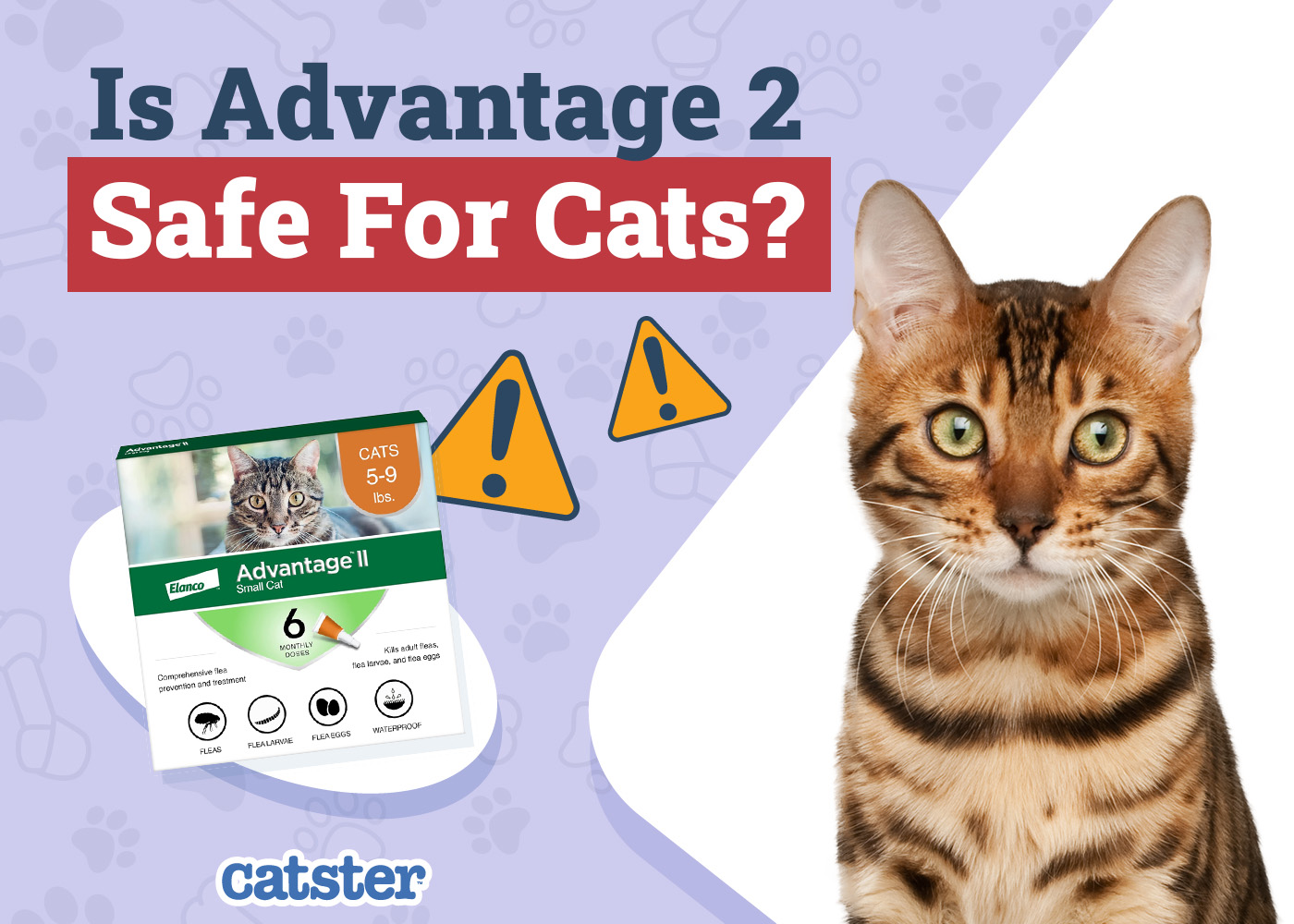
Many brands offer species-specific preventatives. For example, Advantage II is available as a feline product and as a canine product. The active ingredients are the same; however, the amount needed to be administered to a cat varies from that of the dog.
Administering too much of a product could be detrimental. A general rule of thumb is that cat products should not be used on dogs, and vice versa. Many products that are not safe for cats will have a product warning visible on the box.
Keeping Your Cat Safe
Even if your cat is not administered a dog preventative, accidental exposures are still possible and problematic. Grooming or rubbing on a dog with a recent application of a pyrethroid-containing preventative could result in toxin exposure. To be safe, after administering a topical preventative to your dog, physically separate your cat from the dog for 72 hours, or for the duration of time recommended by the manufacturer.
In Summary
It is not recommended to administer a canine preventative to your feline companion. If this is done accidentally, the results could be devastating. Immediately contact your veterinarian and pet poison helpline for treatment recommendations. The prognosis is overall good for cats with pyrethrin toxicosis if treatment is quickly initiated. To be safe, carefully examine the product prior to administration. Always confirm that the species, age, and weight on the label are appropriate for your feline companion.
Sources
Featured Image Credit: Susan Santa Maria, Shutterstock
Expert cat care, straight to your inbox
News, insights, and useful advice, delivered to you.

No spam — unsubscribe anytime.
By signing up, you agree to our Terms & Conditions and Privacy & Cookies Policy.
How useful was this post?
Click a star to rate. You can leave written feedback afterwards. (We read all feedback.)
Dr. Marti Dudley is a small animal veterinarian with a passion for preventative medicine and pet parent education. She enjoys being a resource for pet owners as she believes that having a team approach leads to the best possible care of pets. Dr. Dudley enjoys writing and has been able to use this skill as another avenue to educate pet owners outside of the traditional office setting.
Dr. Dudley has been practicing veterinary medicine since 2014. She has an interest in preventative care and emphasizes the importance of pet owner education. Dr. Dudley’s experience in veterinary medicine is broad, as she has worked as a general practitioner, which has allowed her to see and treat many different types of conditions.
Dr. Dudley received her bachelor’s degree in biology from Longwood University in Virginia. She earned her Doctor of Veterinary Medicine (DVM) degree from Ross University.