Get

In Your Inbox

Catster is reader-supported. When you buy via links on our site, we may earn an affiliate commission at no cost to you. Learn more.

8 Fascinating Facts About Black Tabby Cats (With Pictures)

Share

You’re probably no stranger to tabby cats. They are plentiful, popular, and peppy kitties that have so much to offer. They are spirited, spunky, and curious, with a great sense of adventure and playfulness.

These interesting felines also have a rich history, showing up all over the place since the domestication of house cats eons ago. Let’s look at fascinating facts you might not know about the beautiful black tabby cat.divider cats oct 2024

The 8 Facts About Black Tabby Cats

1. There Are Five Distinctive Patterns of the Black Tabby

tabby cat patterns
You are free to use this image but we do require you to link back to Catster.com for credit

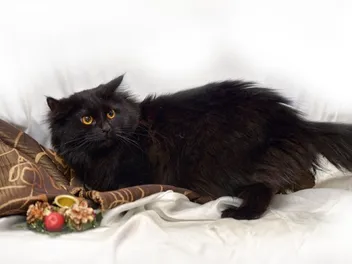
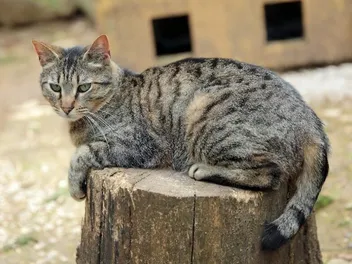
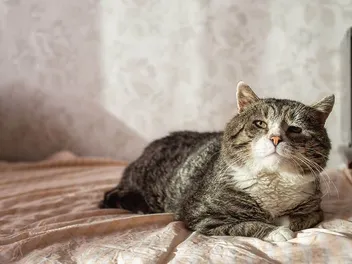
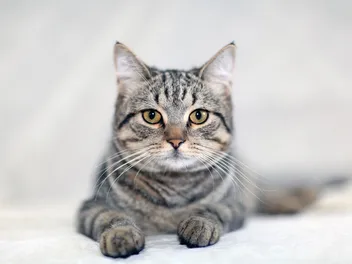
Black tabby cats have five distinctive coat patterns, so they cover a lot of ground in terms of looks.

All cats below are considered black tabbies.
  • Classic — The classic tabby is a swirl of different shades of black and gray.
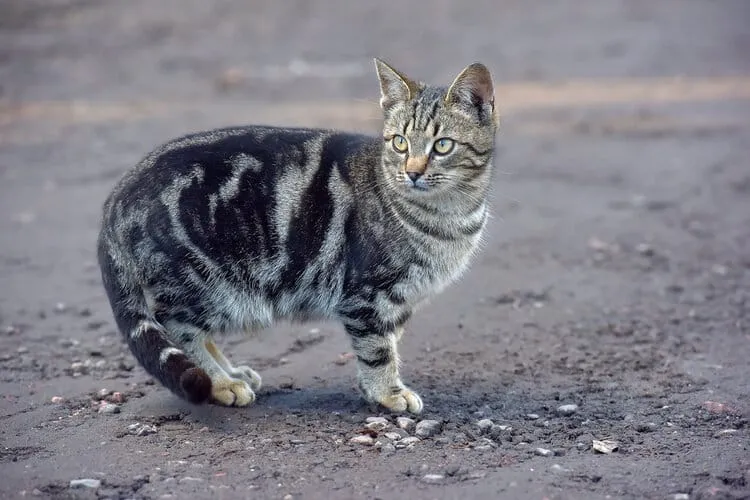
  • Mackerel — A mackerel pattern is what is classically referred to as the tiger stripes.
  • Spotted — A spotted pattern is where the stripes are broken up into leopard-like spots.
  • Ticked — A ticked pattern is where the entire code appears to be one solid color except on the face, tail, and sometimes paws.
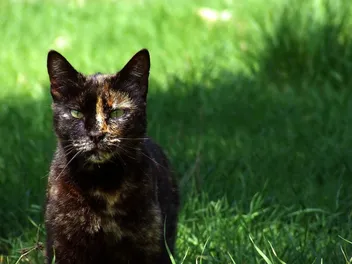
  • Patched — The patched coat is also known as tortoiseshell, and these cats are almost always female.


2. Tabby Cats Are Rumored to Be a Favorite Familiar of Witches

Have you ever heard of familiars? A familiar is said to be the right-hand animal of a witch—one who stands by her. Essentially, it was a demon in animal form that assisted her with magical goings-on.

Cats are among some of the most common familiars you hear of. These days, you might see that black cats are all the rage with witches. But it was initially the black tabby that was the witch’s favorite—or so the rumors have it.


3. Black Tabbies Have a Classic M-shape on Their Forehead

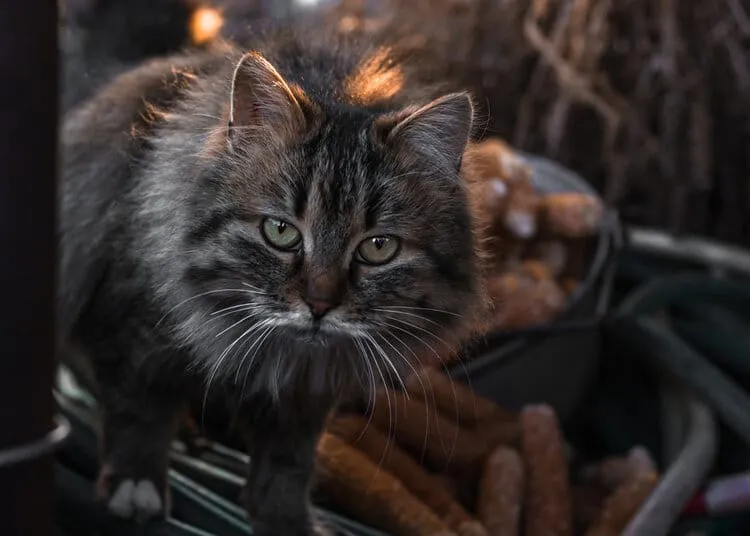
If you look at the forehead of every single black tabby cat, you will see a classic “M” on their head. They form in four distinct lines, no matter the overall coat pattern. It’s always easy to tell a tabby apart, even if their lines, stripes, or spots are faded on the body.

It happens in all five designs and is the easiest way to tell if you have a ticked tabby or solid-colored cat.
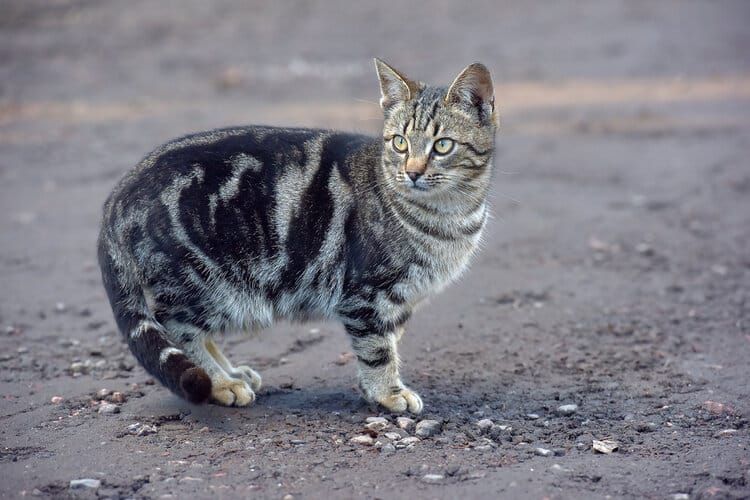
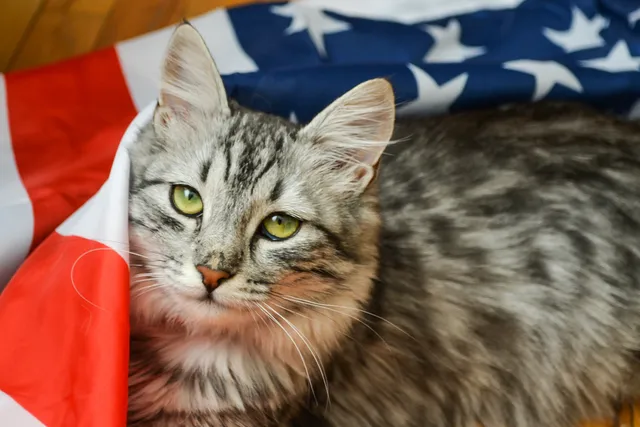
black furry tabby green eyes
Image Credit: calatorescu, Shutterstock

4. The M-Shape Has Many Myths Surrounding It

This “M” shape is the stuff of legends. Some say that it represents the word “mau” of ancient Egypt, which literally translates to “cat.” Others say it was a blessing from Mother Mary to thank the tabby for comforting baby Jesus at his birth. Some say it was about the prophet Mohammed, who loved and respected felines.

Regardless of the legend you hear, cats are always intertwined with some spiritual significance—a common theme for cats across history.


5. Black Tabbies Were Named After Baghdad Silk

Because of their incredible patterns and tones, black tabbies were named after a silk type from Baghdad. Initially, the word referred to a kind of silk taffeta that had interestingly woven waves.

Over time, the wavy patterns and unique designs of the silk were compared to their unique coat. By the 1700s, the term “tabby” was directed toward the cats themselves. So, the term evolved over several hundred years.
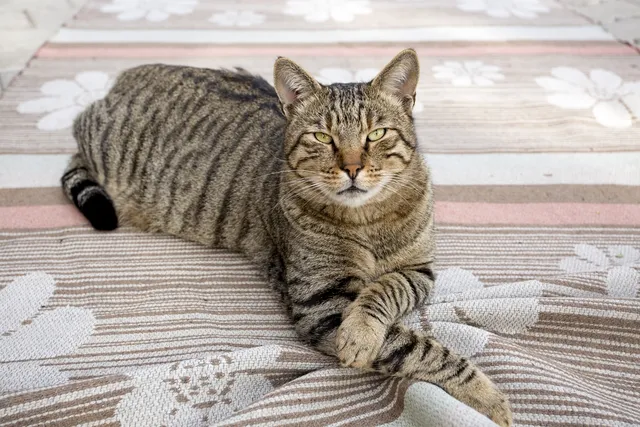
black tabby stripe
Image Credit: Anna Krivitskaya, Shutterstock

6. The Tabby Comes From Wild Roots

In nature, their pattern serves the black tabby cats well. Their design is very distinctive, which you may notice is similar to cats in the wild, such as cheetahs, tigers, and other big cats.

Their markings help them blend in with their territory to hide from prey, so they don’t see the attack coming. It helps them to remain undercover while they’re prowling for something to catch. It may be one reason why these cats tend to be fabulous hunters.


7. Black Tabbies Are Incredibly Social

While the personality of every cat comes from a combination of genetics, environment, and learned behaviors, tabbies are widely revered for being some of the most bold and active cats that exist. Their temperaments tend to be extremely loyal, friendly, and outgoing. You might find that a black tabby cat comes running up to you, rubbing up against your legs the first time you meet them.

In general, they love to be around people—even tiny children. They also tend to adapt well to multi-pet households with dogs and other pets. They’re incredibly playful and enthusiastic, but it’s all in good fun. Black tabbies will formulate relationships and bonds with multiple humans and animals, rather than being so selective.

maine coon kitten
Image By: Pixabay

8. The Black Tabby Coat Turns Up in Many Breeds

Even though the black tabby isn’t a breed in itself, the patterns and colors show up in many purebreds across the spectrum.

You might see a black tabby cat in the following breeds:
  • Abyssinian
  • American Shorthair
  • Maine Coon
  • Oriental Shorthair
  • American Curl
  • Domestic Shorthair
  • Domestic Longhair
  • Persian
  • Exotic Shorthair

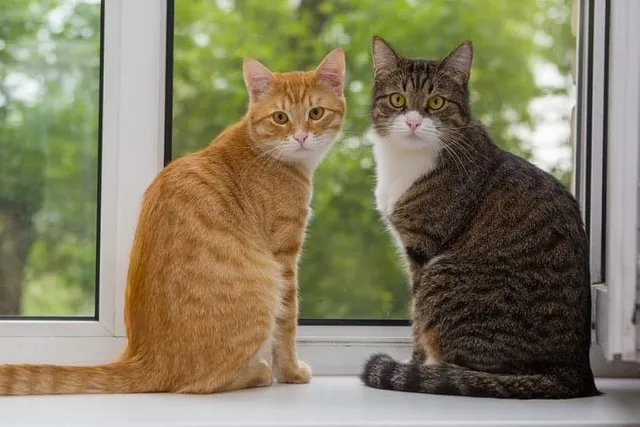
But they can exist in any mixed litter if the genetics are right. It’s one of the most common coats, and black isn’t the only color. They can be orange too, which includes stripes and swirls from cream to deep mahogany.

divider cat paws 2 oct 2024

Final Thoughts

The famous, universal black tabby cat isn’t going anywhere anytime soon. They have been around since the beginning of cat domestication, and they will continue to flourish. We love the black tabby cat for so many reasons, like their rich history, ideal temperament, and beautiful patterns. Hopefully, you come into contact with one (or many) if you haven’t already.

See Also:


Featured Image Credit: Anna Krivitskaya, Shutterstock

Want content like this delivered to you?

Sign Up For Our Newsletter

News, insights, expert advice, and everything cat

* By submitting, you agree to our Terms & Conditions and Privacy & Cookies Policy.


How useful was this post?

Click on a star to rate (you can leave written feedback after clicking submit)

Help us improve Catster for pet parents!

Your feedback really matters.

What did you like about this post? Also how can we improve it?

Join the conversation

Leave a Reply

You’re very welcome to leave a comment or question. Please know that all comments must meet our community guidelines, and your email address will NOT be published. Let’s have a positive and constructive conversation.


Catster's Digital Magazine is Back!

Vet-approved health & behavior advice

Real cat stories & community features

Chatting About the Importance of Spaying/Neutering, Cat Retail Shopping Ban & Red-Level Storms | Chatty Cattys, Episode 30

In this episode of Catster’s Chatty Cattys podcast, Nicole and Dr. Karyn are celebrating a major legal win for pets before diving into...

Is Your Cat Happy? Here’s How You Can Tell

Cats have a reputation for being indifferent, even inscrutable. But despite their seemingly ambivalent appearance, cats experience many emotions, including happiness, and they...

Human Brains Age Like Cats – New Study Debunks the 7-Year Rule

If you’ve ever caught your senior cat staring blankly at a wall, wandering the halls at 3 am, calling out for no clear...

Chatting with Devin About Here! Have a Kitten, Fostering, & Why Two Are Better Than One | Chatty Cattys, Episode 29

In this episode of Catster’s Chatty Cattys podcast, Nicole & Dr. Karyn sit down with Devin, the founder and one-woman show behind “Here...

More related

6 Best Cat Calming Sprays of 2026 – Reviews & Top Picks

One of the hardest parts of being a pet parent is finding a way to deal with a scared and anxious feline. Whether...

Are Zebra Plants (Haworthia) Poisonous to Cats? Vet-Reviewed Houseplants Examined

Haworthia plants—also known as “zebra plants”—are stylish, easy-to-care-for houseplants popular with beginners and long-time plant lovers alike. If you have cats, it’s normal...

Cat Trap Fever – Meet the Mother/Daughter Team Tackling Cat Overpopulation (with Video)

Have you ever looked at a problem and thought to yourself, “But what could I do?” or “How much difference can one person...

What If Your Cat Isn’t a Lap Cat? 6 Vet-Approved Reasons They May Not Want to Sit With You

Cats are just so unique! Some cats are super energetic, while others are quite calm. Many cats are standoffish, but just as many...

Keep reading

Why Do Cats Have Tails? Vet-Reviewed Science & Facts

Cats move their tails in different positions when showing affection or communicating with humans or other cats. As a cat parent, you may have seen your feline rubbing their tail against your legs when asking for food. Some cats even...

tail of a cat on vintage background

8 Best Grain-Free Kitten Foods of 2026 – Reviews & Top Picks

Adding a new kitten to your family is an incredibly exciting time, but it’s also one that requires many decisions! From what sort of bed your kitten should sleep in to what toys to buy them, there’s so much to...

kitten eating cat food

Can Cats Eat Collard Greens? Vet-Approved Nutrition Advice

Plain collard greens are perfectly fine for cats to eat. They provide a good source of fiber, along with nutrients and minerals. Cats cannot digest these greens quite as well as humans or dogs can, though, so they mostly act...

Can Cats Eat Collard Greens

Can Cats Eat Animal Crackers? Vet Reviewed Facts

Picture the scene: You’ve stolen a few minutes to enjoy some animal crackers, and your cat comes over, settles at your feet, and gives you the “eyes” or a swipe at your hand if you’ve got a feisty feline. We...

Can Cats Eat Animal Crackers

Why Does My Cat Sleep at My Feet? 6 Vet-Reviewed Reasons Behind This Behavior

Cats love to nap, with some spending more than 15 hours per day asleep. But cats can be pretty particular about where they snooze. Most have favorite places they return to over and over when it’s time to get some...

Bengal cat hugging their owners feet to sleep

Why Do Cats Poop on Grass? 3 Vet-Reviewed Reasons & How to Stop It

Usually, cats are fastidious about burying their poop in loose earth, sand, or their litter tray. As pet owners, knowing about our four-legged friend’s habits is important. Catching our kitty pooping on the lawn—instead of burying it—can be worrying. Finding...

cat pooping on the grass

How Much Cat Litter Per Month Should You Use? Vet-Verified Facts & FAQ

There are many pleasant aspects of cat ownership, but litterbox duty isn’t among them. Still, it is essential to care for your cat, so ensuring that you provide the cleanest litter box possible for your pet is paramount. While litter...

cat sniffing litter in the box

How to Clean a Cat’s Butt: Vet-Approved Step-by-Step Guide

Cats are generally experts at cleaning themselves, butts included. But sometimes, your feline pal needs a little extra help in the hygiene department. Cleaning a cat’s butt is mildly unpleasant and can also be a health risk, so ensure you...

A-curled-cats-tail-close-up

Love Cats? So Do We! Join the Catster Community

Stay informed with expert pet care insights delivered straight to your inbox! Discover professional guidance on animal behavior, feeding tips, trusted product picks, and much more.


Sign up for the Catster Email Newsletter

Stay informed with expert pet care insights delivered straight to your inbox! Discover professional guidance on animal behavior, feeding tips, trusted product picks, and much more.