15 Weird Cat Behaviors That Stump Kitty Parents: Facts & Explanation


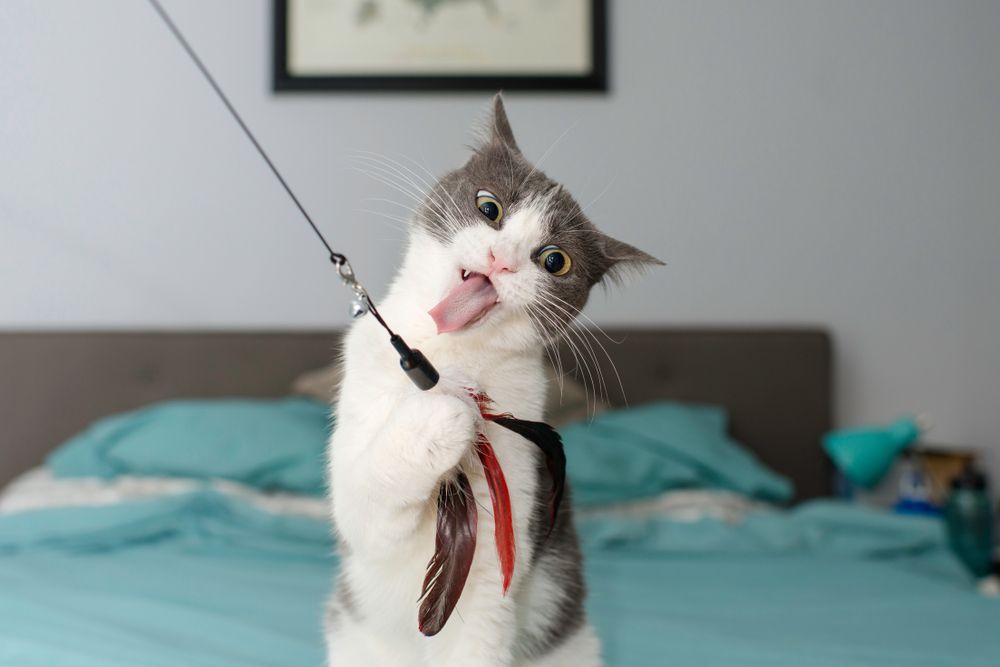
Cats are comical in some ways and confusing in others, and they have some undeniably curious habits. Often, it’s worth the effort to figure out what’s causing their behavior. If they don’t leave you scratching your head, your cat could have you ripping your hair out as you try to understand why they’re being destructive, aggressive, or just plain weird.
In many cases, a strange habit is simply a way of communicating that we humans don’t understand. If you want to end the confusion and better respond to your cat's needs, we’ll explain 15 common but weird behaviors in cats that stump cat owners.

The 15 Weird Cat Behaviors that Stump Kitty Parents
1. Gifting Dead Animals
Cats often leave dead mice, bugs, and other critters as gifts for owners, and while we find them to be more of a nuisance than anything, the cat has good intentions. Sometimes, the cat might bring their kill back to a safe place to dine. But in the wild, mother cats do this to provide for their family and train them how to hunt so they can fend for themselves.
Despite the intent, this isn’t a habit to promote. Alongside the cleaning chores they create, dead animals can expose your cat to parasites and diseases that can then spread to the rest of the household.
Keeping your cat updated on vaccinations and preventative medicines is crucial if they frequently hunt. You may also want to deter the behavior by putting a warning bell on your cat’s collar or keeping them confined in the house.
2. Kneading
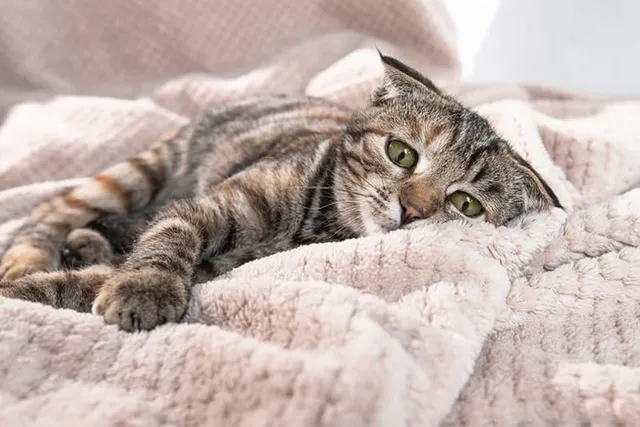
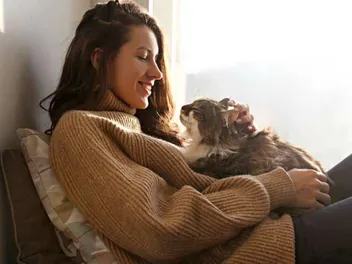
Kneading is a soothing habit cats perform while snuggling, receiving pets, or getting comfy in a cozy spot. Cats commonly “make biscuits” while nursing to stimulate milk production, and the habit carries into adulthood as cats associate it with comfort.
At the same time, the action helps them stretch their muscles and mark their territory by rubbing their paws’ scent glands on the kneaded material.

3. Knocking Objects Over
Cats are too agile for us to chalk their habit of knocking over vases and water cups up to clumsiness. Although it’s purposeful, cats rarely do it to be mean or malicious. Instead, your cat is either bored and looking for attention or instinctively exploring and playing with something they perceive as entertaining. Perhaps it reminds them of the kill?
Cutting off access to tabletop objects is one way to fix the issue, though it’s hardly the easiest. The best approach is to prevent the habit from becoming too commonplace or rewarding. Securely attaching your breakable items to the shelves might be the only realistic approach to ensuring they remain intact.
Enrichment devices like toys, scratching posts, and cat shelves provide better routes to stave off boredom. You also don’t want to give your cat attention when they knock items over, or you might encourage it.
Looking for toys that will cater to the many needs of your cat? The Hepper Hi-lo Cat Scratcher is one of our favorite cat products, and it will encourage your cat to get active. Its clever three-angle design offers multiple ways for your cat to climb, stretch, and exercise. Made of a sturdy plywood base and a replacement cardboard insert, this scratcher is an option that cats can enjoy for years to come. If your cat requires a little encouragement for self-play, the Hepper Catnip Mice Toy Set is a fantastic choice for their instinctual needs. Made with natural, bite-resistant hessian fabric and filled with organic catnip. Cats can satisfy their natural prey instincts while getting the physical activity they need to thrive.
| Image | Product | Details | |
|---|---|---|---|

|
Hepper Hi-Lo Cat Scratcher |
|
Check Price |

|
Hepper Catnip Mice Toy Set |
|
Check Price |
At Catster, we've admired Hepper for many years, and decided to take a controlling ownership interest so that we could benefit from the outstanding designs of this cool cat company!
4. Chattering
Chattering is one of several specific cat vocalizations. The rapid clicking sound of their teeth usually occurs when they’re observing prey. If you catch your cat chattering while looking out a window, they’re like reacting to an out-of-reach bird or squirrel.
Some suggest cats chatter for more than excitement or frustration. The typically voiceless sounds may be an attempt to lure a bird by copying its call. Or, chattering may be a cat performing the physical action they would use to subdue their prey, in this case, chomping down rapidly. Though often harmless, a frustrated and overstimulated cat may need extra enrichment to satisfy their predatory behaviors.
5. Chewing on Plants
Most of us know cats are obligate carnivores, which makes it surprising that they often consume grass and plants. The truth is that plants are part of the cat’s natural diet, helping them push along their digestion and reduce their intestinal parasite load.
While eating plants isn’t necessarily bad for cats, you probably won’t want them destroying your household greenery. You can supply a box of cat grass or another cat-safe option to manage your pet’s yen for plants if needed.

6. Grimacing (“Stink Face”)
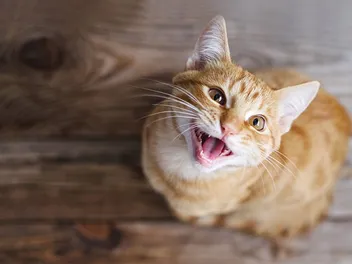
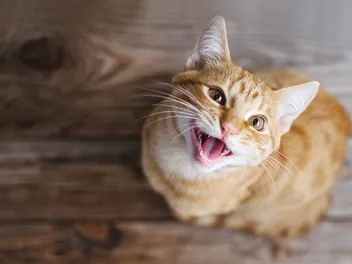
Grimacing, also called “stink face,” is one of the funniest and weirdest cat behaviors you can witness. The cat will curl back their lips and open their mouth to expose their teeth, leaving it agape to make the cat look supremely confused and taken aback. But while it might look like a surprised reaction, this grimace is a controlled method of gathering information.
Cats don’t rely on their nose alone to take in scents. The vomeronasal organ, or Jacobson’s organ, is a small inlet in the roof of the cat’s mouth just behind the front teeth. This specialized sensory organ is engaged when the cat displays a grimace, a behavior known as the flehmen response.
The flehmen response lets the cat detect chemical stimuli, allowing them to detect pheromones, which are specialized hormones that provide them with information about other cats in the area. Pheromones have the particular characteristic of influencing the behavior or physiological responses of those who perceive them.
7. Inappropriate Elimination
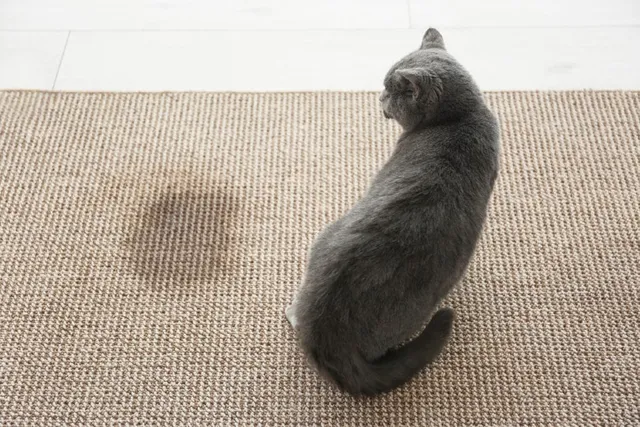
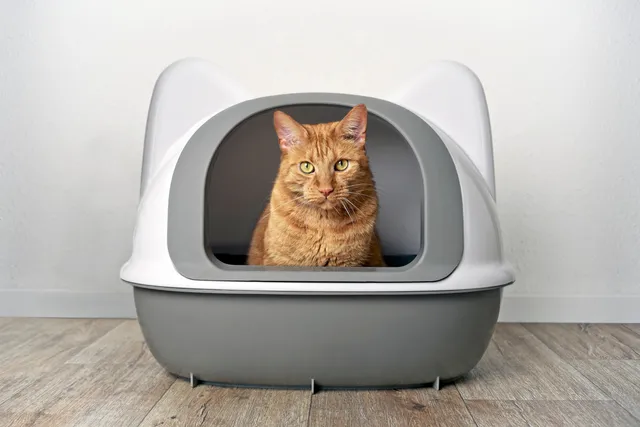
Of all the unexplained cat behaviors, inappropriate elimination is generally the most frustrating. In some cases, urinating or defecating outside the litter box is due to an issue with the box or its location.
Possible Causes of Inappropite Elimination:
In many cases, cats may have an underlying medical issue that forces them to go outside the box. Arthritis and mobility problems may make the litter box inaccessible.
Otherwise, internal ailments, including diabetes, bladder stones, GI disorders, UTIs, or feline idiopathic cystitis, are likely causes. A vet visit is a crucial first step in addressing inappropriate elimination to test for and rule out a severe health concern.
Helping Your Cat with Inappropriate Elimination
8. Marking (“Spraying”)
Marking can seem similar to inappropriate elimination, but the causes and habits surrounding this strange cat behavior are unique. Cats mark to leave scent information about them, notably their sexual status, or as a reaction to stress. Urine marking, or “spraying,” occurs on vertical surfaces around the home, and you likely won’t see any changes in the cat's expected litter box use.
Due to the sexual advertising behind many marking behaviors, spaying and neutering reduces it drastically. Only roughly 10% of males and 4% of females continue marking after desexing.
Handling Urine Marking Habits

9. Sleeping on Your Laptop
As much as pets love us, they rarely respect our need to work, and there’s no finer example of it than the cat’s love for our laptops. For a cat, a laptop is the ultimate lounging spot for several reasons. It offers warmth to keep them in their thermoneutral zone, and its elevated position provides an optimal perching spot.
Many theorize cats may also wish to get your attention when they jump on your keyboard. With your eyes glued to the screen, they know they must block your line of sight to steal your focus. Others believe the owner’s smell on the laptop keys attracts their cat. They may even lie on the keyboard to place their scent in a show of territoriality and possession.
10. Covering Their Food
Food-covering is a curious habit cats may display with unfinished bowls. The act of burying or covering food with clothes, shredded paper, and almost any other handy material is an instinct borrowed from wild ancestors.
To hide their tracks from other animals, wild cats conceal their leftovers. They may cover their waste for the same reason. In the home, food covering is often a sign you’re overfeeding your cat.
11. Staring
Staring is a common behavior that needs to be interpreted in context with the environment and other behavioral cues. Cats might stare simply out of curiosity; they love to observe details, whether it's a movement, sound, or something unusual that has caught their attention. A wide-open stare can be a dominant or antagonizing cat behavior. Although cats are less likely to bite humans, a hard stare is often a warning that they’re about to get aggressive. A cat might stare at you to get your attention. They may be hungry, want to play, or need something else. This stare is often direct and accompanied by other signs like meowing or approaching you.

12. Winking
While staring may be a threat, a cat’s lazy winking and blinking in your direction generally means the exact opposite. Although it can also indicate an infection, inflammation, or other eye issue in rare cases, winking is usually an affectionate display from cats.
Sometimes called a kitty kiss, the slow, relaxed eye closing signifies loyalty and trust for someone with whom they share a deep bond.
13. Wool-Sucking
Common in certain breeds, including Burmese and Siamese, wool-sucking is a compulsive behavior where cats suckle on wool and other soft fabrics. The habit can also broadly apply to other materials like plastic.
Early weaning often predicts wool-sucking, as it may arise from a persistent desire to suckle as a kitten. Although wool-sucking is generally not a concern, it can be problematic if the cat swallows the material.
14. Licking Itself
Grooming is one of a cat’s top activities, both with others and by themselves, but sometimes, their random licking can seem a little out of place.
If they aren’t licking to keep clean or cool down, they may show anxious behavior out of embarrassment or internal conflict. Excessive grooming could also be due to an infection, localized pain, or dermatitis, causing your cat to lick one spot obsessively.

15. Head Rubbing
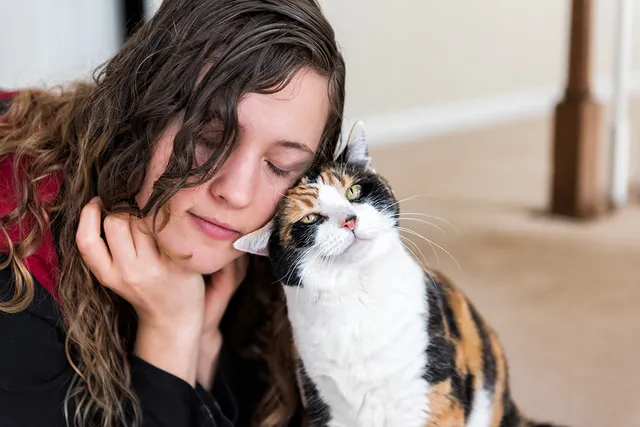
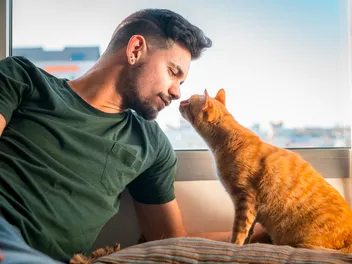
Head rubbing, also called “bunting,” is an affectionate behavior from a cat to their owner. Most recognize it as a call for attention and an invitation for pets and cuddles. But many don’t realize their cat may also use bunting to mark them as a friendly affiliate.
Cats have scent glands across several body parts, including their cheeks. Allorubbing occurs when cats rub their faces to distribute their pheromones to family members and friends.
They may also rub their head on various surfaces around the house to mark their territory. Bunting isn’t necessarily a display of dominance or possessiveness but creates a familiarity that comforts cats in their environment.

Conclusion
Cats, in general, are known for confusing and downright weird behaviors, and as you get to know your cat better, you’ll discover all kinds of fun, funny, and adorable personality quirks.
The mystery and surprise surrounding their habits are part of the magic of pet ownership. We’ll never understand our cats entirely, but the more we strive to learn, the more we can appreciate these unique and ever-intriguing characters. We love our weird cats!
Featured Image Credit: Casey Elise Christopher, Shutterstock
Expert cat care, straight to your inbox
News, insights, and useful advice, delivered to you.

No spam — unsubscribe anytime.
By signing up, you agree to our Terms & Conditions and Privacy & Cookies Policy.
How useful was this post?
Click a star to rate. You can leave written feedback afterwards. (We read all feedback.)
Oliver (Ollie) Jones - A zoologist and freelance writer living in South Australia with his partner Alex, their dog Pepper, and their cat Steve. Ollie, originally from the USA, holds his master's degree in wildlife biology and moved to Australia to pursue his career and passion but has found a new love for working online and writing about animals of all types.