5 Types of Superfoods for Cats: Vet-Approved Foods to Benefit Their Health

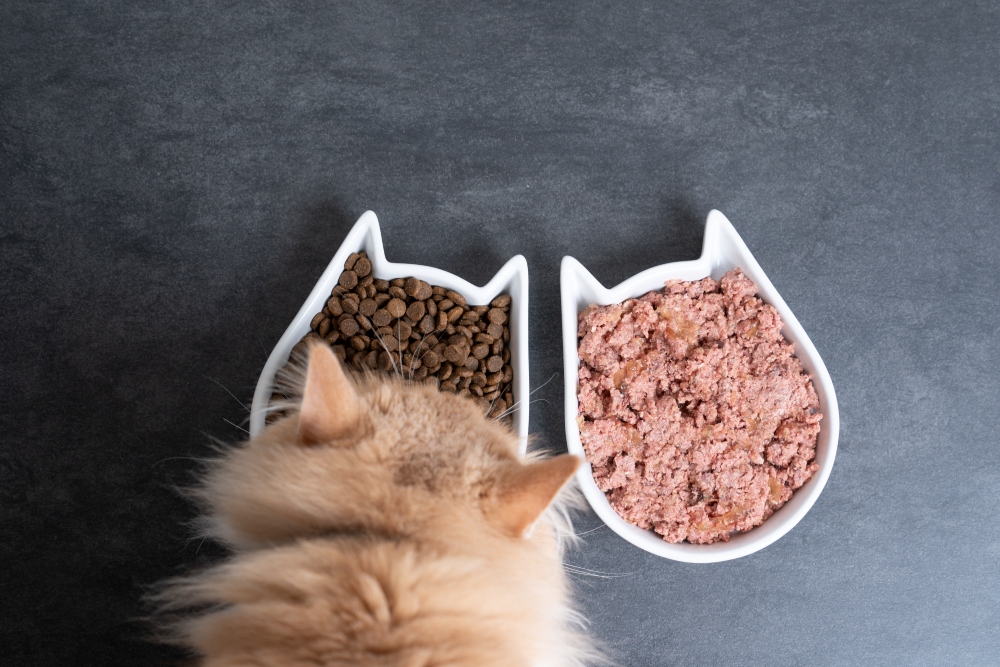
There are various superfoods for cats that are available to help improve their diet and replenish their body with much-needed vitamins and minerals. Many of these superfoods are easy to access and can be found at most grocery or health stores.
Most cats will benefit greatly from having these nutrient-rich foods included as supplements alongside their daily diet. A few of these superfoods also work as nutraceuticals for felines, providing benefits that can strengthen their immune system or help their bodies fight certain ailments.

The 5 Superfoods for Cats
1. Blueberries

| Preparation: | Can be fed raw |
| Nutritional content: | High in antioxidants |
The benefits of blueberries for cats put them at the top of the list of superfoods because they are packed with vital antioxidants. Most cats will enjoy their taste and texture. This berry is rich in a variety of different vitamins and minerals and is a great source of fiber for cats, which helps to support your cat's gut bacteria and promotes good digestion. Alternatively, you can feed them strawberries or raspberries, but blueberries seem to have the most benefits of all the berries you can feed to your cat.
Pros
- Rich in antioxidants
- Helps support your cat’s immune system
- Supports healthy gut bacteria
Cons
- Can be a choking hazard
2. Flaxseed

| Preparation: | Ground |
| Nutritional content: | Rich in fiber, minerals, and oils |
Flaxseed has a variety of different benefits for your cat’s health. For one thing, it’s rich in vitamins and minerals and is a great source of dietary fiber. It can, therefore, help keep your cat’s digestive tract healthy and working properly. Flaxseed also contains omega-3 oils that are good for your cat’s skin and coat. This can be a great superfood for your cat's diet if you want to improve their coat health, as it has been proven to reduce inflammatory skin problems.1
Pros
- Boosts immunity
- Aids in digestive health
- Keeps coat healthy and shiny
Cons
- Must be ground to a powder and added to your cat’s food
3. Cranberries

| Preparation: | Can be fed raw |
| Nutritional content: | Antioxidants and antibacterial properties |
Cranberries are rich in antioxidants and famous for their antibacterial properties that could help support your cat’s urinary tract health. These berries contain proanthocyanidins, which help with the prevention of certain bacterial growth in your cat’s urinary tract. Cranberries should not be offered to treat an active urinary infection in your cat, however. Instead, they can be given as supplements to help improve your cat’s urinary tract health if they are prone to infections. Of course, this should be approved by your vet after seeing your cat’s case. Cranberries can be mixed into your cat’s food or mushed together and fed alone. Ready-made cranberry supplements are also available in the market for felines.
Pros
- Helps in the prevention of UTIs
- Rich in antioxidants
- Source of fiber
Cons
- Potential choking hazard
4. Pumpkin

| Preparation: | Cooked |
| Nutritional content: | Rich in fiber |
Pumpkin is a great superfood for cats with sensitive stomachs, particularly if they are suffering from constipation or diarrhea. It is rich in prebiotic fiber, which helps support healthy digestion in cats. Unflavored and cooked pumpkin is the most beneficial for your cat, so avoid purchasing canned pumpkin that may contain sugar or other additives that are not beneficial to your cat’s health. Pumpkin can be added in small amounts to your cat’s main diet a few times a week, as it is rich in beneficial components that can be fed frequently to your cat.
Pros
- High in fiber
- Supports healthy digestion
- Source of prebiotics
Cons
- Should be unflavored and cooked, not canned
5. Pomegranate

| Preparation: | Can be fed raw |
| Nutritional content: | Source of vitamins and fiber |
If you’re wondering if cats can eat pomegranates, the answer is yes. It is a great source of dietary fiber, vitamins C and K, and folate. Pomegranates can be added to your cat’s main food in moderation, and ideally, they should be ground, as feeding these small pieces of fruit alone can be a choking hazard. Pomegranates are rich in antioxidants that can help protect your cat’s cells from free radical damage and related disease processes. They can also promote digestive health.
Pros
- Source of dietary fiber
- Improves immune function
- Anti-inflammatory benefits
Cons
- Can be offered only in moderation

Final Thoughts
Superfoods for cats can greatly improve their quality of life, especially if they are fed alongside a balanced diet. Most superfoods have specific qualities that may appeal to your cat’s health. Cats that are suffering from UTIs will enjoy the benefits of cranberries in particular due to their unique properties that can help with the prevention of UTIs. Cats with low immune systems may benefit from fruits like blueberries and pomegranates due to their high levels of antioxidants and vitamin C.
Superfoods are great because even though they are not a medical treatment, they can add to your cat's health. However, keep in mind that your cat needs a complete and balanced food that’s formulated to cover all the nutritional needs of their species to thrive. Therefore, superfoods should only be offered as supplements and not as a staple diet. You can mix them with their regular food to ensure that your cat is reaping all the benefits.
Featured Image Credit: Nils Jacobi, Shutterstock

Expert cat care, straight to your inbox
Vet-reviewed advice, behavior tips, and the best of Catster. Free, and you can unsubscribe anytime.
By signing up, you agree to our Terms & Conditions and Privacy & Cookies Policy.
Christian started writing for a local newspaper as a teenager, and he's been involved in the publishing industry for most of his adult life. Combining his love of writing with a passion for animals, he is currently the Director of Editorial at Pangolia and the Editor-in-Chief at Catster.
Christian lives in the Philippines with his wife, son, and four rescue cats: Trixie, Chloe, Sparky, and Chopper.
Join the conversation
Ask a question, share your story, or send private feedback.