8 Most Common Cat Colors and Patterns (With Info, Pictures & Breeds)

In this article
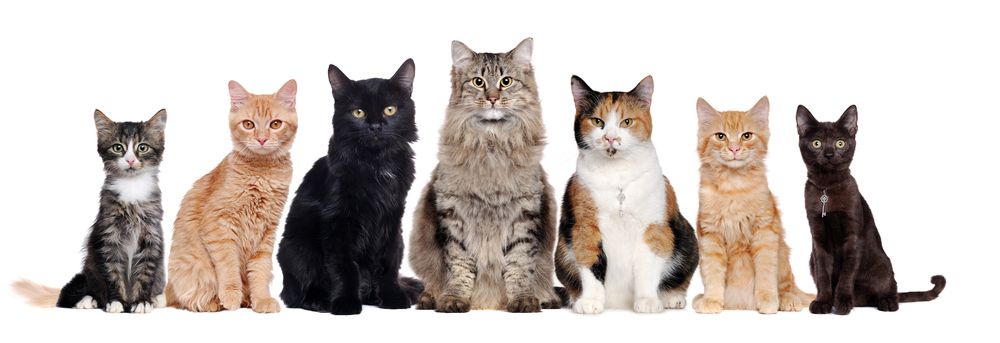
Cats are adorable creatures that, along with their unique personalities, can come in all shapes and sizes—big or small, long fur or short, even different sized tails! The myriad colors and patterns ultimately come down to genetics, with some combinations rarer than others.
We’re going to take a look at the 8 most common colors and patterns found in cats around the world, but first, let’s explore the chromosomes behind the chromatics.

The Science of Cat Colors
We often describe cat coat colors using terms like black, white, ginger, cream, blue, gray, brown, orange, and lilac. However, the vast array of patterns and shades we see actually stems from just a few base colors, all controlled by two genes:
- The KIT gene – determines how pigment-producing cells (melanocytes) are distributed in the skin, fur, and even the eyes.
- The X-chromosome – one of the two chromosomes that determine genetic sex; it also houses the gene for the color orange. This is one of only two cases of sex-linked color in the whole animal kingdom, with the other being the X-linked yellow mutation in Syrian hamsters.1
Cats have two main pigments: eumelanin (black/brown) and pheomelanin (red/yellow). The way these pigments appear depends on inherited genes:
- Brown gene (B): Controls black, chocolate, or cinnamon fur.
- Orange gene (O): Found only on the X chromosome, explaining why tortoiseshell cats are almost always female.
- Dilution gene (D): Softens colors, turning black into gray (blue) or orange into cream.
- White genes (WD/Ws): Either completely masks color (WD) or creates white spots (Ws).
Cat patterns like tabby or colorpoint are determined by other genes that control how the pigment is distributed on the skin and along the hair shaft. As you can imagine, it gets pretty complicated, and if you’d like to know a bit more, you can read our more in-depth explanation of Cat Coat Genetics.
In a wild feline population, the most common colors and patterns are those controlled by dominant genes. With selective breeding, recessive traits, which would ordinarily only occur occasionally, have become more numerous as cats with those genes are chosen to produce litters. In the absence of human intervention, virtually any population of cats would eventually revert to the natural distribution.
So, with all that in mind, what are the most common cat colors and patterns?
The 8 Most Common Cat Colors
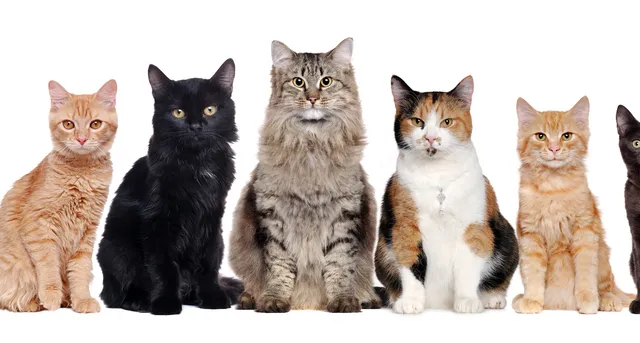
In no particular order, here are the most common cat coat color and pattern combinations:
1. Brown Tabby

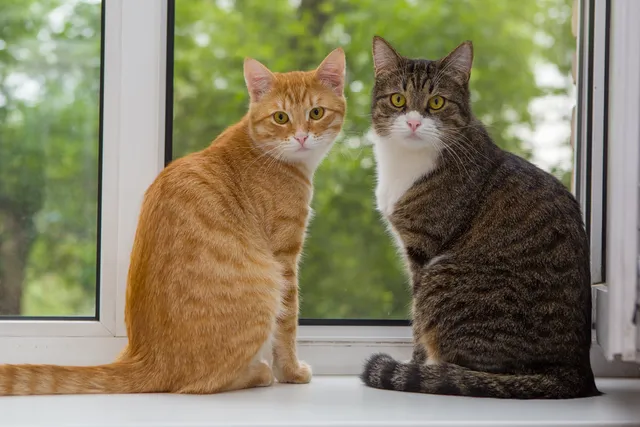
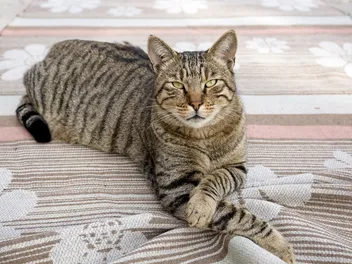
The brown tabby, with mackerel pattern and agouti banding of the fur, is the most common cat color, and the ‘wild type’ feline coat. In other words, it is the color combination that any population of cats will eventually revert to if left to breed without human interference. Being highly effective camouflage, it’s easy to see why natural selection favors this appearance, just like in the close relative of our domestic felines, the Scottish Wildcat.
Virtually all cat breeds can be found in various permutations of the brown tabby, and it is commonly seen in breeds like the American Shorthair, Domestic Longhair and Shorthair, Maine Coon, Norwegian Forest Cat, Siberian, and Japanese Bobtail. There is even a tabby-point Siamese!
2. Solid Black

Not only is the color black a dominant trait, but it also has two possible genetic sources: the B locus on the KIT gene and the O locus on the X-chromosome, which is why we see so many beautiful black kitties in almost every breed imaginable.
The only breeds that don’t come in black are the color-pointed Siamese, Birman, Tonkinese, Ragdoll, and the single-colored Russian Blue.
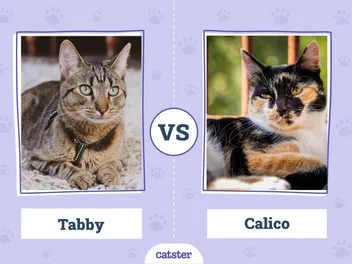
3. Tortoiseshell or Calico

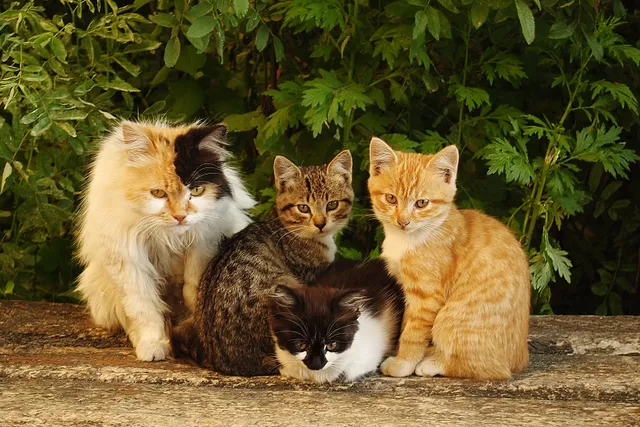
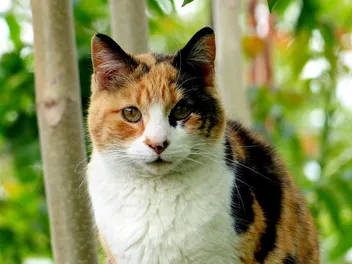
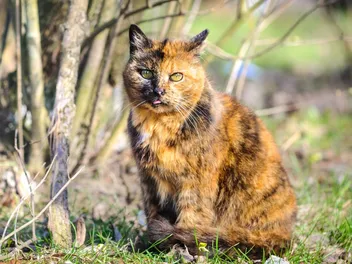
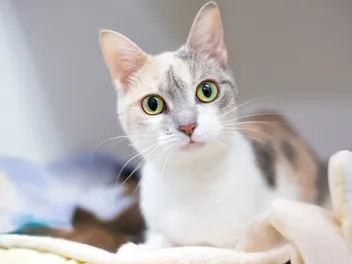
As mentioned earlier, the orange gene is found on the X-chromosome, with the alternate color being black. What is unique about the genetics of this color is that both black and orange are co-dominant, meaning that if both the black and orange genes are present, both will be expressed, resulting in a mixture of orange and black. But for that to happen, there needs to be two versions of that gene, which means two X chromosomes, which is why tortoishell (black & orange) and calico (tortoiseshell & white) are almost always female. Males are extremely rare, and if they occur, are always sterile.
Despite this, the tortoiseshell coat color is still one of the most common in the feline population, found in almost every breed, apart from the Bombay, Chartreux, or Russian Blue. Like the tabby, you can even get a tortie-point Siamese.

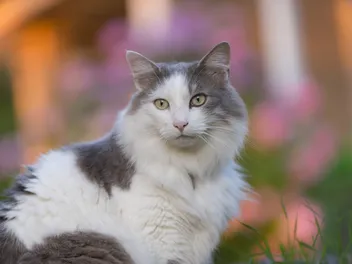
4. Black & White

You wouldn’t think these two hues would create so many different looks, but the combination of black with the masking white gene has some striking coat variations, including:
- The tuxedo: predominantly black with white mittens and chest
- The locket: a mostly black coat only has a small bit of white
- The bicolor: equal parts black and white throughout the fur
- The magpie: a white coat with black spots
Most cat breeds can be found in black & white varieties, with the exception of the breeds mentioned above that don’t come in black, or the solid black Bombay.
5. Silver Tabby

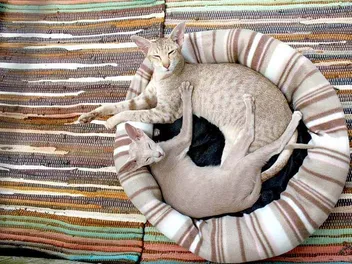
Almost as abundant as the wild-type brown, the grey or silver tabby has become a favored shade, with some cats, like the Egyptian Mau, making it something of a trademark. With shades ranging from ultra-dark to snow white and silver, it’s no wonder these elegant felines are seen around the world, in all breeds, apart from those in solid black or blue.
6. Orange Tabby

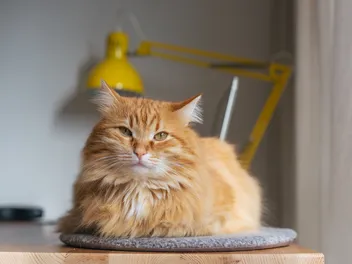
We know that torties and calicos are almost always female, but what about the ginger cat? Because of the sex-linked orange trait, a female with the O-gene is more likely to also have the black gene and be tortoiseshell or calico. In fact, only around 20% of orange or ginger cats are female. You may have also noticed that there don’t seem to be any solid orange cats around, and that’s because of another genetic interaction. The orange gene is only ever expressed alongside the tabby gene. Whether it’s spotty, stripey, or agouti, orange or ginger fur is always patterned, not plain.
Again, most breeds, apart from the Bombay, Chartreux, or Russian Blue, can be found in ginger or orange, with the Turkish Van famous for their white and ginger features. Interestingly, the vibrant rust-red of the Abyssinian breed is not a result of the orange gene, but is an agouti pattern on a brown coat (b).
7. Blue

Obviously not the color of bluebells or the Cookie Monster, blue is often used to describe cats of a dark, solid grey, which is a dilution of black. Although almost every cat breed can be found with various shades and patterns of grey, the solid grey or blue coat is particularly eye-catching. Many breeds, including the Persian, the humble Domestic Shorthair, and even the Sphynx, can be solid grey, while the Russian Blue, Burmese, British Shorthair (aka British Blue), Chartreux, Korat, and Nebelung are particularly famous for this trait. As a result, blue makes it to the list as one of the most common cat colors.
8. Colorpoint

When picturing a colorpoint cat, most people immediately think of the Siamese. However, there are actually quite a few breeds that exhibit this interesting pattern of color distribution. Colorpoint cats can be found in a wide range of colors, shades, and patterns, including chocolate, lilac, blue, tortoiseshell, tabby, and ginger.
All colorpoint cats are born completely white, with a form of temperature-reactive albinism controlled by a mutation of the tyrosinase (C) gene, often referred to as the Himalayan gene. As they get older, their extremities (ears, face, tail, and limbs), which are slightly cooler than the body, start to display color.
Alongside the Siamese, other breeds that may have a colorpoint appearance include the Balinese, Tonkinese, Birman, Javanese, and Ragdoll.
What Is the Rarest Cat Color?
So now we know about the most common cat coat colors and patterns; what about the rarest? Technically not a color, but the absence of it, the albino cat is the rarest of all coat types. Not to be confused with a white cat, the albino results from the combination of two recessive alleles in the tyrosinase (C) gene. Most cats will inherit one of the alleles and present the colorpoint pattern instead. The lack of pigment also affects the eyes, which are usually very pale blue to pinkish, and these cats must stay out of the sun to protect them. Their skin can also suffer from sun damage, especially around the nose and ears, so an indoor lifestyle is best for these striking cats.

Technically possible in virtually any breed with the Himalayan gene, these cats are very rare and, due to their high potential for health problems, are not selectively bred for.
Final Thoughts
Cats can come in all shapes, sizes, and colors. With a wide variety of appearances to choose from, there are many cat colors and patterns that have become popular among feline enthusiasts, but the color combinations seen most often are the ones that carry the greatest genetic weight. But whether they are monochromatic, bi- or tri-colored, a rare pigment, or one that is more common, there is no such thing as a boring cat. Each has their own personality and quirks, and no matter what they look like, all cats are lovable and unique!
Might Also Interest You: Why Are Cats More Popular Pets in Japan Than Dogs? (Japanese Cat Lore)
Sources
Featured Image Credit: Kasefoto, Shutterstock

Expert cat care, straight to your inbox
Vet-reviewed advice, behavior tips, and the best of Catster. Free, and you can unsubscribe anytime.
By signing up, you agree to our Terms & Conditions and Privacy & Cookies Policy.
Dr. Karyn Kanowski BVSc MRCVS (Veterinarian)
Dr. Karyn comes from Queensland, Australia, and has lived in the UK for the past 10 years. In 2010, she graduated from The University of Queensland School of Veterinary Science and also has a Bachelor’s degree in Zoology. She is passionate about using evidence, experience, and owner collaboration to provide the best solutions for pets, and believes in making reliable information about animal health accessible to all. Dr. Karyn shares her home with five cats, four dogs, and one husband. When she is not in the scrubs, she spends her time writing, gardening, and cleaning up pet hair!
Join the conversation
Ask a question, share your story, or send private feedback.