Ask Dr. Paola – My Cat Loves Eating Grass, But It Makes Her Vomit! (June 29, 2026)


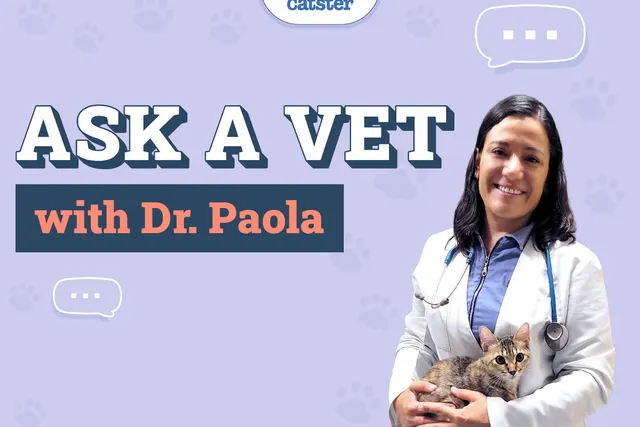
Welcome to our "Ask Dr. Paola" series, where every Monday we bring expert advice straight from Dr. Paola Cuevas (MVZ) to help our readers better understand their cat's health and well-being.
Whether you're a new pet parent or a seasoned cat lover, Dr. Paola is here to provide answers to your most pressing questions. From nutrition tips and preventive care to troubleshooting common behavioral issues, Dr. Paola is ready to offer insights that will keep your kitty happy, healthy, and feline fine. Stay tuned for expert guidance on a range of topics that matter most to you and your cat, so you can make informed decisions and provide the best possible care for your furry companion.
Have a question? Send it in here!

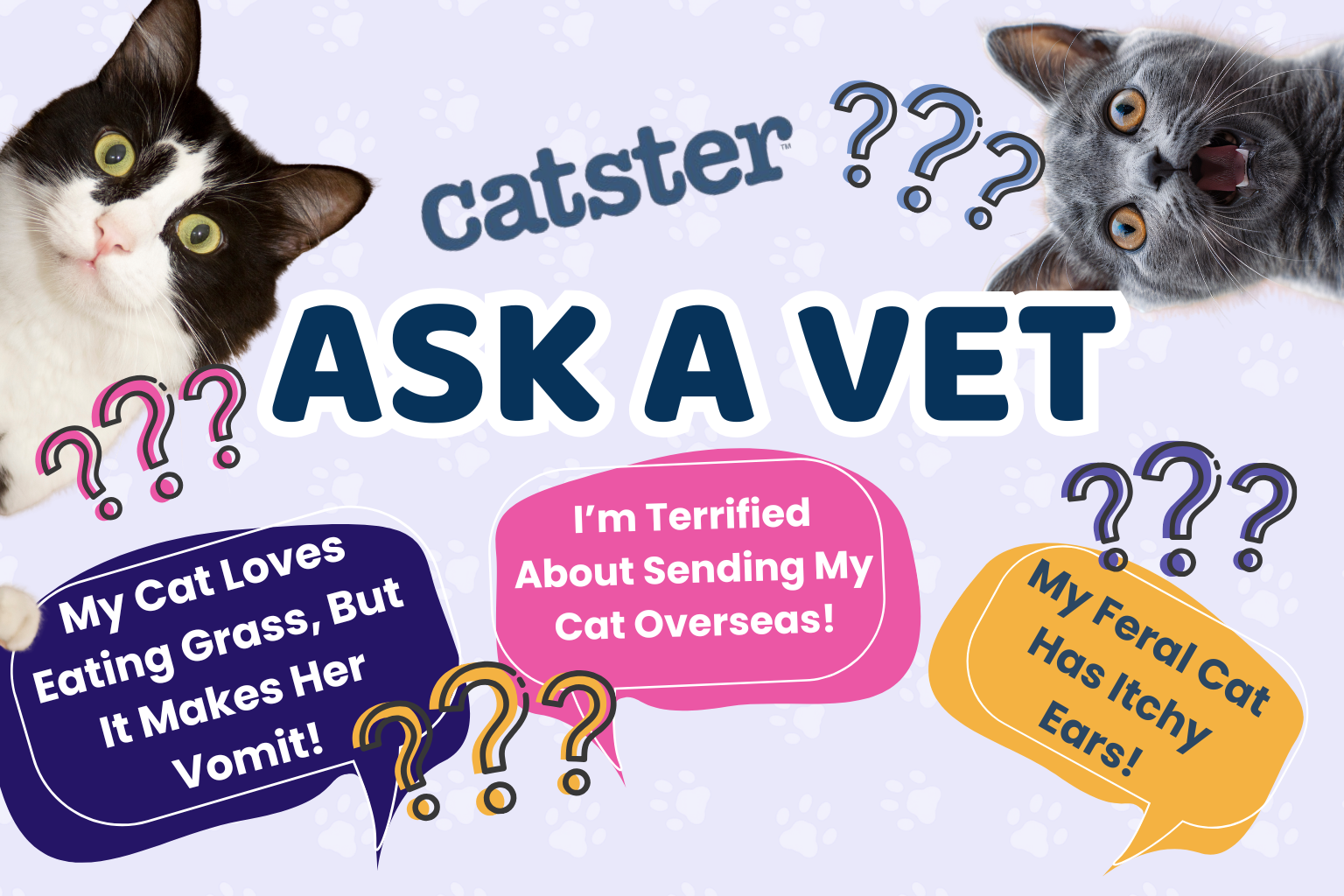
HELP! My Cat Loves Eating Grass, But It Makes Her Vomit!
"Dear Dr Paola,
My 9-year-old cat, Bhelpuri, loves to munch on kitty grass when we go out for supervised garden time each day. More often than not, she will throw it up minutes later. She is in all other ways healthy, so I’m curious if this is something beneficial to her, or if I should remove the grass, even though she loves to chomp on it. Thanks!"
- Duncan
Dear Duncan,
What you're describing is actually quite common in cats. Many cats seem to enjoy chewing grass, and some will vomit shortly afterward. We do not have definitive evidence that cats eat grass specifically to induce vomiting, but it appears to be a normal feline behavior. Think of it a bit like a person enjoying a particular crunchy snack. The behavior itself is not necessarily a sign that something is wrong. The blades of grass can sometimes irritate the stomach lining or tickle the back of the throat, which may trigger vomiting soon after ingestion.
If Bhelpuri is otherwise healthy, maintaining her weight, eating normally, and showing no other digestive signs, I would not be overly concerned. However, because she vomits "more often than not" after eating grass, it may be worth limiting the amount available during garden time rather than removing it entirely. Offering a small patch of safe, untreated cat grass and discouraging large binges may help. If the vomiting becomes more frequent, occurs when she has not eaten grass, or is accompanied by changes in appetite, weight, energy level, or stool quality, a veterinary examination would be warranted.
For now, Bhelpuri sounds like a cat who may simply enjoy her garden salad a little too enthusiastically!
Kind regards,
- Dr. Paola

HELP! My Feral Cat Has Itchy Ears!
"Dr Dr Paola,
Thank you for all the wonderful things you do for our pets. What do you think of SPRAY BANIXX for ear infections, yeast infections, ringworm, wounds, and hot spots? My feral kitty, Ninji, cannot go to a vet or be touched as she's very afraid. She has scratched both ears to the point where some fur has come off. I saw her trying to get her foot inside her ear — it's bad. I think it's ear mites, and I was told this spray will help. What are your thoughts, please?"
- Sybil
Hi Sybil,
Thank you for your kind words. I can certainly understand your concern for Ninji. Watching a fearful feral cat struggle with itchy ears can be heartbreaking, especially when handling her is not an option.
Banixx Spray is marketed for a variety of skin and ear conditions, but it is not considered a proven treatment for ear mites. Ear mites are tiny parasites that live deep within the ear canal, and effective treatment requires a medication specifically designed to kill them. If Ninji is scratching intensely, losing fur around the ears, and trying to reach deep into the ear canal with her foot, ear mites are one possibility, but some other conditions can cause very similar signs, including bacterial or yeast ear infections, allergies, ear polyps, inflammatory ear disease, or even skin parasites. Using a spray that does not address the underlying cause may provide little benefit and could delay effective treatment.
Because Ninji cannot be handled, the safest approach may be to contact a veterinary clinic, shelter veterinarian, or a teletriage veterinary service for guidance on some options for treating feral cats. In many cases, veterinarians can recommend parasite treatments that can be applied to the skin at the back of the neck (spot-on treatments) after humane trapping, and these products are often effective against ear mites. If you notice head shaking, a foul odor from the ears, discharge, loss of balance, or worsening wounds from scratching, veterinary attention becomes more urgent. Think of the scratching as an alarm bell rather than the problem itself. The important part is identifying what is causing the itch so it can be properly treated. I hope this helps!
- Dr. Paola

HELP! I’m Terrified About Sending My Cat Overseas!
"Hello Dr Paola,
I live in Oman, and rescued a Persian doll face and her kittens from the streets. I’ve had them for 2 years now, but unfortunately we have to move, and my Mom isn’t letting me take them with us. I’ve tried to get them adopted here, but had no luck, so my only option was to reach out to shelters abroad since there aren’t any here. I found a rescue in Canada that agreed to take them, but my issue is that they’ll have to travel in cargo, and the temperature here in Oman can get up to almost 50oC (122oF). Will they be okay?
I am honestly losing sleep over this and waking up with panic attacks every day.
The Persian is 5 years old. When she was outdoors, she was panting and drooling from the heat. Please, do you have any advice? Would you recommend I send her abroad? I’m really scared about the temperature because it really is extremely hot here, and I don't know what the temperature will be like in cargo."
- Dana
Dear Dana,
First, I want to acknowledge how much you care about these cats. The fact that you're losing sleep over this decision tells me you've been carrying a tremendous sense of responsibility for them. You rescued them from the streets, gave them a safe home for two years, and are now trying to secure their future. That is an act of compassion, even though the situation is incredibly difficult.
Your concern about the heat is very valid. Persian cats, even doll-face Persians, can be more vulnerable to heat stress than many other cats, and a history of panting and drooling in hot weather suggests your cat may not tolerate extreme temperatures well. The good news is that reputable airlines that transport pets internationally generally keep live animals in a temperature-controlled, pressurized section of the aircraft, not in the same conditions as regular cargo.
The greatest risk is often not during the flight itself, but during ground handling, loading, unloading, and transfers. Because temperatures in Oman can approach 50°C (122°F), I would strongly encourage working closely with the airline and rescue organization to arrange travel during the coolest months possible, select flights that depart or arrive during cooler times of day, minimize layovers, and verify the airline's live-animal temperature policies. Many airlines have temperature restrictions specifically to protect pets and may refuse transport if conditions are unsafe.
If the Canadian rescue is experienced with international cat transport, they have likely navigated these concerns before and may be able to recommend the safest route and season. From an animal welfare perspective, I would generally consider a carefully planned journey to a reputable rescue preferable to abandonment or an uncertain future on the streets. Think of the trip as a short, stressful bridge to a potentially much safer life. Before committing, I would ask the rescue and airline detailed questions about temperature controls, transfer procedures, and contingency plans for delays. Having those answers may help replace some of the fear with concrete information and allow you to make the most informed decision for your Persian and her kittens.
Best wishes,
- Dr. Paola
This article is a part of our weekly Ask Dr. Paola series
Expert cat care, straight to your inbox
News, insights, and useful advice, delivered to you.

No spam — unsubscribe anytime.
By signing up, you agree to our Terms & Conditions and Privacy & Cookies Policy.
How useful was this post?
Click a star to rate. You can leave written feedback afterwards. (We read all feedback.)
As a certified cat-lover, Radim was excited to join the Catster team on the mission to help all the cat parents in the world by providing useful and helpful information. He used to live with two wonderful cats before embarking on his travels around the world. Radim currently lives in Slovakia, surrounded by nature and his neighbors' cat community.