When to Switch From Kitten Food to Cat Food? Vet-Reviewed Facts & FAQ


In this article
Cats, like people, have different nutritional and dietary requirements at different stages of life. Kittens have seemingly boundless energy, and they need to consume the nutrients to match this. When they cross into adulthood, they will be burning off a lot less energy but will need to sustain a healthy weight and a nutritional diet. As a senior, your cat will be moving around much less and will need to consume different amounts of food. But these are only very general dietary requirements, and your cat has more specific vitamin and mineral requirements depending on their age.
Read on for more information on just when to switch from kitten to adult cat food.

When Does a Kitten Become a Cat?
Kittens are young, playful, and still learning the ropes. During this time, they are very active for a portion of the day but will also need to sleep for long periods. They will be using their brain to learn new behaviors and adopt new skills.
Young kittens are also forging new relationships with their humans and other animals. Once a kitten reaches approximately 6 months of age, they are considered adolescent, so a kitten aged between 6 months and 12 months is more like a teenage child. They will have started to develop most of their skills, they should have a good understanding of what is right and wrong, but they will still have a lot of pent up energy to burn off.
Once they reach 12 months old, a kitten is considered a fully-grown cat, although giant breeds may not have fully developed until they are 18 months old. For a normal-sized house cat, you will be looking to transition from kitten food to adult cat food at 12 months.

What Is in Kitten Food?
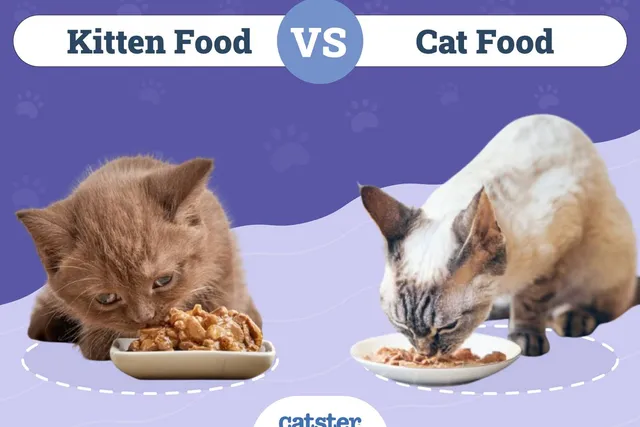
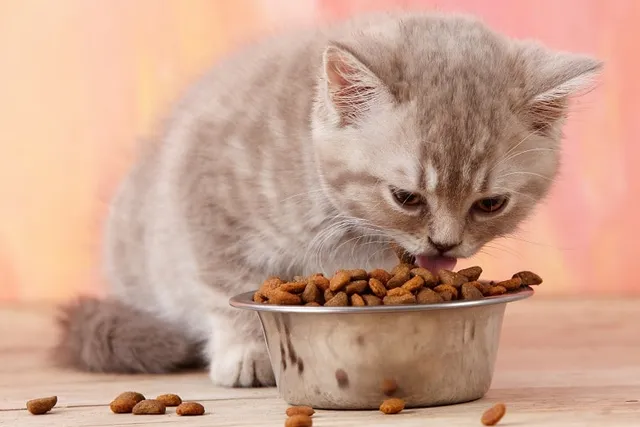
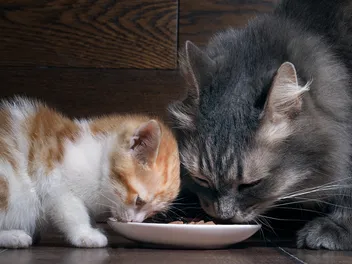
Kitten food is designed for very young cats, pregnant cats, and nursing cats. Good quality kitten food usually contains at least 55%–60% protein and at least 22%–25% fat, with more of these not being an issue, as kittens need the nutrients and energy to grow and develop, and pregnant or lactating cats need the surplus as well. It has a high fat density, which means that it has a lot of calories in a small amount of food. This caloric density is the reason that adult cats put on a lot of extra weight if they eat kitten food. This is common in multi-cat households where the adult cat eats the kitten’s food, and it should be prevented.
As well as having a higher calorie content, kitten food tends to be packed with omega-3 fatty acids, calcium, and phosphorus. These nutrients help with the development of everything from a healthy coat and skin to strong bones and a healthy brain.

Can Kittens Eat Adult Cat Food?
It is not uncommon to hear the myth that kitten food is nothing more than a marketing ploy; the same food as adult cat food but wrapped up in kitten packaging and sold for a higher price.
This isn’t true. Kitten food contains different amounts of nutrients that will help your kitten develop properly and healthily. But can they eat adult food?
Some adult foods are suitable for kittens. Check the packaging, and if it says it is suitable for all life stages, it can make good kitten food. It is considered nutritionally sound for seniors, adults, and kittens.
Otherwise, you should avoid feeding adult cat food to kittens until they reach a suitable age.
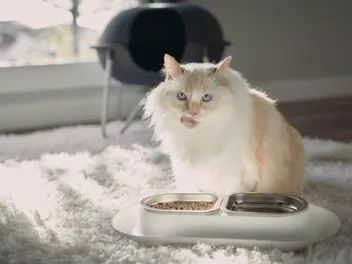
While many kittens grow out of the essential supplies you buy for them when they are young, finding a product that can last them a lifetime is like hitting the cat jackpot - which is why we love the Hepper NomNom Cat Bowl so much. Its unique cat-inspired design offers dual, stainless steel bowls that are wide and shallow, crucial for neck support when kittens are little and benefits mature cats by offering whisker relief. If you want to learn more about what other advantages the NomNom will provide for your growing kitten, click here.

- NO MESS - The 360° tray on this cat food and water bowl set has a raised design to catch and contain stray crumbs and drips. Protect your indoors and floors from wet and messy meals!
- WHISKER FRIENDLY - Shallow and wide metal containers with flat bottoms ensure your kitty can enjoy mealtime free from whisker fatigue!
- CHEW-SAFE MATERIALS - Kittens and cats love chewing on silicone and soft rubber - but it's a choking hazard. Our cat feeding station materials are anti-chew for a 100% safe feeding frenzy!
At Catster, we’ve admired Hepper for many years and decided to take a controlling ownership interest so that we could benefit from the outstanding designs of this cool cat company!
How to Choose Adult Cat Food
There is a huge range of adult cat foods on the market, including dry and wet food. You can even find some freeze-dried raw food ingredients.
Wet food hydrates your cat and provides them with the nutritional content they need. It can be more appealing, too, but it is more expensive, will only stay fresh for a few hours once in the bowl, and has a shorter shelf life than dry food.
Dry food will last longer in the cupboard and the bowl. It is less expensive than wet food, and it can contain all of the nutritional requirements needed. It also smells less and causes less of a mess around the food bowl.
You can also combine dry and wet foods. If you do this, ensure that you only feed half of the recommended amount of each, per day, otherwise, you will be overfeeding and your cat will put on extra weight.
Whatever type of food you feed your cat, remember that cats are obligate carnivores. They would eat meat in the wild, and this is where the majority of their protein should come from. Buy animal-protein-based foods and ask a veterinarian if you need expert advice on the proper food for your cat.
How to Transition From Kitten to Cat Food
Moving from kitten to cat food is an important stage in your cat’s life. When changing food for any reason, you should make the transition gradually. This will help prevent stomach upsets and gastrointestinal complaints. Make the transition over two weeks.
Start with about 90% kitten food and 10% adult food. Replace another 10-20% every second day, taking a total of one or two weeks to fully transition. This gives your kitten time to adjust to the new flavors and textures and its digestive system a chance to adapt to the change. From this time, your kitten must be used to eating only two to three meals a day. Avoid getting your kittens into the habit of free feeding. Most adult cats don’t self-regulate very well, so giving your cat two or three portioned-out meals a day can help avoid obesity.
Moving from Kitten to Adult Cat Food
Changing from kitten to adult cat food is a major milestone in your pet’s life. It means that they should have settled down enough that they do not need the extra calories and additional energy in their diet. Adult food provides a more suitable calorie ratio and contains life-stage-appropriate vitamins and minerals for your cat. Make the move gradually from kitten to cat food, typically at the age of about 12 months, and choose a good quality food that includes meat-based proteins.
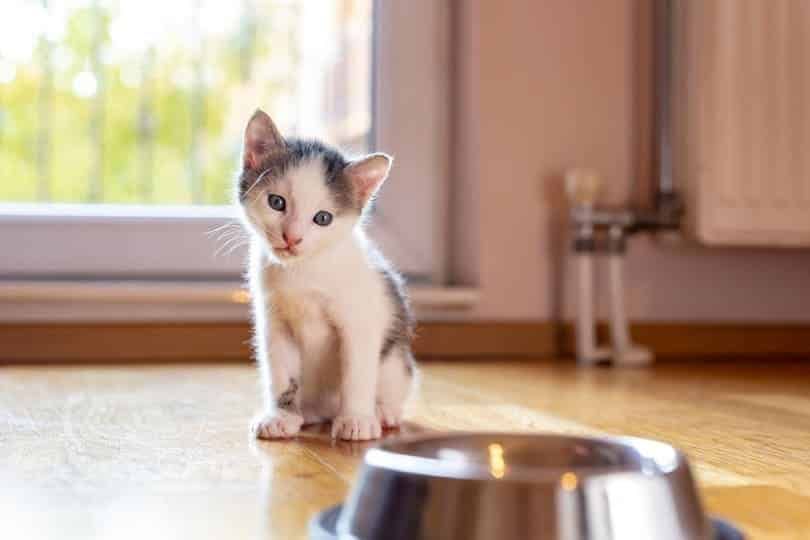
Featured Image Credit: Impact Photography, Shutterstock
Expert cat care, straight to your inbox
News, insights, and useful advice, delivered to you.

No spam — unsubscribe anytime.
By signing up, you agree to our Terms & Conditions and Privacy & Cookies Policy.
How useful was this post?
Click a star to rate. You can leave written feedback afterwards. (We read all feedback.)
Christian started writing for a local newspaper as a teenager, and he's been involved in the publishing industry for most of his adult life. Combining his love of writing with a passion for animals, he is currently the Director of Editorial at Pangolia and the Editor-in-Chief at Catster.
Christian lives in the Philippines with his wife, son, and four rescue cats: Trixie, Chloe, Sparky, and Chopper.