Can Cats Sweat? Vet-Reviewed Facts & FAQ

Every year as summer approaches, many pet owners wonder if their cats can sweat to stay cool and what they should be doing to prevent their pets from becoming overheated. The short answer is yes, cats do sweat, though not in the same way that we do. The full answer is a bit more complicated.
Keep reading to learn more about sweat and cats and how they stay cool even in hot temperatures. We also explain the signs that appear that indicate that it's time to take your cat to the vet due to their inability to maintain the proper body temperature.

Do Cats Enjoy the Heat?
Many people may not realize that cats are descendants of animals native to Africa and Arabia's extremely hot and arid climates. While there are a few areas of the United States that come close, the vast majority of the country has much cooler weather that is unlikely to get too hot for your pet even on the sunniest days.
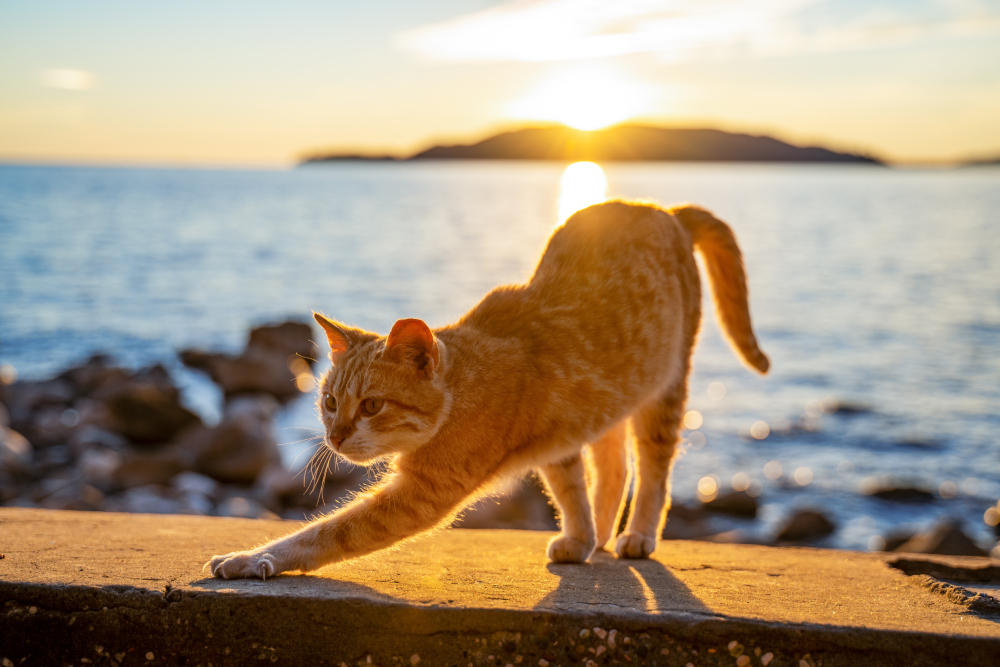
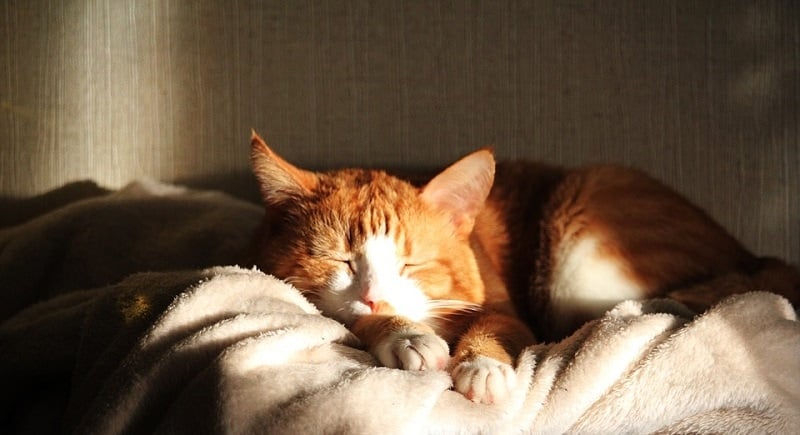
You can tell cats love warmer temperatures by the way they enjoy lying in the sunlight and curling up to sleep in warm places, often on bedding or blankets. If you use an electric blanket in the winter, there is a good chance your cat sleeps with you.

How Do Cats Keep Cool?
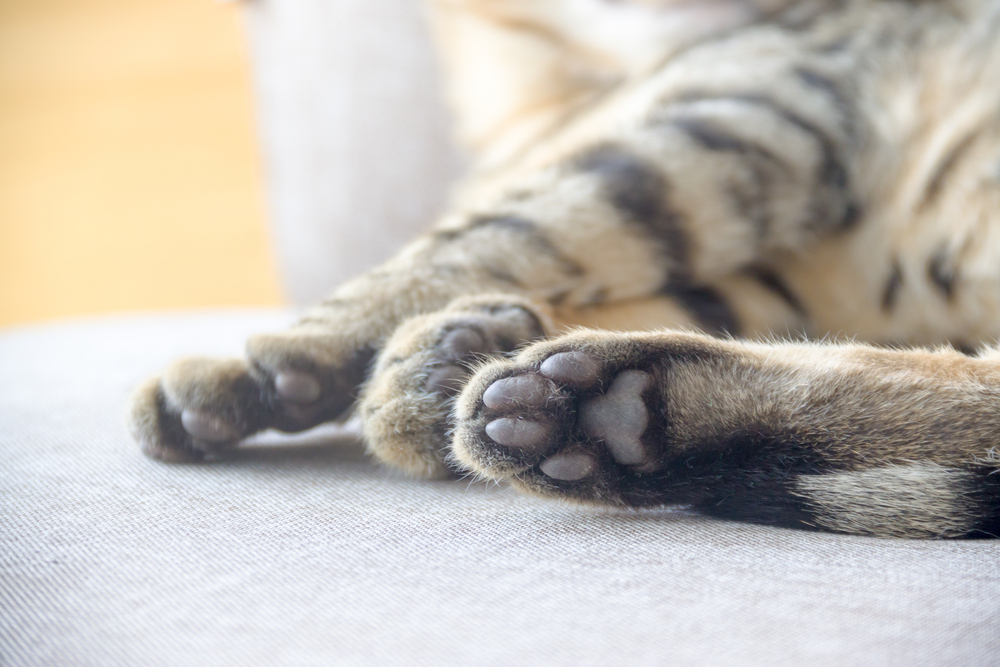
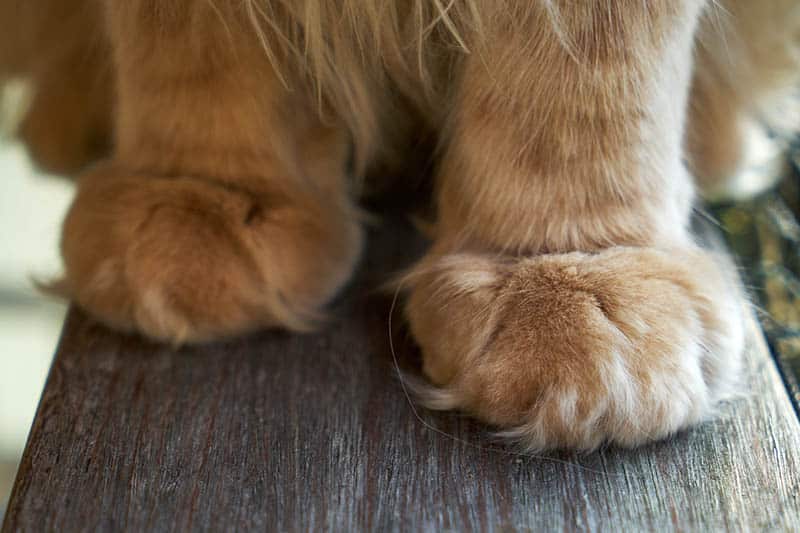
While humans have sweat glands all over the body, with higher concentrations under the arms and feet, cats have only a few of these glands, located on parts of their bodies that don't have hair. You can find the cat's sweat glands on the paws, lips, chin, and around the anus. Although the sweat glands are only in a few small areas, they effectively reduce body temperature and cool the cat.
Since there are no sweat glands on the main part of their body, your cat will never feel sweaty when you pet them and will appear not to sweat at all. However, if your cat pushes their face up against you, you may notice on warmer days that it's wetter than it normally is. You may also notice wet paw prints on the floor after your cat walks by.
Grooming
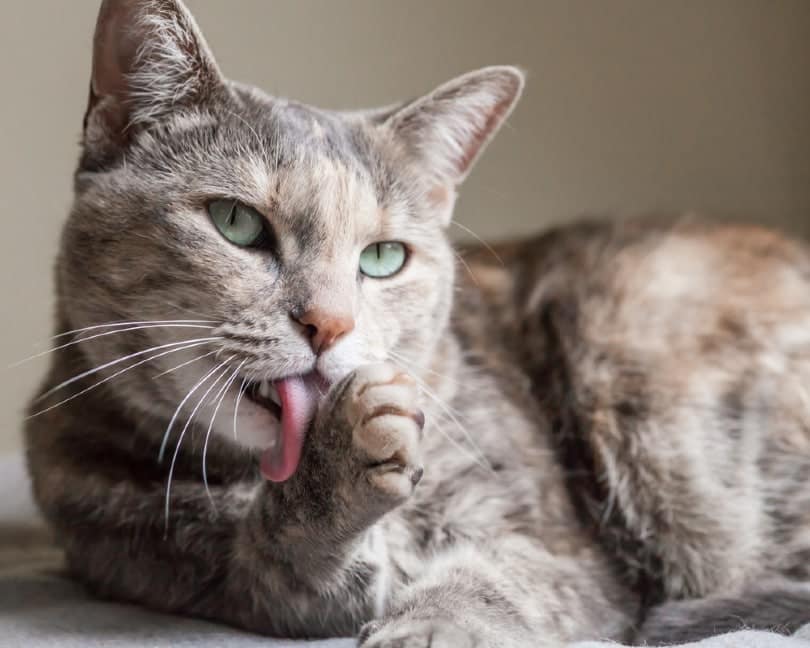
Your cat will begin grooming if the temperatures are getting too high. Cats lick themselves to clean their fur, and as the saliva evaporates, it cools them just like sweat. Many owners agree that their cats groom more frequently on hot days, but they also shed more, which can lead to hairballs and vomiting, so it's important to brush or comb them frequently to keep the ingested hair at a minimum.
Sleep
While cats are naturally nocturnal, you will notice it most during the hottest days, as your cat will likely sleep away the hot part of the day and be more active at night. This activity may lead to more sleepless nights for you, but it will help your cat get through the warmest part of the year. You will usually find them in a cool shady spot during the day until the sun goes down.
How Do I Know If My Cat Is Overheated or Has a Medical Condition?
Panting
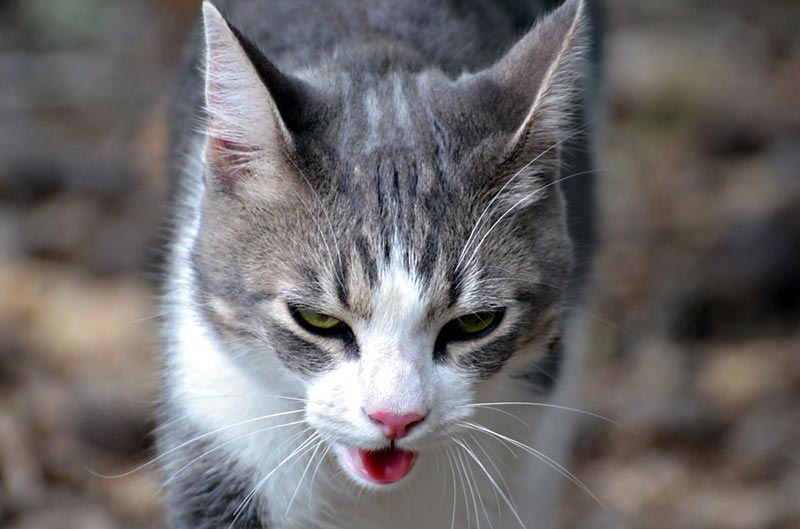
Cats can pant to release heat through evaporation, but this is not something that they commonly do. Panting in cats can be a sign of overheating or a problem with their respiratory system or heart. If you notice that your cat is panting, place them in a cool, well-ventilated area immediately with a bowl of fresh, cool water, and call a veterinarian.
Excessive Sweating
Your cat should go their entire life without you even noticing that they are sweating beyond the occasional wet paw prints on a hot day. Your cat can also leave tracks when they are feeling stressed, like when you take them to the vet. However, if you notice your cat continuously leaving tracks, even on cool days in a relaxed environment, it can be a sign that your cat has an underlying medical condition. It can be a sign of chronic stress in many cases, and you should have the cat evaluated.

Summary
Cats do sweat, but only from a tiny portion of their body, and they rely on other cooling methods too. Except for wet paw prints on the hottest days, you'll probably never be able to tell that they can sweat, and even though cats can handle high temperatures, we still recommend putting on air conditioning when you see these paw prints because it can be difficult to get a cat to drink enough water to replenish what they are losing, leading to dehydration. Wet pawprints on a cool day are a sign that your cat might be stressed.
We hope that you enjoyed reading this guide and learned new facts about your cat. If we have helped you feel more confident about your cat's ability to handle warm temperatures, please let us know!
See Also:
Featured Image Credit: LiinaFox, Pixabay

Expert cat care, straight to your inbox
Vet-reviewed advice, behavior tips, and the best of Catster. Free, and you can unsubscribe anytime.
By signing up, you agree to our Terms & Conditions and Privacy & Cookies Policy.
Christian started writing for a local newspaper as a teenager, and he's been involved in the publishing industry for most of his adult life. Combining his love of writing with a passion for animals, he is currently the Director of Editorial at Pangolia and the Editor-in-Chief at Catster.
Christian lives in the Philippines with his wife, son, and four rescue cats: Trixie, Chloe, Sparky, and Chopper.
Join the conversation
Ask a question, share your story, or send private feedback.