Is a Cat’s Sense of Smell Stronger Than a Dog’s?
In this article
Cats vs. dogs have been a subject of debate for as long as the two have been human companions. But there are some things cats “do better” than dogs, and vice versa. Looking at senses, it might surprise you that contrary to popular belief, a cat’s sense of smell is better than a dog’s…usually.
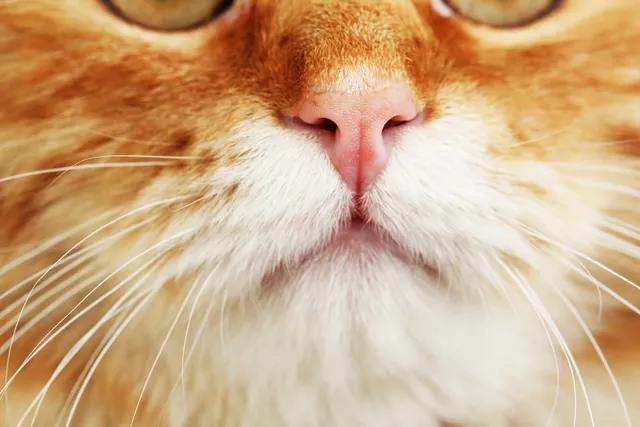
A cat has up to 200 million olfactory receptors in its nose, which is more than humans have (we only have a paltry 6 million). Dogs, in comparison, have an average of 100 million. However, some exceptions exist; breeds of dogs like the Bloodhound have been selectively bred for hundreds of years to be smelling machines.
Bloodhounds have almost 300 million scent receptors in their noses, outranking cats by 100 million or more. The Bloodhound is a special case since they are built to be scent trackers.
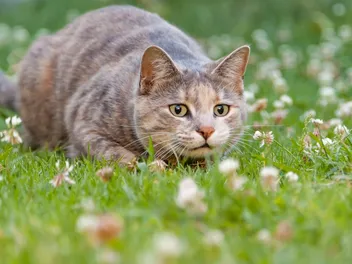
Cats, on the other hand, are predators that dominate the top of their food chains; scent tracking is one of their most deadly weapons, and they will hunt their prey for hours in their natural habitats. Because of this, a cat needs to have a good sense of smell to combine with its other food-finding senses to be successful.
But how does a cat's sense of smell compare to a dog's? Below, we compare cats and dogs in a table to visualize how their sense of smell competes:
| Domestic cat—all breeds (Felis Catus sylvestris) | Domestic dog—most breeds (Canis lupus familiaris) | Bloodhound (Canis lupus familiaris) |
| ~200 million scent receptors | ~100 million scent receptors | ~300 million scent receptors |

What Makes a Cat’s Sense of Smell So Good?
Having several olfactory receptors is not the only component of having a good sense of smell. The size of the olfactory epithelium (where scents are carried) and additional elements such as the Flehmen response and the vomeronasal organ also have a part to play in making a cat’s sense of smell so good.

Vomeronasal Organ
The vomeronasal organ (or Jacobson’s organ) is located on the roof of a cat's mouth and is the primary organ a cat uses to detect pheromones. This organ is a chemical highway to the cat's brain and pens up behind the cat's upper incisors. Smells are taken into the nose and mouth and pushed up into the vomeronasal organ by the cat’s tongue.
The Flehmen Response
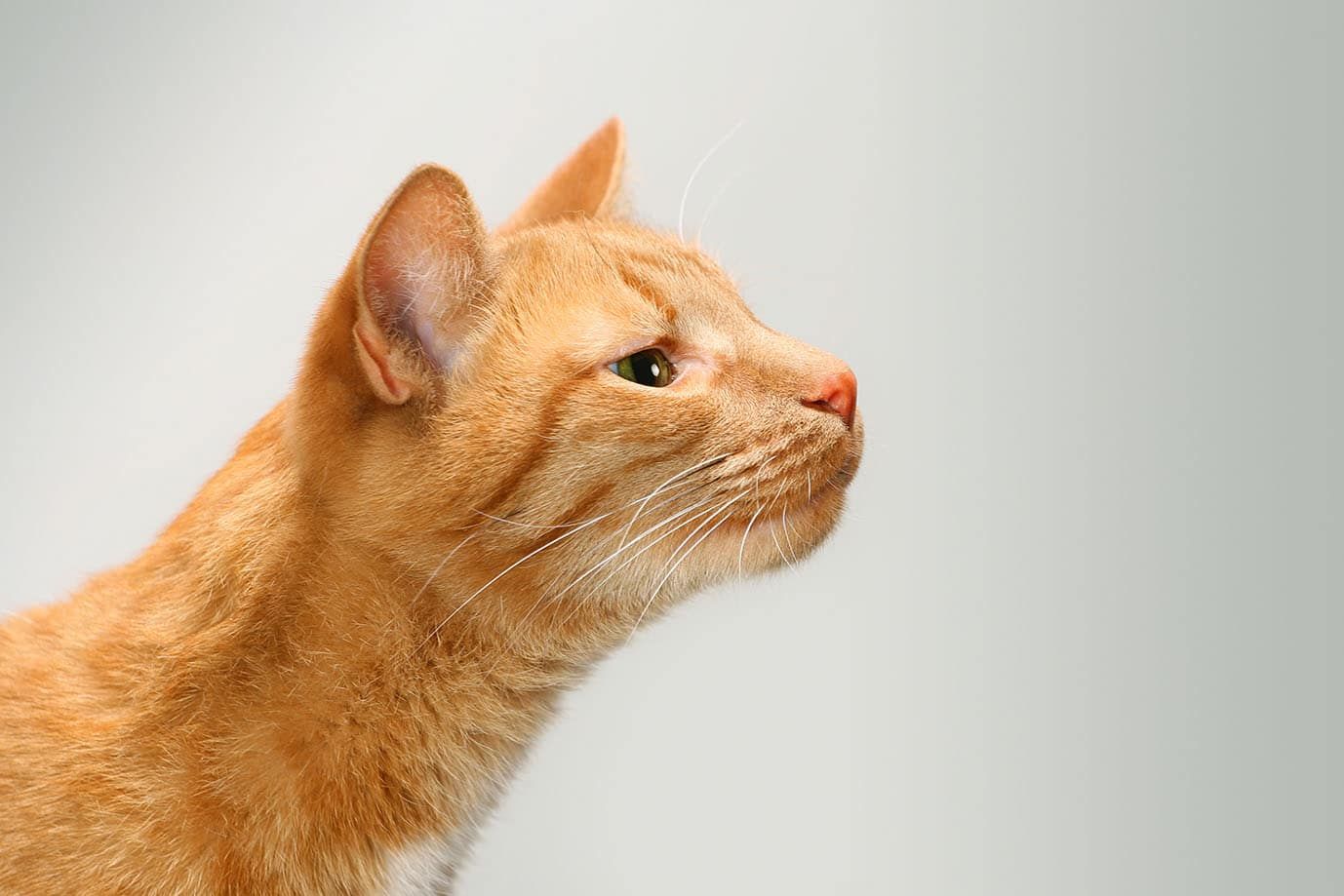
If you have seen a cat pause with its head low to the ground, eyes alert, and ears pricked forward, but with its mouth hanging open (and even tongue hanging out), you've seen the flehmen response. This is a particular set of actions that help a cat (and many other animals, such as horses) pull smell into their nasal cavity and vomeronasal organ so they can analyze it.
Cats use this to identify pheromones primarily, which can’t be picked up by their normal olfactory sensors.

What Is a Cat’s Strongest Sense?
Cats have more than a human's five senses to navigate and make sense of their world. A cat’s sense of smell is one of their strongest senses, but they seem to use their sight most when hunting prey.
Cats also heavily rely on their whiskers in their everyday lives. Whiskers, or vibrissae, are whole organs that e cats use to scope out their environment. They use them to judge the width of gaps and detect minute changes in air pressure to sense prey.
A cat's hearing is much better than a human's, as they also rely on this to hear mostly high-pitched noises when hunting and communicating. These noises, such as the squeaks of a mouse, are usually far too high-pitched for us humans to hear— a mouse communicates to other mice in ultrasonic tones.
Cats have a special flap on their ears called Hunter’s flap that's hypothesized to be used in tandem with the ear’s cone shape in directing higher-pitch sounds towards their ears, helping them to hear the high-pitch sounds of their prey easier. Cats have a hearing range of between 45Hz to 64Hz (a human's range is 20Hz to 20kHz), which is about 1.6 octaves above the human range, and one octave over a dog’s.

Do Dogs Have a Sense That’s Stronger Than Cats?
Dogs (and humans) do have a sense that is better than a cat’s, and that is taste. Taste is important to all animals, as taste can indicate whether a food is good or not. When it comes to food, however, cats rely much more heavily on their sense of smell to tempt them to eat rather than taste.
A cat only has 473 taste buds on average, which, compared to a human’s, is tiny. Humans have around 8000 taste buds, and dogs have 1,700, which is a little better.
Final Thoughts
Cats generally have more scent receptors than dogs, meaning that they have a stronger sense of smell. However, this is not true for all breeds, as Bloodhounds have an astonishing 300 million olfactory receptors compared to the cat’s 200 million. Cats use their sense of smell in tandem with their other senses, such as hearing, sight, and whiskers, to hunt prey and navigate the world. Every sense a cat has is much better than a human's, apart from taste!
Sources
https://vcahospitals.com/know-your-pet/why-cats-sniff-butts#:~:text=When%20compared%20to%20humans%2C%20cats,to%20200)%20million%20scent%20receptors.&text=to%20enhance%20their%20sense%20of%20smell.%22
https://scienceblogs.com/lifelines/2015/03/03/cats-hunt-using-sight-more-than-smell
https://catsinternational.org/the-cats-sense-of-taste/
https://www.physiciansmutual.com/web/community/article/blt96ce104869156043
https://www.midoricide.com/blogs/midoricide-blog/dogs-vs-cats-a-comparison-of-the-5-senses
Featured Image Credit: MariyaL, Shutterstock
Expert cat care, straight to your inbox
News, insights, and useful advice, delivered to you.

No spam — unsubscribe anytime.
By signing up, you agree to our Terms & Conditions and Privacy & Cookies Policy.
How useful was this post?
Click a star to rate. You can leave written feedback afterwards. (We read all feedback.)

Christian started writing for a local newspaper as a teenager, and he's been involved in the publishing industry for most of his adult life. Combining his love of writing with a passion for animals, he is currently the Director of Editorial at Pangolia and the Editor-in-Chief at Catster.
Christian lives in the Philippines with his wife, son, and four rescue cats: Trixie, Chloe, Sparky, and Chopper.