How to Keep Cat Claws Dull Safely: Vet-Approved Tips


In this article
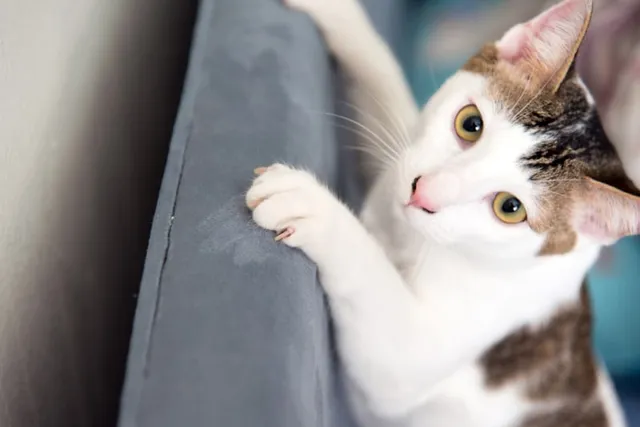
What’s that old saying—when you love someone, you have to love everything about them. Well, that’s definitely put to the test when you see your cat scratching. When you own a cat, you have to accept that scratching is normal behavior.
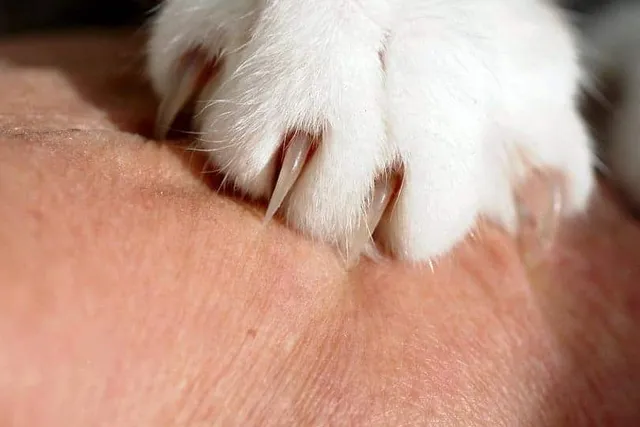
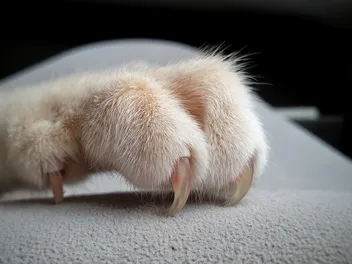
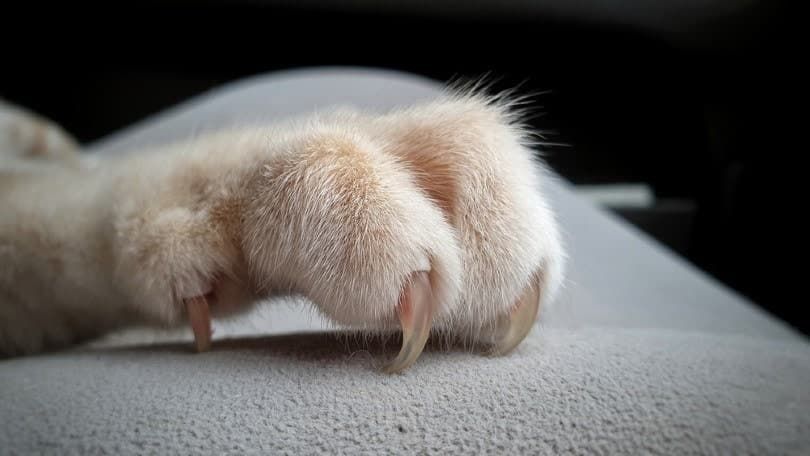
Cats scratch when they’re stretching and playing and to mark their territory. They also scratch objects to remove worn-out outer claws and expose new, sharper claws. So, what can you do to manage your cat’s claws and keep your furniture intact? First, we’ll look at how you can safely trim your cat’s nails at home. Then, we’ll examine preventative methods you can use to keep your furniture in one piece.

How to Safely Trim Your Cat's Claws at Home
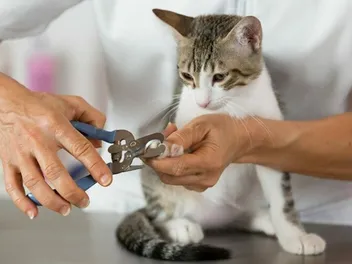
Your cat may be calm while its nails are trimmed, and hopefully, you’ll finish the clipping without being bitten or scratched. However, most cats are not fond of anyone holding their paws, and it’s crucial to create a relaxed environment that will keep your pet as stress-free as possible.

Tips and Tricks for Claw Trimming
These are our top tips for creating the best environment and putting your cat at ease before you start.
- Get your cat accustomed to the trimming process at an early age.
- Help your cat learn to trust your touch by making a point to touch and stroke their paws and pads when you aren’t going to cut their claws.
- Let your feline see the clippers before they’re in use. Leave them out and let the cat explore them, so the tool will not seem unfamiliar when you’re ready to trim.
- Plan to perform the procedure over several days. If your cat is stressed, you may only manage one claw per day, and that’s fine!
- Use high-quality pet clippers.
- Try to stay calm so that your cat doesn’t become anxious. Have a friend help you keep the animal relaxed and provide words of encouragement. Positive reinforcement will go a long way with this experience, and you can provide a treat before and after the trimming.
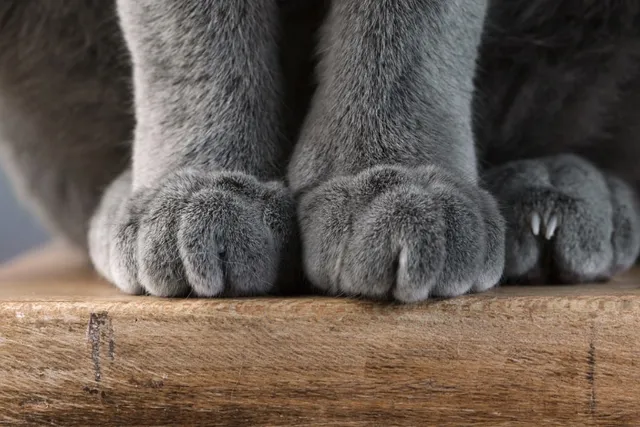
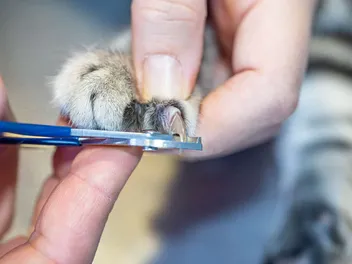
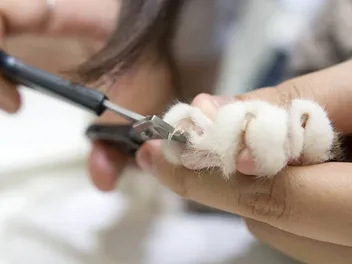
- Gently squeeze your cat’s pad until the claw sticks out.
- Trim the sharp point of the claw and avoid hitting the blood vessel (quick). If you do cut the quick, you can stop the bleeding by coating the nail with styptic powder. Minor bleeding can also be stopped by applying light pressure with a clean microfiber towel or gauze.
- If there are any signs of distress, release your cat immediately and try later. Continuing when they’re distressed will potentially make them fearful of doing this in the future.
- If your cat seems calm, continue with the other claws.
Veterinary surgeons, vet technicians, vet nurses, and groomers can also clip your cat’s nails for you.


- Complete Set - These cat nail clippers include both a large and small pair, meaning it works well as a kitten claw trimmer when they're a small kitty, and then before you know it, as a cat nail cutter
- Razor Sharp Stainless Steel - The most comfortable cat nail clippers for indoor cats provide a fast and clean cut. And for rough residuals remaining, the free cat nail file included can smooth it all.
- Safety First - With a safety nail guard and locking spring, you can make sure every grooming cut is stress free for you, and pain free for your purry pal
Trimming your cat's nails at home can be hard, but having a professional do it can be expensive. With the help of great tools like Hepper's Cat Nail Clipper Set, you can easily and quickly trim your cat's nails at home. This set includes two pairs of stainless steel clippers with safety guards and locking mechanisms, plus a built-in nail file and a convenient pouch.
At Catster, we’ve admired Hepper for many years and decided to take a controlling ownership interest so that we could benefit from the outstanding designs of this cool cat company!

The 5 Other Ways to Maintain Your Cat’s Claws
Although nail trimming is important, you can keep your cat’s claws dull with these tips.
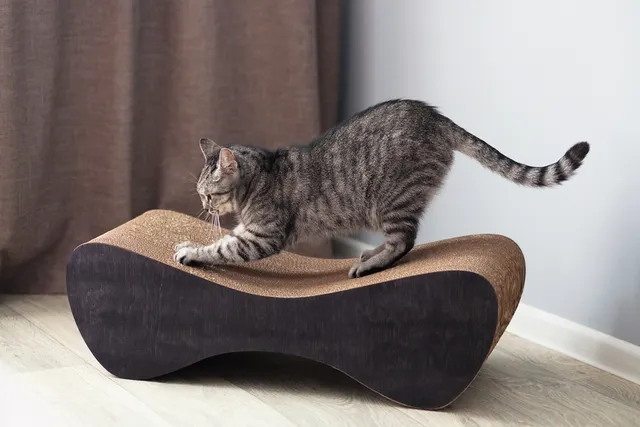
1. Get a Scratching Post

The scratching post should be tall enough for a full vertical scratch and sturdy enough that it doesn’t topple over when the cat puts its full weight on the post.
Put the post in a place your cat is likely to scratch to offer an alternative the next time it scratches up your furniture. Some cats enjoy horizontal posts, others prefer vertical, and you might need to experiment with different scratching posts to see which type your pet likes the best.
We're quite fond of cardboard as a material in cat scratchers, which is why we love the Hepper Hi-Lo Cat Scratcher. Encased within a well-constructed, modern birch plywood frame, this scratcher is designed with both cats and their owners in mind. It offers three versatile configurations to keep your feline friend active and entertained while enticing them to fulfill their natural scratching instincts (and away from scratching things they shouldn't). For more details, click here!
At Catster, we’ve admired Hepper for many years, and decided to take a controlling ownership interest, so that we could benefit from the outstanding designs of this cool cat company!
2. Try Out Plastic Claw Caps

Soft Claws, also known as Soft Paws, are plastic nail caps that come in four sizes. They also come in various colors, from natural to fashion colors, and sort of look like fake nails for cats.
They glue onto the nail to create a dull tip and they’re soft plastic caps that fit over your cat’s claws after trimming. Essentially, they form a protective barrier between your favorite chair and your cat.
3. Nail Grinder

Nail grinders use a spinning emery board to file the nails quickly, quietly and efficiently. They may be a good option for your cat but, as with clipping go gently and remove the hooked nail tip.
4. Scratching Pad

This scratching pad helps to file your cats’ nails whilst they forage for a treat. Providing entertainment and nail care at the same time.
5. Scratching Manicure Strips

These are strips designed to be placed under the litter in a cat tray and as the cat scratches to cover their toileting they file their nails a little at the same time. These may be an option for cats that are resistant to handling.

Never Declaw Your Cat
The term “declaw” is inaccurate because it implies that the procedure only removes the cat’s claws. However, declawing involves amputating the last digital bone on the front of each toe. Cats suffer tremendous pain when they recover from this procedure.
Cats use their claws every day for pouncing, scratching, balancing, climbing, and defending themselves. Removing their nails limits their ability to function as normal felines, and it can be avoided easily with training, claw-trimming, and scratching posts. Cats don’t scratch up your favorite armchair maliciously; they do it because scratching is natural and a way to keep their claws sharp and healthy.
Preventative Measures You Can Take
Here are a few preventive steps you can take that will deter your cat from scratching up your home.
1. Scents

Cats will often avoid scents they dislike. Examples of this are citronella, orange, banana, and rosemary. Cats also deposit pheromones on objects that they scratch, which repeatedly brings them back to the object. Enzyme sprays are available to clean your furniture and prevent return visits.
2. Turn Them Against Their Favorite Spots
You can lay sheets of aluminum foil over areas you want to protect. Cats will avoid the areas because they don’t like the feeling or the sound of the foil. You can also try wide, double-sided sticky tape.
3. Distract Them

If you catch your pet in the act of scratching, redirect their attention to a scratching post and offer a reward if they scratch the post. You can also try making a loud noise, like clapping when the feline turns its attention to your furniture. The noise should act as a distraction and not feel threatening in any way.
Conclusion
The best thing for you, your cat, and your furniture’s longevity is to ensure you’re trimming your cat’s claws. To do this, you’ll need an assistant and a calm atmosphere.
You can also try preventative measures like scratching posts and citrus scents if you think they’ll work for your kitty. If you’re having problems maintaining your pet’s nails, contact your vet or a professional cat groomer to trim the claws.
See also:
How to Keep Your Cat’s Nails Healthy in 5 Vet-Approved Steps
Cat Pedicures: What's Involved? Vet-Approved Facts & Explanation
Sources
Featured Image Credit: RJ22, Shutterstock
Expert cat care, straight to your inbox
News, insights, and useful advice, delivered to you.

No spam — unsubscribe anytime.
By signing up, you agree to our Terms & Conditions and Privacy & Cookies Policy.
How useful was this post?
Click a star to rate. You can leave written feedback afterwards. (We read all feedback.)
Kerry-Ann lives in Scotland and would love to have a bigger garden so she could have her very own Highland cow. But her dogs probably wouldn’t like that idea very much. She has a La Chon called Harry who was sick with a liver shunt when he was a puppy. It wasn't likely he would make it into adulthood, which was difficult to comprehend, but he beat the odds and is a healthy old man now. She also has a Pug called Maddie who is a big foodie. She’s small, sassy, and every day she finds a new way to wind her brother up.
When she isn’t writing you can find Kerry-Ann going for long walks when it isn't raining, reading, or watching cartoons. She would one day like to be a tourist in her own country and travel through the Highlands with her family.