How Many Eyelids Do Cats Have? Vet-Reviewed Facts & FAQ (With Infographic)


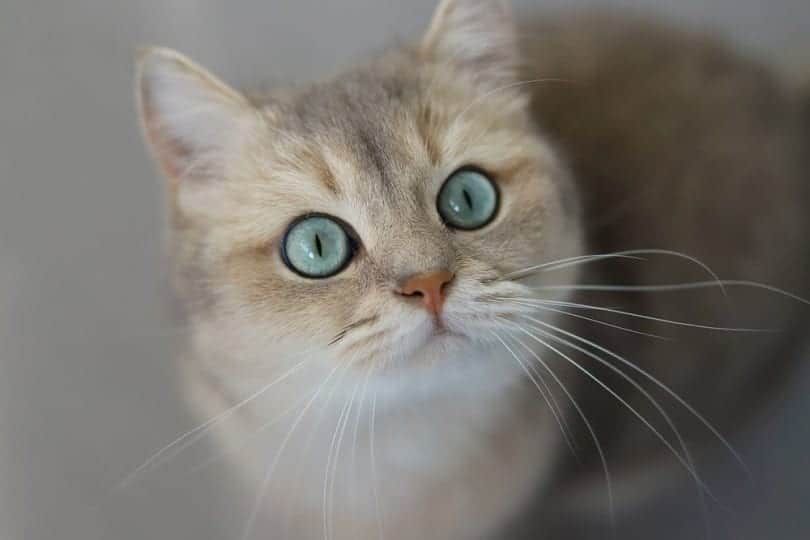
Cats are one of the most popular pets in the world. They are known for their adorable faces, soft fur, and, above all else—their hypnotic eyes. But do you know how many eyelids cats have? Contrary to popular belief, most cats do not have two eyelids per eye as humans do.
Cats actually have six eyelids—an upper lid, a lower lid, and a third lid located in the corner of each eye called the nictitating membrane or, less commonly, “haw”. This is a triangular, thin, pinkish layer of tissue that can be drawn across the eye to help distribute tears and protect it from debris and foreign objects. Three plus three means cats have six eyelids in total. Read on to find out all about their unique ocular anatomy.

How Do Cats Blink?
The lower and upper eyelids of felines work together to cover and protect their eyes. In cats, both upper and lower eyelids move toward each other when they blink. You might see the eyelids not closing together completely at times as if the cat was squinting. The third eyelid, the nictitating membrane, moves diagonally across the eye and helps to keep the surface of the eye lubricated and clean.
How Do I Find My Cat’s Third Eyelid?
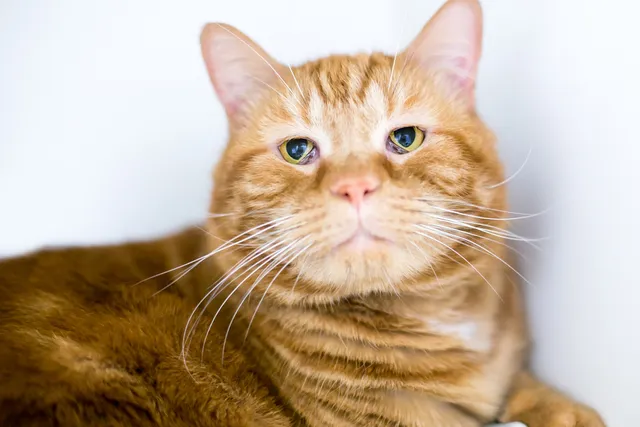
Many cat owners have never seen their cat's third eyelid and are not sure where to look for it. The third eyelid is a thin membrane that is located on the inside corner of your cat's eye. You can check for the third eyelid by looking at the inner corner of your cat's eye.
If you see a small, pink or light red triangle-shaped membrane, that’s the third eyelid. When your cat’s third eyelid is easily visible, and they are awake and active, it means something is going on with your cat’s eyes and it is time to see the vet.

What Color Should My Cat’s Third Eyelid Be?
The third eyelid is a membrane that is visible in cats and dogs. It is located in the inner corner of the eye and is normally hidden by the upper and lower eyelids. The lining is made of conjunctiva, so anything that irritates or damages this tissue will cause the third eyelid to look darker or redder than normal or even thicker. In healthy cats, the third eyelid should be pink or very light red.

Why Is My Cat’s Third Eyelid Dark?
There are a few different reasons why a cat's third eyelid may be darker than normal. The conjunctiva is a very special tissue that reacts extremely fast to any external agents. The conjunctiva may appear red or bright pink when it is inflamed or damaged. It is very common to get a bright pink conjunctiva when your cat is suffering from pink eye.
One possibility is that the cat has a scratch on the third eyelid, which would cause the tissue to bleed and become inflamed. Another potential explanation is that the cat has an infection, corneal scratch, or other medical condition that is causing the eye to become painful and reactive.
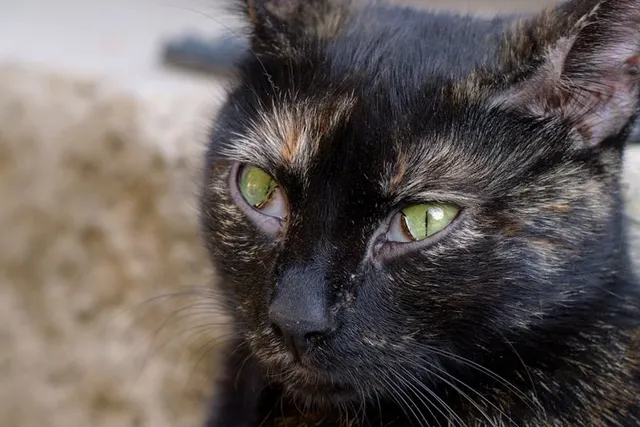
Other causes could include a tumor or a foreign body in the eye. Additionally, melanin pigmentation may cause the third eyelid to appear darker than normal, especially in black cats. In this case, the darker color is totally harmless.
What Does a Cat’s Third Eyelid Do?
A cat’s third eyelid is called a nictitating membrane. This membrane contains a special gland that forms tears. When this gland pops out (seen in dogs much more commonly than in cats) it is called cherry eye. The third eyelid is very thin and moves very quickly.
In response to a cat's blinking, the nictitating membrane travels diagonally across the eye very rapidly. It’s difficult to catch the membrane moving. Instead, your cat may simply appear to be squinting. Each of these three eyelids protects the eyes of your cat. Apart from having one of the most important tear glands, the third eyelid protects the eyes and distributes the tear film, helping with vision and moisture.

How Else Does the Third Eyelid Protect a Cat's Eyes?
Cats use their third eyelid, or nictitating membrane when hunting. This extra eyelid acts as a windshield wiper to keep the cat's eyes clean and clear. In addition, the third eyelid of cats can also extend upward to protect the eyeball from injury. For example, when a cat moves through tall grass or when a cat is closing in on their prey, the cat's third eyelid will elevate to ensure that nothing can scratch their cornea.

Why Is My Cat's Third Eyelid So Thin?
The third eyelid is so thin it is almost translucent. Cats can probably at least see light and dark, if not make out some shapes through the nictitating membrane. Some theories suggest that cats have an advantage when hunting prey because they can see through the membrane of this eyelid.
Why Does My Cat’s Eye Look Weird?
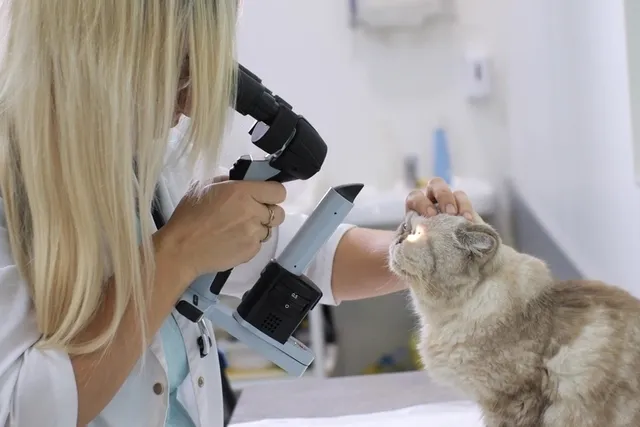
There are a couple of things that could be going on with your cat's eye if it looks weird. One possibility is that your cat has a condition called uveitis, which is inflammation of the uvea, one of the internal layers of the eye. This can cause the iris to change color and the pupil to look cloudy. Another possibility is that your cat has a cataract, which is a clouding of the lens in the eye that can lead to vision problems. For issues affecting your cat’s third eyelid, read the next section.

Why Is My Cat’s Third Eyelid Showing?
There are times when eye injuries are accompanied by the protrusion of the third eyelid. The third eyelid in felines protects the cornea, and it is normally not visible. In cases of injury or illness to the eye, the third eyelid can protrude or appear swollen. Contact your veterinarian as soon as possible if you see your cat's third eyelid sticking out.
Often, seeing the nictitating membrane is a sign that there is a foreign body in the eye or a scratch. Plant fragments, sticks, excess pollen, or other debris could be causing irritation to your cat’s eyes. Your vet will check the eye for scratches or ulcerations if the third eyelid is sticking out. An untreated injury could lead to further infection.
The third eyelid can also show and look swollen when suffering from inflammation (eosinophilic keratoconjunctivitis) or tumors. On occasion, both nictitating membranes can show up and look normal; otherwise, this can happen in cats that suffer more commonly from dehydration, severe weight loss, poisoning, dysautonomia, and Haw’s syndrome.
What Is Haw’s Syndrome in Cats?
Haw's syndrome is common in cats. This is a condition in which both third eyelids protrude (or prolapse). If both eyelids prolapse at the same time with a normal-looking eye, your vet will perform a full physical exam to rule out medical conditions such as dysautonomia, dehydration, and weight loss. If nothing is found and your cat is experiencing mild diarrhea, their illness might be labeled Haw's syndrome.
It's not known exactly what causes Haw's syndrome, but your cat's diarrhea might most commonly be linked to a viral infection. If your cat is dull, depressed, and has no appetite, your veterinarian will perform a more comprehensive exam to rule out other causes of diarrhea and protruding third eyelids.

How Long Does Haw’s Syndrome Last & How Is It Treated?
Usually, Haw’s syndrome is self-limiting, meaning it goes away without treatment after four to six weeks. In most cases, cats recover from this condition on their own, but if protrusion of the third eyelid persists for more than two months, your vet may reconsider their diagnosis.
If a cause of diarrhea can be identified, it will be treated specifically, generally with dietary changes or deworming tablets. Usually, it’s not necessary to form a treatment plan for your cat’s eyes, and you will be asked to wait and see, provided that your cat is well otherwise.
What Age Cats Are Affected By Haw’s Syndrome?
The occurrence of Haw's syndrome is not age-dependent; however, young adult felines are more likely to suffer from this disease than older cats.
Conclusion
In conclusion, cats have a total of six eyelids. The upper and lower eyelids involved in blinking and the third eyelid, or nictitating membrane, have important functions but are only clearly visible in certain conditions. While this third eyelid may seem like a small detail, it is actually essential to their vision and overall eye health. So, the next time you see your cat blinking lazily in the sun, remember that they are doing something much more complex than you may think!
Featured Image Credit: Anna Azarenko, Shutterstock
Expert cat care, straight to your inbox
News, insights, and useful advice, delivered to you.

No spam — unsubscribe anytime.
By signing up, you agree to our Terms & Conditions and Privacy & Cookies Policy.
How useful was this post?
Click a star to rate. You can leave written feedback afterwards. (We read all feedback.)
Christian started writing for a local newspaper as a teenager, and he's been involved in the publishing industry for most of his adult life. Combining his love of writing with a passion for animals, he is currently the Director of Editorial at Pangolia and the Editor-in-Chief at Catster.
Christian lives in the Philippines with his wife, son, and four rescue cats: Trixie, Chloe, Sparky, and Chopper.