Do Cats Have Eyelashes? Vet-Reviewed Anatomy Facts & Conditions


In this article
Cat eyes are fascinating animals to observe, but have you ever wondered if your cat has eyelashes? If you ask this question, you’re likely going to get mixed answers. Some people say yes, and others are adamant that the answer is no.
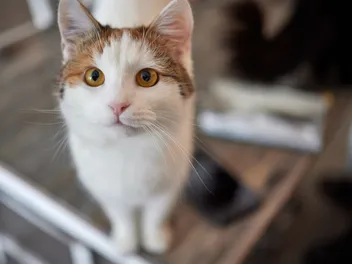
Technically, cats don’t have eyelashes! They lack eyelashes on both eyelids, although they have a row of thicker facial hair that serves as rudimentary lashes along their upper eyelid. While cats don’t have eyelashes as such, on rare occasions, they can develop medical conditions related to the hairs in their eyelids. These include extra hairs or ingrown hairs that grow abnormally, rubbing on the eye and causing different degrees of discomfort and irritation.
Read on to decide for yourself if cats have eyelashes or not!

Why Are Cats’ Eyelashes Heavily Debated?
A cat’s eyelids are different from ours. As humans, we don’t have fur covering our faces, so our eyelashes are clearly visible. Eyelashes on humans are often used as beauty enhancers, but their main function is to keep particles like sand, dust, and other debris out of the eye.
Another role that eyelashes play is to warn if something is getting too close to the eye. Eyelashes are sensitive to touch and will alert the person if the eye is in danger of being injured.
Since a cat’s eyelids are covered in hair but lack true eyelashes, they use their eyelids and eyebrow whiskers for the above purpose. Plus, they also feature a third eyelid,which gives their eyes extra protection.

Third Eyelid of Cats
The third eyelid that cats have is also called the nictitans or the nictitating membrane. This is a translucent membrane that sweeps over the eye to protect it from debris and keep it moist without the cat having to close their eyes. They can still maintain their vision, which is especially important in dangerous situations.
The third eyelid acts as a windshield wiper blade to the cat’s cornea, removing dirt and distributing tears. As cats move and hunt through bushes and tall grass, their eyes can be protected while they watch where they’re going.
It does a better job than the regular eyelids of keeping the cornea hydrated. For cats that had to have their third eyelids removed either partially or completely, their eyes are then chronically irritated and may require supplemental artificial tears.

Do Humans Have Third Eyelids?
Humans lack the third eyelid but did have them at one time. The evolutionary proof is the fleshy bump in the corner of each human eye, technically called plica semilunaris. They are the remnants of the membranes. The exact reason why we lost it is unclear; however, we don’t hunt for food or walk through dense vegetation as cats do, so our third eyelid was likely phased out because we don’t have a need for it.
What About Whiskers?

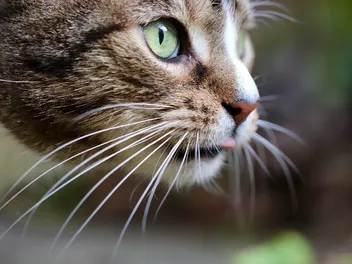
You may have noticed whiskers around your cat’s nose and mouth, but they also appear above the eyes, on the chin, near the ears, and on the front legs. Whiskers grow out of hair follicles on cats, but whisker hair follicles are full of blood vessels and nerves. This makes whiskers much more sensitive than the rest of the hair that covers a cat's body.
Whiskers are one of a cat’s ways to navigate their surroundings. Their sensitivity to touch warns cats of potentially dangerous situations. They let cats know when they’re getting too close to objects and should change direction. They help cats stay out of harm’s way.
Whiskers located above the eyes are another layer of protection that cats have to keep their eyes safe. Since cats can’t focus on objects that are close to them very well, whiskers help them determine what’s around them by acting as radar sensors.
Cat Eyelash Disorders
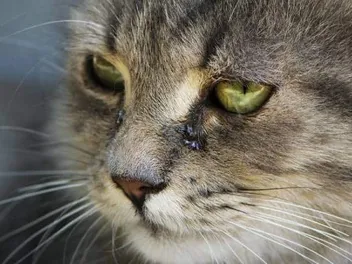
While cats don’t have true eyelashes, they can still suffer from disorders related to cilia that grow abnormally from one of the multiple glands present along the eyelids. Disorders related to cilia or eyelashes are quite uncommon, and even though these conditions are not life-threatening, they can cause discomfort, irritation, and even eye ulcers. If these conditions are left untreated, they can affect the overall health of the eye.
Signs
Usually, any of these signs will indicate that something is wrong with your cat’s eyes. Just one eye can be affected. Some of these signs mimic those of eye infections. If you notice any of these signs, bring your cat to a vet so a proper diagnosis can be made and treatment can begin.
- Color changes in the eyes
- Frequently twitching the eyelid
- Excessive tearing
- Skin around the eyes swelling
- Pawing at the eyes
- Eye kept shut
- Red eyes
- Different types of discharge from the eyes
- Painful eyes
Your vet will ask questions about the signs and examine your cat. Further testing may be necessary to diagnose and treat the condition.
Distichiasis
This most commonly occurs in dogs, but it’s occasionally seen in cats. Distichiasis refers to eyelashes that grow in abnormal locations. Eyelashes typically grow on the edge of the eyelid skin, but errant eyelashes can grow from the meibomian glands on the eyelid margin.
This constant aggravation of the cornea is extremely unpleasant and requires treatment to correct. The treatment will depend on the degree of irritation, the thickness of the hairs, and the number present. Treatment can include lubricating the eye, plucking the eyelashes (a repeated treatment since the lashes grow back), surgery to remove the hair follicle, or laser treatments to destroy the hair follicle.
Ectopic Cilia
Ectopic cilia is similar to distichiasis. While distichiasis emerge at the eyelid margin, ectopic cilia grow abnormally through the conjunctiva at the inner side of the eyelid and touch the cornea. Treatment includes surgical removal of the harmful eyelash.

Can Cats Recover From Eyelash Disorders?
Early treatment is necessary to ensure that your cat makes a full recovery from any eyelash disorders. Detecting the issue early and working to fix it will prevent further damage to the eye. Your vet may prescribe medications or lubrication to help your cat recover faster. In some cases, surgery is necessary to correct the problem.
You may need to keep your cat's eyes clean by washing them every day with a prescribed eyewash. Follow-up appointments are important to keep your cat’s eyes healthy and pain-free.
Final Thoughts
Though the topic may seem debated for some, cats don’t have eyelashes. Their eyelids are covered in hair, so it may seem as if they do. Cats’ eyes are designed to keep dirt and other debris out of them. In addition to eyelid hairs, cats have a third eyelid and whiskers above the eyes to help keep them safe and protect against injuries.
Eyelash disorders happen much more frequently in dogs than cats, but it’s still important to make sure your cat’s eyes are healthy. If you notice any signs of eye problems, see your vet right away.
Sources
https://www.petmd.com/cat/conditions/eyes/c_ct_trichiasis_distichiasis_ectopic_cilia
https://www.scientificamerican.com/article/why-do-cats-have-an-inner/
https://vcahospitals.com/know-your-pet/why-do-cats-have-whiskers
https://www.petmd.com/cat/conditions/eyes/c_ct_trichiasis_distichiasis_ectopic_cilia#
https://vcahospitals.com/know-your-pet/distichia-or-distichiasis-in-dogs
https://bluepearlvet.com/pet-blog/what-are-symptoms-of-eye-infections-in-cats/
https://vcahospitals.com/know-your-pet/ectopic-cilia-or-eyelash-problems-in-dogs
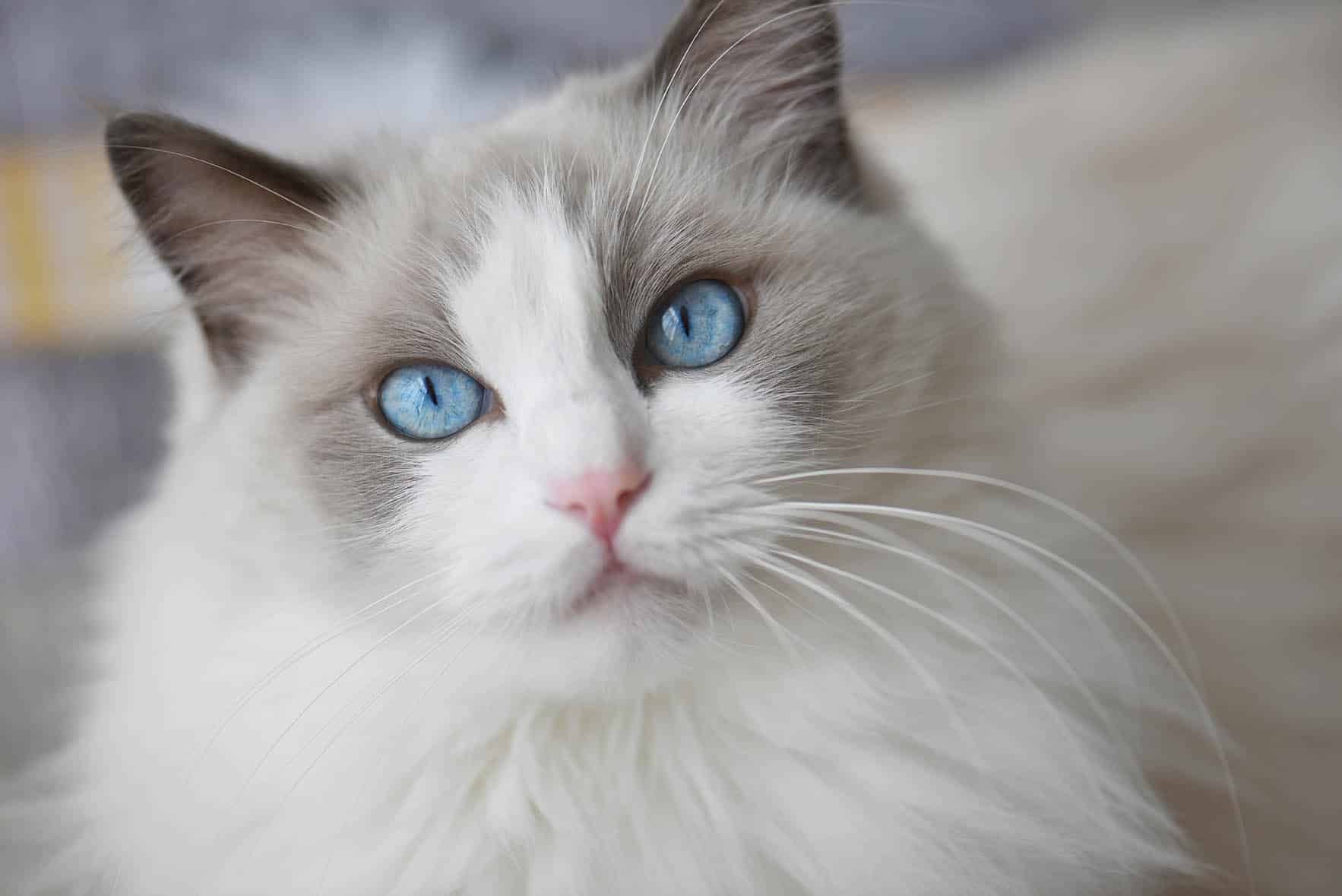
Featured Image Credit: Luxurious Ragdoll, Shutterstock
Expert cat care, straight to your inbox
News, insights, and useful advice, delivered to you.

No spam — unsubscribe anytime.
By signing up, you agree to our Terms & Conditions and Privacy & Cookies Policy.
How useful was this post?
Click a star to rate. You can leave written feedback afterwards. (We read all feedback.)
Christian started writing for a local newspaper as a teenager, and he's been involved in the publishing industry for most of his adult life. Combining his love of writing with a passion for animals, he is currently the Director of Editorial at Pangolia and the Editor-in-Chief at Catster.
Christian lives in the Philippines with his wife, son, and four rescue cats: Trixie, Chloe, Sparky, and Chopper.