How Do Cats Carry Their Kittens? & Why It Doesn't Hurt Them (Vet-Verified Info)


In this article
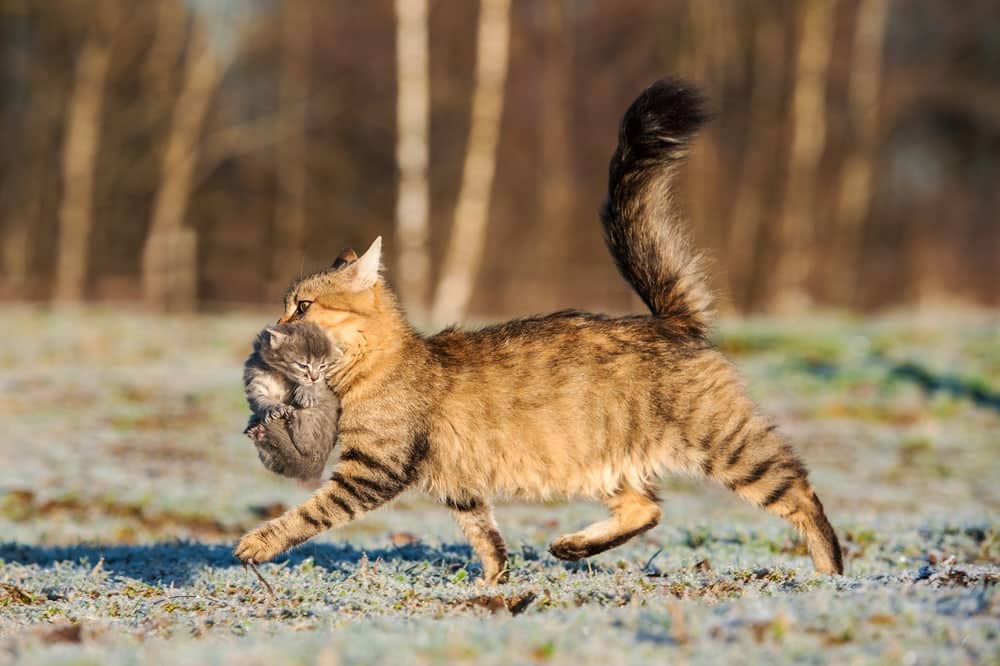
If your cat has recently had kittens, you’ve probably seen her moving the kittens around by the scruff of their necks. Many pet parents worry that this hurts the kitten and that the mother cat does it as a form of discipline.
First, this is a myth; the mother is not punishing the kitten, and a cat would never intentionally hurt her babies in this way. Second, carrying the kittens by the scruff of their necks is how the mother moves them from one spot to another in the first few weeks of their lives.
So, why do cats carry their young this way? We answer this question and others for you here.

How Do Cats Carry Their Kittens?
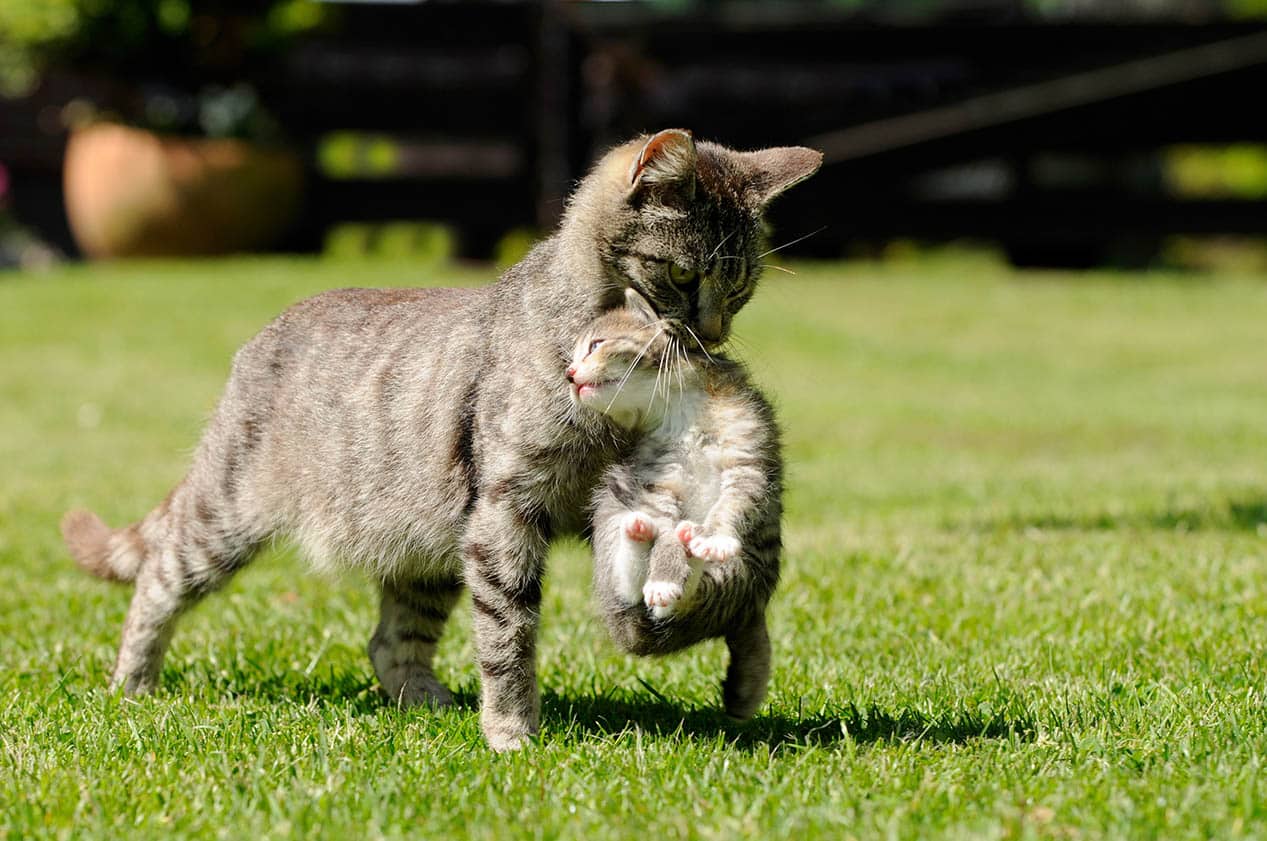
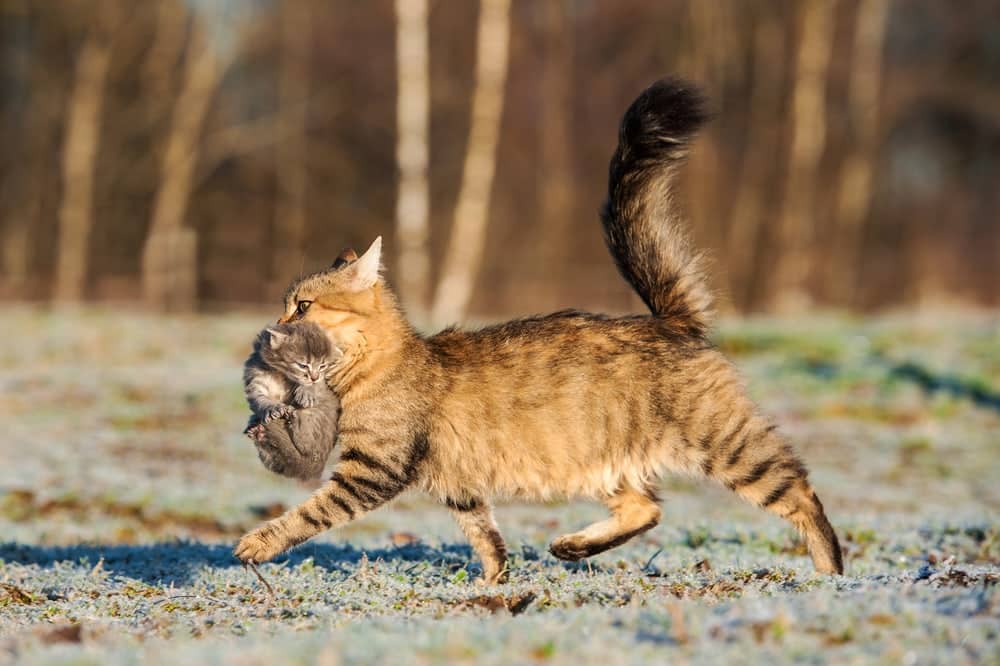
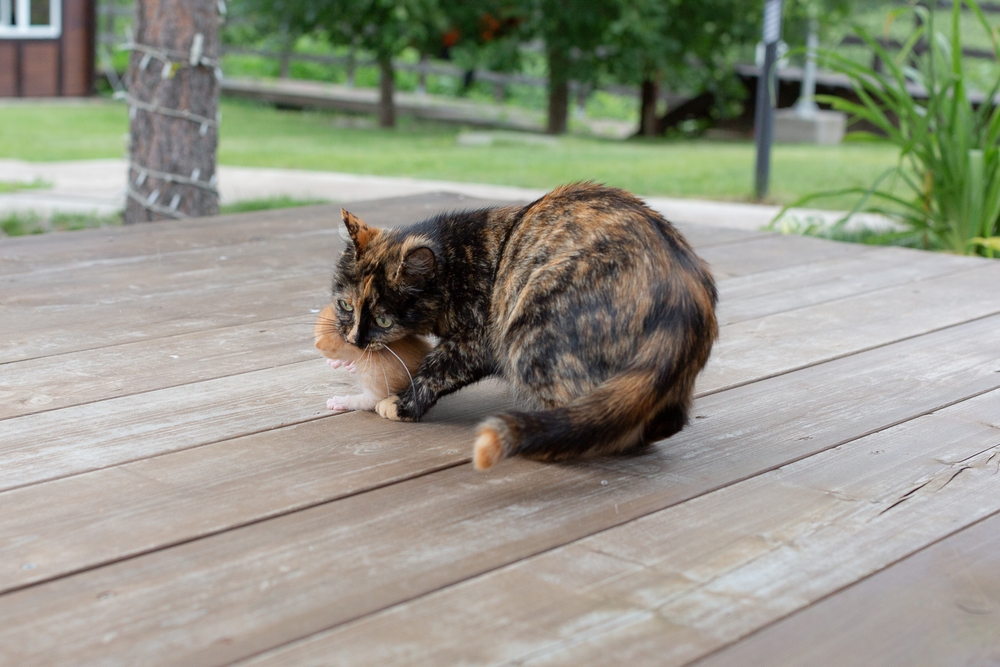
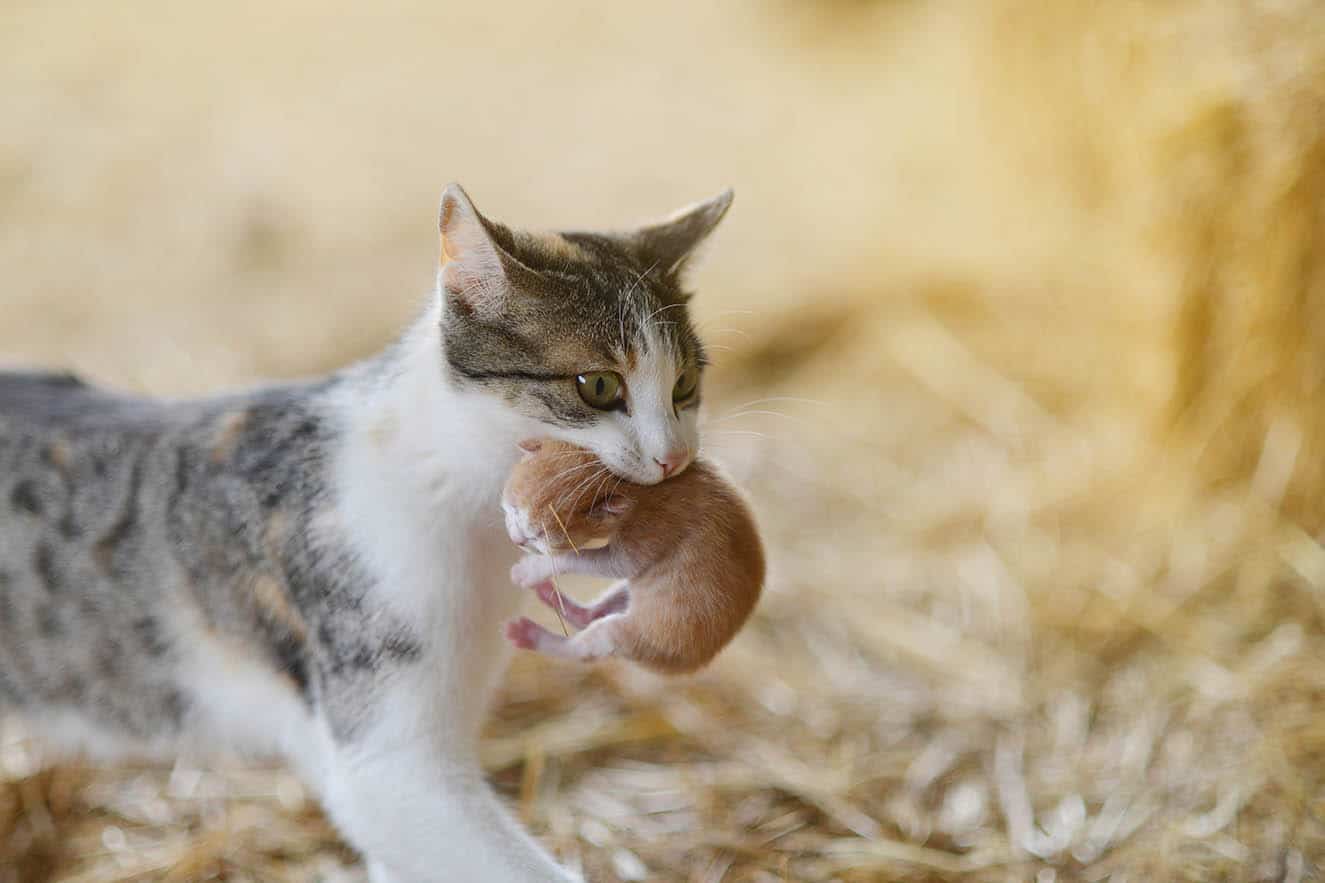
Kittens cannot walk or move their bodies by themselves in the first few weeks after birth, so they need the mother cat to move them. To do this, she will grab the kitten by the scruff of their neck and carry them to where she wants them to be. After all, she doesn’t have arms or hands, so moving the kitten with her mouth is her only option.
The skin between a kitten’s shoulders (their scruff) allows her to do this. Mothers instinctively know how to carry their kittens and will do so until they are old enough to be on their own.
Kittens have a “scruff reflex”, which causes them to go limp and curl up whenever their mother carries them by their scruff. This further assists the mother in moving her kittens (as they won't squirm), and also helps keep them more secure and safe as they’re moved.
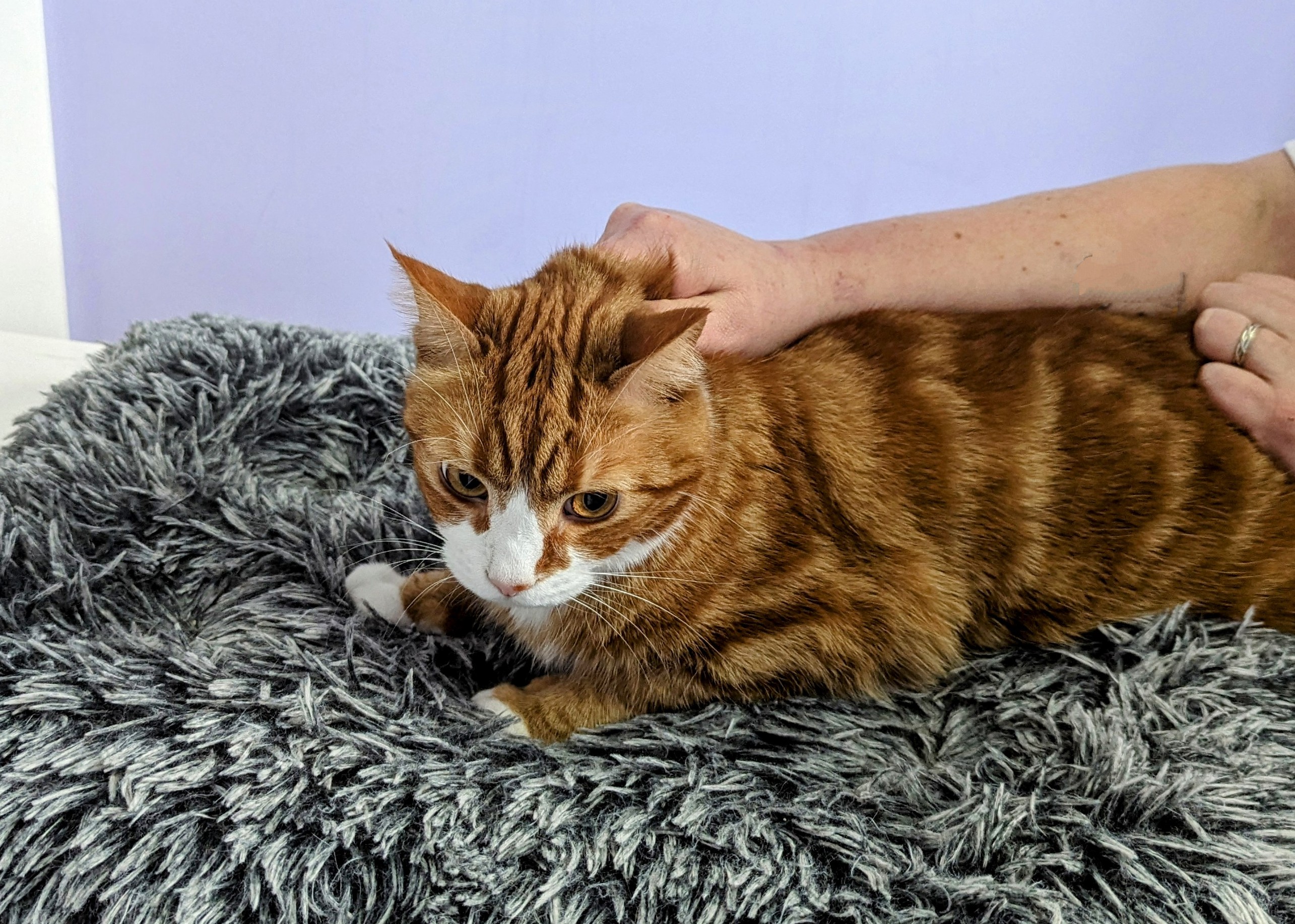
This reflex is lost by adolescence and as such, you should NOT scruff a juvenile or adult cat in order to restrain them, as it’s considered extremely stressful for them. Contrary to popular belief, an overly aggressive cat will not be well restrained by being scruffed. They will likely struggle, and as you pull more and more on their scruff, they may not be able to breathe properly due to the pressure on their trachea (windpipe).
Does This Hurt the Kitten?
A mother cat will never intentionally hurt her babies. A cat’s bite is strong enough to incapacitate and suffocate their prey, but they do not injure their babies when they carry them. This means that they’re able to control the amount of force they exert on their babies as they carry and move them around.
This is a trait possessed by even the largest and strongest felines (such as a lioness or a tigress).

Why Does a Mother Cat Move Her Kittens?
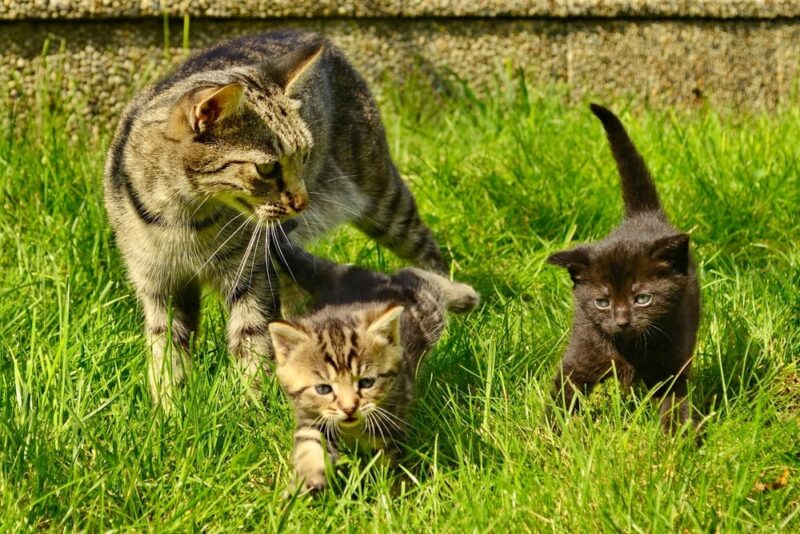
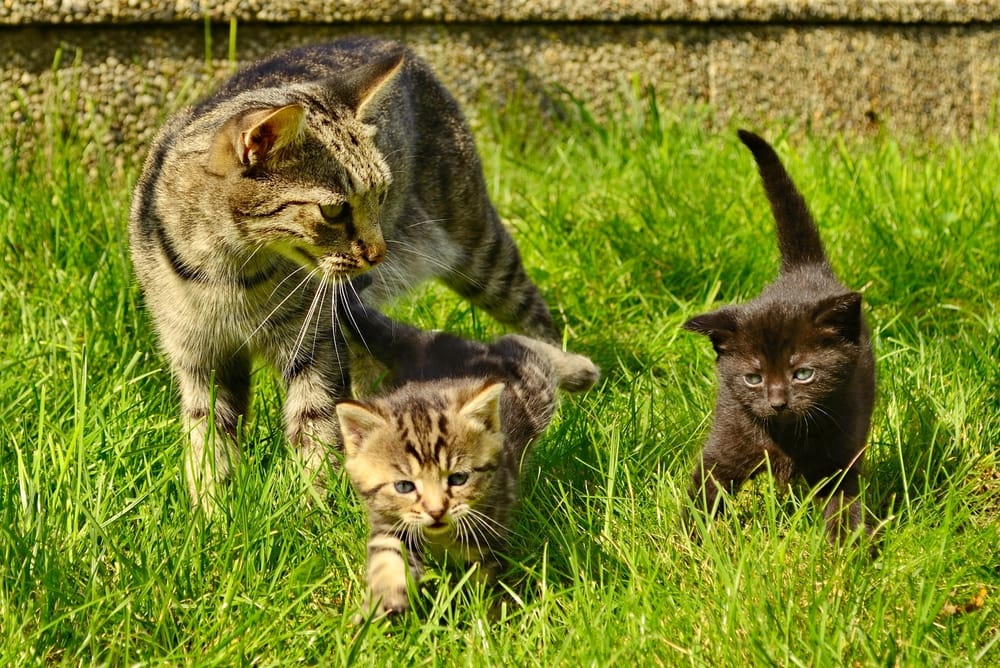
There are quite a few reasons that a mother cat might need to move her kittens. When they start to move around on their own, she might move a kitten back if they stray too far from the spot where she’s keeping them. Let's go over a few other reasons why a mother cat might need to move her kittens.
The Area Is Too Cold
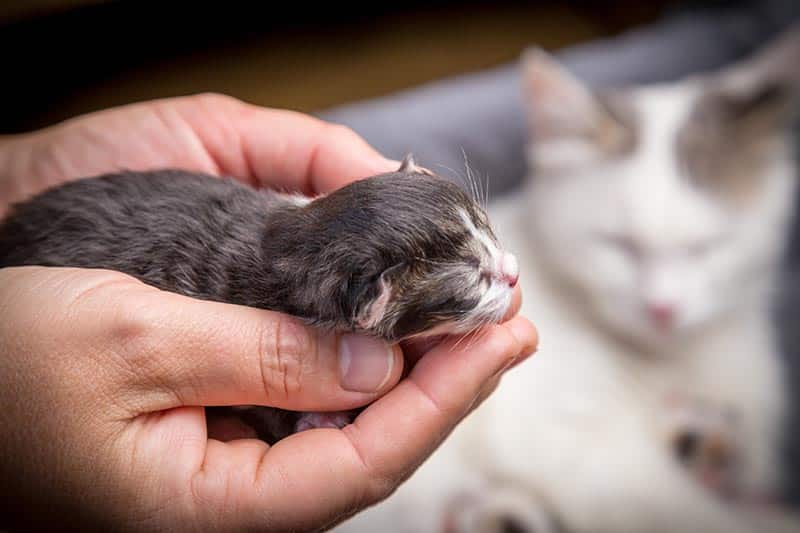
Kittens can’t regulate their temperatures until they are around 4 weeks of age. This means the mama cat has to do the job for them. If the mother feels that the room is too cold, she’ll move her litter to a spot she considers to be warmer.
She Feels Unsafe
If your cat feels threatened by other animals, humans, or even noises in the house, she’ll try to move her litter to where she feels they’ll be safe. You can help her with that by keeping her bed away from loud noises and foot traffic.
It helps if you keep her food, water, and litter box nearby so she doesn’t have to venture too far to go eat or use the bathroom, or she might try to move them.

It's Maternal Instinct
Many cats instinctively find a new den for their litter as they grow slightly older, possibly as a way to minimize the risk of their kittens falling ill from the debris in their previous den. They may also move their kittens to a larger den as they prepare to wean them.
The Kittens Have Been Displaced
A kitten has a very distinctive stress call which they use when they feel as though they’re lost. They will often use this call when they venture too far from their den. It often prompts their mother to come over and scruff them to carry them back to safety.
Should You Stop Your Cat From Moving Her Litter of Kittens?
It’s essential to give a mother cat and her kittens a bed or den that is safe and situated away from busy areas. Unless the mother cat moving her kittens puts them in danger, you need to let her do what she feels is best for her family.
If you think your cat is not taking care of her litter of kittens or is abandoning one or more of her kittens, it’s best to talk to your vet. They can help you with the kittens and tell you what to do to keep them alive and safe until they are old enough to make it on their own.
Conclusion
Cats can’t carry their kittens the same way that we carry our babies, so they carry them by picking them up by the scruff of their necks. This doesn’t hurt the kittens; they have extra skin on their necks for this very reason.
Your mother cat may move her kittens for a variety of reasons, and it’s best to let her, as she should know what’s best for them. However, if you feel that your cat is singling out a kitten or is neglecting her litter completely, you should make an appointment with your vet to determine the cause and get recommendations on how to keep the kittens alive and help them thrive.
Featured Image Credit: Rita_Kochmarjova, Shutterstock

Expert cat care, straight to your inbox
Vet-reviewed advice, behavior tips, and the best of Catster. Free, and you can unsubscribe anytime.
By signing up, you agree to our Terms & Conditions and Privacy & Cookies Policy.
Patricia is a pet writer and lifelong animal lover. She has two cats (Binx and Link) and one dog (Mystery). Binx was found as a kitten under her house and has been part of the family ever since! Patricia is also a published author under the pen name Skylar McKinzie. When she isn’t writing, Patricia enjoys volunteering at her local animal rescue.
Join the conversation
Ask a question, share your story, or send private feedback.