How Do Cat Microchips Work? Vet-Reviewed Facts & FAQ


In this article
Microchips are undoubtedly incredibly useful for our pets. They're tiny but contain information about our animals in order to identify them and make it easy for us to be reunited with them if they ever got lost. The microchip conveys information stored on it to a microchip scanner. But how exactly does a cat microchip work? Is it dangerous for cats? We take a deeper look at this increasingly common implant and find out why it's such an essential addition for any cat owner to consider.

How Does It Work?
Pet (and cat) microchips are tiny pods around the size of a grain of rice. They contain a silicone microchip and other components containing information on your cat, specifically a unique ID number. The microchip uses radio frequency identification (RFID) to convey this information to a microchip scanner, which is the other half of the whole package needed for the microchip to work.1
Cat microchips don't actively transmit this data into the world. Instead, they are inactive in the body until activated by a microchip scanner, making them "passive RFID tags." They have no batteries and no power source of their own, so there is no danger of electrocution to your cat.
The essential data about a pet, such as a cat's name, address, and owner contact details, are linked to the unique ID number via a computer and database system. Databases are secure and require a password for access, provided to veterinarians and animal shelters, and people can only view a cat's details if the correct ID number is input.
A potential issue that may arise with presence of multiple registry databases is due to the fact that they don’t necessarily communicate with one another, meaning that if the chip is registered in only one database, the person looking the chip up in a different one, may not be able to locate the owner unless they check several registries. A way to go around this, is to have your cat’s microchip registered with more than one registry or to use the services like the American Animal Hospital Association Look Up tool, that is able to check multiple registries, enhancing the likelihood of reuniting the pet with their owner.

What Is Inside a Cat Microchip?
Cat microchips are comprised of a biocompatible glass capsule (which makes up the main body of the microchip), a silicon data chip, a tuning capacitor, and an antenna coil. Some newer chips also feature a polymer casing or cap, which helps the microchip bond with the body and anchor it into position. The whole microchip is no bigger than a grain of rice, so it is very unobtrusive and won't be noticed by your cat.

Biocompatible Glass Capsule
The microchip components are encased in a biocompatible glass capsule. Biocompatible means the glass won't react with the body in any way; it's non-toxic and readily accepted by the cat's body. These capsules are designed to not cause allergic reactions, as the body would then try to reject them, causing numerous issues. They are often made from borosilicate glass or biocompatible soda lime and hermetically sealed to prevent bacteria or moisture from getting to the parts inside.
Tuning Capacitor
A tuning capacitor is part of a microchip that works to receive power from the scanner when it's passed close to the chip. Because the whole microchip doesn't have its power source, it needs to receive power from an outside source to transmit its information (your cat's ID number).
The tuning capacitor works with the antenna coil to form an LC circuit when the scanner passes it by, enabling the chip to transmit data to the scanner. The tuning capacitor is tuned to the scanner's specific frequency, which activates the circuit and gives the chip power.
Coil Conductor
The coil conductor is wound tightly inside the glass capsule next to the tuning capacitor and the silicon chip. This coil is made of copper wire wound over a (usually) ferrite core, making it incredibly conductive. When powered by the scanner, the coil acts as an antenna that transmits the chip's data. This is called backscatter communication.
Polymer
A polymer is often used on the glass capsule of a microchip to help the chip bond to the animal's body and keep it in place. The polymer encourages connective tissue and other tissue growth around the microchip, anchoring it in place and preventing migration of the chip to other areas of the body. For example, some cats can end up with their microchips migrating to their shoulders or legs from the original implant site (usually the nape of the neck).

Where Are Microchips Implanted in Cats?
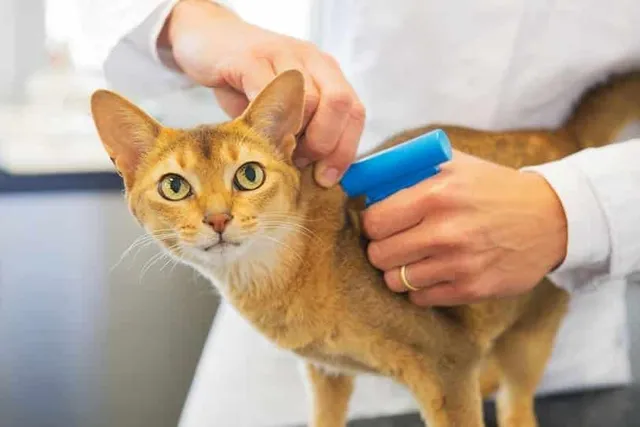
Cat microchips are nearly always implanted beneath the skin between the shoulder blades. Known as the "scruff," this area of skin is very loose and easily manipulated. As a result, there is plenty of room for a tiny microchip to sit without causing any irritation, even in the tiniest kittens.
How Is a Cat Microchip Implanted?
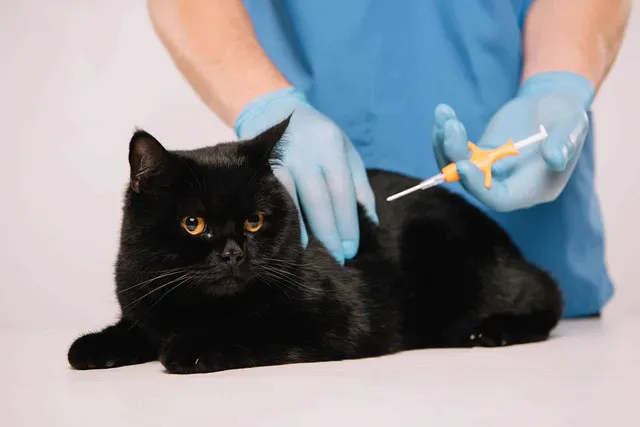
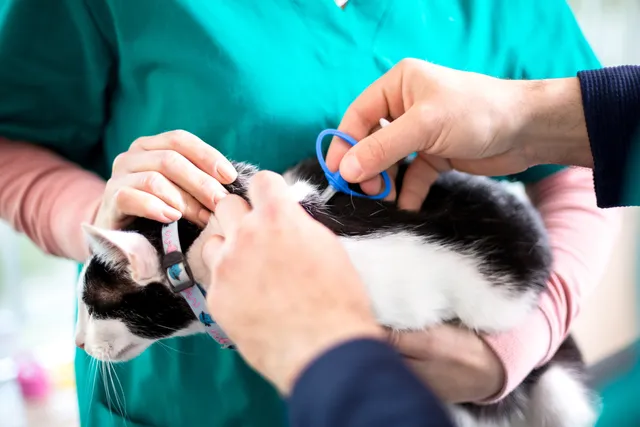
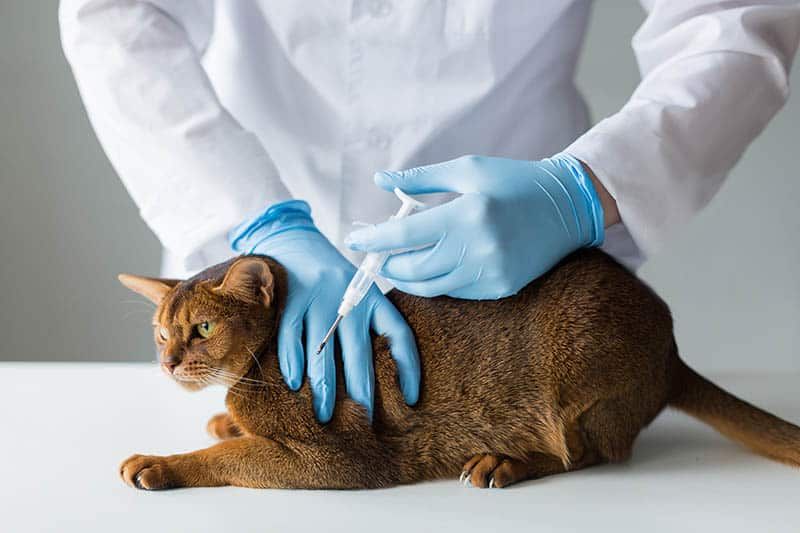
Cat microchips are often implanted using a pre-packaged needle, usually containing the microchip already loaded in the end. These sterilized, single-use needles come in bags with the chip number on the front, making implantation easy. The chip sits at one end of the needle, and an easy-use handle is at the other for the implanter to use. Handles can be retracted (pulled back to insert the chip) or pushed down.
Cat microchips are implanted in the following steps:
The microchip implanter will check the cat's ID and details before implantation.
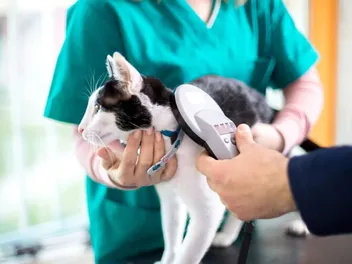
Next, the cat will be checked for a possible chip already implanted by running a scanner over their entire body.
The new microchip is checked to ensure that it works by scanning it.
The implanter will then open the pre-packaged needle and gather the skin at the nape of the cat's neck.
The microchip is injected into this space, and the scanner is run over the area to ensure the chip has been implanted correctly.

What Is a Cat Microchip Database?
A cat microchip database is where all data from implanted microchips are stored. A microchip is essentially useless until its number is registered to the database and information about the cat is assigned. The chip number is stored on the database and can be linked with the cat's file, where all their important information is held.
The information usually held on a microchip database includes:
There are different databases where the chip can be registered. Some databases are nationalized, and others are individual or part of a rescue and recovery service. Some veterinarians register the cat's details; others let the owners choose which database to register.
A potential issue that may arise with presence of multiple registry databases is due to the fact that they don’t necessarily communicate with one another, meaning that if the chip is registered in only one database, the person looking the chip up in a different one, may not be able to locate the owner unless they check several registries. A way to go around this, is to have your cat’s microchip registered with more than one registry or to use the services like the American Animal Hospital Association Look Up tool, that is able to check multiple registries, enhancing the likelihood of reuniting the pet with their owner.
Where Is It Used?
Cat microchips are used worldwide to register cats, making it easier to find them. In addition, pet owners, breeders, and animal shelters use them to give the cat a unique identifier. Some countries have specific laws and regulations regarding cat microchips, including the U.K. and Australia.

United States of America
In the U.S., microchipping cats is voluntary and isn't mandated except for animals deemed dangerous. So, microchipping a pet cat will usually be the owner's choice. However, kittens sold by breeders and cats adopted from rescues or shelters are increasingly being microchipped before rehoming.
United Kingdom
In the U.K., from 2023 all owners must have their cats microchipped by the age of 20 weeks, while dog microchipping law was instituted in April 2016. Microchipping is also mandatory for cats that usually only stay indoors and there are fines for those breaking the law.
Australia
It is a legal requirement for cats to be microchipped in certain parts of Australia, including New South Wales, by 12 weeks of age. The exact requirements of cat microchipping vary state by state, so here's a simple breakdown:
Advantages of Cat Microchips
The main advantage of microchipping a cat is that they allow a cat to be identified if they're ever separated from their owners. Cats are notorious for wandering off or removing collars and tags, so a microchip is invaluable for those who find them.
Veterinary offices and rescue shelters can scan the cat for a chip and find the owner's information, which can then be used to contact them and let them know where their cat is. In addition, they are more secure than a collar and ID tag and safer. Cats can slide out of some collars, and others can be a strangulation hazard (depending on the type).
Microchips are only readable by specific scanners, and the information they hold can't be accessed by anyone other than the keeper or a professional. They allow for a larger amount of data to be held in a safe place, meaning a cat has a higher chance of successfully being reunited with their owner if they have a microchip.
There are even some specific types of microchips that can read your cat's temperature and display it on a scanner in real time. Finally, most countries have mandatory microchipping and vaccinating rules for entry, so a microchip can allow your cat into and out of some countries if traveling.
Disadvantages of Cat Microchips
While there are many advantages to cat microchips, there are also some downsides. While microchips aren't expensive, they do come with a cost. A small amount of discomfort comes with getting a microchip implanted, and there is a minor risk of infection. Some adverse effects have been reported by owners, though the chance of your cat experiencing any side effects from their microchip is rare.
Side effects reported by owners include:
It's important to mention here that there has only ever been one reported study on a cat with cancer suspected caused by a microchip, and it's very rare for pets to get any reactions at all to microchips; they are very safe.
Some microchip scanners can only read certain types of microchips. This used to be a bigger problem, as many are now standardized, but there are still microchips and scanners used today that are incompatible with one another.

FAQ
Does Microchipping Hurt Cats?
Microchipping might look scary, but the actual process is no more painful to a cat than getting a vaccine. Realistically, microchipping may be slightly more uncomfortable for kittens and very small cats due to their size. Still, microchipping should never be painful enough to cause the cat harm.
Like vaccine injections, most don't notice it being done if they're distracted. Microchipping can also be done under general anesthetic, most commonly when a cat is neutered or spayed.
How Much Do Microchips Cost?
Microchips are universally inexpensive, but the price will vary depending on location and whether additional elements are added. The cost is usually around $40–50, depending on where (geographically) the microchip is implanted and by whom. Some programs that improve feline health and welfare may offer free microchipping, like some animal shelters. Microchips can also be included in the cost of a cat spay or neuter.
Can Every Scanner Read a Microchip?
Most countries that use microchips now have a standardized microchip and scanner frequency set up, but that doesn’t necessarily guarantee that every scanner can universally read every microchip. This depends on the scanner. Each scanner and chip must use the same radio frequency to be compatible.
The differences in scanners are all down to the frequency at which the chip is read. Universal scanners need to be able to read microchips at 134.2 kHz (the most common frequency, ISO standard), 125 kHz, and 128 kHz. 134.2 kHz is used worldwide and is the most widespread scanner frequency.
Some scanners may be able to read several different types of microchips that work on the same frequency, but that doesn’t mean they are universal. This could lead to inability to read microchips that work on a different frequency.
Conclusion
Cat microchips are much more complex than they seem. These little rice-sized implants can securely hold ID information about a cat, making a reunion between the cat and owner more likely should they get separated. There are minor drawbacks to getting your cat microchipped, but the benefits still outweigh the risks. Be mindful of a known limitation due to the presence of different microchip readers and chips, that can’t be read unless they work at the same frequency.
There's no better way to ensure your cat has the best possible chance to be returned to you if they're found wandering or injured and taken to a vet. Make sure your cat’s chip is registered and contains up-to-date details, with even considering registering them in several different databases to improve their chances of being found.
Sources
Featured Image Credit: Petrovicheva Mariia, Shutterstock

Expert cat care, straight to your inbox
Vet-reviewed advice, behavior tips, and the best of Catster. Free, and you can unsubscribe anytime.
By signing up, you agree to our Terms & Conditions and Privacy & Cookies Policy.
Christian started writing for a local newspaper as a teenager, and he's been involved in the publishing industry for most of his adult life. Combining his love of writing with a passion for animals, he is currently the Director of Editorial at Pangolia and the Editor-in-Chief at Catster.
Christian lives in the Philippines with his wife, son, and four rescue cats: Trixie, Chloe, Sparky, and Chopper.
Join the conversation
Ask a question, share your story, or send private feedback.