Can Cats Drink Sunflower Oil? Nutritional Facts & FAQ


Cats are incredibly curious creatures that like to poke their noses, tongues, mouths, and paws into anything and everything. An inquisitive cat in the kitchen is a common occurrence for cat owners who cook. It is essential to know if your kitty can be harmed by whatever they eat off your counter.
When it comes to food, most cats are pretty good about avoiding foods they shouldn't eat and focusing on those they should. Many cats won't touch a piece of candy, but they will happily accept a freshly cooked slice of lamb! Occasionally, cats eat foods and ingredients that we're not certain are safe for them. You might wonder if your cat will be harmed if you leave sunflower oil out on the counter and they drink it.
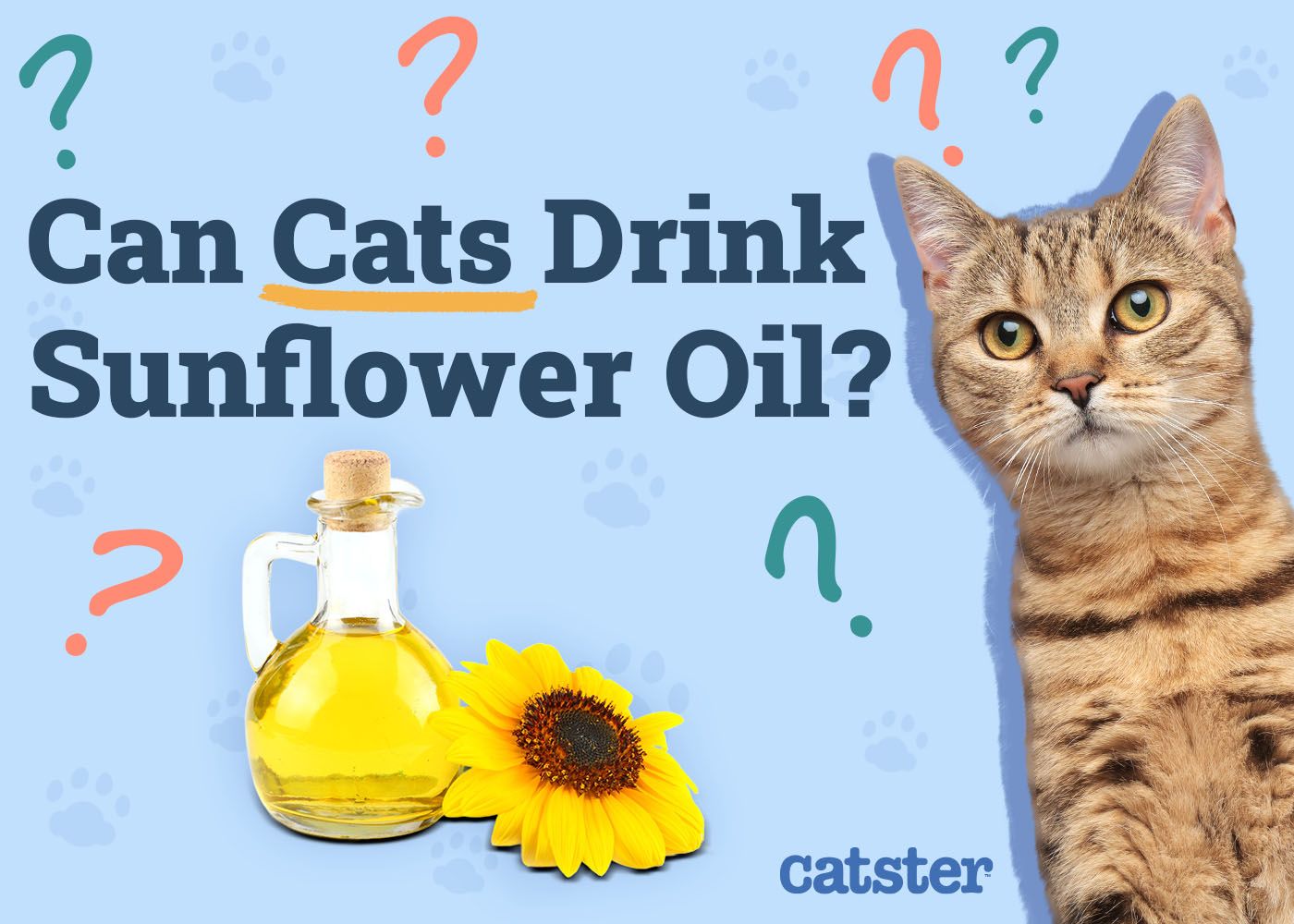
Overall, sunflower oil is safe for cats to consume in small quantities. Read on to find out everything you need to know about giving sunflower oil to your beloved feline friend!

Is Sunflower Oil Found in Commercial Cat Food?
Sunflower oil is a vegetable oil extracted from sunflower seeds and not something cats ever consume in the wild. However, sunflower oil is a polyunsaturated fat found in many types of food, including commercial cat food. A small portion of sunflower oil is a healthy addition to your cat's diet, which is why it's included in many different types of commercial cat foods and snacks.

How Does Sunflower Oil Benefit Cats?
There are vitamins and minerals in sunflower oil that cats need to stay healthy. Vitamin K is one such nutrient that prevents bleeding problems by helping blood clot properly. Additionally, sunflower oil helps maintain the health of your cat's skin and coat over time.
Even cats' eyes and brains benefit from the oil's omega fatty acids. Sunflower oil can also help make mealtime more appealing, especially for cats who are getting older and losing enthusiasm for food.
Can Cats be Harmed by Sunflower Oil?
Sunflower oil is not toxic to cats, but there are some precautions to take before introducing any oil to your pet. The first and foremost risk is that your cat could gain weight if they consume too much oil regularly. Feline obesity is associated with several health problems, including diabetes.
It is also possible to cause digestive issues and diarrhea by giving your cat too much sunflower oil. Cats with a history of pancreatitis and diabetes should not be given sunflower oil. Sunflower oil is not a substitute for real food and should only be taken as a supplement. When your cat consumes enough sunflower oil to cause them to consume fewer calories, their diet might not be complete.

Should You Sometimes Deliberately Give Your Cat Sunflower Oil?
Providing your cat with a balanced diet already meets their fat requirements. Some people feel that hairballs may be reduced by adding oil to their cat's diet. There are also commercially prepared hairball treatments with sunflower oil available online. A veterinarian should be consulted before adding oil to your cat's diet to ensure it is appropriate.
Is it Safe for Cats to Consume Canned Tuna in Sunflower Oil?
Adding tuna to your cat's diet can be a healthy choice. It is very low in carbohydrates as well as high in protein. It contains essential fatty acids and may help keep inflammation under control. The added health benefits of tuna packed in sunflower oil make it a better choice than tuna packed in brine.
Tuna does, however, have some health concerns to be aware of. Primarily, tuna contains fewer vitamins, minerals, and antioxidants than balanced commercial cat food. Cats may become nutrient deficient if tuna replaces their food too frequently. Additionally, tuna contains high levels of mercury, which is a toxin and best to be avoided.
Tuna should only be served as a treat rather than as a meal.

What Other Kinds of Vegetable Oils Can Cats Eat?
The ASPCA and the Pet Poison Helpline do not list vegetable oils commonly used for cooking (such as soybean, olive, peanut, or canola oil) as dangerous to cats. Although it's not necessarily good for them, it won't cause severe problems.
The ASPCA, however, recommends pet owners avoid giving coconuts and coconut oil to their pets. A small amount of the oil will not harm them, but it may cause an upset stomach, loose stools, or diarrhea. The same applies to vegetable oils. In general, fish oils are better for cats.
Is it Safe for Cats to Eat Other Canned Proteins Packed in Sunflower Oil?
Other canned proteins packed in sunflower oil can be enjoyed by cats occasionally as a snack or treat as long as they aren't consumed too frequently. When shopping for your cat, you should look for canned mackerel, sardines, crab, liver, and chicken.
If you decide to buy canned meats or fish packed in sunflower oil for your cat, make sure they do not contain any additional ingredients or spices. They should only contain protein and sunflower oil, and you should drain most of the oil off before feeding. Watch out for sodium, especially, as cats are much more sensitive to salt than humans.

Should Cats Eat Anchovies?
No, cats should not eat anchovies. Anchovies are high in sodium, which can be harmful in large quantities. Although anchovies are a good source of protein for cats, their high salt content is dangerous for cats. A high sodium diet can lead to excessive thirst and urination. This puts the cat at risk for dehydration, which can cause kidney damage.
Is it Safe for Cats to Eat Meat Cooked in Sunflower Oil?
Owners often feed their cats cooked meat. Our cats should eat meat free of additives like salt and onions. We can, however, add some sunflower oil to the pan before adding chicken or beef chunks to cook for our pets.
By adding sunflower oil, the meat will cook more evenly and be more nutritious. You should only give your cat cooked chicken or beef occasionally as a treat, and it should not replace their regular food.
Conclusion
If the oil is used more as an occasional treat or snack than as a main course, feeding sunflower oil to cats has no adverse effects but is not recommended regularly. Cats benefit more from fish oils than vegetable oils. Before adding new food or ingredients to your cat's diet, including sunflower oil, it is always a good idea to consult a veterinarian.
Expert cat care, straight to your inbox
News, insights, and useful advice, delivered to you.

No spam — unsubscribe anytime.
By signing up, you agree to our Terms & Conditions and Privacy & Cookies Policy.
How useful was this post?
Click a star to rate. You can leave written feedback afterwards. (We read all feedback.)
Christian started writing for a local newspaper as a teenager, and he's been involved in the publishing industry for most of his adult life. Combining his love of writing with a passion for animals, he is currently the Director of Editorial at Pangolia and the Editor-in-Chief at Catster.
Christian lives in the Philippines with his wife, son, and four rescue cats: Trixie, Chloe, Sparky, and Chopper.