Can Cats Have Olive Oil? Vet-Approved Nutritional Facts & FAQ

In this article
The health benefits of olive oil for people are well-established. Evidence suggests it can improve cardiovascular health by lowering LDL, what is referred to as “bad cholesterol.” Many pet owners consider their animal companions family members. Just as you’d give your kids the best foods, you may wonder, can cats have olive oil?
When it comes to olive oil for cats, the short answer is that they can have it because it’s not technically harmful. However, it’s also not a great idea because of the calories and content. Let’s take a deep dive into the details.

Nutritional Content of Olive Oil
Olive oil is 100% fat, packing a significant caloric punch. A single tablespoon contains 124 calories.1 It doesn’t offer a lot of nutritional value other than some vitamin E, vitamin K, and choline. It also contains 14 grams of total fat. Its value lies in the fact that it has more monounsaturated fatty acids than saturated fat.
Felines differ from humans because they are obligate carnivores, with animal-based proteins making up the bulk of their intake. This diet has influenced their metabolism and physiology. They have evolved the unique ability to use amino acid oxidation for energy.2 Amino acids are the building blocks of proteins. This trait differs from people and canines that tap glucose for their needs.
Olive oil contains no protein. Therefore, it won’t help cats on that score. However, fat is a potent energy source that provides twice as many calories as carbohydrates. Scientists haven’t set minimum amounts for felines for this macronutrient. Cats simply don’t need them in the way we do. It’s a moot point since olive doesn’t have any carbs. That leaves us with its fat content.

The Fat Content of Olive Oil
According to the Association of American Feed Control Officials (AAFCO), cats should get 9% of the calories from fat, regardless of their life stage. There are 14 grams of fat in a tablespoon of olive oil. However, the elephant in the room is the calories. A 10-pound adult cat should get about 200 calories daily. That tablespoon amounts to 62–69% of a pet’s total caloric intake while providing scant nutritional value.
Research has shown that felines can adapt to varying carbohydrate and protein intakes to some degree. Many cat foods meet or exceed the recommended fat percentage, particularly with commercial dry diets. While that may seem like a red flag, one review of studies of feral cats found that it may point to a way to improve pet diets.
Presumably, food intakes would consist of foods that offer the best nutritional value. Interestingly, the researchers found that the diets of free-living cats averaged 52% protein and 46% fat. Granted, they have higher energy needs if they must find their own food as opposed to getting it from a bowl filled with yummy goodness every morning. Regardless, it shows the importance of fat.
Fats are crucial to cats despite the obesity risk. They need them to absorb vital fat-soluble vitamins like A and E. They need them to produce cell membranes and control inflammation. Fats also play a role in the functioning of the nervous system and skin health. The key is moderation. However, nature has another card to play in the question of olive oil and your pet in an unexpected way.
Another Twist to the Tale
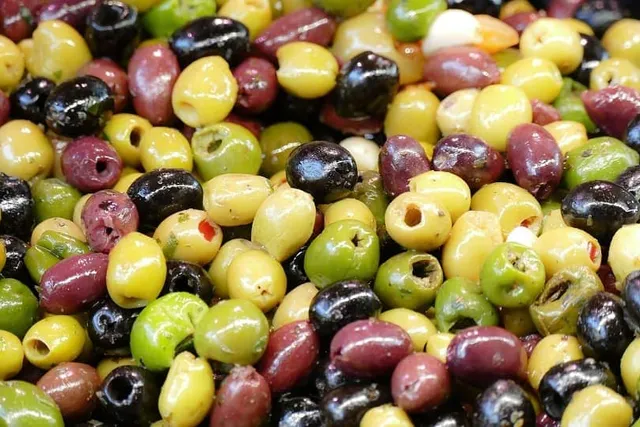
Some cats love olives, particularly the green ones. The reason is their isoprenoid content. This class of chemical compounds includes another one that provokes dramatic reactions in many pets—nepetalactone. It is the ingredient that gives catnip its distinctive scent and euphoric properties that some pets experience.
Scientists theorize that nepetalactone gives plants insect-repelling properties that also benefit felines that roll around in the stuff. Anecdotal accounts rave about pets loving the unripe fruit. It’s worth mentioning that it might be the salt content that attracts cats. However, this information provides evidence for a feline liking olive oil, regardless of its health risks.

Final Thoughts
While cats can have olive oil and it’s not harmful when given in moderation, it may not be the best treat for them. We don’t recommend olive oil for cats as a regular part of your pet’s diet because of its high caloric content. We can’t ignore the fact that an estimated 61% of cats are obese. There’s no reason to throw fuel on the fire with something your pet doesn’t need in her diet. Stick to the fat their commercial diet provides.
Contact a veterinarian for expert advice on which food to choose and how to devise a perfect diet for your cat.
You might also like: Do Coffee Grounds Keep Cats Away? Is It a Safe Choice?
Sources
https://www.health.harvard.edu/nutrition/is-extra-virgin-olive-oil-extra-healthy
https://fdc.nal.usda.gov/fdc-app.html#/food-details/167737/nutrients
https://www.petmd.com/cat/centers/nutrition/slideshows/why-cat-food-fat-is-good
https://www.sciencedirect.com/science/article/abs/pii/S0023643817307594
https://www.chemeurope.com/en/encyclopedia/Nepetalactone.html
Featured Image Credit: Marina Pershina, Pixabay; Steve Buissinne, Pixabay; Andreas Wohlfahrt, Pixabay

Expert cat care, straight to your inbox
Vet-reviewed advice, behavior tips, and the best of Catster. Free, and you can unsubscribe anytime.
By signing up, you agree to our Terms & Conditions and Privacy & Cookies Policy.
Chris has been a science-focused pet writer since 2009, specializing in health and the environment. She lives with her husband Norm and three amazing cats in the land of 10,000 lakes. When she's not writing about cats, Chris also enjoys boating and sampling wine. She has her WSET 1 and 2 certifications and is currently pursuing her Certified Wine Specialist Award (CSW).
Join the conversation
Ask a question, share your story, or send private feedback.