Get

In Your Inbox

Catster is reader-supported. When you buy via links on our site, we may earn an affiliate commission at no cost to you. Learn more.

Do Cats Gain Weight After Being Spayed? Vet-Reviewed Facts

Share

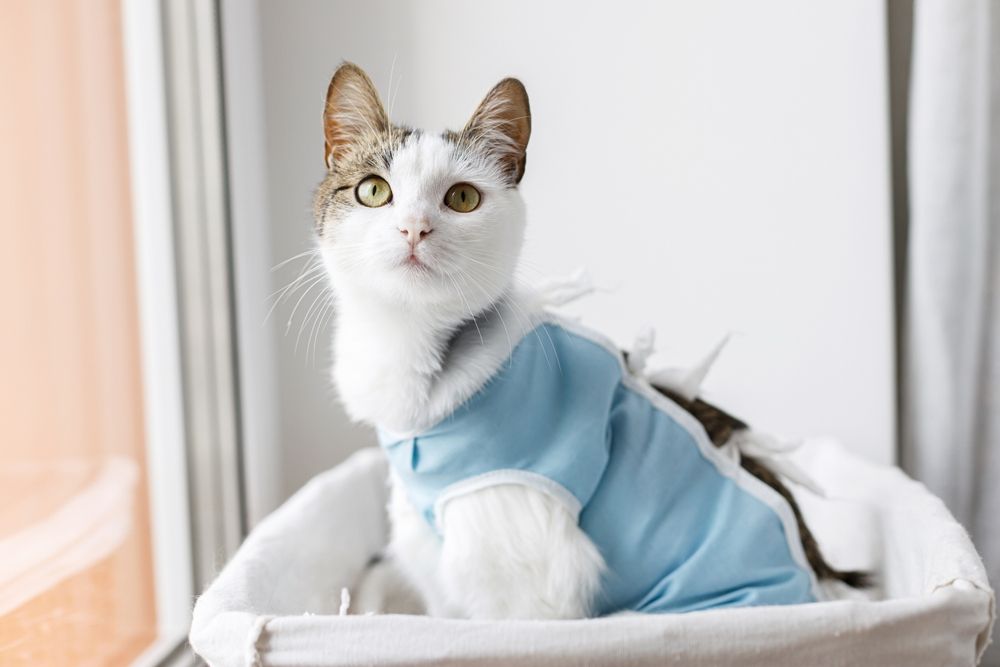
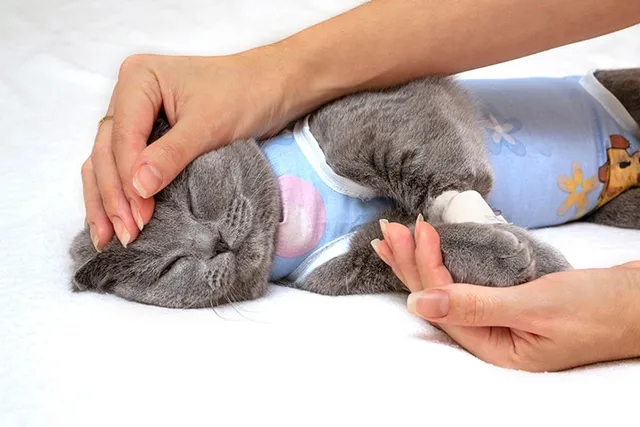
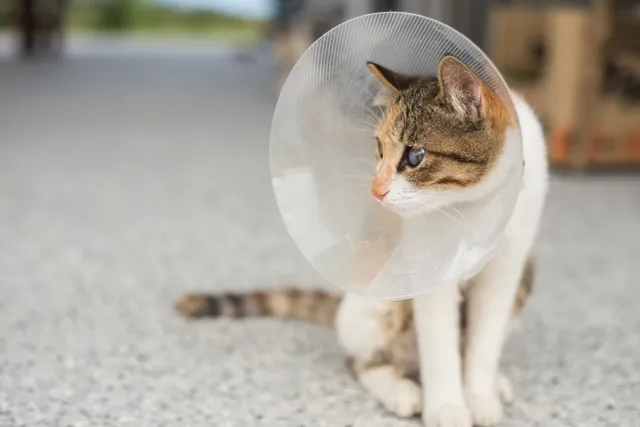
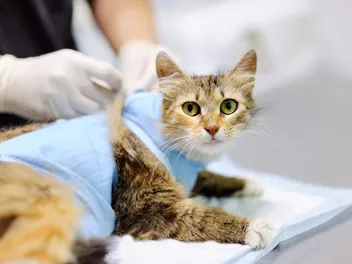
cat recovering from spay surgery

Most prospective cat owners look forward to having their cat spayed or neutered. After all, tom cats and queens are significantly more annoying and cause a lot more trouble for their owners than spayed and neutered cats. However, most cat owners are also concerned about the prospective weight gain common in cats who are reproductively altered. To learn more about spayed cats and weight gain, read on!

The answer is complicated, but cats that have been spayed or neutered seem to eat more, so you may want to avoid free-feeding for a few months after the procedure to avoid weight gain.

divider 2 cats

Will My Cat Gain Weight After Being Spayed?

There is no conclusive evidence to support that a cat’s energy threshold will always decline after sterilization. In practice, though, it is worth treating the situation as though it does, as there is also no evidence that a cat’s energy threshold doesn’t decline. As a result, veterinarians will consider whether a cat is spayed or not when determining its Maintenance Energy Requirements (MER).

MER is determined by taking a cat’s Resting Energy Requirement (RER)—in the case of an adult cat weighing about 10 pounds, around 218 kcal per day—and then applying multipliers to it based on their energy levels and physical status. It’s a unique identifier, and no two individuals are the same.

fat cat sitting on the wood
Image Credit: Piqsels

Details About MER

The multiplier for a spayed cat is 1.2, while an intact cat will get a multiplier of 1.4. So, a spayed cat will have an MER of approximately 261 kcal/day for spayed cats and 305 kcal/day for intact ones.

However, even if spayed or neutered cats have fewer energy requirements, this doesn’t mean that weight gain is inevitable. You can take agency over your cat’s health by not allowing them unlimited access to food.

A study performed on spayed and neutered cats shows that both male and female cats ate significantly more post-surgery than before. There’s no known answer to why this occurs; we just know it does.

Given how easily cats gain weight after being spayed or neutered, it’s safe to say that their resting energy requirements don’t change. So, the increase in food intake likely has to do with a hormonal or other biochemical change after sterilization. If you take certain medications, you suddenly constantly become hungry and gain weight.

The study on female cats showed that spayed kittens ate significantly more four weeks after the surgery—well after the point of healing—and that the effect peaked 10 weeks after the procedure. At 18 weeks post-surgery, spayed and non-spayed cats were eating similar amounts of food. However, the study on male cats showed a dramatic increase in appetite during the first week post-surgery, with bodyweight increases of 10%.

cat-eating-food-from-feeding-bowl
Image Credit: TarasBeletskiy, Shutterstock

Free-Feeding vs. Meal Times

While these studies have differing details, the conclusions are essentially the same; altered cats eat more than reproductively-intact cats. Thus, portion control is significant for neutered cats to prevent them from gaining too much weight.

Veterinarians generally consider meal feeding more appropriate for cats than free-feeding for most of their lives. Still, even if you’d prefer to free-feed your cat, it’s best to restrict their food intake for 4–5 months post-surgery to help prevent weight gain. As long as your cat gets proper nutrition, there’s no need to overfeed them.

divider 2 cats

Final Thoughts

There are a lot of differing opinions on the causes of rapid weight gain in spayed and neutered cats, but one thing is for sure: all other variables controlled, cats who are spayed or neutered generally eat more than ones who aren’t. Not free-feeding your cat in the immediate months following their procedure can help prevent them from getting fat in the long run.


Featured Image Credit: Bogdan Sonjachnyj, Shutterstock

Want content like this delivered to you?

Sign Up For Our Newsletter

News, insights, expert advice, and everything cat

* By submitting, you agree to our Terms & Conditions and Privacy & Cookies Policy.


How useful was this post?

Click on a star to rate (you can leave written feedback after clicking submit)

Help us improve Catster for pet parents!

Your feedback really matters.

What did you like about this post? Also how can we improve it?

Join the conversation

Leave a Reply

You’re very welcome to leave a comment or question. Please know that all comments must meet our community guidelines, and your email address will NOT be published. Let’s have a positive and constructive conversation.


Talk With A Vet Online

Peace of mind,
anywhere, anytime

Affordable vet advice

Do Cats Cause Schizophrenia? Scientists Find a Link – Here’s What It Means

Being a fierce advocate (and occasional recipient of) mental health support and awareness, the term ‘crazy’ is not one I like to fling...

One in 100 Cats Gets Diabetes – Here’s How to Catch It Early

One in every 100 cats develops diabetes.1 That’s not a rare, unlucky condition reserved for cats with obvious health problems. It’s common enough...

Dramatic Rescue Turns Into Dramatic Reunion

What started as a routine call for the RSPCA became a heroic, five-hour rescue featuring one trapped and traumatized cat, an emotional family...

Ask Dr. Paola – Help! How Do I Know if it’s Ear Mites! (May 4, 2026)

Welcome to our “Ask Dr. Paola” series, where every Monday we bring expert advice straight from Dr. Paola Cuevas (MVZ) to help our...

More related

Himalayan Cat vs Ragdoll Cat: Vet-Verified Key Differences (With Pictures)

If you’re looking for a snuggly, laid-back cat with the softest coat and the sweetest temperament, chances are you’ve considered either a Himalayan...

10 Worst Cat Breeds for First-Time Owners (With Info & Pictures)

There’s nothing quite like cat ownership—for better and for worse. Cats are remarkable animals, and they can be loving yet independent, inquisitive yet...

Do Scottish Fold Cats Get Along With Dogs? Vet-Verified Facts & FAQ

Scottish Fold cats are sweet, mellow kitties with ticked ears and loving personalities. They tend to be social, friendly, and calm. These laid-back...

Blind Cat Mr. Magoo Leaves Behind an Artistic Legacy

Just like humans, cats have special talents. For a Siamese cat named Mr. Magoo, that special talent was art. He’d dip his paws...

Keep reading

Can Cats Drink Smartwater or Flavored Water? Vet-Approved Nutritional Science & Advice

Water is one of the most important elements that living things need for survival as it plays an important role in proper body function. Of course, this includes cats as well; fresh water is absolutely essential for all pet cats...

Can Cats Drink Smartwater or Flavored Water

Why Do Cats Hiss and Growl at Strangers? Vet-Reviewed Behavior Insights

Hissing and growling are ways cats communicate how they’re feeling. Hearing your cat hiss and growl can be shocking and a bit embarrassing if they’re doing it when you have house guests. Some cats may hiss and growl at strangers...

siamese cat hissing

Is Sandalwood Incense Safe for Cats? Vet-Verified Facts and Safety Guide

Sandalwood incense is a common way for people to freshen up their homes and keep their living areas smelling nice. However, it isn’t safe to use around cats. Sandalwood essential oil is known to be toxic to cats, and the...

Catster_Is Sandalwood Incense Safe for Cats

Are String of Hearts Toxic to Cats? Vet-Reviewed Houseplants Examined

If you’re looking to add houseplants to your home, the potential options can be overwhelming. However, if your home already has a cat in residence, your choices will be limited by one important factor: whether or not the plant is...

Catster_Are String of Hearts Toxic to Cats

Cat Regurgitation vs. Vomiting: Vet Reviewed Differences & How to Help

Owning a cat or several of them comes with a great deal of responsibility. Felines are independent creatures that can practically take care of themselves. However, if your cat gets sick or is involved in an accident, as a responsible...

Cat Regurgitation vs. Vomiting

How to Speak Cat: Vet-Verified Ways of Communicating with your Kitty

Think your cat can’t talk to you and you can’t talk back? Learn how to speak cat by paying attention to your cat’s body language and vocalizations....
young cat owner playing with her pet at home

Can Cats Eat Plums? Vet-Reviewed Facts & FAQ

Cats are curious creatures that often conduct investigations with their mouths. While cats generally won’t eat foods that aren’t good for them, curiosity may get the better of them from time to time. You should do your best to keep...

Can Cats Eat Plums

How to Manage Cat Separation Anxiety: 8 Vet-Approved Tips

Although separation anxiety is often associated with dogs, it’s also a problem that can occur in cats. Knowing how to deal with separation anxiety in cats can be difficult, and it can become frustrating to manage this issue. To help...

lonely cat sits on a bed and sadly looks at the window

Love Cats? So Do We! Join the Catster Community

Stay informed with expert pet care insights delivered straight to your inbox! Discover professional guidance on animal behavior, feeding tips, trusted product picks, and much more.


Sign up for the Catster Email Newsletter

Stay informed with expert pet care insights delivered straight to your inbox! Discover professional guidance on animal behavior, feeding tips, trusted product picks, and much more.