Himalayan Cat vs Ragdoll Cat: Vet-Verified Key Differences (With Pictures)

In this article
If you're looking for a snuggly, laid-back cat with the softest coat and the sweetest temperament, chances are you've considered either a Himalayan or a Ragdoll. Both are among the most popular cats in the world, with good reason, which you’ll discover in this article!
Because these two breeds have similar coloring, personalities, and coat textures, you might wonder how to tell which is which. In this article, we'll go into detail about each breed and the differences between them, including appearance, personality, and health concerns. We'll also help you determine which breed might work best for you!
Important information: Although specific characteristics are often associated with certain breeds, each cat is an individual with unique needs and behaviors. Genetics, health, environment, and life experiences all influence a cat’s personality and suitability for a particular home. The traits outlined here represent typical breed patterns and may not apply to every cat.

Visual Differences

At a Glance
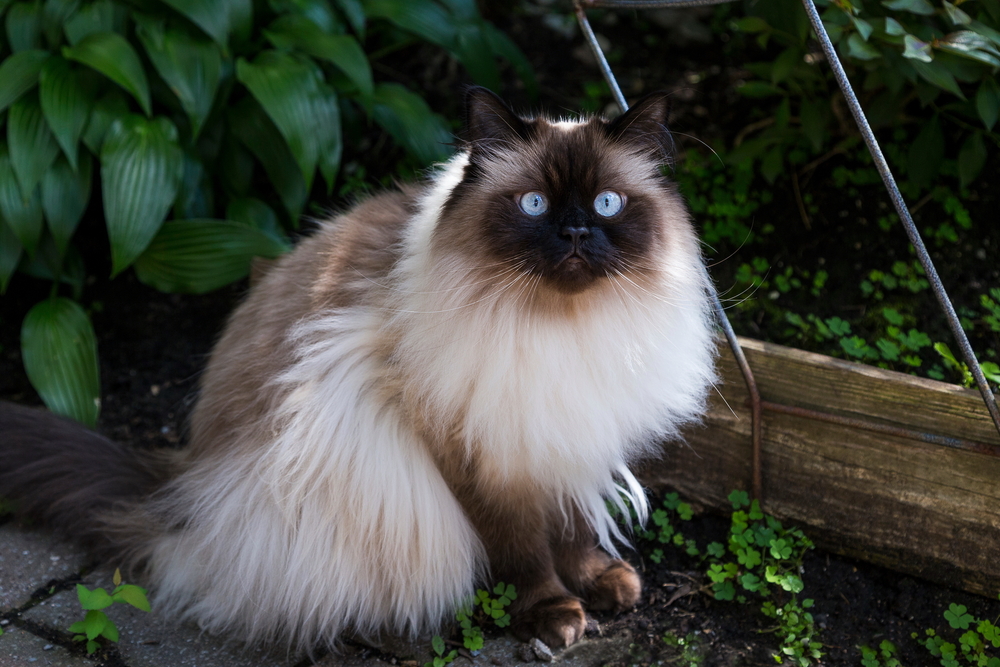
Himalayan Overview

Personality
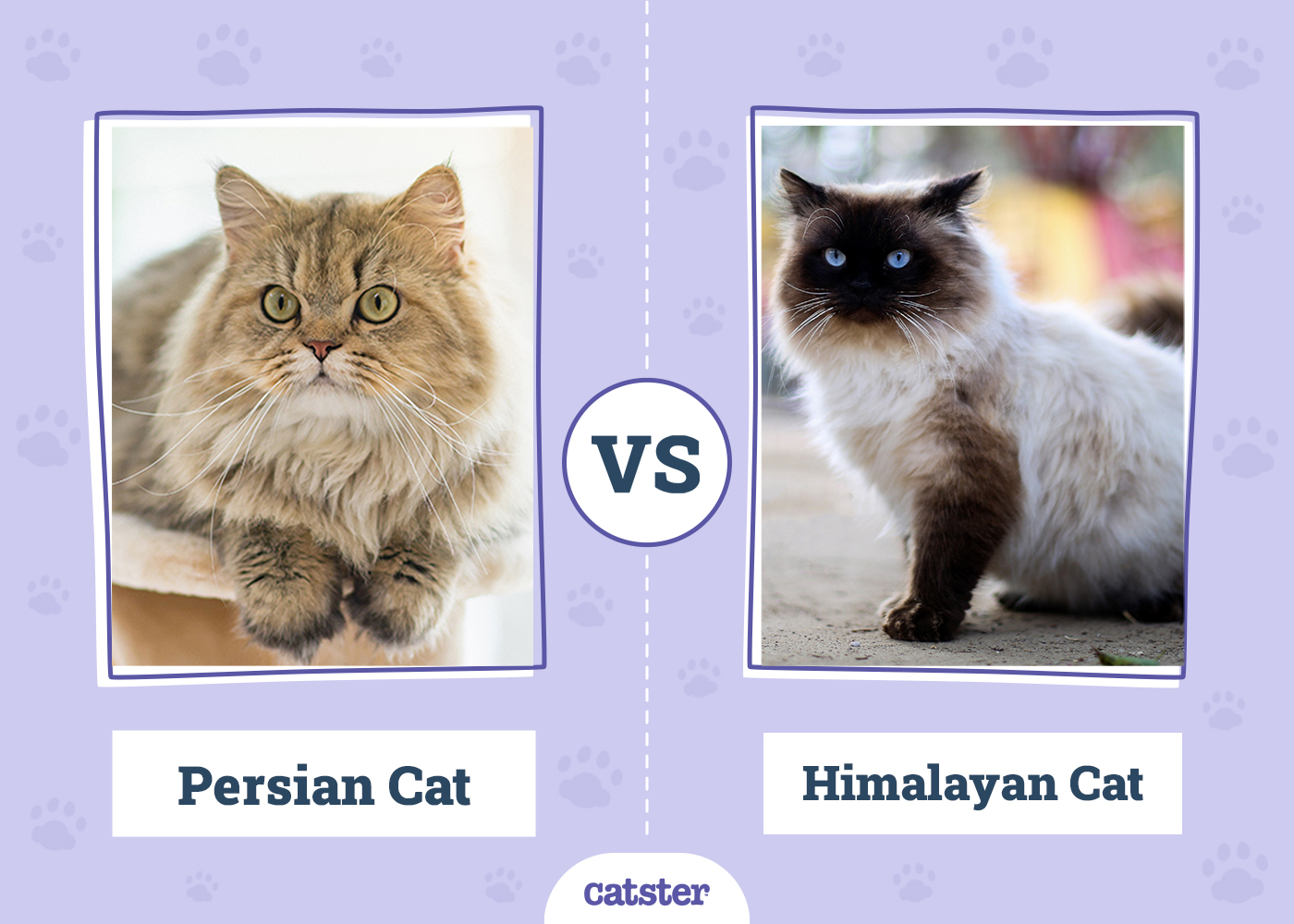
The Himalayan is the result of crossing Siamese and Persian cats and is classified as a color variety of Persians in some purebred registries. Because of this, they share similar personalities with their Persian relatives.
Himalayan cats are sweet and gentle animals who are incredibly affectionate. They love attention but usually aren’t needy or demanding. The Himalayan is friendly and social and gets along with people and other pets.
They are playful but generally not energetic, preferring to spend more time napping than climbing and running. Himalayans can be a little more talkative than Persians because of their Siamese ancestry, but they are not overly vocal cats.
Grooming
Himalayan cats are known for their luxurious coats, but keeping their fur neat requires effort. They have thick undercoats and long, silky overcoats that tangle easily. Himalayan cats require daily grooming to keep their fur free of mats.
The breed is also prone to tear staining and eye discharge because of the shape of their faces. Wiping their eyes and face folds should also be part of their regular grooming routines. Himalayans also need regular nail trimming and ear cleaning.
Health
Himalayan cats can suffer similar health conditions as Persians related to their flat faces, including brachycephalic obstructive airway syndrome or ocular corneal sequestrum. They are prone to an inherited condition called polycystic kidney disease and hypertrophic cardiomyopathy. Himalayan cats can also suffer from urinary calculi or stones, and peritoneopericardial diaphragmatic hernia (PPDH), but it is relatively uncommon.
Breeding
Because Himalayan cats are prone to so many health issues, breeding them responsibly is vital. Before breeding, males and females should be screened for genetic conditions like Polycystic kidney disease. They usually produce litters of 3-6 kittens.
Generally, responsible breeders don’t let their kittens go to new homes until they are at least 12 weeks old.

Suitable for:
Himalayan cats are suitable for most living situations. Their sociability and gentleness make them excellent family pets. At the same time, their calmness and relatively low energy level mean they are lovely companions for seniors and dedicated friends for individuals.
They get along well with most other pets if properly introduced.
Ragdoll Overview

Personality
Ragdolls are the most popular breed in the world, according to the Cat Fanciers’ Association, which is one of the largest feline organizations to register purebred cats. Their gorgeous blue eyes and plush coats certainly play a role in this popularity, but it's their devotion and connection to their humans that sets them apart.
Ragdolls are sometimes called “dog-like” because they are much more interested in humans than many cats. They often follow their owners from room to room, taking any opportunity to snuggle or seek attention. Ragdolls are friendly, laid back, and happy to hang out with anyone, human or animal.
They are intelligent cats that accept training better than many breeds and are generally well-behaved compared to other, more mischievous and troublesome felines. The Ragdoll is playful but doesn't have a high energy level, preferring to lead a less active lifestyle. They are exceptionally calm cats and are tolerant of nearly every situation.
Grooming
Unlike Himalayan cats, Ragdolls don’t have an undercoat, making their grooming needs less intense. Their silky coats are medium-long and should be brushed or combed about twice a week to combat tangles.
They shed seasonally, but usually not to the same extent that a cat with a thick undercoat would. Besides brushing, Ragdolls should have regular nail trimmings, ear cleanings, and routine dental care.
Health
The primary health concern for Ragdolls is the heart condition, hypertrophic cardiomyopathy (HCM). Ragdolls carry a genetic mutation that increases their risk for this problem. Ragdolls have been shown to be at a higher risk of developing feline infectious peritonitis (FIP), a life-threatening virus. The breed is also prone to forming urinary stones, which can lead to infection or urinary blockage.
Breeding
Before breeding Ragdolls, the parents should be tested to see whether they have one or two copies of the HCM mutation in their DNA. Breeding cats should be genetically tested for the HCM-associated mutation, and breeding decisions should be made in consultation with veterinary genetic and cardiology guidance. Ragdoll cats mature slowly, taking 2 years to reach full size, and shouldn't be rushed into breeding until they're ready. Ragdolls usually have three to five kittens per litter, but they can have up to twice that number due to their size.

Suitable for:
Ragdolls fit just about anywhere! They're equally at home in a busy family full of kids and other pets as they are serving as the sole confidante of a single human. They are also calm enough to live in small spaces or quiet senior living centers. Because of their peaceful nature and desire for human company, Ragdolls aren't well-suited to being outdoor cats.
Ragdolls And Himalayans: A Side-by-Side Comparison
Personality
Ragdolls and Himalayans have very similar personalities. Both are affectionate and calm cats that enjoy human interaction and attention. Neither are very energetic, but Ragdolls are generally more active than Himalayans. Ragdolls can be a little more demanding of attention than Himalayans and are more easily trained.
Physical Appearance
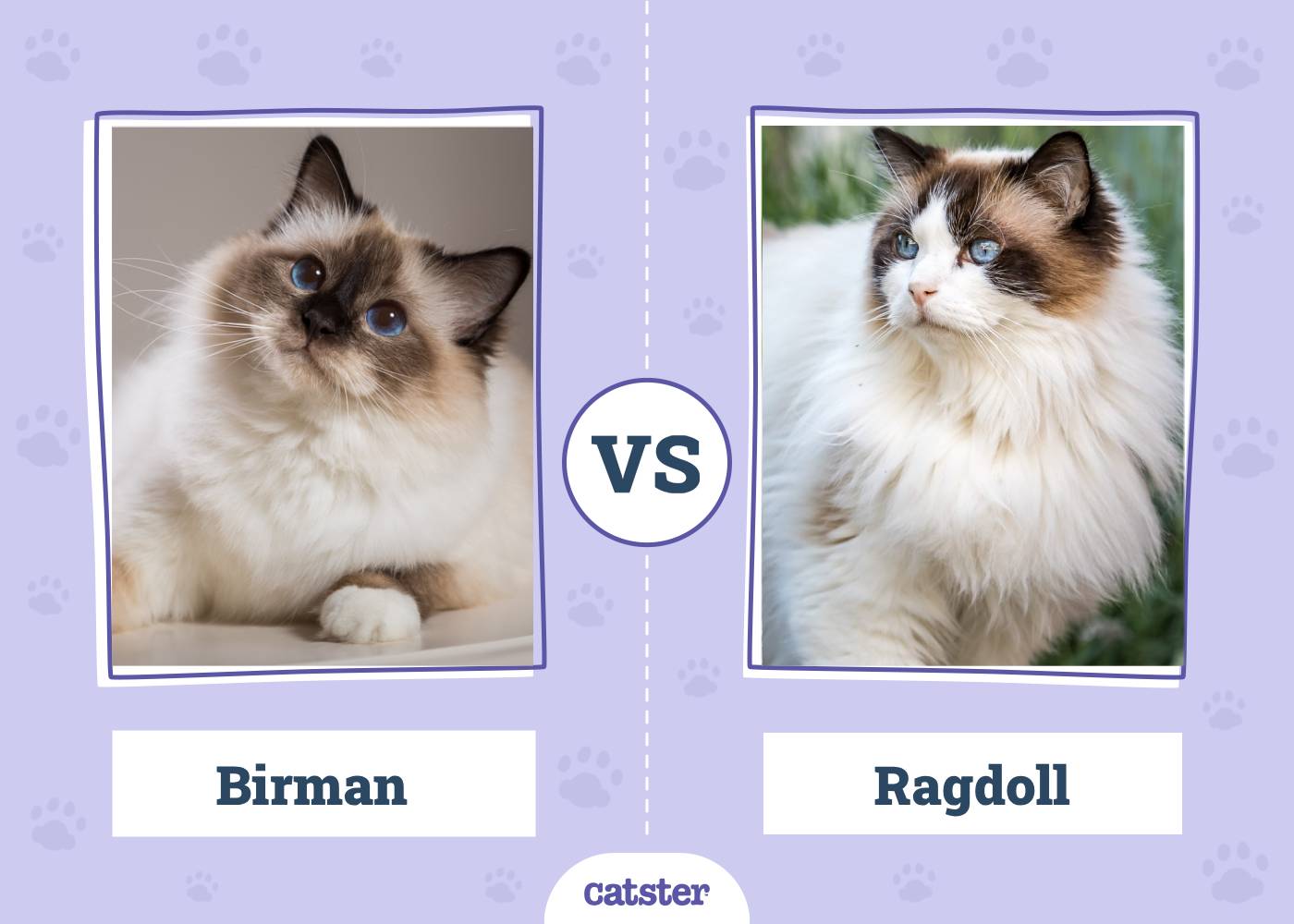
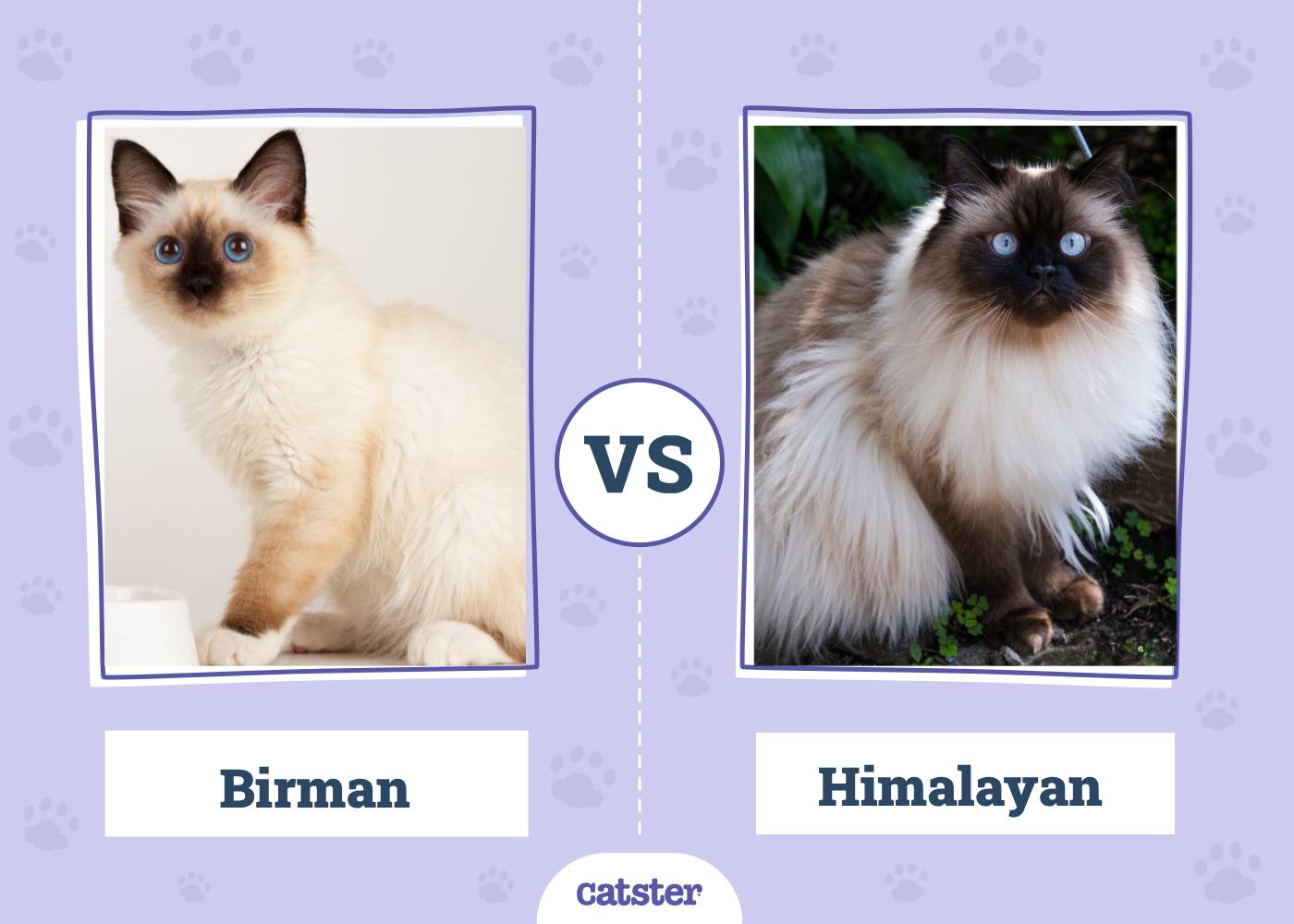
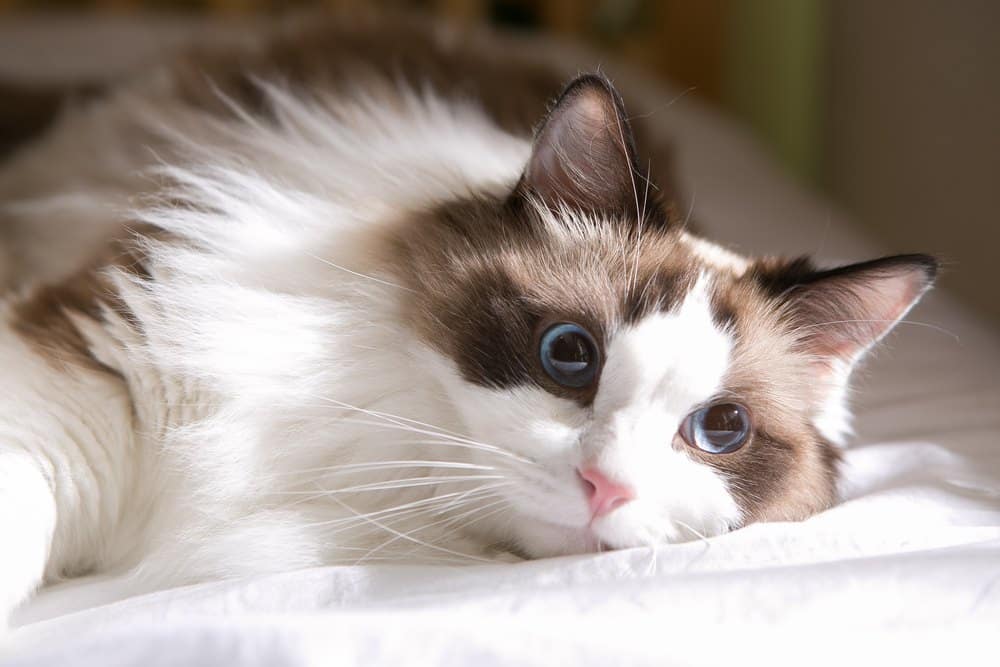
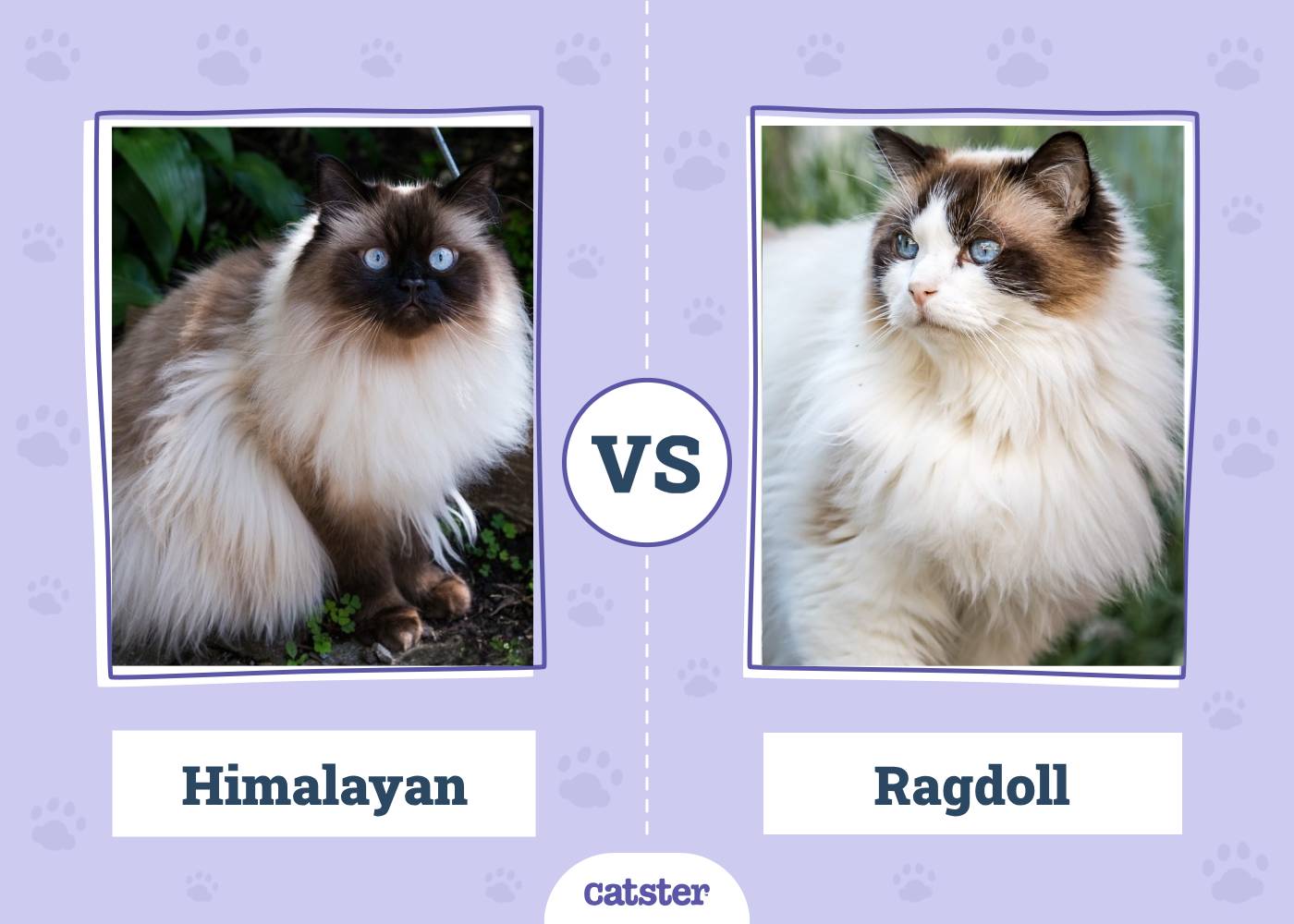
Physically, Himalayans are smaller than Ragdolls. Their coats are thicker and require more grooming. In addition, their faces are flatter, with stockier bodies. The cats are somewhat similar in color, with light bodies and darker faces, legs, tails, and ears.
The two breeds share similar color and pattern options, including chocolate, lilac, blue, red, and cream. Both Ragdolls and Himalayans have the same gorgeous blue eyes.

Health
Himalayans are predisposed to a wider range of health issues compared to Ragdolls, largely due to their flat-faced anatomy. While hypertrophic cardiomyopathy (HCM) has been reported in both breeds, Ragdolls are considered one of the breeds with a known genetic predisposition to HCM, and genetic testing is available for some lines. HCM can also occur in Himalayans, but it is not as strongly breed-associated as in Ragdolls.
Other conditions reported in Himalayans include polycystic kidney disease (PKD), airway issues, dental crowding, ocular problems such as corneal sequestrum and excessive tearing, and urinary stones.
Responsible breeding of either breed requires appropriate health screening (including cardiac screening and PKD testing where relevant), genetic testing when available, and waiting until cats are physically mature before breeding
Which Breed Is Right For You?

The Himalayans and Ragdolls have gorgeous looks and relaxed temperaments, making them excellent pets for almost anyone. If you live in tighter quarters, the smaller Himalayan cat might make a better choice. If you're not willing to spend part of your day brushing a cat, the lower-maintenance Ragdoll might be a better fit.
Whichever cat you choose, make sure you work with a responsible breeder who performs all recommended health screenings. As always, make sure you have the time and money to care for your new pet for their entire lifespan before you bring them home.
Featured Image Credit: Left - Anne Richard, Shutterstock | Right - Serita Vossen, Shutterstock

Expert cat care, straight to your inbox
Vet-reviewed advice, behavior tips, and the best of Catster. Free, and you can unsubscribe anytime.
By signing up, you agree to our Terms & Conditions and Privacy & Cookies Policy.
Christian started writing for a local newspaper as a teenager, and he's been involved in the publishing industry for most of his adult life. Combining his love of writing with a passion for animals, he is currently the Director of Editorial at Pangolia and the Editor-in-Chief at Catster.
Christian lives in the Philippines with his wife, son, and four rescue cats: Trixie, Chloe, Sparky, and Chopper.
Join the conversation
Ask a question, share your story, or send private feedback.