Get

In Your Inbox

Catster is reader-supported. When you buy via links on our site, we may earn an affiliate commission at no cost to you. Learn more.

Do Cats Attack Chickens? Can They Coexist? Vet-Reviewed Precautions

Share

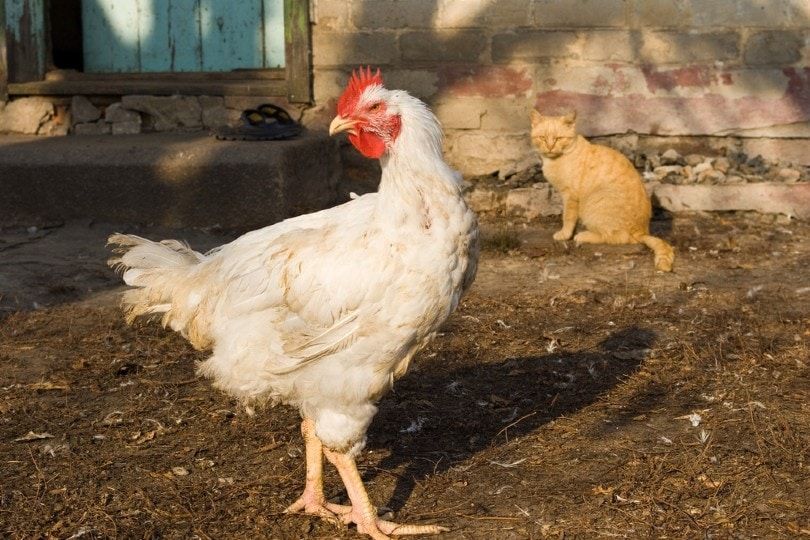
cat looking at a chicken

If you have a cat but are considering adding chickens to your household, you’re likely pondering the wisdom of that move. After all, cats are predators, this is a hard-wired instinct and many will attack the chickens even if they do not intend to eat them.

This does not mean that every cat will attack the chickens as some are aware that chickens are large and come with claws and beaks that can be quite painful, so some of them will avoid any run-ins!

But it’s a different matter with baby chicks. Baby chicks can make tasty little snacks in between meals for our kitty friends. Even if your cat isn’t attacking a baby chick for food but is instead trying to play with it, there’s still a good chance that their predatory instincts will kick in and your kitty will kill the chick.

So, cats will rarely attack adult chickens (though it’s always a possibility), but it’s an absolute must to keep them far away from baby chicks.

divider cat faces 2 oct 2024

Can Cats and Chickens Coexist?

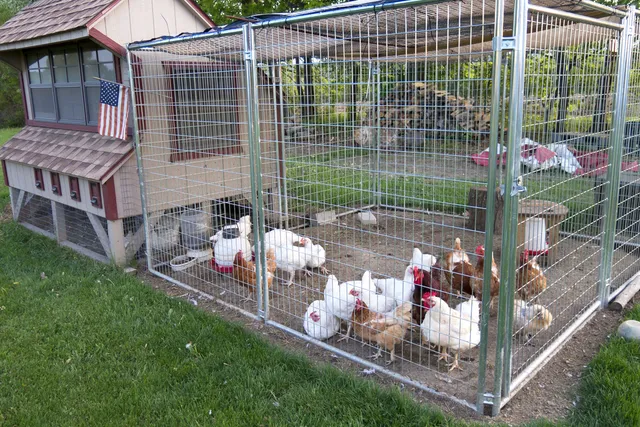
On rare occasions, felines and adult chickens can coexist, but it’s a risk best to avoid and we recommend keeping them in a separate, secured area far away from your cats. You’ll also want to ensure young chicks only roam in an enclosure protected from cats, dogs, and other wild animals.

However, it is not completely unheard of and there are a few testimonials of people who managed to get their pet cats and chickens to coexist. So yes, there are anecdotes of cats who have been successfully socialized to coexist with these large birds. If your chickens are fully grown and your cat is smaller in size, they will be even less likely to want to attack them, but there are no guarantees. Moreover, unknown neighborhood cats are more than likely to attack your chickens, even if just for fun.

You can also help keep your pet cat from being tempted into trying to fight with your chickens by ensuring that they have plenty to eat so they don’t become ravenous enough to want to go up against the birds. It’s also smart not to leave food near your chicken coops or enclosures, as that will tempt not only your cat to that area but also wild animals.

Of course, the best way to ensure your chickens are always safe is by having them in an area your feline (or any other animal) isn’t allowed into, just on the off-chance kitty decides to attack. Remember cats are natural predators and chickens are considered prey, so if you decide to try to have your cat and chickens coexist, we recommend you only do supervised interactions.

Cat and Chicken
Image Credit: Spech, Shutterstock

Potential Benefits of Cats and Chickens Coexisting

Not only is it nice for you when all your animals get along, but there are also a couple of benefits to your cat and chickens coexisting peacefully.

First, having a feline prowling around means you’ll have less of a rodent population (mice and rodents will try to go after your chickens’ feed). Having fewer rodents around means a lower chance of snakes coming around looking for a meal, which equals more safety for your chickens.

Next, cats being around your chickens may help deter wild birds from hanging about. The more wild birds around your chickens, the higher the chance they could catch a disease or get mites. If you have a feline chasing away the wild birds, though, it’s much less likely your chickens will catch anything.

Cat and chicken in a barn
Image Credit: Eriks Z, Shutterstock

Other Considerations

There are other vital things you should know about cats and chickens being around each other: Your chickens can make your kitty sick and vice-versa. Chickens sometimes carry Salmonella, which can then be passed on to your feline. Likewise, your cat could transmit the infection to your chickens, and humans are also susceptible to this zoonotic disease. While your cat may show no signs of having Salmonella, they could still end up with medical issues, such as:

  • Vomiting
  • Diarrhea
  • Loss of appetite
  • Fever
  • Dehydration
  • Elevated heart rate
  • Lethargy
  • Sepsis (in severe cases)

Other bacteria including Campylobacter jejuni can be transmitted from chickens to cats and even to humans. So, this is something to watch for if you have the two species in your home hanging out together. If you’re concerned about your cat’s health we suggest you speak to a vet.

Likewise, it is important to know that if a chicken does get attacked by a cat, the chances of puncture wounds getting infected are very high so they will require medical attention.

divider cat faces 2 oct 2024

Conclusion

Since cats have a high prey drive many would be more than eager to attack chickens, even if they do not intend to eat them. Moreover, baby chicks are entirely too tempting to our cats, as they make tasty snacks and fun playthings, so it is imperative to keep the two apart while your chicks are growing up. Anecdotal reports tell stories of some cats and adult chickens who have learned to coexist with likely little interest in each other. But there are no guarantees and we recommend you to keep your chickens in an enclosed area to be on the safe side.

Although there are few testimonials of cats and chickens being friendly with each other, there’s also a downside, as your chicken and cat could pass along some common pathogens. So besides being extra careful, it is imperative to practice hygienic methods when having these two animals together!


Featured Image Credit: Yuriy Kulik, Shutterstock

Want content like this delivered to you?

Sign Up For Our Newsletter

News, insights, expert advice, and everything cat

* By submitting, you agree to our Terms & Conditions and Privacy & Cookies Policy.


How useful was this post?

Click on a star to rate (you can leave written feedback after clicking submit)

Help us improve Catster for pet parents!

Your feedback really matters.

What did you like about this post? Also how can we improve it?

Join the conversation

2 Responses

  1. I will disagree as the population of cats expand, they find this as fun and games to attack chickens and small livestock. Currently we have had 2 cases of domesticated non feral well plump cats that have attacked and just about took out our chicken flocks. It is becoming more common, and cat owners don't want to face the true nature of cats. They may not jump a full-grown chicken, in most cases but they will sure jump a juvenile without a thought. As a chicken owner and someone who constantly has to capture neighbors' cats because they have found it a good sport to attack chickens. People underestimate cats.
    Our first encounter we lost over 30 birds to a domesticated house cat that the owner decided to let it out and over 2 days we lost 30 juvenile birds, the 3 day the cat attacked to Indian runner ducks, and I captured the cat and hauled it off. then occasionally we would hear, our hens stirring and find another cat had showed up to test the waters on seeing if they could get in, I trap and send it packing. That has happened multiple times these aren't strays they were well fed took care of cats.
    just this past Friday 10/4/2024 guess what another cat showed up attacked 4 juveniles, 1 adult hen and adult rooster. over a 3-day period 6 birds taken out. we are currently trying to trap it as it is a 12–15-pound cat.
    I think people need to stop underestimating cats and what they will do to find sport and fun. Also, Cats have bacteria in their mouth and claws that can be fatal to chickens that why many chickens don't survive a cat bite but can survive a dog bite. I know no one wants to face the true nature of a cat. I have noticed as more people fail to spay and neuter their cat's people are reporting horrible problems from cats just destroying flock, personal property destroying gardens etc.

    1. Dear Labreeska,

      thank you for your message. First of all we would like to say that we are very sorry to hear about cats attacking your chicken. It is admirable that you choose to trap them and send them away instead of other more severe solutions. In the end, they are natural predators and they are only acting on their instincts. The only thing we can suggest here is to properly secure your chicken and ducks, especially at night, so the cats would have no chance of getting to them. We have an article on this matter on our site. Perhaps you will find some advice there valuable:
      – How to Keep Cats Away From Chickens: 7 Easy Tips – https://www.catster.com/lifestyle/how-to-keep-cats-away-from-chickens/
      Just copy and paste the URL into your browser.

      Best of luck to you and thank you for reading Catster.

Leave a Reply

You’re very welcome to leave a comment or question. Please know that all comments must meet our community guidelines, and your email address will NOT be published. Let’s have a positive and constructive conversation.


Catster's Digital Magazine is Back!

Vet-approved health & behavior advice

Real cat stories & community features

Chatting About the Importance of Spaying/Neutering, Cat Retail Shopping Ban & Red-Level Storms | Chatty Cattys, Episode 30

In this episode of Catster’s Chatty Cattys podcast, Nicole and Dr. Karyn are celebrating a major legal win for pets before diving into...

Is Your Cat Happy? Here’s How You Can Tell

Cats have a reputation for being indifferent, even inscrutable. But despite their seemingly ambivalent appearance, cats experience many emotions, including happiness, and they...

Human Brains Age Like Cats – New Study Debunks the 7-Year Rule

If you’ve ever caught your senior cat staring blankly at a wall, wandering the halls at 3 am, calling out for no clear...

Chatting with Devin About Here! Have a Kitten, Fostering, & Why Two Are Better Than One | Chatty Cattys, Episode 29

In this episode of Catster’s Chatty Cattys podcast, Nicole & Dr. Karyn sit down with Devin, the founder and one-woman show behind “Here...

More related

Can Cats Eat Artichokes? Vet Reviewed Facts & Safety Guide

Artichokes are delicious vegetables that can be savored as treats. There are many ways that you can enjoy artichokes, and they also happen...

Can Cats Eat Beef Wellington? Vet-Reviewed Risks & Alternatives

Beef Wellington is a popular dish for the holidays or dinner parties. It is an impressive dish to make, and you may want...

10 Best Low-Dust Cat Litters in 2026 – Reviews & Top Picks 

In many ways, cats are relatively independent and self-sufficient pets. Some of the perks of living with cats are that they can self-groom...

Does Lemon Juice Kill Fleas on Cats? Vet-Verified Effectiveness & Safety Explained

Keeping our pets parasite-free is big business, with a projected 2026 global revenue of $3.68 billion.1 Fleas are quite the nuisance on several...

Keep reading

What Is Cat Nuzzling? 4 Vet-Approved Behavior Explanations & Info

For most cat parents, it warms their hearts for their cat to climb up in their lap and nuzzle their necks or anywhere else. Usually, a cat will knead your chest or lap while nuzzling and purring. It makes you...

black and white cat nuzzling on man's chin

How to Train a Cat Not to Bite: 8 Vet-Approved Tips & Tricks

Is your cat constantly biting you? You are not alone. The behavior is typical for kittens and adult cats, but they do it for different reasons. Adult cat bites are painful and potentially dangerous, but bites from kittens shouldn’t be...

a young tabby cat bites a womans feet

Can Cats Get Lice? Vet-Approved Facts & Treatment Tips

Lice are a common problem for most pet owners, especially if your pet enjoys the outdoors. They can cause skin disease and itchiness, affect your pet’s coat, and even cause a variety of health complications. Many cats, especially those who...

cat scratching itself

Can Fleas Kill a Cat? Vet-Approved Facts & Safety Guide

Fleas are an annoying part of cat ownership. Unfortunately, your cat will likely get at least one flea infestation at some point during their life. Keeping on top of regular flea treatments should protect your kitty from harm even if...

Cat with fleas

How to Bond With Your Cat: 12 Vet-Approved Options

Owning a cat is one of life’s great pleasures, but sometimes, it can feel like we need them more than they need us. It can even feel like we’re burdening them with our presence. However, that may not be true....

teenager cat owner cuddling with pet cat

Can Cats Eat Lychee? Vet-Reviewed Nutritional Facts & FAQ

Cats are obligate carnivores, so they need little more than animal protein to stay happy and healthy throughout their lives. However, this is not to say that eating some safe plant material is detrimental to cats. Cats can indeed consume...

Can Cats Eat Lychee

How Early Can You Hold a Kitten? Early Life & Vet-Reviewed Safety Tips

Cats are known to be exceptional at caring for their young ones, and there’s nothing more exciting than having a cat give birth to a litter of kittens at home. If you have a cat that has recently given birth,...

man-holding-kitten

How Long Can a Cat Be in Labor? Vet-Approved Feline Birth Facts

Most veterinary professionals recommend getting your cat spayed or neutered to help control the feral cat population, reduce disease transmission between cats, and reduce the risk of health complications later in life. It can also help make it much easier...

pregnant cat on the ground

Love Cats? So Do We! Join the Catster Community

Stay informed with expert pet care insights delivered straight to your inbox! Discover professional guidance on animal behavior, feeding tips, trusted product picks, and much more.


Sign up for the Catster Email Newsletter

Stay informed with expert pet care insights delivered straight to your inbox! Discover professional guidance on animal behavior, feeding tips, trusted product picks, and much more.