Can I Get Worms From My Cat? Everything You Need to Know!



In this article
We love to have our cats close by for company and affection. But cat ownership has some downsides—like when they use their litter box and then walk on your countertops, furniture, or even your face.
Since we are in such close proximity at all times to our cat's waste, you may wonder if you can contract worms. And the answer is a creepy but resounding yes; you absolutely can contract parasites from your cat. But don't worry! Let's discuss this and prevention methods.

What Parasites Can Cats Have?
Cats are susceptible to various types of intestinal parasites. Even cats who are on routine prevention can get certain worms that preventatives do not cover. So, that is why routine vetting and paying close attention to any changes in bathroom activity can help guide you.
Some parasites are feline- or animal-specific, meaning they pose no direct risk to humans. If a parasite cannot thrive in a host, it will not infect. However, several worm species can infect and have a detrimental impact on us.

Zoonotic Worms
“Zoonotic” simply refers to an infectious disease (bacterial, viral, or parasitic) that can be transmitted between humans and animals. Zoonotic worms can be passed from animal to person. In the case of the cat, we will delve into some of the most common parasitic culprits that cats can pass along to us.
- Roundworm: Roundworms are one of the most common cat-to-human transmissible parasites, particularly in children. Roundworm infection in a person is called ascariasis and is transmitted through hand-to-mouth contact with roundworm eggs. Statistics show 10,000 cases of roundworm infect people annually.
- Hookworm: Hookworms are another commonly treated parasite in cats that can infect humans, too. The hookworm gets its name from using its sharp teeth to latch onto the intestinal wall to feed on blood. Hookworms can be fatal to cats if untreated but are rarely fatal in people. Statistics show roughly 400 million people have a case of hookworms annually.
- Tapeworm: The tapeworm is another cat-to-human transmissible parasite. Since fragments of these long, flat worms break off and pass through the intestinal tract, it's easy to see in your cat's litter box—and your own toilet if you're infected. Tapeworm in humans is a pretty rare occurrence. The CDC estimates it affects roughly 1,000 people annually in the USA.
Parasite Prevention Medication
The best way to prevent parasites in yourself is to ensure your cat doesn't have them. You can get parasite prevention at department stores, feed stores, pet-specific stores, online, and at your veterinary office. You might also receive discounted prices at animal rescues or shelters, permitting that they sell it.

Frequency
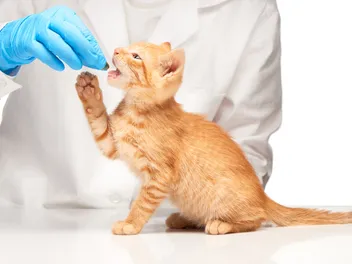
You should treat kittens for roundworms once they turn three weeks of age, every two weeks until they are 8 weeks old. Throughout the juvenile stage, you should treat your cat monthly.
Most adult parasite preventions also take care of tapeworms and roundworms. Once they are adults, greater than six months old, you can deworm as necessary every one to three months, depending on your brand of treatment. Follow the instructions from your vet.
Cost
Like all other products and services, the cost can vary depending on the brand and avenue of purchase for deworming medication. You can spend as little as $10 or as much as $40 in some cases.
Potency
Efficacy is critical. You want to eliminate the problem and prevent it from happening in the future. Making sure to keep up with a strict routine deworming schedule will increase the efficacy. But do not cut corners with quality. Make sure to select a brand with raving reviews so you know you are getting a quality product to eliminate this troublesome issue in your pets.

Tips to Keep Yourself Worm-Free
The transmission of worms to humans is very rare, but it can create many serious, even life-threatening issues. Keep yourself safe from your pet by practicing safe handling and proper preventative measures.

Treat on a Schedule
Dewormer is only as efficient as you let it become. To ensure your cat is not infected, make sure you are keeping them on a strict deworming schedule. You should never lapse, especially if you have indoor/outdoor cats.
Wash Your Hands
Anytime you handle your cat or clean up after them, it's best to wash your hands. This just prevents the transmission of any parasite, along with lots of other bacteria and germs. When you clean litter boxes, it’s best to do so with gloves to add that much-needed layer of protection.
Avoid Contact With Waste
Anytime you are near your cat's litter box, always protect your eyes, nose, mouth, and hands. Worm eggs are very small; if they are stirred up, they can even go airborne and wind up in your system.
If You Suspect Worms
Sometimes, patients with intestinal parasites can be asymptomatic unless the infestation is advanced. Some signs of worms in humans include:
- Abdominal pain
- Diarrhea
- Nausea
- Vomiting
- Gas
- Bloating
- Weight loss
- Fatigue
- Itchy anus
If you're worried about the possibility of contracting worms, it's time to make a doctor's appointment. Some worms can be very life-threatening, so get in for proper testing as soon as possible. It's better to be sure than to wait and regret the time-lapse.
Conclusion
So now you know that it is very possible to get worms from your cats, especially in the right circumstances. However, if you keep up with routine deworming, you should have next to no risk of transmission. If you have any issues about potential worm issues, always speak directly with your family doctor. In no way is this article meant to replace medical advice from a licensed physician.
“Sources”
Featured Image Credit: evrymmnt, Shutterstock
Expert cat care, straight to your inbox
News, insights, and useful advice, delivered to you.

No spam — unsubscribe anytime.
By signing up, you agree to our Terms & Conditions and Privacy & Cookies Policy.
How useful was this post?
Click a star to rate. You can leave written feedback afterwards. (We read all feedback.)
As a freelance dog writer and passionate pet enthusiast, Ashley Bates is pursuing studies in animal therapy. A mother to four human children and 23 animal companions, Ashley is dedicated to volunteering at shelters, advocating for animal rights, and rescuing animals in need. Her goal is to spread awareness, provide education, and offer entertainment about pets to reduce homelessness. Ashley's specialties include dogs and cats.