Can Cats Eat Mice? Vet-Reviewed Facts & Safety Guide



In this article
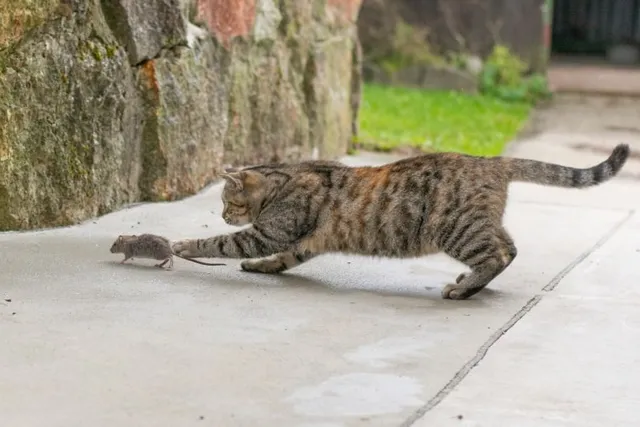
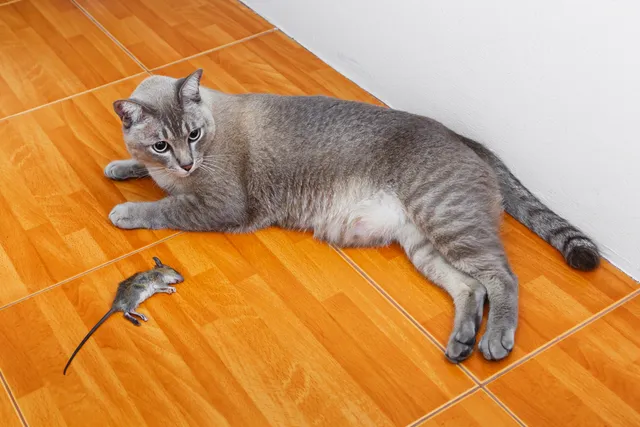
Cats are natural-born hunters, and it is not unusual to discover them bringing home small furry prey. They often pridefully leave their mice to be found in a place of honor, such as on the front doorstep or the middle of the living room floor.
It seems intuitive and natural for cats to hunt and eat mice, yet you might still wonder: "Is it okay for my cat to eat a mouse?" This is especially relevant with indoor cats, as their owners typically monitor their diets to provide maximum health and wellness. Unfortunately, mice are not healthy, especially for indoor cats. Read on to find out why.

Cats & Mice
While cats make great deterrents to rodents in the home, they are not foolproof, and mice can find their way into your house through poorly sealed walls, attics, and basements. So, you might think, "Why not let my kitty’s killer instincts keep my home pest free? Isn’t it healthy for my cat to eat mice sometimes?" The short answer is no. It is natural but not entirely risk free for cats to kill and eat mice.
The mice are not the problem. Cats can kill and eat prey in the wild without issues and can digest the raw meat and bones; the real problem lies with the infections, parasites, or poisons that mice can carry.
These illnesses and toxins can be transferred from the mouse to your cat and if left untreated, could prove dangerous to your pet. It is important that you watch your cat for 24–48 hours after you suspect they have eaten a mouse, and if they are vomiting or experiencing gastrointestinal pain, seek help from your veterinarian.
Types of Illness in Mice
Nature is a series of relationships, many of which remain invisible to us. While it may seem innocuous for cats to eat mice, a mouse can be a carrier of disease or toxins that can harm our cats or even be passed from cats to humans in the home. Three common problems associated with mice are ringworm, toxoplasmosis, and the issues that arise if the mouse has consumed rodenticides or poisons.
Ringworm
Mice can carry ringworm, which can then be passed onto your cat. Ringworm is unrelated to worms but is a fungal skin infection that creates circular patches of infected or inflamed skin that can be itchy and scaly. It can also cause hair and fur loss in people and animals where it is active on the skin. Cats can catch ringworm and display no visible signs. A vet can make a reliable diagnosis using various methods and provide treatment for your furry friend. Treating your cat for ringworm is vital because it can be passed on to other pets, kids, or grownups in the home.

Toxoplasmosis
Mice are also carriers of toxoplasmosis, a parasitic disease caused by the micro-organism Toxoplasma gondii. Cats are ideal carriers of these parasites because they are the only animals in which the parasite can complete the entire span of its life cycle. The infection is passed on from host to host through oocysts found in cat feces.
Mice and birds that ingest the infected cat feces can become carriers. Then, they can pass it on to other cats when they are caught and eaten, starting the cycle over again. Remarkably, this parasite is known to cause mice to lose their fear of cats, making them more easily caught and therefore proving the dominance of the parasite in triumphing over its host species. Cats often are silent carriers of this illness and show no signs throughout their lifetimes.
In some cases, though, cats can show signs of fatigue, gastrointestinal problems, or respiratory problems. While this can be serious for our pets, toxoplasmosis can also be passed on to humans in the home. The parasite can infect humans when they handle cat litter, and it’s wise to wear gloves and thoroughly wash up afterward to avoid an infection.
Interestingly, the term “crazy cat lady” comes from the notion that there is a connection between cat owners infected with toxoplasmosis and later incidences of schizophrenia and other behavioral anomalies. Currently, research on this topic is still inconclusive, though, and there is not a proven causal link between toxoplasmosis and human behavior.
Mouse & Rat Poison
If your cat consumes a mouse that has recently ingested poison from a trap, the cat can become ill. However, the cat would need to consume several mice to reach a dangerous toxin level. Nevertheless, there is some risk, and it is better to use other forms of mechanical or humane mouse traps in the home rather than poisons and toxic traps. Some people also use peppermint oil as a pest deterrent, and while this works well on the pests, it should be avoided when there is a cat in the home, since the oil can be toxic for them.

Healthy Diets for Cats
Cats evolved as hunters and need meat to meet their nutritional needs. They are considered obligate carnivores, meaning they require protein from animals. The feline diet should consist of mostly protein, limited amounts of fat, minimal carbohydrates, and a variety of other nutrients, vitamins, and minerals. Unlike humans, they are not omnivores and do not rely on plants and veggies in the same way we do. Mice fit the profile of a cat’s diet, but for the reasons outlined here, they are not suitable for your fluffy roommate to rely on them for food.
Conclusion
Because of a steady and reliable diet and less access to prey, indoor cats do not hunt as often as their outdoor counterparts, but their hunting instincts still exist. It is perfectly normal for your cat to go on a hunting spree, ridding your home of unwanted visitors and having a great time doing it. However, it is not healthy for indoor cats to eat the mice, and if you see any issues with your cat in the days after eating a mouse, reach out to your vet. This is why it is important to regularly deworm even indoor cats. Instead of allowing your pet to hunt, you can purchase toys that encourage stalking and hunting.
See Also:
Sources
Featured Image Credit: Kapa65, Pixabay
Expert cat care, straight to your inbox
News, insights, and useful advice, delivered to you.

No spam — unsubscribe anytime.
By signing up, you agree to our Terms & Conditions and Privacy & Cookies Policy.
How useful was this post?
Click a star to rate. You can leave written feedback afterwards. (We read all feedback.)
Christian started writing for a local newspaper as a teenager, and he's been involved in the publishing industry for most of his adult life. Combining his love of writing with a passion for animals, he is currently the Director of Editorial at Pangolia and the Editor-in-Chief at Catster.
Christian lives in the Philippines with his wife, son, and four rescue cats: Trixie, Chloe, Sparky, and Chopper.